
Understanding the Kingdom Fungi: A Biological Overview
The Kingdom Fungi represents one of nature’s most fascinating and diverse groups of organisms, fundamentally distinct from both plants and animals despite their historical association with botany. Approximately 144,000 known fungal species have been identified by scientists, yet this represents only a fraction of the estimated millions that exist in nature. These remarkable organisms have evolved to occupy virtually every terrestrial and aquatic environment on Earth, playing critical ecological roles as decomposers, symbionts, and sometimes as pathogens. The scientific discipline dedicated to studying fungi is called mycology, a field that has grown increasingly important as researchers uncover the profound impact these organisms have on human health, agriculture, and ecosystem functioning.
Fungi possess a unique combination of characteristics that place them in their own kingdom rather than classifying them as plants or animals. They are eukaryotic organisms with rigid cell walls composed of chitin, a substance that also provides structure to insect exoskeletons. Unlike plants, fungi cannot photosynthesize and must obtain nutrients by absorbing organic compounds from their environment. This heterotrophic lifestyle gives fungi their distinctive ecological role as nature’s primary recyclers, breaking down dead organic matter and returning nutrients to the soil. Understanding the structural and functional diversity within the fungal kingdom requires examining the five major phyla that organize this vast group of organisms.
The Five Phyla: Fundamental Divisions of Fungal Diversity
The fungal kingdom is organized into five primary phyla, each characterized by distinct reproductive mechanisms, cellular structures, and ecological roles. These divisions represent millions of years of evolutionary divergence and adaptation to different environmental niches. Each phylum contains organisms with shared fundamental characteristics while displaying remarkable diversity within their respective groups. Understanding these divisions provides insight into how fungi have successfully colonized virtually every terrestrial and aquatic environment.
Ascomycota: The Dominant Fungal Group
The Phylum Ascomycota comprises the majority of all known fungal species, representing a dominant force in fungal diversity and ecological importance. Members of this group are commonly called sac fungi due to their distinctive reproductive structure called an ascus, which is a sac-like container that stores haploid ascospores, typically in groups of four or eight. This phylum includes organisms with tremendous commercial and culinary significance. Baker’s yeast, the organism responsible for bread rising and beer fermentation, belongs to this group. Additionally, culinary treasures like truffles and morels represent highly valued ascomycetes prized for their unique flavors and textures.
Beyond their economic importance, ascomycetes demonstrate the remarkable ecological range of fungi. Some species function as plant pathogens, including the causative agent of Dutch Elm disease, which has devastated elm tree populations across North America and Europe. This phylum also includes numerous yeast species that have become model organisms for biological research. Saccharomyces cerevisiae, for example, has been extensively studied to understand cellular processes applicable to higher organisms, including humans.
Basidiomycota: Club Fungi and Edible Treasures
The Basidiomycota represent another major fungal phylum, characterized by club-shaped reproductive organs called basidia, each bearing four basidiospores. This phylum encompasses the vast majority of edible mushroom species that appear in grocery stores and restaurants worldwide. Button mushrooms and oyster mushrooms, among the most commonly cultivated fungal species, belong to this group. These fungi are sometimes referred to as “gill fungi” because of the characteristic gill-like structures visible on the underside of mushroom caps, which actually represent compacted hyphae bearing the reproductive basidia.
The Basidiomycota phylum exhibits remarkable structural diversity, including shelf fungi that grow on tree bark in distinctive shelf-like formations and jelly fungus species with gelatinous textures. However, this phylum also includes significant plant pathogens. The rusts and smuts, economically important pathogens affecting agricultural crops, belong to this group. Notably, while most edible fungi are basidiomycetes, this phylum also contains some of the most toxic fungi known to science, including Cryptococcus neoformans, which causes severe respiratory infections in susceptible individuals.
Zygomycota: The Conjugated Fungi
The Phylum Zygomycota represents a relatively small but economically significant group of fungi. These organisms are often called conjugated fungi and include the familiar bread mold Rhizopus stolonifer, which rapidly propagates on bread surfaces and soft fruits, causing visible deterioration. Most zygomycetes function as saprotrophs, obtaining nutrients from decaying organic material, though some species have evolved parasitic relationships with insects. The metabolic capabilities of certain Rhizopus species have garnered significant pharmaceutical attention, as their metabolic products serve as intermediates in the synthesis of semi-synthetic steroid hormones, demonstrating how fungal metabolism can contribute to human medicine.
Chytridiomycota: Ancient Aquatic Fungi
The Chytridiomycota, commonly called chytrids, represent one of the most ancient fungal lineages, with evolutionary origins predating most other fungal groups. These fungi are distinguished by their production of flagellated spores that possess motility, an adaptation reflecting their primarily aquatic habitat. While less frequently encountered than other fungal groups, chytridiomycetes have gained scientific attention due to their role in amphibian ecology. Batrachochytrium dendobatidis, a chytridiomycete species, causes chytridiomycosis, a disease that has contributed to the decline and extinction of amphibian populations worldwide. This pathogen demonstrates how fungi can profoundly impact vertebrate populations and ecosystem dynamics.
Glomeromycota: Symbiotic Fungal Associates
The Glomeromycota represent a specialized fungal phylum characterized by their formation of symbiotic relationships with plant roots through a process called endomycorrhizae. These fungi form intimate associations with plant roots, extending the plant’s nutrient absorption capabilities while receiving carbohydrates from the plant host. Species like Glomus claroideum form symbiotic relationships with economically important crops including soybeans, enhancing nutrient uptake and promoting plant growth. These mutualistic partnerships represent a successful evolutionary strategy that has benefited both fungi and plants for hundreds of millions of years.
Morphological Categories: Yeasts, Molds, and Mushrooms
While the five phyla represent the formal taxonomic organization of fungi, understanding fungi also requires examining their morphological forms. Fungi can occur as yeasts, molds, or combinations of both forms, with each morphology reflecting different ecological strategies and life histories. The primary morphological categories include unicellular yeasts, filamentous molds, and fruiting body-producing mushrooms.
| Morphological Form | Structural Characteristics | Reproduction Method | Common Examples |
|---|---|---|---|
| Yeasts | Unicellular, eukaryotic organisms | Asexual by budding or fission | Saccharomyces cerevisiae, Candida species |
| Molds | Multicellular filamentous structures (hyphae) | Asexual via conidia spores | Rhizopus stolonifer, Trichophyton |
| Mushrooms | Multicellular fruiting bodies with caps and stalks | Sexual via spore-bearing structures | Agaricus bisporus, Pleurotus ostreatus |
Yeasts: Microscopic Single-Celled Fungi
Yeasts represent a morphological category encompassing unicellular fungi that reproduce asexually through budding or binary fission. These microscopic organisms have become invaluable research models for studying cellular processes applicable to complex organisms, including humans. Saccharomyces cerevisiae serves dual purposes as both a scientific research organism and as the biological agent responsible for fermentation in bread-making and beverage production. The single-celled nature of yeasts makes them particularly amenable to genetic manipulation and molecular biological studies, contributing to breakthrough discoveries in cell biology and genetics.
Beyond their research applications, yeasts have profound practical importance in food and beverage industries. Baker’s yeast produces carbon dioxide gas during fermentation, causing bread dough to rise and creating the characteristic texture of baked goods. Wine fermentation relies on yeast metabolism to convert sugars into alcohol and carbon dioxide, transforming grape juice into wine. However, yeasts also include pathogenic species; Candida albicans causes various human infections ranging from oral thrush to systemic infections, depending on where the infection becomes established.
Molds: Filamentous Fungal Networks
Molds represent multicellular, filamentous fungi composed of thread-like structures called hyphae that collectively form extensive networks called mycelium. These microscopic fungi reproduce asexually through structures called conidia, which are spores produced along the hyphae and dispersed by air currents. Molds are ubiquitous in human environments, frequently appearing on foods when moisture and appropriate temperatures enable growth. Rhizopus stolonifer, the common bread mold, exemplifies the rapid proliferation characteristic of many mold species, quickly colonizing bread, fruits, and vegetables.
The filamentous growth pattern of molds reflects their ecological role as decomposers breaking down organic material in soil and other environments. The extensive network of hyphae increases surface area available for nutrient absorption, enabling efficient decomposition of complex organic compounds. While many molds are essential for ecosystem functioning, some species cause human disease. Trichophyton and Microsporum fungi cause ringworm, a common fungal infection characterized by ring-shaped scaly lesions, transmissible between individuals or acquired from contaminated surfaces.
Mushrooms: Fruiting Bodies and Visible Fungi
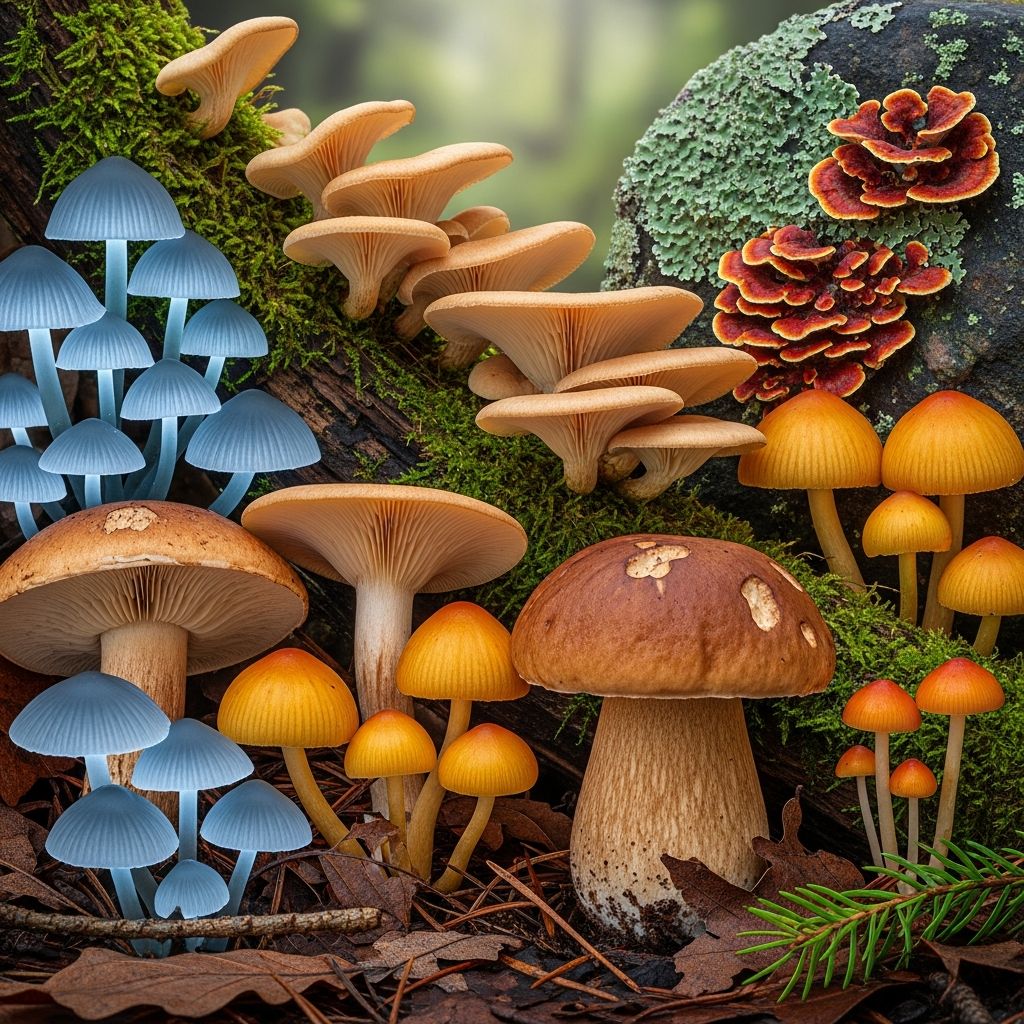
Mushrooms represent the fruiting bodies of certain fungi, making them among the most visually recognizable fungal forms. The visible mushroom structure consists of a pileus (cap) and stipe (stalk), representing specialized reproductive structures that produce and disperse spores into the environment. Approximately 14,000 mushroom species exist globally, yet only about 2,200 are considered edible, and even fewer are widely studied and commercially cultivated. The iconic forest mushrooms represent merely the “flowers” of the organism; beneath the soil surface lies the mycelium, the vast vegetative network of hyphae that constitutes the majority of the organism’s biomass.
Edible mushroom species such as button mushrooms (Agaricus bisporus) and oyster mushrooms (Pleurotus ostreatus) have been cultivated for centuries, providing nutritional and culinary value to human diets. Conversely, some mushroom species produce deadly toxins and must be avoided. The Fly Agaric (Amanita muscaria) represents a highly toxic species, while other Amanita species contain compounds equally dangerous to human health. Identifying edible versus poisonous species requires expert knowledge, as visual similarities between species can create dangerous confusion.
Cellular Architecture and Fungal Structure
Fungal cells possess distinctive structural features that distinguish them from both plant and animal cells. The fungal cell wall, composed of chitin rather than cellulose as found in plants, provides structural rigidity and protection. Chitin is a polysaccharide also found in arthropod exoskeletons, representing a fundamental structural polymer in these two biological kingdoms. The fungal cell membrane contains manno-proteins and β-glucans, complex carbohydrates that contribute to cell structure and immune recognition.
Hyphal cells exhibit specialized growth mechanisms centered around the Spitzenkörper, an aggregation of vesicles containing proteins, lipids, and other organic molecules located at the hyphal tip. This specialized structure directs the growth and extension of hyphae, enabling the formation of extensive mycelial networks. This growth mechanism distinguishes fungal cells from structurally similar organisms such as filamentous algae, which grow through repeated cell division within chains of cells rather than through continuous extension at hyphal tips.
Ecological and Medical Significance of Fungal Diversity
Fungal diversity extends beyond simple taxonomic categorization; it encompasses tremendous ecological and medical importance. As primary decomposers, fungi break down dead organic material in ecosystems, recycling nutrients essential for plant and animal life. Many fungi form mutualistic relationships with plants, such as the mycorrhizal associations formed by glomeromycetes, enhancing plant nutrient uptake and survival. Conversely, numerous pathogenic fungi cause diseases in plants, animals, and humans, representing significant medical and agricultural challenges.
Human fungal infections range from superficial skin infections caused by dermatophytes to systemic infections affecting multiple organ systems. Ringworm infections, caused by Trichophyton and Microsporum species, represent among the most common fungal infections in humans. More serious infections include those caused by Candida species, which can become life-threatening in immunocompromised individuals. Understanding fungal diversity and classification provides the foundation for developing diagnostic techniques and therapeutic approaches to treat these infections.
Frequently Asked Questions
Q: What distinguishes fungi from plants and animals?
A: Fungi are eukaryotic organisms with rigid chitin cell walls that cannot photosynthesize. While historically classified with plants, fungi are genetically more closely related to animals, possessing their own kingdom designation due to their unique characteristics and evolutionary history.
Q: How many fungal species have been identified?
A: Approximately 144,000 fungal species have been scientifically identified, representing only a fraction of the estimated millions that likely exist in nature. Mycologists continue discovering new species regularly, particularly in underexplored tropical and deep-sea environments.
Q: What is the difference between yeasts and molds?
A: Yeasts are unicellular fungi reproducing through budding or fission, while molds are multicellular organisms composed of filamentous hyphae reproducing through asexual spore production. Despite these differences, both are types of fungi occupying different ecological niches.
Q: Are all mushrooms safe to eat?
A: No; while approximately 2,200 mushroom species are edible, many others are toxic or deadly. Proper identification by experts is essential, as visual similarities between edible and poisonous species can create dangerous confusion.
Q: What role do fungi play in ecosystems?
A: Fungi function as primary decomposers, breaking down dead organic material and recycling nutrients essential for ecosystem functioning. Many fungi form symbiotic relationships with plants, while some function as plant and animal pathogens, influencing population dynamics and ecosystem structure.
Q: How do mycorrhizal fungi benefit plants?
A: Mycorrhizal fungi, including glomeromycetes, extend plant root systems and enhance nutrient absorption from soil. In exchange, plants provide carbohydrates produced through photosynthesis, creating a mutually beneficial relationship that has existed for hundreds of millions of years.
References
- Fungi: Definition, Types & Examples – Lesson — Study.com. 2024. https://study.com/learn/lesson/fungi-types-examples-description.html
- Classifications of Fungi — Biology LibreTexts. 2024. https://bio.libretexts.org/Courses/Lumen_Learning/Fundamentals_of_Biology_I_(Lumen)/08:_Module_5-_Fungi/8.15:_Classifications_of_Fungi
- Introduction to Mycology — National Center for Biotechnology Information Bookshelf. 2024. https://www.ncbi.nlm.nih.gov/books/NBK8125/
- Fungus: Definition, Characteristics, Types, & Facts — Britannica. 2024. https://www.britannica.com/science/fungus
- Different Types of Fungi — Educational Video Content. 2024. https://www.youtube.com/watch?v=V6qY2MNSHdg
- A Beginner’s Guide to Fungi: Nature’s Hidden Kingdom — Planet Wild. 2024. https://planetwild.com/blog/beginners-guide-to-fungi
- Fungus — Wikipedia. 2024. https://en.wikipedia.org/wiki/Fungus

- Integrated M.A. in Applied Linguistics, University of Hyderabad
- 5+ years in editorial, instructional, SEO, and research-based writing
Sneha is a relationships and lifestyle writer with a strong foundation in applied linguistics and certified training in relationship coaching. She brings over five years of writing experience to theskillvault, crafting thoughtful, research-driven content that empowers readers to build healthier relationships, boost emotional well-being, and embrace holistic living. Her writing and insights reflect the belief that beauty, happiness, and wellness…