
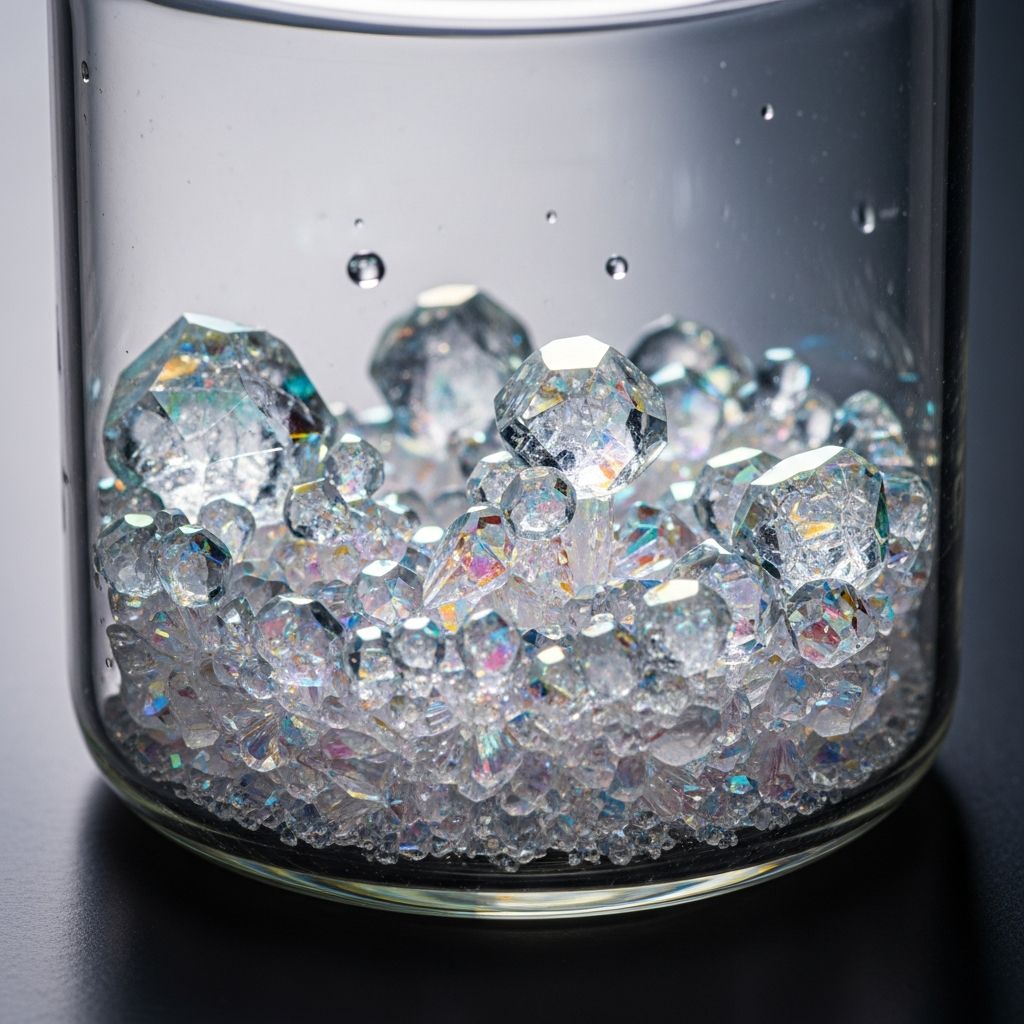
Ammonium phosphate crystals offer a captivating way to explore chemistry through hands-on experimentation. These formations, often resembling natural quartz or vibrant emeralds, emerge from simple solutions of monoammonium phosphate (MAP), a compound commonly found in fertilizers. This guide provides a comprehensive approach to growing these crystals, emphasizing safety, precision, and creativity for enthusiasts of all ages.
Understanding the Science Behind Crystal Formation
Crystals develop when molecules arrange in ordered, repeating patterns during the solidification of a solution. Monoammonium phosphate, chemically known as NH₄H₂PO₄, dissolves readily in hot water, creating a supersaturated solution. As the liquid cools, excess solute precipitates out, forming structured needles or blocks. The process hinges on temperature control: rapid cooling produces fine needles, while gradual cooling yields larger, gem-like structures.
This phenomenon demonstrates key principles of solubility and nucleation. Solubility decreases with temperature drop, prompting crystal seeds to form. Introducing impurities like food coloring or alum alters growth patterns, influencing spike length and color intensity. Educational value abounds, as growers observe supersaturation, polymorphism, and controlled precipitation firsthand.
Gathering Essential Materials for Success
Assembling the right supplies ensures reliable results. Focus on purity and accessibility:
- Monoammonium phosphate (MAP): Source from garden stores or online as white powder fertilizer, also labeled ammonium dihydrogen phosphate. Aim for lab-grade for flawless crystals, though fertilizer grade works well.
- Distilled or boiled water: Enhances purity, minimizing unwanted nucleation from tap impurities.
- Heat-resistant glass container: Jars or bowls withstand heating without leaching chemicals.
- Stirring tools: Spoon or glass rod for dissolving solute.
- Optional enhancers: Food coloring for hues, alum powder (0-1g per 100ml) for elongated spikes, coffee filters for straining.
A basic setup costs under $15 and yields multiple batches. Store MAP in a dry area to prevent clumping.
Step-by-Step Guide to Initial Crystal Development
Begin with seed crystal production to anchor future growth.
- Prepare supersaturated solution: Boil 100ml water to 80-85°C. Stir in 80-85g MAP (about 6 tablespoons) until fully dissolved. Add drops of green food coloring for emerald effect.
- Induce nucleation: Cool slightly, then sprinkle extra MAP powder and stir vigorously for 30 seconds. Tiny crystals will dust the solution.
- Pour and settle: Filter through coffee filter if undissolved bits remain. Transfer to a shallow dish in a draft-free spot.
- Monitor growth: Within hours, seeds form. By day one, select promising ones—thin needles or blocks—using tweezers.
For spikier forms, incorporate alum during dissolution to acidify the mix, promoting sharper protrusions.
Scaling Up: Growing Large, Display-Worthy Crystals
Transition seeds to bigger vessels for impressive specimens.
- Craft new solution: Repeat saturation with 45g MAP per 100ml water, matching prior conditions (color, alum).
- Plant seeds: Allow solution to cool to room temperature before suspending seed via thread over a pencil or placing on the base. Avoid contact with sides.
- Control environment: Insulate with a hot water bath for slow cooling, fostering single large crystals. Room temperature growth takes 3-7 days; refrigeration speeds to needle clusters.
- Harvest carefully: Gently remove when desired size is reached. Rinse with cooled saturated solution, dry on paper towel.
| Growth Method | Temperature Control | Resulting Crystal Type | Time Frame |
|---|---|---|---|
| Fast Cool (Fridge) | Quick drop | Fine needles, clusters | 1-2 days |
| Slow Cool (Insulated) | Gradual | Large single blocks | 5-7 days |
| Alum-Enhanced | Any | Spiky, elongated | 3-5 days |
This table summarizes outcomes based on variables, aiding experimentation.
Advanced Techniques for Unique Variations
Elevate projects with modifications. For glow-in-the-dark effects, select kits with phosphorescent additives, though pure MAP glows faintly under UV after charging. Layer colors by sequential additions or blend dyes for turquoise emeralds. Supersaturate further by evaporating solution slowly for massive clusters.
Purity matters: Lab-grade MAP yields mirror-flat faces; fertilizer versions may show imperfections from additives like limestone, yet still produce beauty. Experiment with pH via vinegar drops for varied habits, always testing small batches.
Troubleshooting Common Challenges
Issues arise but are fixable:
- No growth: Solution not saturated—reheat to dissolve fully or filter solids.
- Cloudy results: Impure water or container; use glass and distilled H₂O.
- Seeds dissolve: Added to hot solution; always cool first.
- Soft crystals: Humidity; dry in low-humidity area or desiccator.
- Uneven spikes: Adjust alum (less for blocks, more for needles).
Patience and iteration refine skills.
Safety Precautions and Best Practices
MAP is food-safe in purity but avoid ingestion post-experiment. Wear gloves handling powders; ventilate during heating. Supervise children, keeping solutions from pets. Dispose by diluting and pouring down drain—phosphate benefits plumbing minimally. Clean gear immediately with soap to prevent residue.
Creative Projects and Educational Applications
Beyond display, integrate into STEM curricula: measure growth rates, graph solubility curves, or compare polymorphs. Craft jewelry with polished pieces or terrariums mimicking geodes. Host crystal-growing contests varying conditions. These activities foster scientific inquiry.
Frequently Asked Questions (FAQs)
Can I use fertilizer with additives like limestone?
Yes, if MAP dominates, but expect minor imperfections; pure chemical preferred for perfection.
How long until crystals appear?
Seeds in hours, significant growth in 1-3 days, large ones in a week.
Glass vs. plastic containers?
Glass ideal for clarity and non-reactivity; plastic may slow growth or leach.
Why are my crystals spiky or blocky?
Spikes from acidity/alum; blocks from neutral, slow cooling.
Can I make them glow?
Yes, with phosphors in kits or UV exposure for faint effect.
Reusing solution?
Strain and resaturate; discard if contaminated.
References
- Grow Monoammonium Phosphate Crystals (MAP) That Resemble… — Science Notes. 2023. https://sciencenotes.org/grow-monoammonium-phosphate-crystals/
- Growing Crystals: How to Make Beautiful Crystals at Home — Crystalverse. 2023. https://crystalverse.com/growing-crystals/
- How to Make Glow-in-the-Dark Crystals – Ammonium Phosphate — YouTube (NurdRage). 2019-05-15. https://www.youtube.com/watch?v=AmNy2VDv-vY
- Turning Ordinary Fertilizer into a Beautiful Crystal — YouTube (The King of Random). 2023. https://www.youtube.com/watch?v=gEYYwtob7yk
- Elementary Crystal Growth Kit — CSUN Department of Science Education. Accessed 2026. http://www.csun.edu/scied/2-chem/growing%20crystals%20kit/crystal_kit.htm

- Integrated M.A. in Applied Linguistics, University of Hyderabad
- 5+ years in editorial, instructional, SEO, and research-based writing
Sneha is a relationships and lifestyle writer with a strong foundation in applied linguistics and certified training in relationship coaching. She brings over five years of writing experience to theskillvault, crafting thoughtful, research-driven content that empowers readers to build healthier relationships, boost emotional well-being, and embrace holistic living. Her writing and insights reflect the belief that beauty, happiness, and wellness…