
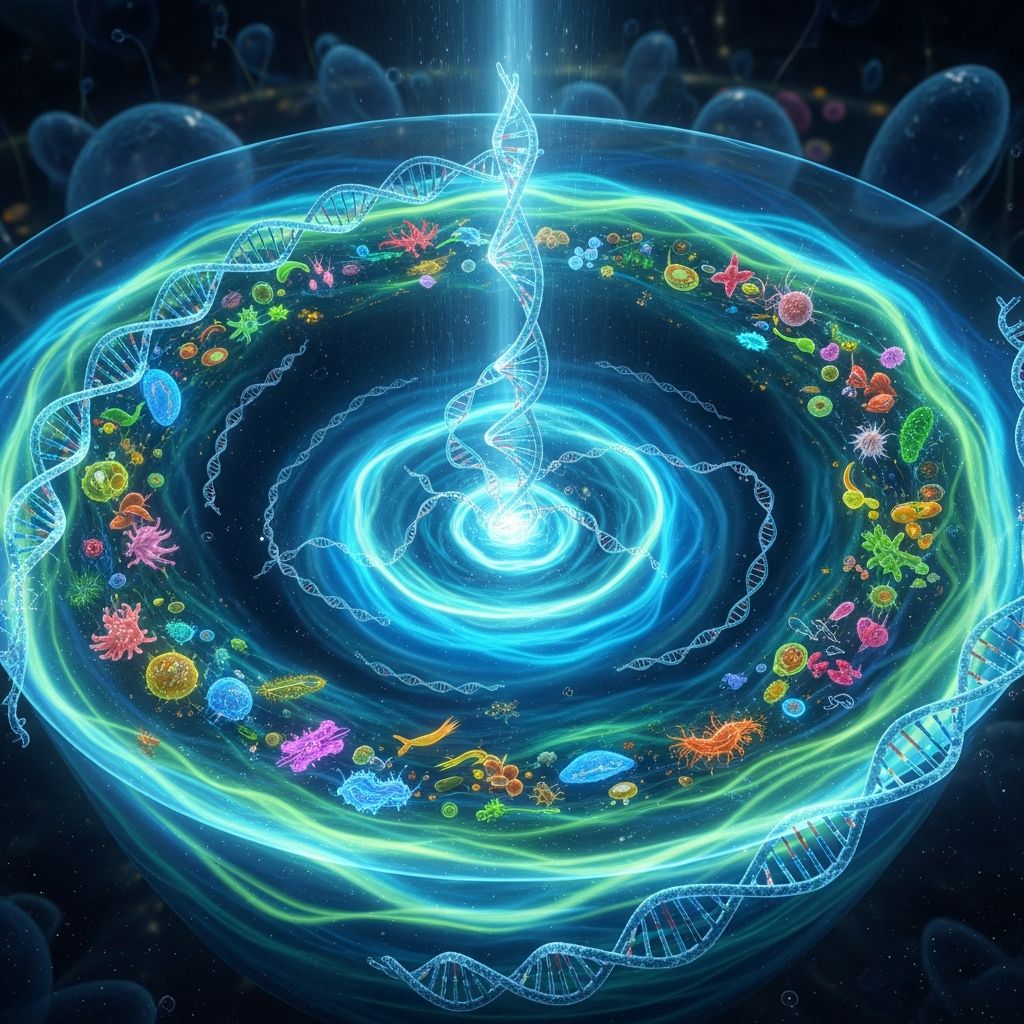
The gene pool represents the complete collection of genetic material available within a breeding population of a species. It encompasses all genes and their variant forms, known as alleles, found among interbreeding individuals. This dynamic reservoir underpins a population’s ability to adapt, evolve, and persist in changing environments.
Defining the Gene Pool in Population Biology
In population genetics, the gene pool is conceptualized as the total genetic diversity present in a group of organisms capable of interbreeding. Unlike the visible traits (phenotypes) of individuals, the gene pool captures the underlying genotypes—the full spectrum of hereditary information passed from one generation to the next. For instance, in a population of wildflowers, the gene pool includes every allele influencing flower color, height, and resistance to drought, regardless of which traits are expressed in any single plant.
This concept, formalized in modern evolutionary theory, emphasizes that gene pools are not static. They fluctuate due to factors like reproduction rates, migration, and selective pressures. A robust gene pool, rich in allelic variety, equips populations to face challenges such as disease outbreaks or climate shifts.
Key Components: Genes, Alleles, and Frequencies
At its core, a gene pool consists of genes—segments of DNA that code for specific traits—and their alleles, which are alternative versions of those genes. Allele frequencies, the relative proportions of each variant within the pool, are crucial metrics. High-frequency alleles dominate inheritance patterns, while rare ones may confer advantages under specific conditions.
- Genes: Functional units of heredity directing protein synthesis and trait expression.
- Alleles: Variants arising from mutations, each potentially influencing phenotype differently (e.g., dominant vs. recessive).
- Frequencies: Proportions that determine the likelihood of alleles appearing in offspring; measured via Hardy-Weinberg equilibrium in stable populations.
Understanding these elements allows scientists to predict evolutionary trajectories. For example, if a beneficial allele increases from 10% to 30% frequency over generations, it signals natural selection at work.
The Critical Role of Genetic Diversity
Genetic diversity, quantified by the breadth of a gene pool, is vital for long-term species survival. Populations with expansive gene pools possess a wider array of traits, enabling rapid adaptation to novel threats. Conversely, narrow gene pools heighten vulnerability to extinction, as seen in cases of inbreeding where harmful recessive alleles accumulate.
Large gene pools foster resilience. Consider coral reefs: diverse genetic pools among fish species help them tolerate warming oceans better than genetically uniform groups. Inbreeding, such as mating between close relatives, shrinks the pool, amplifying risks from environmental stressors or pathogens.
Mechanisms Altering Gene Pool Composition
Gene pools evolve through several processes, each reshaping allele frequencies:
| Mechanism | Description | Impact on Gene Pool |
|---|---|---|
| Mutation | New alleles arise from DNA changes. | Introduces novelty, expanding diversity over time. |
| Natural Selection | Favorable traits increase in frequency. | Shifts pool toward adaptive alleles. |
| Genetic Drift | Random changes in small populations. | Can reduce diversity, especially via bottlenecks. |
| Gene Flow | Migration introduces external alleles. | Increases diversity through mixing. |
| Non-Random Mating | Preferences for certain mates. | Alters frequencies without changing totals. |
These forces interact dynamically. In large populations, drift has minimal effect, but in isolated groups, it can drastically narrow the pool.
Real-World Examples Across Species
Examining gene pools in nature reveals their practical implications. Cheetahs, post a historical bottleneck, exhibit low diversity, leading to high infertility and disease susceptibility. Their gene pool’s uniformity stems from a near-extinction event 10,000 years ago, limiting adaptive potential.
In contrast, humans maintain a relatively diverse global gene pool, bolstered by migration. However, isolated indigenous groups sometimes show reduced diversity, increasing risks for certain genetic disorders. Agricultural crops like corn benefit from deliberate gene pool management, where breeders introduce wild alleles to combat pests.
Island species often display unique pool dynamics. Darwin’s finches on the Galápagos evolved distinct beak shapes via selection on existing variation, demonstrating how even modest pools can drive speciation.
Human Impacts on Natural Gene Pools
Human activities profoundly influence gene pools. Habitat fragmentation isolates populations, promoting drift and inbreeding. Conservation efforts, like those for endangered pandas, involve genetic monitoring to maintain pool health through translocation.
In agriculture, selective breeding narrows crop gene pools, heightening vulnerability to blights—as with the Irish potato famine. Modern solutions include gene banks preserving wild relatives’ diversity for hybrid vigor.
Climate change exacerbates these issues, pressuring pools to evolve faster than natural rates allow. Strategies like assisted migration aim to bolster diversity proactively.
Measuring and Calculating Gene Pool Metrics
Scientists quantify gene pools using tools like allele frequency calculations and heterozygosity indices. The Hardy-Weinberg principle models equilibrium: for a gene with alleles A (p) and a (q), frequencies remain p² + 2pq + q² = 1 absent evolutionary forces.
Effective population size (Ne) estimates breeding contributors, crucial for conservation. Low Ne signals drift risks. Software analyzes genomic data from thousands of loci for precise diversity assessments.
Conservation Strategies for Healthy Gene Pools
Preserving gene pools is central to biodiversity efforts:
- Captive Breeding: Pairs unrelated individuals to maximize diversity.
- Gene Banking: Cryopreserves gametes and tissues.
- Habitat Corridors: Facilitates natural gene flow.
- Genomic Monitoring: Tracks changes via sequencing.
These approaches have revived species like the California condor, whose pool was perilously small.
Gene Pools in Human Evolution and Health
The human gene pool reflects millennia of migration and selection. Out-of-Africa migrations spread diversity, with bottlenecks shaping regional variations like lactose tolerance in pastoralists.
Today, consanguineous marriages in some communities shrink local pools, elevating recessive disease risks. Global interconnectivity, however, homogenizes the pool, potentially buffering against localized threats but introducing new pathogens.
Frequently Asked Questions (FAQs)
What is a gene pool in simple terms?
A gene pool is all the genes and their variants (alleles) shared by a breeding population, forming the genetic foundation for future generations.
Why is a large gene pool beneficial?
It provides more genetic variation, enhancing adaptation to changes and reducing extinction risk from inbreeding or disasters.
How does evolution change a gene pool?
Through selection, drift, mutation, and flow, allele frequencies shift, altering the pool’s composition over generations.
Can humans affect animal gene pools?
Yes, via habitat loss, hunting, or conservation; fragmentation often reduces diversity, while breeding programs restore it.
What happens in a small gene pool?
Inbreeding increases, harmful alleles accumulate, and adaptability declines, as in cheetahs or island species.
Future Directions in Gene Pool Research
Advancing genomics, including CRISPR and whole-genome sequencing, enables precise pool manipulations. Climate models predict diversity needs, guiding interventions. Ethical debates surround editing wild pools, balancing preservation with enhancement.
Ultimately, gene pools embody life’s adaptability. Protecting them ensures ecosystems’ resilience amid accelerating global change.
References
- Gene Pool – Genome.gov — National Human Genome Research Institute. 2023-10-01. https://www.genome.gov/genetics-glossary/Gene-Pool
- Gene Pool | Definition, Changes & Examples — Study.com. 2024-05-15. https://study.com/learn/lesson/gene-pool-concept-examples.html
- Gene Pool Definition & Meaning — Merriam-Webster. 2026-01-20. https://www.merriam-webster.com/dictionary/gene%20pool
- Gene pool – Wikipedia — Wikipedia Contributors. 2026-03-10. https://en.wikipedia.org/wiki/Gene_pool
- Gene pool | Evolution, Diversity & Inheritance — Encyclopædia Britannica. 2025-11-05. https://www.britannica.com/science/gene-pool

Medha Deb is an editor with a master's degree in Applied Linguistics from the University of Hyderabad. She believes that her qualification has helped her develop a deep understanding of language and its application in various contexts. Medha specializes in the areas of beauty, health, sports, and wellness and is committed to ensuring that the content on the website is…