
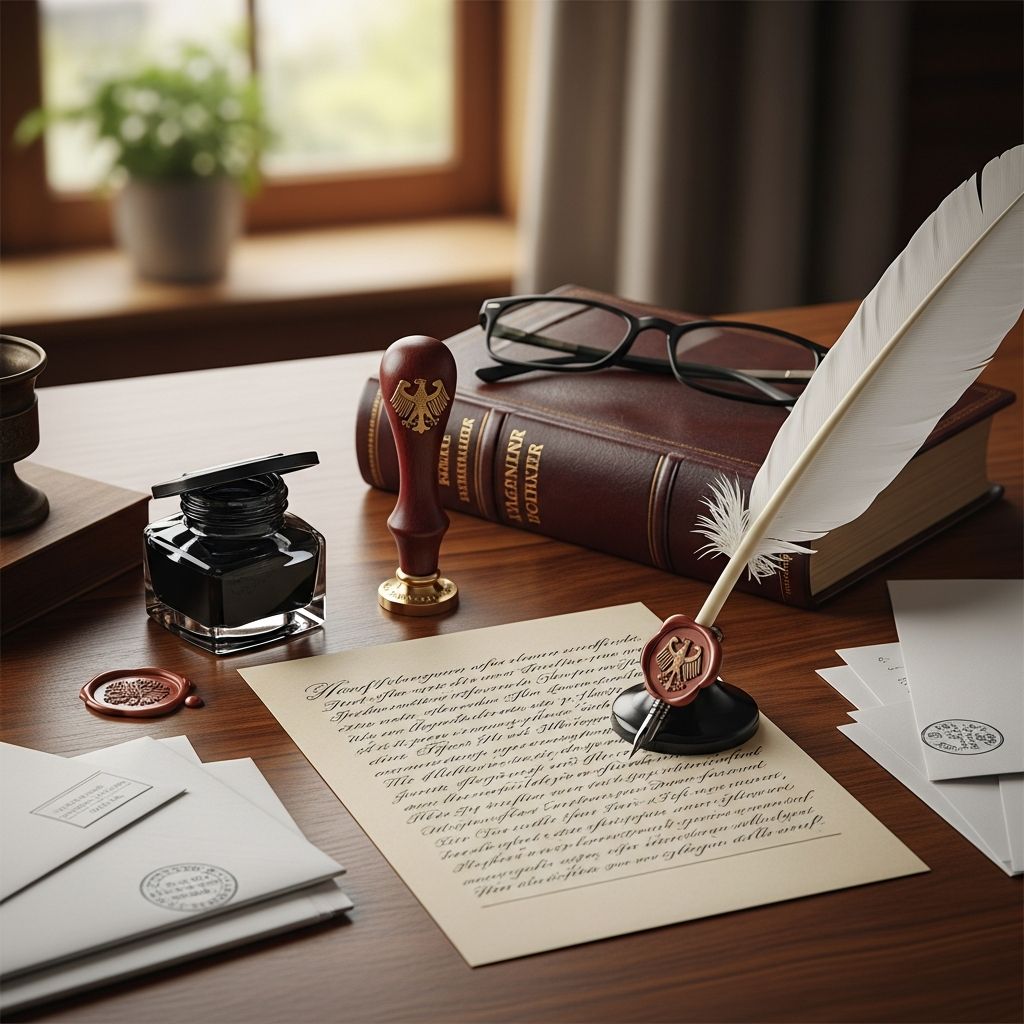
Writing letters in German demands attention to detail, respect for conventions, and an understanding of cultural norms. Whether composing a business inquiry or a note to a friend, knowing the proper format elevates your communication. This guide explores every aspect, ensuring your letters are polished and appropriate.
Understanding the Foundations of German Correspondence
German letter writing follows strict conventions, particularly in formal contexts. Unlike casual emails, traditional letters prioritize structure and politeness. The standard paper size is A4, and alignment is typically left-justified with specific placements for addresses and dates. Digital communication has influenced formats, but core elements remain unchanged.
Key principles include using the formal ‘Sie’ pronoun in professional settings and ‘du’ for close relationships. Capitalization rules apply rigorously, especially for nouns and formal pronouns. Precision in phrasing prevents misunderstandings, as Germans value clarity and directness tempered with courtesy.
Essential Layout for Every German Letter
A well-structured layout is non-negotiable. Begin with your address in the top-left corner, using a smaller font if space is limited. Follow with the recipient’s address on the right or below, including full details like street, postal code, city, and country for international mail.
Place the date on the right side, formatted as ‘Ort, den DD.MM.YYYY’ (e.g., ‘München, den 15.04.2026’). An optional subject line (‘Betreff:’) follows, bolded or underlined for emphasis. Skip a line before the salutation.
| Element | Placement | Example |
|---|---|---|
| Your Address | Top-left | Max Mustermann Musterstraße 1 80331 München Deutschland |
| Recipient’s Address | Top-right or below | Frau Anna Schmidt Beispielweg 5 10115 Berlin |
| Date | Right-aligned | Berlin, den 05.04.2026 |
| Subject | Centered or left, optional | Betreff: Anfrage zu Produkten |
Crafting the Perfect Salutation
The opening greeting sets the tone. For formal letters, use ‘Sehr geehrter Herr [Nachname],’ or ‘Sehr geehrte Frau [Nachname],’ adjusting for titles like ‘Professor’ or ‘Dr.’. If the name is unknown, opt for ‘Sehr geehrte Damen und Herren,’. Less formal yet polite options include ‘Guten Tag, Herr Mustermann,’.
In informal letters to friends or family, ‘Lieber Hans,’ or ‘Liebe Marie,’ suffices, followed by a comma. Always capitalize the pronoun ‘Sie’ in formal contexts.
- Formal Examples: Sehr geehrter Herr Direktor, / Sehr geehrte Frau Professorin,
- Neutral: Sehr geehrte Damen und Herren,
- Informal: Hallo Peter, / Liebe Oma,
Opening Your Letter Effectively
The first paragraph should state your purpose clearly. Formal openings might reference prior contact: ‘Ich beziehe mich auf Ihr Schreiben vom 01.04.2026,’ or ‘Hiermit möchte ich mich erkundigen nach…’. Informal starts are warmer: ‘Ich hoffe, dir geht es gut,’ or ‘Wie geht es dir?’.
Avoid lengthy preambles; Germans appreciate brevity. Link directly to the main topic for efficiency.
Developing the Main Body with Clarity
The core content requires logical paragraphs. Each should advance your message: explain details, provide context, or make requests. Use transitional phrases like ‘Zusätzlich,’ ‘Deshalb,’ or ‘Außerdem,’ for smooth flow.
In formal letters, employ polite requests: ‘Ich würde mich freuen, wenn Sie mir weitere Informationen zusenden könnten,’. For complaints or inquiries, remain factual and solution-oriented. Informal bodies allow contractions and personal anecdotes, but maintain readability.
Aim for 150-250 words in exam or professional contexts. Structure with bullet points if listing items:
- Erstes Anliegen: …
- Zweites Anliegen: …
Closing Your Letter Gracefully
End with a forward-looking statement: ‘Ich freue mich auf Ihre Rückmeldung,’ or informally, ‘Ich höre gerne von dir,’. Then, the valediction.
Formal closings: ‘Mit freundlichen Grüßen,’ (most common), ‘Hochachtungsvoll,’ for high respect, or ‘In Erwartung Ihrer Antwort,’. Informal: ‘Liebe Grüße,’ ‘Viele Grüße,’ or ‘Bis bald,’.
Follow with your full name, handwritten signature if printed, and title if relevant.
| Type | German Phrase | English Equivalent |
|---|---|---|
| Formal Standard | Mit freundlichen Grüßen | Best regards |
| Formal Respectful | Hochachtungsvoll | Yours sincerely |
| Informal Friendly | Herzliche Grüße | Warm regards |
| Casual | Tschüss | Cheers |
Special Types of German Letters
Business Inquiries and Responses
For inquiries: ‘Ich interessiere mich für Ihre Dienstleistungen und bitte um ein Angebot,’. Responses acknowledge: ‘Vielen Dank für Ihre Anfrage vom [Datum]. Hier sind die gewünschten Informationen,’.
Complaint Letters
State facts calmly: ‘Leider musste ich feststellen, dass das Produkt defekt war,’. Propose solutions: ‘Ich bitte um einen Ersatz oder eine Rückerstattung,’.
Personal Letters
Share updates: ‘Hier bei uns ist alles im grünen Bereich. Und bei dir?’ Include questions to encourage reply.
Common Pitfalls to Avoid
Mistakes like incorrect capitalization, mixing ‘du’ and ‘Sie’, or poor alignment can undermine credibility. Proofread for grammar, especially adjective endings and cases. Use tools like Duden for verification, but rely on knowledge for exams.
- Do not use slang in formal letters.
- Ensure dates follow European format (DD.MM.YYYY).
- Hand-sign printed letters.
Adapting for Emails and Modern Use
Emails mirror letter structure but omit addresses if known. Subject lines are crucial: ‘Anfrage zu Ihrem Angebot’. Shorter closings like ‘Beste Grüße,’ suit digital formats. Attachments require mention: ‘Im Anhang finden Sie…’
Frequently Asked Questions (FAQs)
What is the standard font for German letters?
Use Arial, Times New Roman, or similar in 11-12 pt size for professionalism. Avoid decorative fonts.
How do I address a married couple formally?
‘Sehr geehrte Frau und Herr Müller,’ or ‘Sehr geehrte Eheleute Müller,’.
Can I use abbreviations in formal German letters?
Minimize them; spell out titles and use full forms like ‘Straße’ instead of ‘Str.’.
What’s the difference between ‘Mit freundlichen Grüßen’ and ‘Mit besten Grüßen’?
‘Mit freundlichen Grüßen’ is neutral-professional; ‘Mit besten Grüßen’ adds warmth.
How long should a formal letter be?
Typically 150-300 words, concise yet comprehensive.
Practice Tips for Proficiency
Study model letters from Goethe-Institut resources. Write daily, varying types. Seek feedback from native speakers. For certifications like B1, focus on task-specific phrases.
Word count expands with examples: Consider a full formal inquiry letter. Your address: [details]. Recipient: [details]. Date: Berlin, den 05.04.2026. Betreff: Information zu Kursen. Sehr geehrte Damen und Herren, ich schreibe Ihnen, um mich über Ihre Deutschkurse zu informieren. Könnten Sie mir bitte Details zu Terminen, Kosten und Voraussetzungen zusenden? Vielen Dank im Voraus. Mit freundlichen Grüßen, [Name].
Informal: Liebe Anna, wie geht es dir? Ich habe kürzlich München besucht… Schreib mir bald! Viele Grüße, Max.
Mastering these elements builds confidence. Practice consistently for natural fluency.
References
- How to write a letter in German — Lingoda. 2023. https://www.lingoda.com/blog/en/how-to-write-a-letter-in-german/
- How to start, write and end a letter in German — Berlitz. 2023. https://www.berlitz.com/blog/how-to-write-a-letter-german
- A Guide to Writing Formal Letters or Emails in German — Olesen Tuition. 2023. https://www.olesentuition.co.uk/single-post/writing-formal-letters-or-emails-in-german
- Guide To Writing Letters in German — Scribd (B1 Exam Guide). 2024. https://www.scribd.com/document/851848911/guide-to-writing-letters-in-German
- Write a Letter in German — Linguanaut. 2023. https://www.linguanaut.com/learn-german/write-a-letter-in-german.php

- Integrated M.A. in Applied Linguistics, University of Hyderabad
- 5+ years in editorial, instructional, SEO, and research-based writing
Sneha is a relationships and lifestyle writer with a strong foundation in applied linguistics and certified training in relationship coaching. She brings over five years of writing experience to theskillvault, crafting thoughtful, research-driven content that empowers readers to build healthier relationships, boost emotional well-being, and embrace holistic living. Her writing and insights reflect the belief that beauty, happiness, and wellness…