
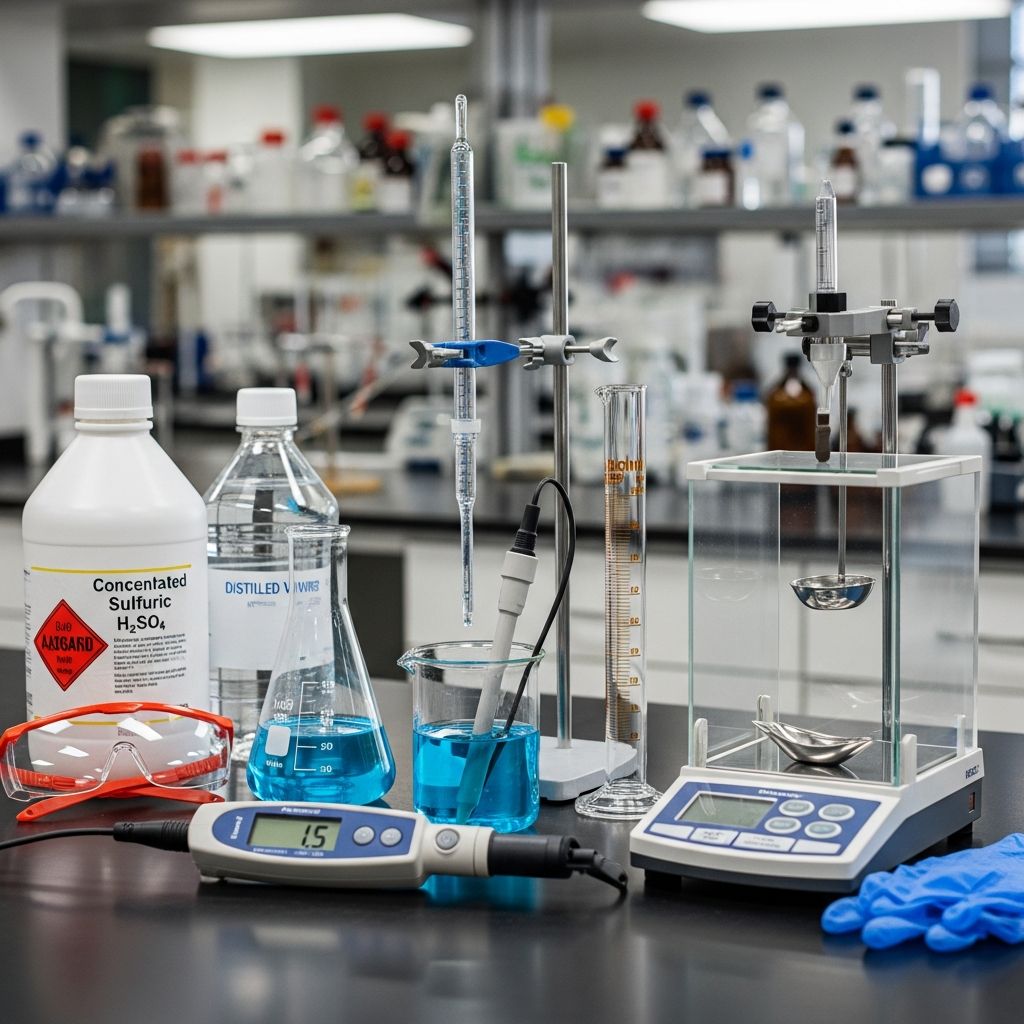
Fundamentals of Acid Solution Preparation
Preparing acid solutions represents one of the most fundamental yet critical skills in chemistry laboratories. Whether working in a teaching environment, research facility, or industrial setting, the ability to create accurate and safe acid solutions is essential for reliable experimental results. Understanding the theoretical foundations and practical techniques enables chemists to work efficiently while maintaining the highest safety standards.
The process of creating acid solutions involves several interconnected steps: selecting appropriate starting materials, performing accurate calculations, gathering necessary equipment, following precise procedures, and implementing rigorous safety measures. Each stage demands attention to detail and adherence to established protocols to ensure both accuracy and safety.
Calculation Methods for Solution Concentrations
Before any physical preparation begins, chemists must determine the exact quantities of acid and solvent needed to achieve the desired concentration. This calculation phase is crucial because errors here translate directly into incorrect final solutions.
The dilution formula provides the mathematical foundation for most acid preparation work: M₁V₁ = M₂V₂. In this equation, M₁ represents the initial molarity of the concentrated acid stock solution, V₁ is the volume of that stock solution needed, M₂ is the desired final molarity, and V₂ is the desired final volume. By rearranging this formula, chemists can solve for any unknown variable.
For example, if preparing a 0.5 M hydrochloric acid solution from a 6 M stock solution in a final volume of 500 mL, the calculation would determine that approximately 41.7 mL of the concentrated acid is required. This precision ensures that the resulting solution has the exact concentration specified for the experiment.
An alternative approach involves calculating from solid materials using molar mass. This method requires determining the molar mass of the compound, then calculating the mass needed based on the desired molarity and final volume. The formula mass multiplied by molarity and volume, divided by 1000, yields the grams of pure substance required.
Selecting Appropriate Starting Materials
The choice of starting material significantly impacts both the preparation process and safety considerations. Chemists should always purchase the most dilute acid concentration that meets their experimental requirements, as dilute solutions are substantially safer and easier to handle and store than concentrated acids.
Common concentrated acids used for preparing working solutions include:
- Hydrochloric acid (approximately 12 M or 36% weight/weight)
- Sulfuric acid (approximately 18 M or 98% weight/weight)
- Acetic acid glacial form (approximately 17.4 M or 99.8% weight/weight)
- Nitric acid (typically 16 M or 70% weight/weight)
Each concentrated acid presents unique hazards and handling requirements. Concentrated sulfuric acid is particularly exothermic when mixed with water, requiring special precautions. Glacial acetic acid can cause severe burns and releases toxic vapors. Understanding these properties before beginning preparation prevents dangerous accidents.
Essential Laboratory Equipment and Glassware
Proper preparation requires gathering appropriate equipment before beginning work. The specific glassware needed depends on the acid type and desired precision level, but certain items are universally necessary.
Standard equipment includes:
- Volumetric flasks in the appropriate size (typically 500 mL or 1 L for standard preparations)
- Graduated cylinders for measuring concentrated acid volumes
- Beakers for initial mixing or cooling
- Glass stirring rods for mixing and temperature monitoring
- Funnels to safely transfer acids
- Pipettes or burettes for precise small-volume measurements
- Appropriate safety equipment including gloves, goggles, and lab coat
All glassware should be clean and dry before beginning work. Any residual contaminants can affect the final solution’s concentration or introduce unwanted chemical reactions. For particularly sensitive applications requiring standard solutions, volumetric flasks provide the accuracy needed for precise concentration achievement.
The Critical Safety Principle: Always Add Acid to Water
This foundational safety rule cannot be overstated: always add acid to water, never the reverse. When concentrated acids contact water, an extremely exothermic reaction occurs that releases enormous amounts of heat rapidly. Adding acid to water allows the water to act as a heat sink, absorbing and distributing this energy gradually. The larger volume of water prevents dangerous temperature spikes and violent boiling.
Reversing this procedure—adding water to concentrated acid—creates a dangerous situation where water droplets contact the acid surface, instantly vaporize, and create an explosive reaction that can splatter concentrated acid violently. This scenario has caused severe burns and permanent injuries.
Following this protocol requires careful technique: measure the concentrated acid into a graduated cylinder, position the receiving flask on a stable surface partially filled with distilled or deionized water, and use a funnel to pour the acid slowly into the flask while stirring continuously. The stirring motion helps distribute heat evenly and prevents local temperature spikes.
Step-by-Step Preparation Procedure
Once calculations are complete and equipment is gathered, the actual preparation follows a systematic process designed to maximize both accuracy and safety.
Step 1: Prepare the Workspace
Conduct all acid preparations in a properly functioning chemical hood or fume cabinet. Ensure adequate ventilation to remove acid vapors. Position all equipment within easy reach and verify that the workspace is clean and free of unnecessary materials that might be damaged by acid splashing.
Step 2: Fill the Volumetric Flask Partially
Fill the volumetric flask approximately halfway with distilled or deionized water. Using purified water prevents introduction of mineral contaminants that would alter the final solution’s properties. Allow the water to stabilize at room temperature before proceeding.
Step 3: Measure the Concentrated Acid
Using a graduated cylinder, carefully measure the calculated volume of concentrated acid. Pour this acid slowly into the water-filled volumetric flask through a funnel while stirring continuously with a glass rod. This slow addition allows heat dissipation and prevents dangerous splattering.
Step 4: Allow Cooling
After all acid has been added, allow the solution to cool to room temperature. This is not optional—attempting to dilute a hot solution to the mark produces inaccurate results since the liquid volume changes as it cools. Place the flask in a cool water bath if rapid cooling is needed for concentrated strong acids like sulfuric acid.
Step 5: Dilute to Final Volume
Once the solution has returned to room temperature, add distilled water until the liquid level approaches the volumetric flask’s calibration mark. Use a dropper or pipette for final adjustments to reach the exact mark accurately. The bottom of the meniscus should align precisely with the mark when viewed at eye level.
Step 6: Mix Thoroughly
Insert and secure the stopper firmly on the volumetric flask. Invert the flask multiple times—at least 10 to 15 inversions—to ensure complete mixing of the solution throughout. This action distributes the acid uniformly and creates a homogeneous solution.
Step 7: Label and Store
Apply a clear, permanent label to the flask indicating the acid type, concentration (molarity), preparation date, and preparer’s initials. Store the solution in an appropriate location following institutional storage guidelines. Many acids require cool, dark storage away from bases and reactive substances.
Common Acid Solutions and Preparation Quantities
| Acid Type | Stock Concentration | Volume for 0.1 M (1 L) | Volume for 1 M (1 L) | Volume for 3-6 M (1 L) |
|---|---|---|---|---|
| Hydrochloric Acid | 12.1 M | 8.3 mL | 83 mL | 248-496 mL |
| Sulfuric Acid | 18.1 M | 5.6 mL | 56 mL | N/A |
| Acetic Acid (Glacial) | 17.4 M | 5.7 mL | 57 mL | N/A |
These reference values provide starting points for common preparations, though actual concentrated acid molarity may vary slightly between manufacturers and batches. Always verify the molarity printed on the concentrated acid container before calculating required volumes.
Temperature Considerations and Heat Management
Diluting concentrated acids generates significant heat that requires careful management. Concentrated sulfuric acid is particularly exothermic—adding it to water can cause violent boiling if precautions are not taken. Some procedures recommend submerging the mixing vessel in an ice bath before beginning, especially when preparing very concentrated solutions from glacial acetic acid or concentrated sulfuric acid.
Monitoring temperature with a thermometer inserted into the flask helps ensure safe operation. If the solution becomes too hot to comfortably touch the flask exterior, cooling is needed before proceeding. Never add more water to a hot solution or move a hot flask suddenly, as thermal shock can crack glassware.
Safety Protocols and Personal Protective Equipment
Working with acids demands consistent adherence to safety practices. All personnel must wear appropriate personal protective equipment including chemical-resistant gloves, impact-resistant goggles, and a protective lab coat or apron. Long pants and closed-toe shoes protect against accidental splashes.
Always work in a functioning fume hood when handling concentrated acids to minimize vapor inhalation. Know the location of emergency equipment including eyewash stations, safety showers, and first aid kits. Have neutralizing agents appropriate for each acid type available in the work area.
Never work alone when handling concentrated acids, especially those with extreme exothermic properties. A colleague should be present to assist in case of emergency. Maintain focus on the task—distractions while handling acids increase accident risk significantly.
Quality Assessment and Contamination Prevention
Once preparation is complete, inspect the solution for signs of problems. Discard any solution showing discoloration, precipitation, or cloudiness, as these indicate contamination or unwanted chemical reactions. Fresh solutions should appear clear and have the expected color for that particular acid.
Using proper water quality throughout preparation prevents many contamination issues. Deionized or distilled water removes mineral ions that could interfere with experiments. Some applications require ultra-pure water from specialized purification systems.
Store prepared solutions in appropriate containers made from materials compatible with the acid. Glass containers with plastic caps work well for most common acids, though some strong acids may require special storage vessels. Keep solutions tightly sealed to prevent water evaporation and atmospheric contamination.
Frequently Asked Questions
Q: Why is deionized water necessary for acid preparation?
A: Deionized water removes dissolved minerals and ions that could contaminate the final solution or interfere with experimental results. Tap water contains various dissolved salts that would alter the solution’s properties and compromise accuracy.
Q: Can I prepare acid solutions at my desk instead of using a fume hood?
A: No. Concentrated acids release hazardous vapors that can damage lungs and respiratory tissue. A functioning fume hood captures and exhausts these vapors safely. Workspace location directly impacts worker safety and regulatory compliance.
Q: What should I do if concentrated acid splashes on my skin?
A: Immediately rinse the affected area with large volumes of water for at least 15 minutes under a safety shower or eyewash station. Remove contaminated clothing and seek medical attention. Acid burns continue causing damage until neutralized and cooled.
Q: How long do prepared acid solutions remain usable?
A: Storage duration depends on the acid type and storage conditions. Most properly stored solutions remain acceptable for several months to years. However, regularly check for contamination or changes in appearance. Date all solutions at preparation to track age.
Q: Can I prepare acid solutions using a different dilution formula than M₁V₁ = M₂V₂?
A: This formula derives from conservation of moles and works universally for dilution calculations. Alternative approaches (such as calculating from mass) achieve the same results through different mathematical paths, but the fundamental principle remains constant.
Q: Why must sulfuric acid solutions cool completely before adjusting to final volume?
A: Thermal expansion increases the solution’s volume while hot. Marking the final volume before cooling results in a more dilute solution than intended. Cooling allows volume to stabilize before final adjustment, ensuring accurate concentration.
References
- How To Prepare a Dilute Acid Solution — Flinn Scientific. https://www.youtube.com/watch?v=xeA7DRarq6I
- Solution Preparation Guide — Carolina Biological Supply Company. https://knowledge.carolina.com/discipline/physical-science/ap-chemistry/solution-preparation-guide/
- Laboratory Solution Preparation — Flinn Scientific. https://www.flinnsci.com/globalassets/flinn-scientific/all-free-pdfs/dcat016.pdf
- Making stock acid and base solutions — Protocols Online. https://www.protocolsonline.com/recipes/stock-solutions/molarities-and-specific-gravities-of-concentrated-acids-and-bases/
- 2.5: Preparing Solutions — Chemistry LibreTexts. https://chem.libretexts.org/Bookshelves/Analytical_Chemistry/Analytical_Chemistry_2.1_(Harvey)/02:_Basic_Tools_of_Analytical_Chemistry/2.05:_Preparing_Solutions

- Integrated M.A. in Applied Linguistics, University of Hyderabad
- 5+ years in editorial, instructional, SEO, and research-based writing
Sneha is a relationships and lifestyle writer with a strong foundation in applied linguistics and certified training in relationship coaching. She brings over five years of writing experience to theskillvault, crafting thoughtful, research-driven content that empowers readers to build healthier relationships, boost emotional well-being, and embrace holistic living. Her writing and insights reflect the belief that beauty, happiness, and wellness…