
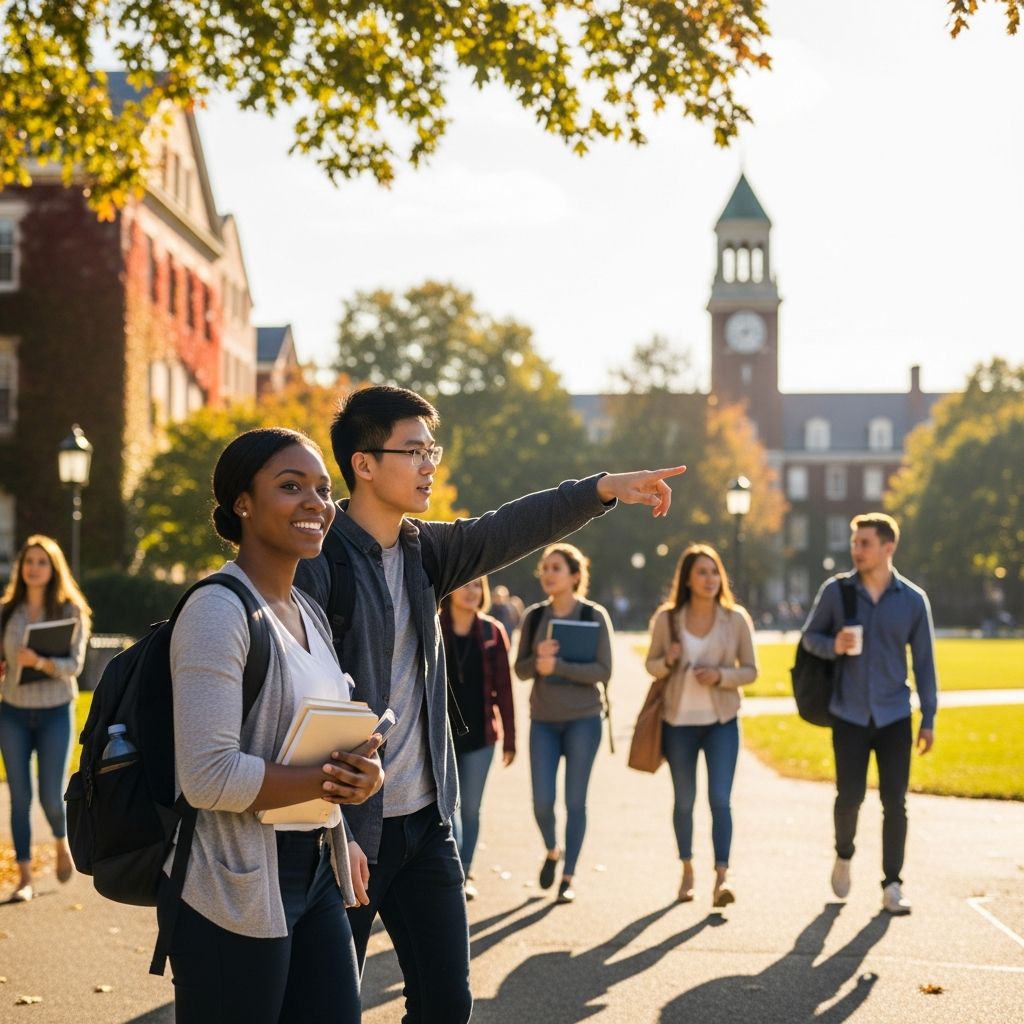
The American higher education system offers an expansive range of institutional options, each designed to serve different student populations and academic objectives. Rather than a single pathway to tertiary education, prospective students encounter a multifaceted ecosystem of colleges and universities, each operating under distinct philosophical frameworks, funding models, and educational missions. Understanding these differences enables students to make informed decisions aligned with their personal aspirations, financial circumstances, and intellectual interests. This guide provides a comprehensive overview of the major categories of higher education institutions operating across the United States.
The Foundation: Understanding Institutional Categories
Higher education institutions in America can be organized through multiple classification systems, each emphasizing different institutional characteristics. The most fundamental distinction separates publicly funded institutions from privately operated organizations. Beyond this primary division, institutions further differentiate based on their academic focus, degree offerings, student enrollment patterns, and organizational missions. Some colleges emphasize general education across multiple disciplines, while others concentrate on specialized training within particular fields. Geographic service areas, religious affiliations, and historical missions also influence institutional identity and operational priorities. This layered classification system reflects the intentional diversity built into American higher education policy.
Public Universities: Serving Broader Populations
Public universities represent cornerstone institutions within American higher education, receiving substantial funding from state governments and operating with missions to serve their respective populations. These institutions typically enroll large student bodies spanning multiple degree levels, from undergraduate through doctoral programs. State legislations generally mandate that public universities maintain accessible tuition rates and admit qualified state residents, making these institutions primary gateways to bachelor’s degrees for millions of Americans. Public universities emphasize research alongside teaching, with many faculty members contributing to scientific advancement, technological innovation, and scholarly knowledge production. Large lecture halls characterize introductory courses, though upper-level seminars often provide more intimate learning environments. The research mission distinguishes these institutions from purely teaching-focused alternatives, creating environments where undergraduates may participate in faculty-mentored investigations.
Private Universities: Selective and Comprehensive
Private universities operate independently from government control, relying on endowment income, tuition revenue, and philanthropic support. These institutions frequently feature smaller undergraduate enrollments compared to their public counterparts, permitting more selective admissions standards. Among prestigious private universities, elite institutions like Harvard, Yale, Princeton, Stanford, and MIT dominate national rankings, offering extensive resources and network opportunities. However, private universities exist across a spectrum of selectivity and resource availability; not all private institutions maintain highly restrictive admissions policies. Many private universities provide comprehensive offerings spanning liberal arts, professional training, and research opportunities, creating diverse intellectual communities. The private funding model sometimes permits greater curricular flexibility and rapid program innovation compared to larger public bureaucracies.
Liberal Arts Institutions: Depth Through Breadth
Liberal arts colleges occupy a distinct institutional niche emphasizing undergraduate education across humanities, natural sciences, and social sciences disciplines. These predominantly private institutions prioritize discussion-based learning environments, close faculty relationships, and comprehensive general education requirements. Students typically select major fields of study while concurrently taking courses across multiple knowledge domains, fostering intellectual flexibility and cross-disciplinary thinking. The relatively small campus populations—often numbering between 1,000 and 3,000 students—create tight-knit communities where faculty members regularly interact with undergraduates outside classroom settings. This institutional model deliberately constrains research enterprises and graduate programming to maintain undergraduate focus. Liberal arts colleges attract intellectually curious students seeking collaborative learning communities and mentored educational experiences rather than large lecture-based instruction.
Community Colleges: Access and Affordability
Community colleges serve as critical access points within American higher education, offering affordable educational pathways to diverse student populations. These two-year public institutions provide associate degree programs and certificate training across vocational and academic disciplines. Tuition costs at community colleges typically represent a fraction of four-year institution charges, enabling first-generation and economically disadvantaged students to begin collegiate education. Many students complete introductory coursework at community colleges before transferring credits to bachelor’s degree programs, substantially reducing overall degree costs. Community colleges emphasize teaching over research, maintaining close connections with local labor markets and employer needs. These institutions often serve non-traditional student populations, including adult learners balancing education with employment and family responsibilities, through flexible scheduling and supportive services.
Specialized and Career-Focused Institutions
Beyond the broad categories of universities and liberal arts colleges, specialized institutions concentrate on particular academic or professional domains. Engineering-focused colleges, business schools, art and design academies, music conservatories, and technical institutes each maintain specialized curricula aligned with specific career preparation. Vocational and technical colleges provide certificate and diploma programs in healthcare, skilled trades, information technology, and other applied fields. These institutions intentionally narrow their academic scope to ensure deep expertise development and direct industry alignment. Students entering these institutions typically possess clear professional objectives and value career-specific training over general education breadth.
Mission-Driven and Identity-Focused Institutions
A distinctive feature of American higher education involves institutions organized around particular missions or identity commitments. Historically Black colleges and universities (HBCUs) were established to provide educational access to African American students during periods of systemic exclusion from predominantly white institutions. These institutions maintain ongoing commitments to serving Black student populations while contributing significantly to American scholarly and cultural production. Women’s colleges continue missions emphasizing female student education and leadership development in supportive environments. Religious colleges operate under theological frameworks, incorporating faith traditions into academic and community life. Military service academies prepare officers for armed forces careers, requiring significant service commitments following graduation. These mission-focused institutions attract students seeking communities aligned with particular values or identities.
For-Profit Institutions and Alternative Models
For-profit colleges operate as commercial enterprises designed to generate investor returns alongside educational programming. These institutions typically offer career-training programs and professional certifications spanning relatively short timeframes. While providing valuable options for working adults seeking credential updates, for-profit institutions generally carry substantially higher tuition costs than comparable public alternatives and warrant careful evaluation regarding accreditation, employment outcomes, and debt implications. The for-profit sector expanded dramatically in recent decades but faces ongoing scrutiny regarding student debt burdens and workforce preparation effectiveness.
Research Universities and Graduate Education
Research universities maintain comprehensive missions encompassing undergraduate instruction, graduate education, and scholarly investigation. These large institutions employ faculty whose primary responsibilities often emphasize research productivity, with teaching representing a secondary obligation. Doctoral programs and advanced training in professional fields like medicine, law, engineering, and business concentrate at research universities. Undergraduate students at research universities access sophisticated laboratories, computing facilities, and specialized libraries alongside potential research participation opportunities. The research intensity creates intellectual environments where knowledge generation constitutes core institutional identity.
Comparative Institutional Features
| Institution Type | Primary Focus | Typical Enrollment | Degree Levels | Cost Structure |
|---|---|---|---|---|
| Public Universities | Teaching and Research | Large (15,000+) | Undergraduate through Doctorate | Moderate (state-subsidized) |
| Private Universities | Teaching and Research | Variable | Undergraduate through Doctorate | High |
| Liberal Arts Colleges | Undergraduate Teaching | Small (1,000-3,000) | Primarily Undergraduate | High (private) |
| Community Colleges | Access and Career Training | Variable | Associate and Certificates | Low (subsidized) |
| Specialized Institutes | Field-Specific Training | Varies by Institution | Certificates through Doctorate | Variable |
Selecting an Appropriate Institution
Choosing among institutional options requires systematic self-assessment encompassing academic interests, learning style preferences, financial capacity, and career objectives. Students should evaluate whether they thrive in large lecture-based environments or prefer intimate discussion seminars. Geographic preferences, residential versus commuter options, and campus culture significantly influence satisfaction and retention. Financial considerations extend beyond tuition to include living costs, textbook expenses, and available financial aid packages. Students should investigate institutional strengths within their intended major fields, faculty research interests, internship partnerships, and alumni career outcomes. Campus visits enable firsthand assessment of community dynamics and environmental fit. Prospective students benefit from consulting multiple information sources including college guidebooks, institutional websites, admission counselors, and current student testimonials.
Transitional Pathways and Transfer Systems
American higher education increasingly emphasizes flexible pathways enabling students to begin at one institution and complete degrees at others. Community college transfer agreements with four-year universities facilitate cost-effective educational progression, permitting students to complete general education requirements affordably before concentrating on major-specific coursework. Some institutions specialize in serving transfer students, maintaining streamlined processes and tailored support services. This flexibility particularly benefits adult learners returning to education after work experience or family responsibilities, as well as students whose circumstances change during collegiate study. Transfer pathways fundamentally democratize access to bachelor’s degrees by reducing financial barriers to degree completion.
Frequently Asked Questions
Q: What distinguishes public universities from private universities?
A: Public universities receive state government funding and maintain missions to serve state residents at affordable costs, while private universities rely on endowment income and tuition revenue, generally charging higher costs with more selective admissions policies.
Q: Are liberal arts colleges only for wealthy students?
A: While many liberal arts colleges charge high tuition, numerous institutions offer substantial financial aid packages, and some maintain relatively affordable costs. Students should investigate individual institutional aid policies rather than assuming prohibitive expenses.
Q: Can community college credits transfer to four-year institutions?
A: Yes, articulation agreements between community colleges and four-year universities enable credit transfer, allowing students to reduce overall degree costs by completing general education requirements at community colleges before transferring.
Q: What is the primary advantage of specialized institutes?
A: Specialized institutions provide concentrated expertise in particular fields like engineering, business, or arts, enabling deep skill development and direct industry connections for students with clear professional objectives.
Q: Do all research universities emphasize research equally across all departments?
A: Research intensity varies significantly across departments within research universities; some areas like engineering or sciences maintain robust research enterprises while others emphasize teaching alongside limited research components.
Q: What financial considerations should influence institutional choice?
A: Students should compare total cost of attendance including tuition, room and board, books, and fees; investigate available financial aid packages; and consider long-term debt implications, not merely published sticker prices.
Emerging Trends in Higher Education
Contemporary American higher education experiences significant transformations affecting institutional operations and student experiences. Online and hybrid educational delivery expanded dramatically, making formal degree programs increasingly accessible to geographically dispersed and time-constrained learners. Competency-based education models emphasizing skill acquisition rather than seat time gain adoption at various institutional types. Growing scrutiny of return on educational investment creates pressure for transparent employment outcome documentation and affordability improvement. Interdisciplinary programming increasingly crosses traditional departmental boundaries, reflecting contemporary workplace demands for versatile professionals. These evolving landscapes suggest that institutional distinctions may continue shifting, with categories becoming increasingly fluid and specialized offerings proliferating across traditional institutional boundaries.
References
- Types of Colleges in the U.S. — McMillan Education. 2024. https://www.mcmillaneducation.com/blog/types-of-colleges-in-the-us/
- Guide to Types of University in the US — TopUniversities. 2025. https://www.topuniversities.com/student-info/choosing-university/guide-types-university-us
- Breaking Down the Different Types of Colleges — MEFA (Massachusetts Educational Financing Authority). 2024. https://www.mefa.org/article/breaking-down-the-different-types-of-colleges/
- A Guide to Different Types of Higher Education Institutions in the U.S. — BAU (Bahçeşehir University). 2024. https://bau.edu/blog/types-of-higher-education-institutions/
- Types of Colleges — Coalition for College Access. 2024. https://www.coalitionforcollegeaccess.org/mycoalition-counselor-all/typesofcolleges
- A Comprehensive Guide to Different Types of Colleges in the U.S. — IvyWise. 2024. https://www.ivywise.com/blog/types-of-colleges/
- Service Academies Overview — U.S. Military Education Services. 2024. https://www.mefa.org/article/breaking-down-the-different-types-of-colleges/

- Integrated M.A. in Applied Linguistics, University of Hyderabad
- 5+ years in editorial, instructional, SEO, and research-based writing
Sneha is a relationships and lifestyle writer with a strong foundation in applied linguistics and certified training in relationship coaching. She brings over five years of writing experience to theskillvault, crafting thoughtful, research-driven content that empowers readers to build healthier relationships, boost emotional well-being, and embrace holistic living. Her writing and insights reflect the belief that beauty, happiness, and wellness…