
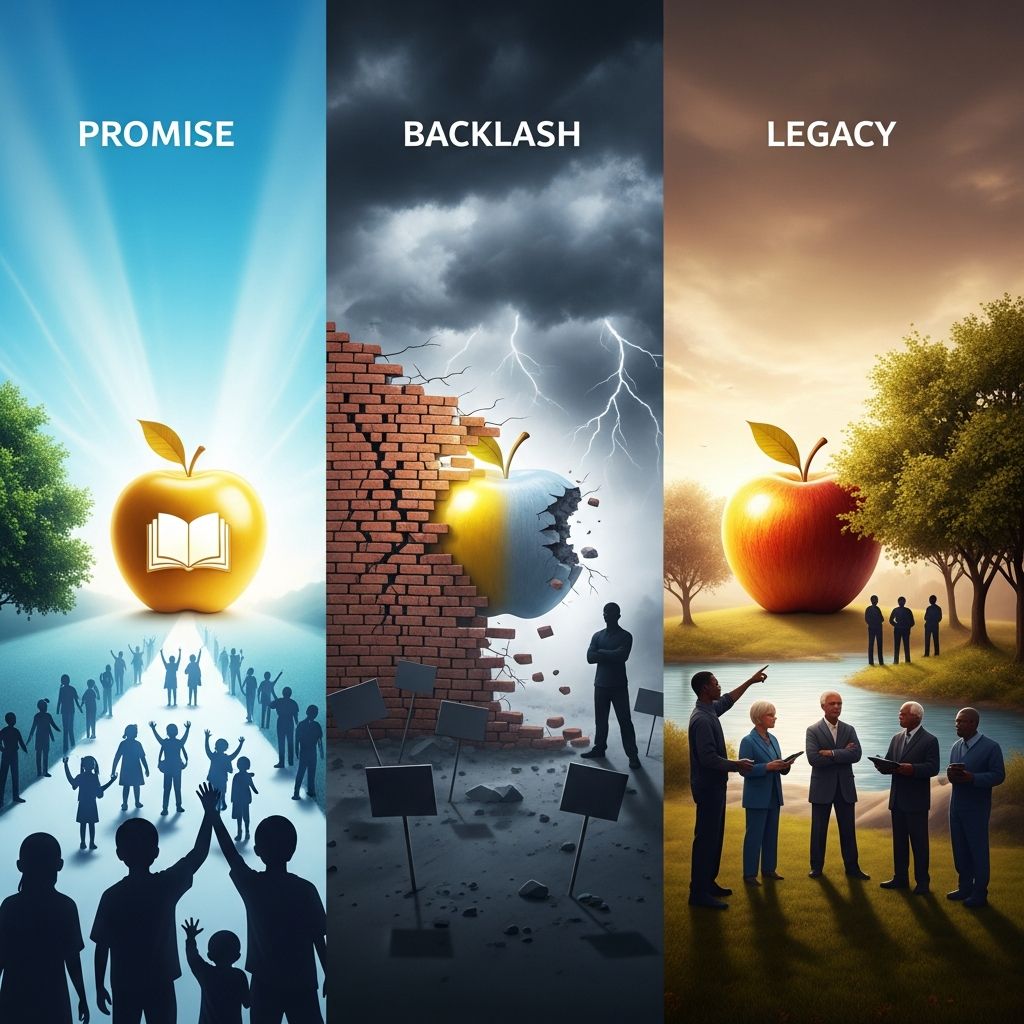
The Common Core State Standards emerged as a bold attempt to unify and elevate educational expectations across the United States. Initiated by state leaders in 2009, these benchmarks aimed to ensure students were equipped with essential skills in English language arts and mathematics for college and careers. Within a few years, 45 states and the District of Columbia adopted them, signaling widespread optimism for consistent, rigorous learning goals. Yet, this initiative quickly ignited one of the most divisive debates in modern education, pitting advocates against critics from diverse ideological backgrounds.
Genesis of a National Educational Framework
The push for Common Core arose amid concerns over varying state standards that often fell short of preparing students for a global economy. Governors and state school chiefs, through organizations like the National Governors Association (NGA) and the Council of Chief State School Officers (CCSSO), collaborated with experts to craft these standards. The goal was clear: define what students should master at each grade level without prescribing specific teaching methods or curricula.
Funding incentives from the federal Race to the Top program encouraged adoption, but proponents emphasized its state-led nature. This voluntary approach addressed post-No Child Left Behind (NCLB) frustrations, where inconsistent state tests failed to close achievement gaps despite mandates for annual assessments. By focusing on critical thinking, problem-solving, and evidence-based reading, Common Core sought to shift from rote memorization to deeper comprehension.
Core Components: What Students Are Expected to Learn
In mathematics, the standards emphasize conceptual understanding over procedural fluency alone. Students learn to justify solutions and apply math in real-world contexts, with a structured progression from basic arithmetic to algebra and beyond. English language arts standards prioritize literacy across disciplines, requiring students to analyze complex texts, cite evidence, and produce coherent arguments.
| Subject | Traditional Approach | Common Core Focus |
|---|---|---|
| Mathematics | Memorize procedures | Understand why procedures work |
| English Language Arts | Summary and opinion | Text-based evidence and analysis |
| Both | Isolated skills | Coherent progression across grades |
These shifts promised to build college readiness, but implementation revealed gaps between ambition and reality.
The Surge of Political and Public Resistance
Adoption was swift, but backlash was fiercer. Conservatives decried it as federal overreach, labeling it “Obamacore” and fearing erosion of local control. Liberals and educators criticized the ties to high-stakes testing, arguing it exacerbated NCLB’s failures by linking scores to teacher evaluations without adequate support. Parents, overwhelmed by homework complexity, formed opt-out movements; in New York alone, 35,000 students refused tests in one year.
- Federal Involvement Concerns: Despite state origins, Race to the Top grants (just 8% of scoring criteria) fueled perceptions of coercion.
- Testing Overload: New assessments like PARCC and Smarter Balanced were costlier and more rigorous, prompting states to withdraw.
- Teacher Pushback: Unions like NEA and AFT supported standards but sought implementation delays amid budget cuts eliminating 300,000 positions.
By 2014, states like Indiana, South Carolina, and Oklahoma repealed or paused Common Core, with others following suit.
Educator Perspectives: Support Amid Skepticism
Many teachers appreciated the clarity and rigor, viewing Common Core as a tool to foster equity. However, critics highlighted developmental mismatches, such as advanced math in early grades or “close reading” that sidelined student background knowledge. Without professional development or resources, implementation felt like a top-down mandate from non-educators—politicians and executives.
Bill Honig, former California superintendent, warned of “hijacking” during rollout, where ideologies like whole language distorted intended frameworks. Budget shortfalls in 34 states compounded issues, lacking plans to fund equitable access to promised proficiency.
State-Level Rebellions and Rebranding Efforts
Indiana’s 2014 exit marked the first domino, followed by Arizona’s repeal and others rebranding standards (e.g., Louisiana’s “Louisiana Standards”). Governors like Bobby Jindal and Scott Walker reversed stances, battling education officials. This fragmentation undermined the “common” vision, with states crafting bespoke assessments to cut costs and customize fit.
Today, adoption varies: some states retain core elements under new names, while others fully diverge. Wikipedia tracks this patchwork, noting Arizona’s repeal and Arkansas’s persistence.
Assessing Long-Term Outcomes and Unresolved Debates
Did Common Core improve outcomes? Evidence is mixed. Proponents cite aligned curricula boosting critical skills, but detractors argue it homogenized learning, stifling creativity and joy. The absence of early educator input and financial backing left millions underprepared for elevated bars.
Broader reforms—test-based evaluations, school closures—intensified scrutiny, framing Common Core as a proxy for larger battles over equity and autonomy. As of 2026, its legacy endures in hybrid state standards, influencing curricula amid ongoing debates on testing’s role.
Current Landscape: Adaptations and Future Directions
Post-backlash, many states integrated Common Core’s rigor into localized frameworks, balancing national benchmarks with community needs. Emerging priorities like social-emotional learning and STEM equity reflect evolved priorities. Yet, testing fatigue persists, with opt-outs and lawsuits challenging data privacy and equity.
Looking ahead, successful reform demands collaboration: robust teacher training, equitable funding, and flexible assessments. Common Core’s saga underscores that standards alone cannot transform education without systemic support.
Frequently Asked Questions (FAQs)
Is Common Core a federal mandate?
No, it was a voluntary, state-led initiative, though federal incentives like Race to the Top encouraged adoption.
Why did so many states abandon Common Core?
Concerns over costs, testing burdens, local control, and implementation flaws led to repeals and rebrandings starting in 2014.
Do teachers support Common Core standards?
Opinions vary; national unions back the standards but criticize rushed testing ties to evaluations.
What replaced Common Core in opting-out states?
Many created similar but rebranded standards or developed custom assessments to address local priorities.
Has Common Core improved student achievement?
Data shows mixed results, with persistent gaps and criticisms of overemphasis on tests over holistic learning.
References
- What Happened to the Common Core? — Harvard Graduate School of Education. 2014-09. https://www.gse.harvard.edu/ideas/ed-magazine/14/09/what-happened-common-core
- The Problems with the Common Core — Rethinking Schools. N/A. http://rethinkingschools.org/articles/the-problems-with-the-common-core/
- Debunking Myths of the Common Core — American Federation of Teachers (AFT). N/A. https://www.aft.org/position/common-core-state-standards/debunking-myths-common-core
- Why is Common Core Controversial? — Austin Family Magazine. N/A. https://austinfamily.com/why-is-common-core-controversial/
- Why Common Core failed — Brookings Institution. N/A. https://www.brookings.edu/articles/why-common-core-failed/
- Controversy and the Common Core — Democracy and Education Journal. N/A. https://democracyeducationjournal.org/cgi/viewcontent.cgi?article=1480&context=home
- 12 Reasons the Common Core is Bad for America’s Schools — The Institute for Learning. 2018-04-26. https://www.institute4learning.com/2018/04/26/12-reasons-the-common-core-is-bad-for-americas-schools/

- Integrated M.A. in Applied Linguistics, University of Hyderabad
- 5+ years in editorial, instructional, SEO, and research-based writing
Sneha is a relationships and lifestyle writer with a strong foundation in applied linguistics and certified training in relationship coaching. She brings over five years of writing experience to theskillvault, crafting thoughtful, research-driven content that empowers readers to build healthier relationships, boost emotional well-being, and embrace holistic living. Her writing and insights reflect the belief that beauty, happiness, and wellness…