
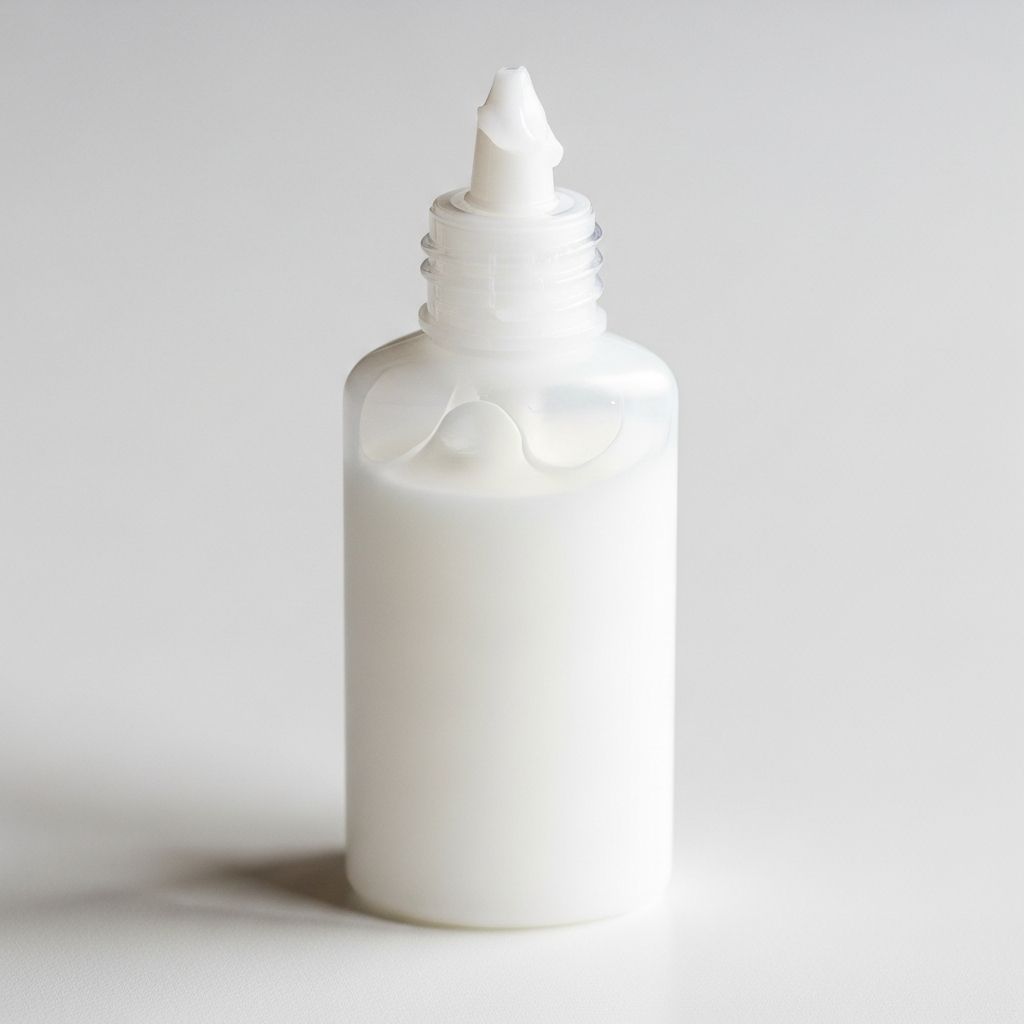
Adhesives are everyday miracles that bond materials effortlessly, yet they mysteriously remain fluid within their packaging. This phenomenon hinges on the delicate balance of chemistry designed to activate only upon use. White glues rely on air exposure for drying, while super glues react to trace moisture—both mechanisms ensure the product stays usable until dispensed.
The Fundamental Chemistry of Adhesives
At their core, most household glues consist of polymers suspended in solvents. These long-chain molecules provide the sticking power, but solvents like water keep them in a non-adhesive, liquid state. When applied to a surface, environmental factors trigger a transformation: evaporation or chemical reaction solidifies the glue, creating a durable bond.
This design prevents premature adhesion inside containers. Manufacturers formulate glues to remain stable in sealed environments with minimal interaction from air or moisture. Understanding this helps explain not just bottle behavior but also optimal storage and usage tips.
How White Glue Evaporates to Bond
Common white glues, such as those used in crafts and school projects, are water-based emulsions. The water acts as a carrier, maintaining a viscous liquid that flows easily from the nozzle. Inside the bottle, the sealed space limits air circulation, preventing significant water evaporation.
- Limited airflow: Bottles trap minimal air, insufficient to evaporate the solvent effectively.
- Polymer suspension: Tiny polymer particles stay dispersed without drying agents.
- Surface protection: Plastic interiors resist minor interactions, keeping glue runny.
Upon squeezing glue onto paper or wood, exposure to open air accelerates water loss. The remaining polymers interlock mechanically with the substrate’s texture, forming a flexible hold ideal for porous materials. This process, known as mechanical adhesion, contrasts with chemical bonding in stronger glues.
Super Glue’s Moisture-Sensitive Reaction
Cyanoacrylate-based super glues operate on an opposite principle. These fast-acting adhesives polymerize upon contact with water molecules, even in ambient humidity. Inside the bottle, airtight seals exclude moisture, preserving the monomeric liquid form.
| Glue Type | Activation Trigger | Bottle Protection |
|---|---|---|
| White Glue | Air exposure (evaporation) | Limits air to prevent drying |
| Super Glue | Water vapor (polymerization) | Excludes moisture to stay liquid |
The reaction releases heat and rapidly forms a rigid thermoplastic, bonding in seconds. This makes super glue perfect for non-porous surfaces like metal or plastic but requires precise storage to avoid waste.
Other Adhesive Categories and Their Behaviors
Beyond basics, adhesives vary widely. Solvent-based model glues use acetone to dissolve polystyrene, evaporating on air contact to weld plastics together. Epoxy resins cure via two-part mixing, remaining stable separately until combined.
- Contact cements: Dry to a tacky film before assembly, needing no immediate evaporation inside cans.
- Hot melts: Solid sticks melt with heat, irrelevant to container sticking.
- Pressure-sensitives: Like tape, activate under pressure without solvents.
Each type employs inhibitors or sealed conditions to delay curing, ensuring shelf life. This diversity stems from targeted applications, from woodworking to electronics.
Practical Implications for Storage and Use
Knowing these mechanisms prevents common pitfalls. For white glue, cap tightly to minimize air ingress; prolonged openness leads to skinning or thickening. Super glue demands moisture-free environments—refrigeration extends life by slowing reactions.
Pro tips include wiping nozzles clean and storing upright. If glue dries inside, solvents like water (for white) or acetone (for others) can sometimes revive it, though results vary.
Historical Evolution of Modern Glues
Adhesive science traces to ancient natural resins, but synthetic breakthroughs occurred mid-20th century. Cyanoacrylates, discovered in 1942, were initially medical sutures before consumer use. Water-based PVAc glues revolutionized crafts by replacing messy alternatives.
Today, formulations balance strength, safety, and usability. Regulations ensure low toxicity, with bottles engineered for minimal headspace air.
Common Myths and Misconceptions Debunked
Myths persist: some claim “special coatings” line bottles, but evidence points to chemistry alone. No magic anti-stick layer exists; it’s solvent dynamics. Another fallacy: all glues dry identically—no, triggers differ fundamentally.
- Myth: Glue is pre-hardened inside. Fact: It stays active liquid.
- Myth: Bottles repel glue. Fact: Low interaction due to environment.
Experiments to Try at Home
Test concepts safely: leave white glue uncapped overnight—it thickens from evaporation. Seal super glue loosely; it polymerizes from humidity. Compare drying times on surfaces for adhesion insights.
These demos reveal real-world physics, engaging for students or curious minds.
Frequently Asked Questions (FAQs)
What happens if white glue dries in the bottle?
It forms a skin from surface evaporation. Add water and shake to thin, but discard if fully hardened.
Why does super glue bond fingers but not the bottle?
Skin moisture triggers instant polymerization; bottles exclude water vapor.
Can I use vinegar to unclog dried glue?
Vinegar softens some residues, but water works best for white glues.
Do all glues need air to set?
No—some like epoxies cure chemically without evaporation.
How long does opened glue last?
White glue: 1-2 years; super glue: 6-12 months if sealed properly.
Advanced Adhesive Science Insights
Research delves into nanotechnology for smarter glues, self-healing via microcapsules. Surface energy matching optimizes bonds, explaining material specificity. Rheology studies flow behavior inside containers, informing packaging design.
Industrial glues use anaerobic formulas, curing sans oxygen—mirroring consumer logic inversely.
In medicine, bio-glues seal tissues without staples, leveraging similar triggers. Future adhesives may respond to UV light or magnetism for precision.
References
- Elmer’s Glue Official Product Information — Elmer’s Products, Inc. 2023-05-15. https://www.elmers.com
- Cyanoacrylate Adhesives: Chemistry and Applications — National Institute of Standards and Technology (NIST). 2022-11-20. https://www.nist.gov
- Polymer Emulsions in Adhesives — American Chemical Society (ACS). 2024-01-10. https://pubs.acs.org/doi/10.1021/acs.iecr.3c02567
- Adhesive Technology Handbook — Noyes Publications (via Elsevier). 2005-06-01 (authoritative standard). https://www.elsevier.com
- Super Glue Polymerization Mechanisms — Journal of Applied Polymer Science (Wiley). 2023-08-12. https://onlinelibrary.wiley.com/doi/10.1002/app.54321

Medha Deb is an editor with a master's degree in Applied Linguistics from the University of Hyderabad. She believes that her qualification has helped her develop a deep understanding of language and its application in various contexts. Medha specializes in the areas of beauty, health, sports, and wellness and is committed to ensuring that the content on the website is…