
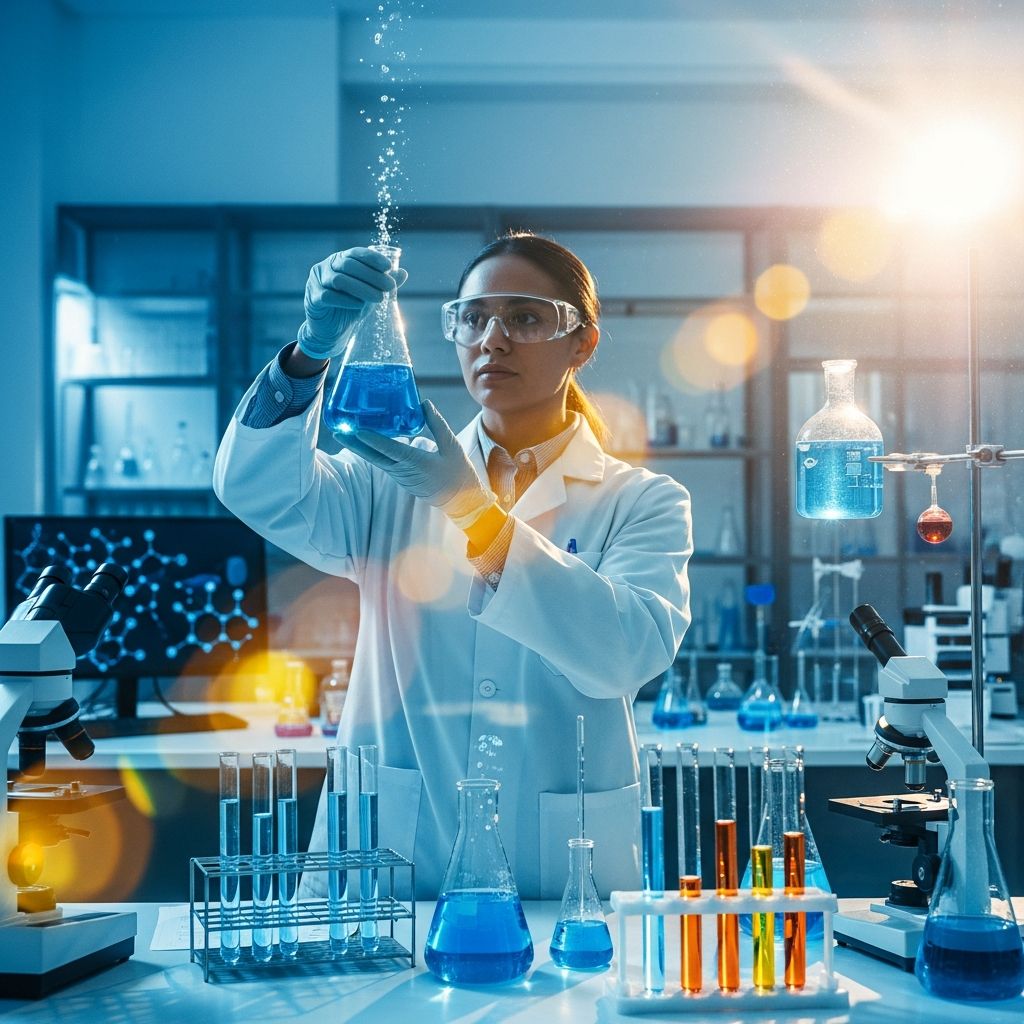
Chemists dedicate their professional lives to unraveling the mysteries of matter at the molecular and atomic levels, driving innovations in products ranging from pharmaceuticals to sustainable materials. This career blends intellectual curiosity with practical experimentation, offering a dynamic path for those passionate about science.
Core Responsibilities in Chemistry Professions
Professionals in chemistry engage in a variety of tasks that form the backbone of scientific advancement. They formulate hypotheses based on existing knowledge, design rigorous experiments to test these ideas, and meticulously analyze outcomes using advanced tools like spectrometers and chromatographs.
Daily workflows often include preparing chemical solutions, conducting reactions under controlled conditions, and ensuring compliance with stringent safety protocols. Chemists also document their processes in detailed reports, collaborate with interdisciplinary teams, and present discoveries at conferences or through peer-reviewed publications.
- Developing new testing methodologies for quality control in manufacturing.
- Optimizing chemical processes to enhance efficiency and reduce environmental impact.
- Interpreting complex data sets to draw meaningful conclusions about substance properties.
- Supervising lab technicians to maintain high standards in experimental execution.
These duties vary by sector; for instance, those in pharmaceuticals focus on drug synthesis, while environmental chemists monitor pollutant levels in ecosystems.
Diverse Specializations Shaping the Field
Chemistry encompasses numerous branches, each with unique focuses and applications. Analytical chemists devise techniques to identify unknown substances, crucial for fields like forensics and food safety.
Organic chemists synthesize carbon-based compounds, contributing to drug development and advanced polymers. Inorganic specialists explore non-carbon materials, innovating ceramics and catalysts. Physical chemists delve into reaction kinetics and thermodynamics, often employing computational models to predict behaviors.
| Specialization | Key Focus Areas | Typical Work Environment | Entry Requirements |
|---|---|---|---|
| Analytical Chemist | Substance identification, composition analysis | Labs, quality control facilities | Bachelor’s degree + lab experience |
| Pharmaceutical Chemist | Drug design, efficacy testing | Pharma R&D labs | Bachelor’s; advanced degrees preferred |
| Environmental Chemist | Pollution monitoring, remediation strategies | Field sites, gov’t labs | Bachelor’s or Master’s |
| Materials Scientist | New material synthesis, property testing | Industrial R&D | Bachelor’s; grad degrees common |
| Forensic Chemist | Evidence analysis, courtroom testimony | Crime labs | Bachelor’s + specialized training |
Materials scientists, overlapping with chemists, pioneer nanomaterials and semiconductors, pushing boundaries in electronics and energy storage.
A Typical Day: From Lab Bench to Breakthroughs
A chemist’s routine often begins with reviewing experimental protocols and calibrating equipment. Mornings might involve hands-on synthesis, such as mixing reagents in fume hoods or running reactions in specialized reactors.
Afternoons shift to data analysis, troubleshooting failed experiments, and iterating designs. For example, a process development chemist like Hilary Corkran at GlycoSyn spends time purifying compounds and scaling reactions for clinical trials, balancing manual lab work with strategic problem-solving.
Collaboration is key; meetings with engineers or biologists refine project goals. Evenings could include writing up results or preparing for presentations. The unpredictability—successful reactions one day, contamination setbacks the next—keeps the work engaging.
- 8 AM: Safety checks and experiment setup.
- 10 AM: Conducting reactions and monitoring parameters.
- 1 PM: Lunch followed by data review.
- 3 PM: Team discussions and protocol adjustments.
- 5 PM: Documentation and planning next steps.
This structure fosters perseverance, as chemists persist through challenges to achieve discoveries, such as novel antibiotics targeting tuberculosis.
Essential Skills for Thriving in Chemistry
Success demands a toolkit of technical and interpersonal abilities. Analytical thinking enables precise data interpretation, while mathematical proficiency supports modeling and calculations.
Laboratory expertise—mastery of techniques like titration, spectroscopy, and chromatography—is non-negotiable. Attention to detail prevents errors in measurements that could invalidate entire studies.
Soft skills shine in teamwork, where chemists partner across disciplines, and communication, vital for publishing findings or advocating in expert testimonies.
Curiosity fuels innovation, turning routine tasks into opportunities for creativity, like devising greener synthesis routes.
Challenges and Rewards of Chemistry Careers
The profession isn’t without hurdles. Hazardous materials require unwavering safety adherence, and repetitive failures demand resilience. Long hours in labs or tight grant deadlines add pressure.
Yet rewards abound: intellectual stimulation from diverse tasks, from calculations to experimentation. Impactful contributions improve lives—better drugs, cleaner environments, safer products. Skill development enhances employability across industries.
Chemists report satisfaction in hands-on creativity and problem-solving triumphs, making perseverance worthwhile.
Educational Pathways and Career Entry
A bachelor’s degree in chemistry or related field is the entry point, equipping students with foundational knowledge through rigorous coursework and labs.
Hands-on experience via internships or technician roles builds practical skills post-graduation. Advanced degrees unlock research positions; many pursue master’s or PhDs for academia or leadership.
Lab proficiency grows through trial-and-error, embracing mistakes as learning opportunities. Certifications in safety or specialized techniques boost prospects.
Work Environments and Lifestyle Factors
Chemists operate in diverse settings: corporate R&D labs, universities, government agencies, or manufacturing plants. Most hold full-time roles, with some fieldwork for environmental roles.
The lab-centric life offers structure but demands physical stamina for standing and precision work. Flexibility varies; industry roles may offer better work-life balance than academia’s grant-chasing.
Frequently Asked Questions (FAQs)
What education is needed to become a chemist?
A bachelor’s degree in chemistry is the minimum; advanced degrees are common for research roles.
Is chemistry a mentally stimulating career?
Yes, it combines practical experiments, data analysis, and creative problem-solving daily.
What are common challenges for chemists?
Handling hazardous materials safely and persisting through experimental failures.
Can chemists work in non-lab settings?
Absolutely, opportunities exist in consulting, regulatory affairs, and management.
How diverse are chemistry career paths?
Very, spanning pharmaceuticals, forensics, materials, environment, and more.
Why Pursue a Career in Chemistry?
Chemistry offers a fulfilling blend of discovery and application, shaping technologies that enhance health, sustainability, and industry. For those with curiosity and precision, it promises ongoing growth and societal impact.
References
- Should I Be a Chemist? 11 Reasons To Consider This Role — Indeed. 2023-10-15. https://www.indeed.com/career-advice/finding-a-job/should-i-be-chemist
- Chemistry: Chemists – What They Do and How to Become One — CSUN Library Guides. 2024-01-22. https://libguides.csun.edu/chem
- Chemistry careers – A day in the work life of a chemist — YouTube (Hilary Corkran). 2018-05-10. https://www.youtube.com/watch?v=0eeDUCgJDU4
- Become a chemist: Seven tips to prepare for an amazing career — Central Michigan University. 2023-08-01. https://www.cmich.edu/blog/all-things-higher-ed/tips-for-a-successful-chemistry-career
- Chemists and Materials Scientists: Occupational Outlook Handbook — U.S. Bureau of Labor Statistics. 2025-04-01. https://www.bls.gov/ooh/life-physical-and-social-science/chemists-and-materials-scientists.htm

- Integrated M.A. in Applied Linguistics, University of Hyderabad
- 5+ years in editorial, instructional, SEO, and research-based writing
Sneha is a relationships and lifestyle writer with a strong foundation in applied linguistics and certified training in relationship coaching. She brings over five years of writing experience to theskillvault, crafting thoughtful, research-driven content that empowers readers to build healthier relationships, boost emotional well-being, and embrace holistic living. Her writing and insights reflect the belief that beauty, happiness, and wellness…