
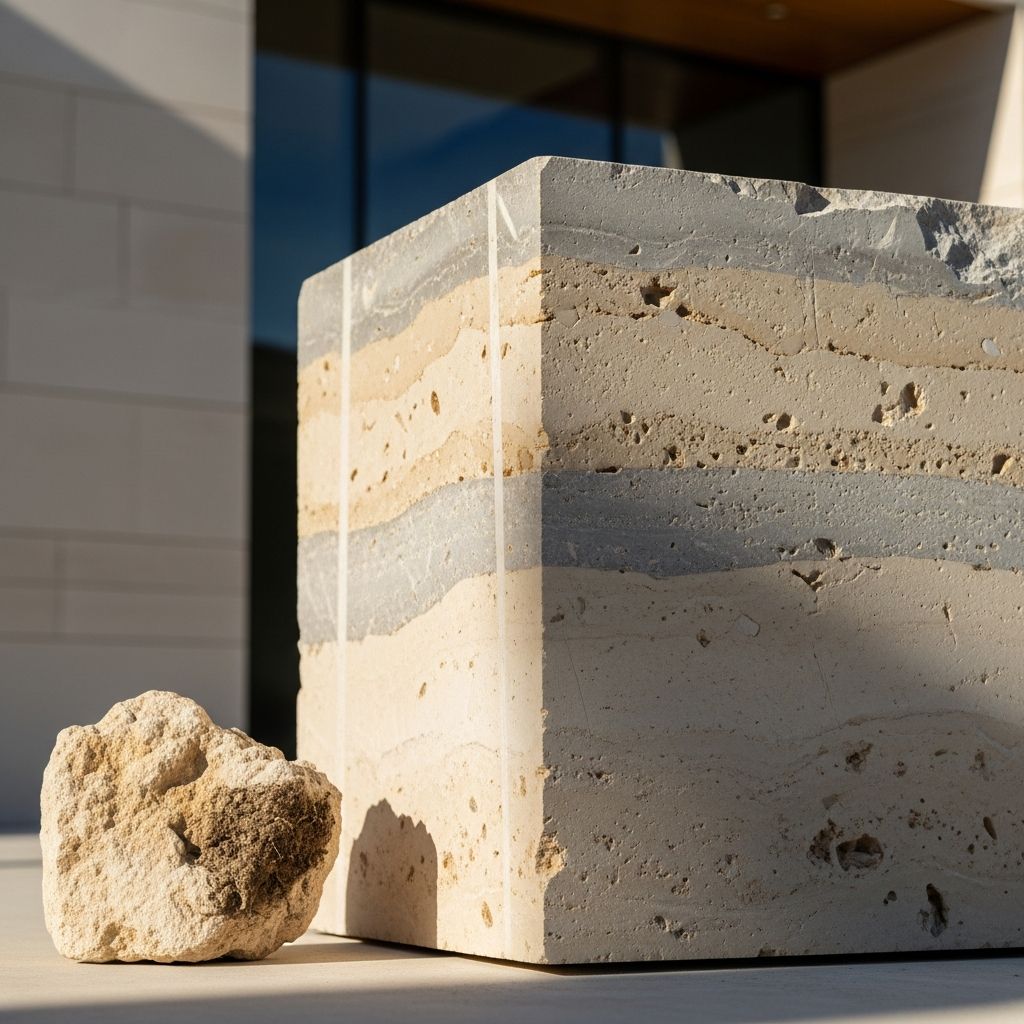
Austin limestone stands as a cornerstone of Texas construction, prized for its natural beauty, robustness, and adaptability in both residential and commercial projects. Quarried primarily from the Texas Hill Country, this sedimentary rock has shaped iconic structures across the region and beyond, blending seamlessly with diverse architectural styles.
Geological Origins and Formation
Austin limestone forms from ancient marine deposits laid down millions of years ago in shallow seas covering what is now central Texas. Composed mainly of calcium carbonate from compressed shells, coral, and marine organisms, it develops its characteristic light colors and textures through geological processes like sedimentation and cementation. The stone’s strata in the Austin area yield blocks with subtle variations in tone, from creamy whites to warm buffs, influenced by mineral impurities and fossil inclusions.
These formations belong to the Edwards Plateau, where erosion exposes high-quality limestone suitable for quarrying. The material’s low porosity and high compressive strength make it ideal for load-bearing applications, resisting weathering while maintaining aesthetic appeal over decades.
Distinctive Characteristics and Properties
Renowned for its soft yet durable nature, Austin limestone features a fine to medium grain structure that allows for precise cutting and shaping. Its natural hues—ranging from pale grays and creams to golden caramels—provide a warm, inviting look that enhances any facade. Unlike denser granites, this limestone offers a lighter weight, easing transportation and installation.
- Compressive Strength: Typically exceeds 4,000 psi, supporting structural walls and heavy features.
- Porosity: Low water absorption (under 5%) ensures longevity in humid or rainy climates.
- Thermal Properties: Excellent insulator, reducing energy costs in buildings.
- Workability: Easily sawn, chiseled, or polished for custom designs.
These traits position Austin limestone as a sustainable choice, with quarries adhering to eco-friendly extraction minimizing environmental impact.
Popular Varieties and Color Profiles
Austin limestone comes in numerous varieties, each offering unique visual and textural qualities tailored to specific project needs. Common types include:
| Variety | Color Profile | Typical Thickness | Best Uses |
|---|---|---|---|
| Austin White | Bright white with subtle gray veins | 1.5-2.5 inches | Veneers, interiors |
| Austin Nicotine | White base with yellow-gold deposits | 4-8 inches chop | Walls, fire pits |
| Austin Cream | Soft cream tones | Random thin veneer | Accents, facades |
| Lueder Gray | Grays to caramels | Varies | Landscaping, slabs |
Austin White, for instance, delivers a clean, modern aesthetic perfect for contemporary homes, while Nicotine adds rustic contrast to stacked walls.
Quarrying and Processing Techniques
Modern quarrying in the Texas Hill Country employs advanced methods like wire sawing and diamond drilling to extract large blocks with minimal waste. Stones are then processed into forms such as chop stone, sawn slabs, or thin veneers. Chop stone, roughly cut for mortar joints, suits landscape walls, covering about 55 sq ft per ton.
Sawed slabs, precisely cut to 2.25 inches thick, provide smooth surfaces for patios and caps. Thin veneers, manufactured or natural, weigh 15 lbs per sq ft, enabling lightweight cladding over existing structures. Precast versions blend cement aggregates with limestone textures for uniform panels used in large-scale builds.
Architectural Applications and Design Versatility
The versatility of Austin limestone shines in myriad applications, from grand public edifices to cozy home features. In residential settings, it adorns fireplaces, accent walls, and outdoor kitchens, creating focal points that endure.
Commercially, it’s favored for facades, columns, window sills, and trims, offering a prestigious look with low maintenance. Landscape uses include retaining walls, patios, and fire pits, where its stackable forms enhance natural terrains.
- Exterior Cladding: Full or veneer siding for timeless curb appeal.
- Interior Features: Hearths, backsplashes, and custom millwork.
- Hardscaping: Steps, coping, and pavers for durable outdoor spaces.
Architects appreciate its ability to age gracefully, developing a subtle patina that deepens character without structural compromise.
Installation Methods and Best Practices
Installing Austin limestone requires attention to substrate preparation, mortar selection, and jointing. For veneers, adhere to clean, level surfaces using Type S mortar; corners match flats for seamless turns.
Full-bed applications on foundations demand weep holes for drainage. Professionals recommend sealing porous surfaces to enhance stain resistance, though natural finishes often suffice. Weight considerations—80-90 lbs per 10 sq ft box—guide project planning.
DIY enthusiasts can tackle small features like garden borders, but larger walls benefit from masons experienced in Texas stone.
Maintenance, Durability, and Longevity
Austin limestone’s durability stems from its resistance to freeze-thaw cycles and UV exposure, lasting centuries with minimal intervention. Routine cleaning with mild soap removes dirt; avoid harsh acids that etch the surface.
Its sustainability—locally sourced, recyclable—appeals to green builders. Unlike synthetic alternatives, it doesn’t fade or crack prematurely, retaining value in resale properties.
Cost Factors and Sourcing Tips
Pricing varies by type and finish: thin veneers around $10-15/sq ft, slabs $20+/sq ft. Bulk crates (150 sq ft, ~1450 lbs) offer economies for big jobs. Source from reputable Texas quarries for authenticity, checking for consistent grading and color blends.
Frequently Asked Questions
Is Austin limestone suitable for indoor use?
Yes, its low porosity and versatility make it ideal for fireplaces, walls, and accents indoors, especially in veneer form.
How does Austin limestone compare to Lueders stone?
Austin offers lighter tones and finer textures, while Lueders provides grayer, bolder options; both excel in durability.
Can Austin limestone be used in wet climates?
Absolutely, its weather resistance handles rain and humidity well, with proper sealing for added protection.
What is the coverage rate for chop stone?
Approximately 55 sq ft per ton, depending on joint thickness and stacking.
Is precast limestone as good as natural?
Precast mimics natural aesthetics with consistent quality and easier install, ideal for uniform elements.
References
- Lime Stone Austin White – Mountain View Stone — Mountain View Stone. 2023. https://mountainviewstone.net/products/lime-stone-austin-white
- Precast Limestone – Austin Block Company — Austin Block Company. 2023. https://www.austinblockcompany.com/product/precast-limestone/
- Austin Limestone Supplier | Lueder Stone Experts — FP Legacy Landscaping. 2023. https://fplegacylandscaping.com/project/limestone/
- Austin Sawed Slabs – Whiz-Q Stone — Whiz-Q Stone. 2023. https://www.whiz-q.com/austin-sawed-slabs.html
- AUSTIN LIMESTONE CHOP STONE– NICOTINE — Outdoor Warehouse Supply. 2023. https://www.outdoorwarehousesupply.com/product/austin-nicotine-6-inch/
- Austin Limestone – Quality Stone Co. — Quality Stone Co. 2023. https://qualitystone.com/austin-limestone/

Medha Deb is an editor with a master's degree in Applied Linguistics from the University of Hyderabad. She believes that her qualification has helped her develop a deep understanding of language and its application in various contexts. Medha specializes in the areas of beauty, health, sports, and wellness and is committed to ensuring that the content on the website is…