
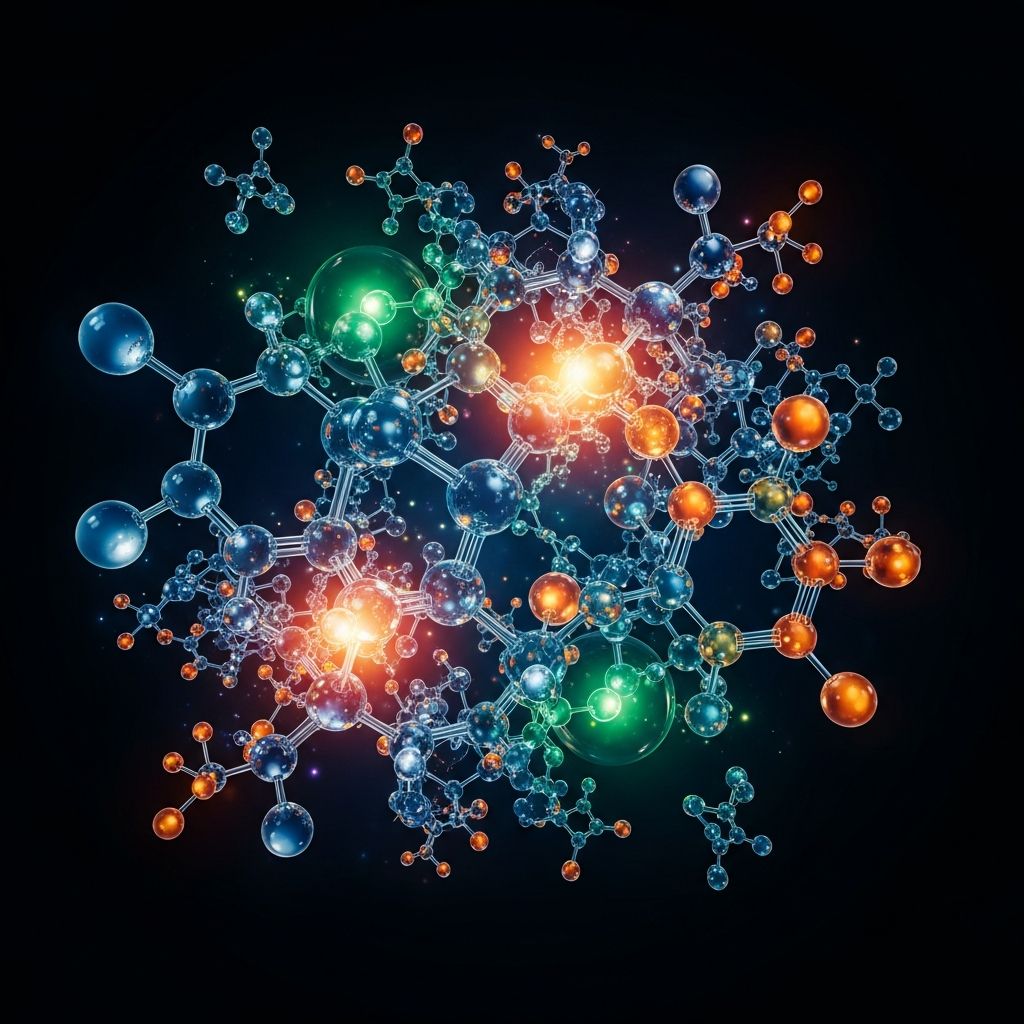
Chemistry is the scientific discipline dedicated to understanding matter—its composition, structure, properties, and the transformations it undergoes through reactions. This field bridges physics and biology, earning its title as the central science for explaining phenomena across disciplines from medicine to environmental science.
Defining the Essence of Chemistry
At its core, chemistry examines substances made of atoms, molecules, and ions, focusing on how they interact and change. Matter, defined as anything with mass and volume, forms the basis of all chemical inquiry. Chemists investigate not just what things are made of but how they behave under different conditions, including temperature, pressure, and interactions with other substances.
This science quantifies properties like density, reactivity, and conductivity while also exploring qualitative aspects such as color changes or phase transitions. Energy shifts during these processes—whether released as heat or absorbed as light—are equally critical.
Historical Foundations of Chemical Knowledge
The roots of chemistry trace back to ancient civilizations. Early practitioners, like Egyptians and Greeks, experimented with ores and metals through fire, unknowingly laying groundwork for modern metallurgy. The concept of atoms emerged from Greek philosophers, evolving into systematic study over centuries.
By the 18th century, figures like Antoine Lavoisier formalized chemistry as a distinct science, introducing concepts like conservation of mass. The 20th century brought quantum mechanics and molecular theory, refining our view of chemical bonds and reactions.
Major Branches of Chemistry
Chemistry divides into key subfields, each tackling unique aspects of matter. Here’s an overview:
- Organic Chemistry: Centers on carbon-based compounds, vital for life and materials like plastics and pharmaceuticals. It explores synthesis, reaction mechanisms, and spectroscopy for structure determination.
- Inorganic Chemistry: Studies non-carbon compounds, including metals, minerals, and semiconductors, focusing on coordination chemistry and catalysis.
- Physical Chemistry: Applies physics to chemical systems, delving into thermodynamics, quantum mechanics, kinetics, and statistical mechanics to predict reaction behaviors.
- Analytical Chemistry: Develops methods to identify and quantify substances, using techniques like chromatography and spectroscopy for precise measurements.
- Biochemistry: Investigates chemical processes in living organisms, integrating principles from other branches to understand enzymes, DNA, and metabolic pathways.
These branches overlap, fostering interdisciplinary advances like nanomaterials and green chemistry.
Chemistry in Everyday Life
Far from confined to labs, chemistry permeates daily existence. The food we eat involves chemical reactions during cooking, like Maillard browning for flavor. Medicines rely on molecular interactions to target diseases, while detergents break down grease through surfactants.
Environmental chemistry addresses pollution degradation and ozone formation, informing sustainable practices. Even cosmetics and fuels stem from chemical innovations.
| Application | Chemical Principle | Example |
|---|---|---|
| Nutrition | Macromolecule breakdown | Digestion of proteins into amino acids |
| Cleaning | Emulsification | Soap removing oil stains |
| Energy | Combustion | Gasoline powering vehicles |
| Health | Drug-receptor binding | Aspirin reducing inflammation |
| Materials | Polymerization | Plastic production |
The Central Role of Chemistry in Science
Chemistry connects scientific fields: it explains biological processes like photosynthesis, geological formations such as rock crystallization, and physical phenomena like superconductivity. In pharmacology, it underpins drug design; in forensics, it aids evidence analysis.
This integrative nature drives innovation, from renewable energy batteries to advanced materials for space exploration.
Key Concepts and Principles
Central to chemistry are atoms—the fundamental units of elements—and molecules formed by chemical bonds (ionic, covalent, metallic). Reactions rearrange these, conserving atoms per Lavoisier’s law.
Thermodynamics governs energy feasibility, while kinetics determines speed. Quantum principles describe electron behavior, enabling predictions of reactivity.
- States of Matter: Solids, liquids, gases, plasmas—each with distinct properties influenced by intermolecular forces.
- Acids and Bases: pH scale measures proton donation/acceptance, crucial for reactions in biology and industry.
- Equilibrium: Dynamic balance in reversible reactions, optimized in processes like Haber-Bosch ammonia synthesis.
Modern Advances and Future Directions
Today’s chemistry tackles global challenges: sustainable catalysis reduces waste, nanotechnology enables targeted therapies, and computational modeling accelerates drug discovery.
Green chemistry emphasizes eco-friendly processes, minimizing hazardous substances. Emerging fields like astrochemistry study interstellar molecules, expanding our cosmic understanding.
Careers and Educational Pathways in Chemistry
Chemists work in research, industry, education, and policy. Roles span pharmaceutical development, environmental monitoring, and materials engineering. A bachelor’s degree opens doors, with advanced studies needed for specialized research.
Skills like problem-solving, data analysis, and lab techniques are prized across sectors.
Frequently Asked Questions (FAQs)
What exactly is matter in chemistry?
Matter is any substance with mass and volume, encompassing solids, liquids, gases, and plasmas composed of atoms and molecules.
Why is chemistry called the central science?
It provides foundational knowledge linking physics, biology, geology, and more, explaining diverse natural processes.
What are the main types of chemical bonds?
Ionic (electron transfer), covalent (sharing), and metallic (delocalized electrons), each dictating material properties.
How does chemistry impact medicine?
Through drug synthesis, molecular targeting of diseases, and understanding biochemical pathways for treatments.
Is chemistry only about lab experiments?
No, it includes theoretical modeling, computational simulations, and field applications like environmental analysis.
References
- Chemistry – Wikipedia — Wikipedia Contributors. 2026-04-01. https://en.wikipedia.org/wiki/Chemistry
- What is Chemistry? – SUNY Fredonia — SUNY Fredonia. N/A. https://www.fredonia.edu/academics/insights/what-chemistry
- About Chemistry – University of Washington — University of Washington Department of Chemistry. N/A. https://chem.washington.edu/about-chemistry
- CHEMISTRY Definition & Meaning – Merriam-Webster — Merriam-Webster. 2026-04-01. https://www.merriam-webster.com/dictionary/chemistry
- Chemistry | Definition, Topics, Types, History, & Facts | Britannica — Encyclopædia Britannica. 2026-04-01. https://www.britannica.com/science/chemistry
- What Is Chemistry? | Ohio Wesleyan University — Ohio Wesleyan University. N/A. https://www.owu.edu/academics/departments-programs/department-of-chemistry/what-is-chemistry/
- What is Chemistry? – University at Buffalo — University at Buffalo. N/A. https://arts-sciences.buffalo.edu/chemistry/about/what-is-chemistry.html

- Integrated M.A. in Applied Linguistics, University of Hyderabad
- 5+ years in editorial, instructional, SEO, and research-based writing
Sneha is a relationships and lifestyle writer with a strong foundation in applied linguistics and certified training in relationship coaching. She brings over five years of writing experience to theskillvault, crafting thoughtful, research-driven content that empowers readers to build healthier relationships, boost emotional well-being, and embrace holistic living. Her writing and insights reflect the belief that beauty, happiness, and wellness…