
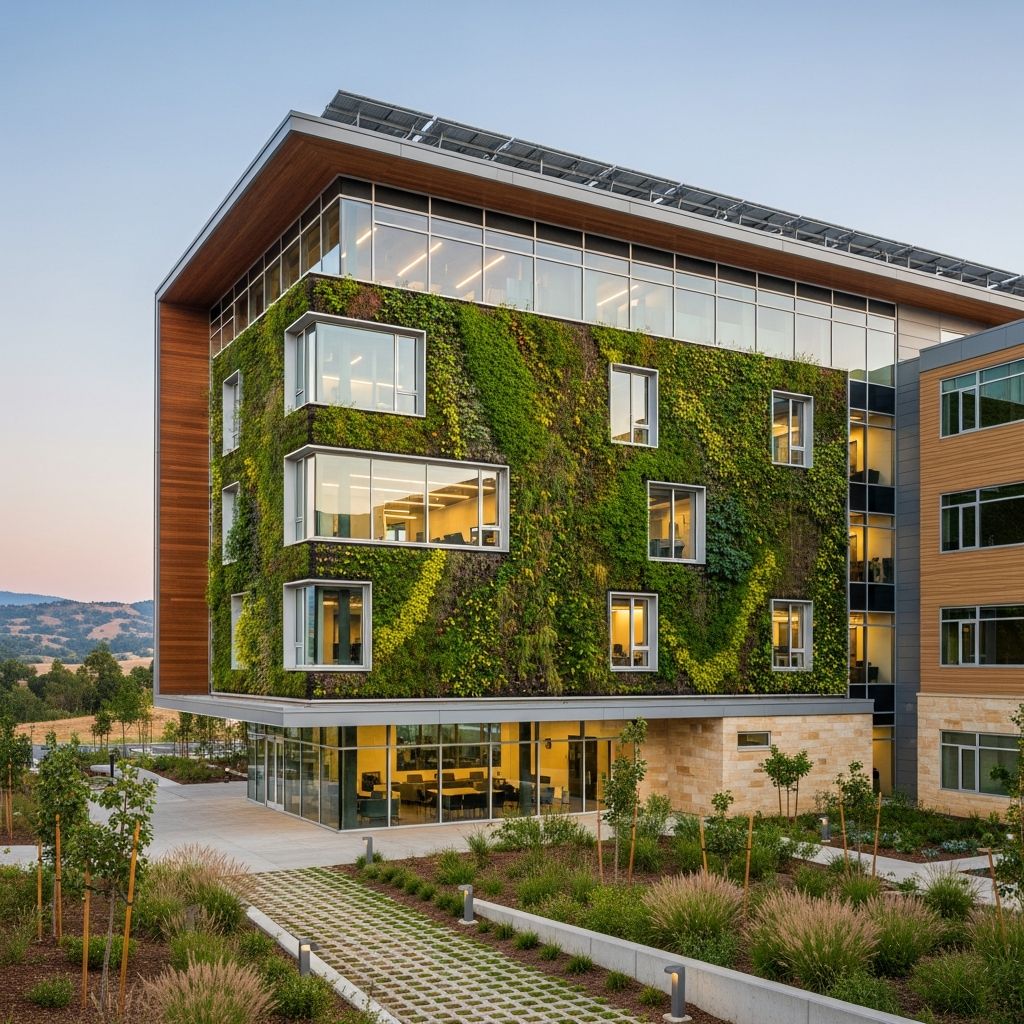
Sustainable architecture integrates environmental responsibility, resource efficiency, and human well-being into the design, construction, and operation of buildings. This approach minimizes ecological harm while maximizing long-term value for occupants and communities.
Foundational Principles of Sustainable Design
Sustainable architecture rests on key principles that guide every project phase. These principles ensure buildings harmonize with their surroundings and perform efficiently over time.
- Site Optimization: Selecting and preparing sites thoughtfully preserves natural features, enhances solar access, and reduces disruption to ecosystems. Proper orientation captures daylight and breezes, cutting energy needs.
- Energy Optimization: Designs prioritize passive strategies like insulation, efficient windows, and renewable integration to slash fossil fuel use and emissions.
- Water Management: Systems capture rainwater, use low-flow fixtures, and treat wastewater on-site, conserving this vital resource.
- Material Stewardship: Choosing durable, recycled, or renewable materials lowers embodied carbon and waste.
- Indoor Environmental Quality: Ventilation, lighting, and acoustics create healthy, comfortable spaces that boost productivity.
- Resilience and Adaptability: Structures withstand climate challenges and evolve with user needs, extending lifespan.
Energy Strategies in Sustainable Buildings
Energy efficiency forms the cornerstone of sustainable architecture. Buildings account for nearly 40% of global carbon emissions, making optimization critical.
Passive design leverages natural elements: thick insulation in walls and roofs prevents heat loss, while strategic shading and glazing maximize daylight without glare. High-performance HVAC with smart controls adjusts to occupancy, and on-site solar panels or geothermal systems generate clean power.
| Strategy | Benefits | Examples |
|---|---|---|
| Passive Solar | Reduces heating/cooling by 30-50% | South-facing windows, thermal mass floors |
| LED + Sensors | Cuts lighting energy 50-80% | Motion-activated fixtures |
| Renewables | Offsets 20-100% usage | PV panels, heat pumps |
LEED-certified buildings use 25% less energy than conventional ones, proving these tactics deliver measurable savings.
Water Conservation Techniques
Water scarcity drives innovation in sustainable architecture. Efficient systems reduce consumption indoors and outdoors while managing stormwater sustainably.
- Rainwater harvesting stores roof runoff for irrigation or flushing.
- Low-flow toilets and faucets cut usage by 30-50%.
- Native landscaping minimizes irrigation needs.
- Greywater recycling reuses sink/shower water.
These measures not only lower bills but also mitigate flooding by permeating soil naturally.
Selecting Eco-Friendly Materials
Materials significantly impact a building’s carbon footprint through production, transport, and disposal. Sustainable choices prioritize low-impact options.
Locally sourced stone or timber reduces transport emissions. Recycled steel, bamboo, and mycelium-based composites offer renewability and strength. Hemp rebar and bendable concrete enhance durability without environmental cost.
- Recycled Content: Reclaimed wood diverts landfill waste.
- Bio-Based: Cork or straw insulation sequesters carbon.
- Low-VOC: Paints and adhesives improve air quality.
Modular prefabrication minimizes site waste by up to 90%.
Enhancing Occupant Health and Comfort
Beyond ecology, sustainable architecture prioritizes people. High indoor air quality via filtration and ventilation reduces illness. Abundant natural light regulates circadian rhythms, improving mood and focus.
Acoustic design dampens noise, while biophilic elements like living walls connect users to nature, lowering stress. Flexible layouts adapt to changing needs, from home offices to aging-in-place features.
Construction and Lifecycle Management
Sustainability spans the full lifecycle. Planning diverts 70-90% of construction waste through recycling. Durable materials cut maintenance, and designs facilitate future retrofits.
Operations emphasize monitoring via smart meters. End-of-life deconstruction allows material reuse, closing the loop.
Benefits Across Economic, Social, and Environmental Dimensions
Sustainable buildings yield triple benefits:
- Environmental: Lower emissions, conserved resources, biodiversity protection.
- Economic: 25% energy savings, higher property values, reduced operations costs.
- Social: Healthier spaces, community integration, resilience to disasters.
Green homes require less upkeep with premium, long-lasting components like 50-year roofs.
Certification Systems and Standards
Frameworks like LEED, BREEAM, and Living Building Challenge verify sustainability. They score projects on energy, water, materials, and equity, guiding architects and owners.
Case Studies: Sustainable Architecture in Action
The Bullitt Center, Seattle: Net-zero energy via solar power, composting toilets, and rainwater systems—”world’s greenest commercial building.”
Pixel Building, Melbourne: Achieves net-positive energy with advanced facades and biodiversity roofs.
These projects demonstrate scalability across residential and commercial scales.
Challenges and Future Directions
Upfront costs deter some, but lifecycle savings outweigh them. Policy incentives and tech advances like AI-optimized systems accelerate adoption.
Emerging trends include circular economy designs for full recyclability and climate-adaptive materials.
Frequently Asked Questions
What defines sustainable architecture?
It creates resource-efficient structures minimizing environmental impact throughout their lifecycle, prioritizing energy, water, materials, and health.
Are sustainable buildings more expensive?
Initial costs may rise 2-5%, but 20-30% energy savings and incentives yield payback in 5-10 years.
How does site selection impact sustainability?
Optimal sites leverage sun, wind, and views, reducing mechanical needs while preserving habitats.
What materials are best for green projects?
Recycled metals, bamboo, low-VOC finishes, and local stone for low embodied energy.
Can older buildings become sustainable?
Yes, retrofits like insulation, efficient windows, and solar add-ons transform them effectively.
References
- What Is Green Building and Its Core Principles — Ecochain. 2023. https://ecochain.com/blog/what-is-green-building/
- The Principles of Green Building: Sustainable Materials and Techniques — Diasen. 2023. https://www.diasen.com/en/the-principles-of-green-building-materials-and-techniques/
- Green Principles for Residential Design — WBDG (U.S. General Services Administration). 2023-10-20. https://www.wbdg.org/resources/green-principles-residential-design
- 5 Green Design Principles for Sustainable Architecture — SAA Architects. 2023. https://saaarchitects.com/5-principles-for-sustainable-and-efficient-design/
- The Five Principles of Green Building — Louisiana Land Can. 2022. http://www.louisianalandcan.org/article/The-five-principles-of-green-building/868
- Basic Principles of Sustainable Architecture — Breathe. 2023. https://www.breathe.com.au/guides/houses/principles-of-sustainable-architecture
- Green Building — U.S. Environmental Protection Agency. 2024-01-15. https://www.epa.gov/smartgrowth/green-building

Medha Deb is an editor with a master's degree in Applied Linguistics from the University of Hyderabad. She believes that her qualification has helped her develop a deep understanding of language and its application in various contexts. Medha specializes in the areas of beauty, health, sports, and wellness and is committed to ensuring that the content on the website is…