
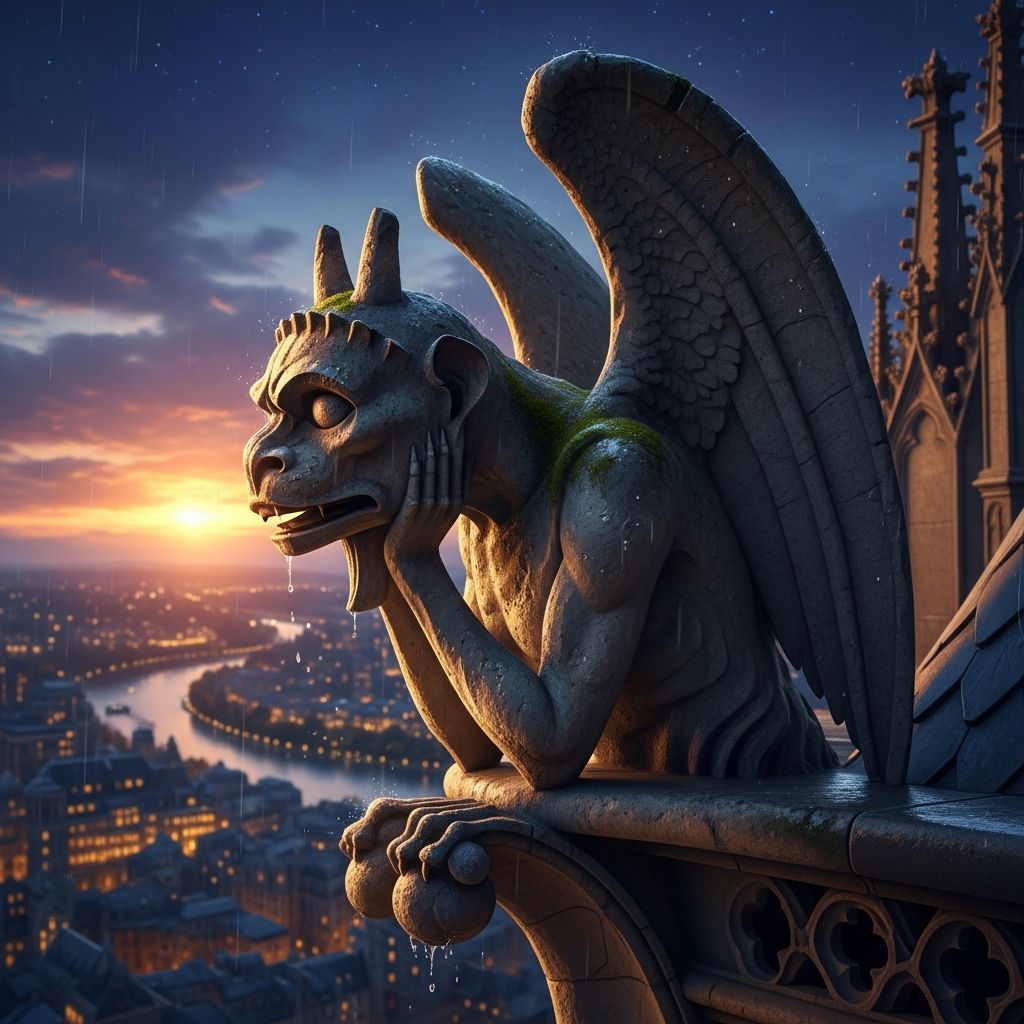
In the shadowy heights of ancient cathedrals and castles, gargoyles perch like silent sentinels, their snarling faces frozen in stone. These enigmatic figures blend architectural ingenuity with profound symbolism, channeling rainwater while warding off malevolent forces. Far more than mere decorations, gargoyles represent a masterful fusion of form and function that defined medieval building practices.
The Essence of Gargoyles: Definition and Core Purpose
A gargoyle is fundamentally a carved waterspout, typically shaped as a grotesque animal or human figure, projecting from a roofline to direct rainwater away from a structure’s walls. This prevents erosion of mortar and masonry, a critical concern in eras without modern drainage systems. The term derives from the Old French gargouille, meaning ‘throat,’ evoking the gurgling sound of water flowing through its channel.
Engineered for efficiency, a gargoyle features an internal trough leading to an open mouth or spout, hurling water clear of the building. Their elongated forms—often fantastical beasts with outstretched necks—ensure water projects far enough to avoid foundational damage, especially vital in Gothic designs with expansive roofs and flying buttresses.
Historical Roots: From Ancient Spouts to Gothic Icons
While gargoyles evoke medieval imagery, their precursors trace back to ancient civilizations. Egyptians, Greeks, and Romans employed lion-headed spouts on temples and aqueducts to manage runoff. However, the monstrous, elaborate versions we recognize today proliferated during the Gothic period, from the 12th to 16th centuries.
The Gothic era’s vertical aspirations—towering spires and vast stained-glass windows—demanded innovative water management. Gargoyles proliferated on landmarks like Notre-Dame de Paris, where hundreds line the parapets. Their popularity waned with the Renaissance as drainpipes emerged, though 19th-century Gothic Revival resurrected them on buildings worldwide.
A captivating legend ties gargoyles to Saint Romanus of Rouen. In the 7th century, the bishop tamed a fire-breathing dragon named Gargouille terrorizing the Seine River valley. Subdued by faith, the beast was paraded through streets and burned—save its unburnable head, affixed to the church as the first gargoyle, inspiring protective carvings.
Gargoyles vs. Grotesques: A Crucial Distinction
Common confusion arises between gargoyles and grotesques. Only those with functional spouts qualify as gargoyles; decorative carvings without drainage are grotesques, chimeras, or bosses.
| Feature | Gargoyle | Grotesque |
|---|---|---|
| Function | Waterspout for drainage | Purely ornamental |
| Design | Elongated with internal channel | Any carved figure |
| Location | Roof gutters, parapets | Walls, corbels, interiors |
| Example | Notre-Dame spouts | Viollet-le-Duc’s Notre-Dame chimeras |
This table highlights how gargoyles prioritize utility, while grotesques emphasize artistry.
Diverse Designs: Creatures Carved in Eternity
Gargoyles span a menagerie of forms, each imbued with intent. Demons dominate, hybrid beasts blending human torsos with animal limbs—eagle wings, serpentine tails—to depict unrepentant sinners destined for damnation.
- Lions: Symbols of Christ’s majesty, their noble roars channel water with regal authority.
- Humans: Caricatures of fools, kings, or clergy, satirizing societal vices.
- Mythical Beasts: Dragons, griffins, and basilisks embody chaos tamed by faith.
- Rude Variants: Anatomically explicit figures mock indecency, reminding viewers of moral perils.
- Animals: Eagles, dogs, and monkeys reflect natural world’s diversity.
Sculptors positioned them crouching or projecting outward, balancing aesthetics with physics. Stone like limestone or sandstone allowed intricate details, though erosion often softened features over centuries.
Symbolic Power: Protectors Against the Darkness
Beyond utility, gargoyles served as spiritual guardians. Medieval lore held they repelled evil spirits, their fearsome visages scaring demons from sacred spaces. Positioned at portals to the divine, they symbolized vigilance—monsters battling monsters to safeguard the faithful.
In Christian theology, they illustrated biblical truths: demons as fallen angels, lions as evangelists. Some interpretations posit ‘good’ demons warding off worse evils, blurring lines between protector and peril. This apotropaic role—averting harm through grotesque imagery—echoes global traditions of mask-like wards.
Iconic Examples Across the Globe
- Notre-Dame Cathedral, Paris: Over 2,000 figures, including restored 19th-century additions by Eugène Viollet-le-Duc, many now grotesques.
- Rouen Cathedral, France: Honors the Gargouille legend with dragon-like spouts.
- York Minster, England: Features Regency-era replacements depicting local wildlife and satire.
- Washington National Cathedral, USA: Modern gargoyles include Star Wars’ Darth Vader, blending tradition with pop culture.
- Cologne Cathedral, Germany: Elaborate Gothic survivors showcasing regional styles.
These sites demonstrate gargoyles’ enduring appeal, from Europe to America.
Modern Legacy and Preservation Challenges
Though obsolete for drainage, gargoyles persist in Gothic Revival architecture, like New York’s St. John the Divine. Contemporary artists draw inspiration for public art, while 3D printing aids restoration.
Preservation battles weather, pollution, and vandalism. Organizations like UNESCO monitor World Heritage sites, employing scans and replacements to combat decay. Climate change accelerates erosion, underscoring gargoyles’ ironic vulnerability to the water they once mastered.
Frequently Asked Questions About Gargoyles
What is the main difference between a gargoyle and a grotesque?
Gargoyles function as waterspouts with drainage channels, while grotesques are decorative without spouts.
Why were gargoyles placed on churches?
They directed rainwater from roofs and symbolized protection against evil spirits.
Can gargoyles be found outside Europe?
Yes, ancient examples exist in Egypt and Greece; modern ones adorn U.S. cathedrals.
Are all stone monsters on buildings gargoyles?
No, only those with spouts qualify; others are grotesques or chimeras.
How has technology changed gargoyles’ role?
Drainpipes replaced them functionally, but they remain symbolic in restorations.
References
- GARGOYLE Definition & Meaning — Merriam-Webster. Accessed 2026. https://www.merriam-webster.com/dictionary/gargoyle
- Gargoyles: Definition and Function in Medieval Architecture — Dolores Herrero. Accessed 2026. https://doloresherrero.com/en/the-gargoyles/
- Gargoyle — Wikipedia. Accessed 2026. https://en.wikipedia.org/wiki/Gargoyle
- The History & Symbolism of Gargoyles — Vault Editions. Accessed 2026. https://vaulteditions.com/blogs/news/the-history-symbolism-of-gargoyles-what-they-mean-a-common-mistake-to-avoid
- The Origin of the ENIGMATIC Stone Creatures of Gothic Folklore — See U in History / Mythology (YouTube). Accessed 2026. https://www.youtube.com/watch?v=hOGiENdB20U
- Gargoyles in Gothic Architecture — Study.com. Accessed 2026. https://study.com/academy/lesson/video/gargoyles-in-gothic-architecture.html
- What are gargoyles? — Gloucestershire Archives (.gov.uk). Accessed 2026. https://www.gloucestershire.gov.uk/archives/learning-for-all/families/ugly-mugs/what-are-gargoyles/

- Integrated M.A. in Applied Linguistics, University of Hyderabad
- 5+ years in editorial, instructional, SEO, and research-based writing
Sneha is a relationships and lifestyle writer with a strong foundation in applied linguistics and certified training in relationship coaching. She brings over five years of writing experience to theskillvault, crafting thoughtful, research-driven content that empowers readers to build healthier relationships, boost emotional well-being, and embrace holistic living. Her writing and insights reflect the belief that beauty, happiness, and wellness…