
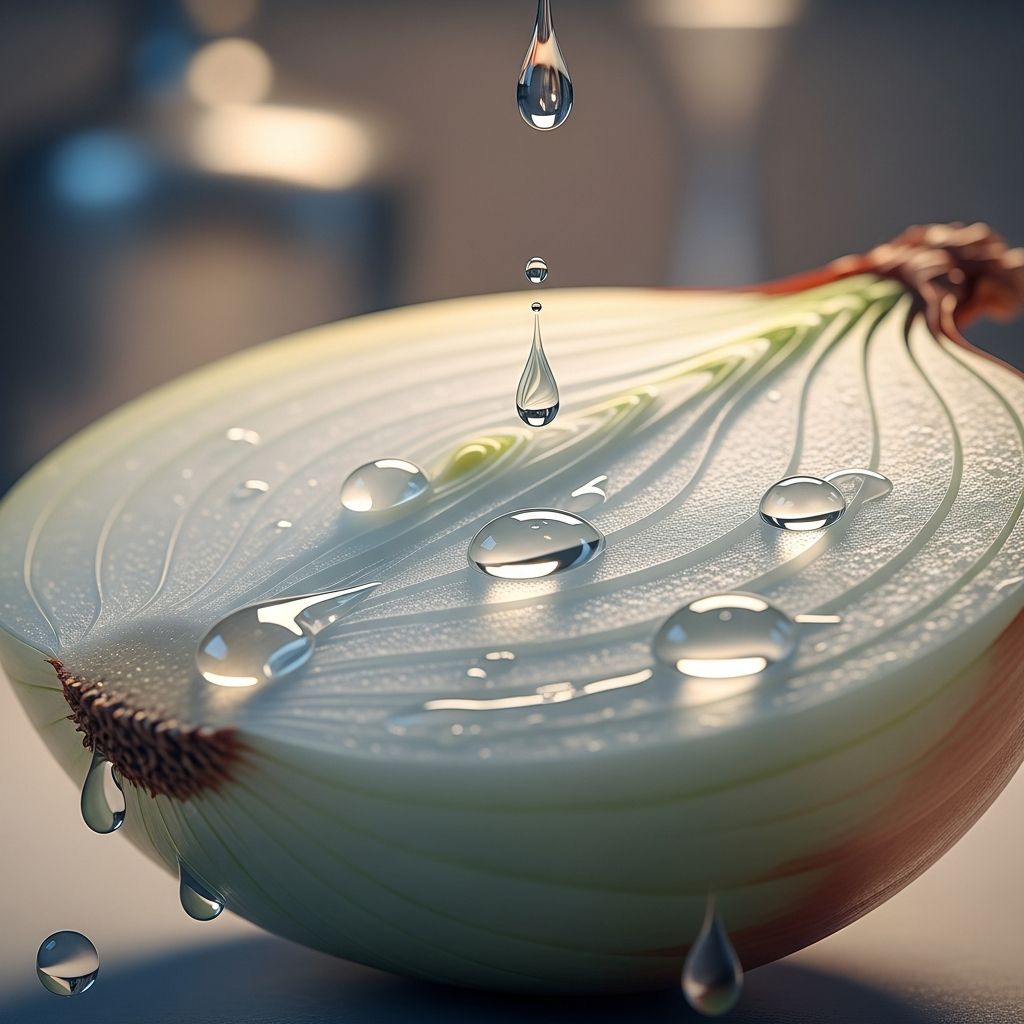
Onions trigger tears through a fascinating chemical reaction involving sulfur compounds released during cutting, irritating the eyes and prompting a protective tear response.
The Hidden Chemistry Inside Every Onion
Onions belong to the Allium family, renowned for their pungent flavors and aromas. Beneath their layered structure lies a sophisticated defense system evolved over millennia. When intact, onions store sulfur-containing amino acids and enzymes in separate cellular compartments, preventing any reaction.
These sulfur amino acids, absorbed from the soil during growth, form the building blocks for the onion’s protective arsenal. Enzymes like alliinase remain dormant in vacuoles, isolated from their substrates. This separation ensures the onion remains stable until damaged.
Step-by-Step: How Cutting Unleashes the Tears
The tear-inducing process begins the moment a knife slices through the onion’s cells. Here’s the precise sequence:
- Blade damage ruptures cell walls, releasing the sulfur amino acids (such as S-1-propenyl-L-cysteine sulfoxide) and enzymes.
- Enzymes catalyze the breakdown of these amino acids into sulfenic acids, unstable intermediates that quickly rearrange.
- Sulfenic acids polymerize and volatilize into syn-propanethial-S-oxide, known as the lachrymatory factor—a lightweight, airborne irritant unique to onions.
- This gas diffuses through the air, reaching sensitive corneal nerves in the eyes within seconds.
- Nerve endings detect the irritant as a threat, signaling the lacrimal glands to produce tears that flush it away.
This rapid cascade, completed in under a minute, explains the immediate burning sensation and involuntary crying.
Eye Anatomy and the Tear Reflex Explained
The human eye’s surface, the cornea, is densely packed with nociceptors—pain-sensing nerve endings designed to detect chemicals, heat, or mechanical damage. The lachrymatory factor mimics these threats, activating TRPA1 ion channels on these receptors.
This neural signal travels via the trigeminal nerve to the brainstem, triggering reflexive tearing. Tears contain lysozyme, an enzyme that breaks down irritants, alongside water and salts for dilution. Interestingly, the gas also stimulates nasal mucosa, amplifying the response.
Not everyone reacts equally; sensitivity varies with factors like eye moisture levels, ambient humidity, and individual enzyme activity in onions.
Comparing Onion Varieties: Which Ones Sting Most?
Not all onions provoke tears to the same degree. Sulfur content, influenced by soil, variety, and growing conditions, determines pungency. Here’s a comparison based on empirical tests and chemistry:
| Onion Type | Sulfur Levels | Tear Intensity | Best Uses |
|---|---|---|---|
| Yellow Onions | High | Highest | Cooking, soups, frying |
| Red Onions | Medium-High | High | Salads, grilling, pickling |
| White Onions | Medium | Moderate | Salsas, raw dishes |
| Sweet Onions (e.g., Vidalia) | Low | Lowest | Raw eating, sandwiches |
| Green Onions/Scallions | Very Low | Minimal | Garnishes, stir-fries |
Yellow onions top the list for tear production due to elevated precursor compounds, while sweet varieties, often grown in low-sulfur soils, produce far less gas.
Health Benefits of Onions Beyond the Tears
Despite their weepy reputation, onions offer substantial nutritional value. They are rich in quercetin, a flavonoid antioxidant that combats inflammation and supports heart health. One medium onion provides vitamin C (20% daily needs), fiber, and folate.
Sulfur compounds, the same culprits behind tears, yield allicin-like benefits: antimicrobial properties, improved immunity, and potential cancer-fighting effects per studies from peer-reviewed journals.
- Antioxidant Power: Quercetin neutralizes free radicals, reducing oxidative stress.
- Cardiovascular Aid: Sulfur lowers blood pressure and cholesterol.
- Anti-Inflammatory: Helps with arthritis and allergies.
Low-pungency onions, comprising 25% of U.S. consumption, retain these benefits with milder flavors but higher perishability due to increased water content.
Proven Strategies to Minimize Tears in the Kitchen
Chefs and home cooks have developed reliable methods to disrupt the chemical chain. Effectiveness varies, but combining techniques yields best results:
- Chill First: Refrigerate onions for 30 minutes pre-cutting. Cold slows enzyme activity, reducing gas by up to 50%.
- Sharp Knife: A keen blade causes cleaner cuts, minimizing cell crushing and precursor release.
- Water submersion: Cut under running water or in a bowl of water to trap volatiles before they airborne.
- Ventilation: Use a strong fan or fume hood to direct gases away from your face.
- Breathing Control: Breathe through your mouth; nasal inhalation draws in more irritant.
Specialized onion goggles with anti-fog coatings block vapors effectively, ideal for those with dry eyes or frequent prep.
Genetic Innovations and Future Tear-Free Onions
Researchers have targeted the lachrymatory synthase gene responsible for syn-propanethial-S-oxide production. Japanese scientists silenced it via RNAi, creating prototypes with 10x less irritant but intact flavor.
While not yet commercial, low-sulfur breeding programs produce milder hybrids. Soil management in sulfur-poor regions also yields naturally gentler bulbs, balancing taste and tolerance.
Frequently Asked Questions About Onions and Tears
Do all onions make you cry?
No, green onions rarely do due to low sulfur precursors. Sweet varieties provoke the least tears.
Why do some people cry more than others?
Factors include eye sensitivity, room humidity, cutting technique, and onion freshness. Dry eyes amplify irritation.
Are tearless onions safe and nutritious?
Yes, genetic modifications preserve health benefits without the irritant, though availability is limited.
Can pets react to onion fumes?
Dogs and cats may experience mild eye irritation; ventilate well during prep.
Does microwaving onions prevent tears?
Partially; heat deactivates enzymes beforehand, but texture suffers.
Onions in Global Cuisines: Taming the Tear Factor
From Indian curries to French soups, onions underpin diverse dishes. In high-volume kitchens, pros pre-peel and freeze portions or use food processors for bulk prep, minimizing exposure. Home cooks can batch-process in ventilated spaces.
Cultural adaptations include pickling in vinegar (which neutralizes enzymes) or fermenting into kimchi, where beneficial bacteria thrive on sulfur compounds.
Evolutionary Purpose: Onions’ Natural Defense
The lachrymatory factor serves as chemical warfare against herbivores and microbes. Underground bulbs deter burrowing pests; above-ground gases repel insects. This adaptation enhances survival in sulfur-rich soils.
Humans have selectively bred onions for 5,000+ years, yet this trait persists, underscoring its efficacy.
References
- All About Onions: Learn Why Onions Make You Cry and More — All About Vision. 2023-10-15. https://www.allaboutvision.com/resources/human-interest/why-do-onions-make-you-cry/
- Why do onions make you cry? — Poison Control (poison.org). 2023-05-12. https://www.poison.org/articles/why-do-onions-make-you-cry
- Why Do Onions Make You Cry? — Britannica. 2024-02-28. https://www.britannica.com/story/why-do-onions-make-you-cry

- Integrated M.A. in Applied Linguistics, University of Hyderabad
- 5+ years in editorial, instructional, SEO, and research-based writing
Sneha is a relationships and lifestyle writer with a strong foundation in applied linguistics and certified training in relationship coaching. She brings over five years of writing experience to theskillvault, crafting thoughtful, research-driven content that empowers readers to build healthier relationships, boost emotional well-being, and embrace holistic living. Her writing and insights reflect the belief that beauty, happiness, and wellness…