
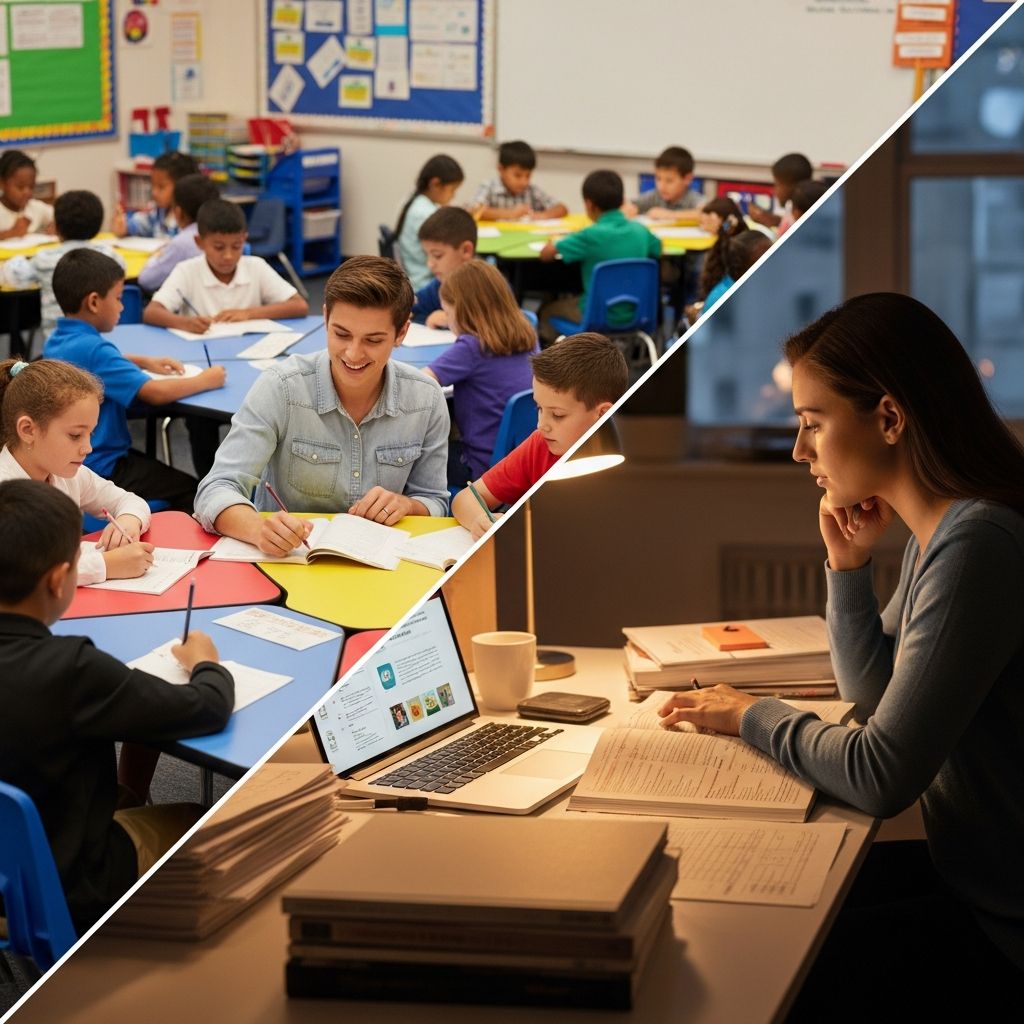
Understanding the Student Teaching Journey
Student teaching represents a pivotal transition in educator preparation programs, marking the point where theoretical knowledge meets classroom reality. This intensive field experience typically spans several weeks to a full semester, during which aspiring teachers step into active classroom roles under the guidance of experienced mentors. The experience serves as a bridge between university coursework and full-time teaching careers, providing a unique opportunity to apply educational theories while developing practical instructional skills in a supported environment.
The student teaching experience fundamentally differs from coursework. Rather than discussing classroom scenarios in seminars or analyzing teaching videos in education classes, student teachers find themselves responsible for actual lesson planning, delivery, and student assessment. This shift from observer to instructor creates both excitement and anxiety, as emerging educators grapple with real-world complications that textbooks rarely capture.
The Reality of Classroom Preparation and Adaptability
One of the most significant discoveries during student teaching involves the gap between careful planning and classroom execution. Aspiring teachers often invest considerable time researching content, designing engaging activities, gathering materials, and organizing lesson sequences with precision. Despite meticulous preparation, unforeseen circumstances frequently disrupt even the most thoroughly planned lessons.
Technology failures represent a common disruption. A projector might malfunction, internet connectivity could disappear at a critical moment, or interactive tools may not function as anticipated. Beyond technical issues, student engagement patterns rarely align perfectly with predictions. Some learners complete assigned activities in half the anticipated time, while others require substantially more explanation and practice. Pacing miscalculations represent perhaps the most frequent planning challenge, requiring teachers to think creatively and adjust on the fly.
Student teachers quickly learn that adaptability ranks among the most valuable teaching competencies. Those who embrace unexpected challenges as learning opportunities tend to develop stronger classroom management skills and gain confidence in their professional capabilities. Working alongside experienced cooperating teachers who encourage experimentation within reasonable boundaries creates an ideal environment for developing this crucial flexibility. When trial-and-error approaches occur in supportive settings, failures become valuable learning experiences rather than sources of discouragement.
Building Meaningful Student Connections
Effective teaching extends far beyond delivering content accurately or maintaining orderly classrooms. Student teachers who prioritize genuine relationships with learners often discover that connection forms the foundation for successful instruction. This involves moving beyond surface-level interactions to genuinely understand who students are as individuals.
Meaningful connection strategies include learning about students’ lives outside the classroom, asking about their interests and activities, remembering details about their families or hobbies, and showing authentic interest in their wellbeing. Mentor teachers frequently model these practices through casual conversations about students’ weekend plans, athletic pursuits, or involvement in clubs and organizations. When student teachers adopt similar practices, they develop richer understanding of individual learner needs and preferences.
Incorporating student voice and choice into classroom decisions represents another powerful connection strategy. Students report that having input into learning activities makes them feel heard and valued. When teachers actively solicit student preferences regarding assignment formats, activity sequences, or assessment methods, learners experience greater investment in their own educational outcomes. This student-centered approach creates a shared sense of classroom ownership, transforming “my classroom” into “our classroom.”
The Mentoring Relationship: Your Most Valuable Asset
The relationship with one’s cooperating teacher fundamentally shapes the student teaching experience. This experienced colleague serves as both guide and role model, providing daily feedback, demonstrating instructional techniques, and offering perspective on classroom situations. The quality of this mentoring relationship often determines how much student teachers learn and how confident they become in their developing abilities.
Successful partnerships require intentional effort from both parties. Student teachers benefit from approaching mentors as genuine learning partners, asking thoughtful questions, demonstrating willingness to implement suggestions, and respecting mentors’ time constraints and existing responsibilities. Rather than viewing feedback as criticism, student teachers who maintain receptive attitudes and demonstrate gratitude for guidance tend to extract maximum value from observations and conversations.
Cooperating teachers also gain professional benefits from working with student teachers. The process of explaining instructional decisions, articulating teaching philosophies, and breaking down teaching techniques into component parts helps experienced educators refine their own practice. Mentoring often prompts veteran teachers to reconsider comfortable routines, experiment with fresh approaches, and more deliberately analyze what constitutes quality instruction.
The Power of Reflection and Self-Awareness
Teacher education research consistently emphasizes that reflective practice distinguishes effective teachers from less successful colleagues. Student teaching provides ideal opportunities to develop this crucial habit. Reflection involves systematically analyzing one’s own teaching decisions, considering what worked well and what could improve, and identifying specific strategies for professional growth.
Immediate post-lesson reflection tends to be particularly valuable, as thoughts remain fresh and specific details remain vivid. Student teachers who spend fifteen to twenty minutes after each lesson considering their delivery, student responses, pacing, and engagement typically identify patterns and opportunities more readily than those who delay reflection. Over time, this practice becomes internalized, leading to continuous mental processing of instruction quality.
Video recording of lessons offers powerful tools for self-assessment. When student teachers view recordings of their own instruction, they often notice habits they were unaware of—including verbal tics, repetitive movements, or uneven eye contact with different classroom sections. Recognizing these patterns through video evidence frequently proves more persuasive than external feedback alone. Moreover, reviewing video recordings across multiple lessons reveals concrete evidence of improvement, building teacher confidence and reinforcing the value of deliberate practice.
Navigating Broader School Community Engagement
While lesson planning and classroom instruction constitute core student teaching responsibilities, broader school involvement significantly enriches the overall experience. Many student teachers later report regret about limited engagement beyond their assigned classroom duties. Participating in after-school activities, attending school events, volunteering for special programs, and attending faculty meetings provides valuable perspective on school culture and increases professional networks.
Parent communication represents another critical yet sometimes neglected aspect of the teaching role. Attending parent conferences, participating in curriculum nights, or assisting with family engagement events introduces student teachers to the community context in which they work. These interactions reveal how families perceive schooling, what concerns occupy parents’ attention, and how teachers bridge home-school connections.
Seeking assignments that provide exposure to diverse learner populations represents another strategic approach to enriching student teaching experiences. Working with culturally diverse students, learners with various special needs, English language learners, and students from different socioeconomic backgrounds expands cultural competence and develops ability to differentiate instruction. This variety prepares student teachers for the diversity they will inevitably encounter throughout their careers.
Seeking and Utilizing Constructive Feedback
Although all teachers benefit from feedback, student teachers are in unique positions to actively solicit regular input without the defensiveness sometimes accompanying evaluation in established teaching positions. Experienced cooperating teachers notice instructional elements that student teachers may overlook—including pacing transitions, questioning techniques, classroom positioning, and wait time after asking questions.
Student teachers who approach feedback with genuine openness rather than defensiveness accelerate their professional growth. Rather than dismissing suggestions as inapplicable or making excuses for observed shortcomings, learner-oriented student teachers ask clarifying questions, request specific examples, and experiment with suggested improvements. This receptive attitude transforms feedback into actionable guidance rather than criticism to resist.
Feedback seeking should extend beyond cooperating teachers to include university supervisors, fellow student teachers, and occasionally students themselves. Student feedback about classroom activities, pacing, clarity of instructions, and engagement levels provides perspectives that adults cannot offer. Creating low-stakes opportunities for students to share thoughts about their learning experiences generates valuable data while demonstrating that teachers genuinely value student perspectives.
Key Strategies for Student Teaching Success
- Invest heavily in the mentoring relationship — Recognize your cooperating teacher as your most valuable professional resource and approach interactions with genuine curiosity and appreciation.
- Embrace flexibility and creative problem-solving — View unexpected classroom situations as opportunities to develop adaptability rather than evidence of failed planning.
- Prioritize relationship building with students — Invest time in understanding individual learners, their interests, strengths, and learning preferences.
- Develop consistent reflection habits — Dedicate time after lessons to analyze what occurred, what you learned, and how you will adjust future instruction.
- Seek diverse experiences and broader engagement — Participate in school events, volunteer opportunities, and interactions with varied student populations.
- Request regular feedback and maintain receptiveness — Actively solicit input from mentors and supervisors, and approach suggestions with genuine willingness to implement changes.
- Utilize video recording for self-assessment — Regularly review recordings of your teaching to identify patterns and track improvement over time.
- Incorporate student voice into classroom decisions — Allow students to have input regarding assignments, activities, and learning approaches.
Comparing Expectations vs. Reality
| Aspect | Common Expectations | Typical Reality |
|---|---|---|
| Lesson Planning Time | 45 minutes to 1 hour per lesson | 2-3 hours including research, material gathering, and refinement |
| Classroom Flexibility | Most lessons proceed approximately as planned | Frequent adjustments needed due to timing, technology, or student needs |
| Student Engagement | All students actively participate in activities | Varied participation levels requiring different engagement strategies |
| Mentor Availability | Dedicated feedback time each day | Brief conversations squeezed between mentor’s other responsibilities |
| Confidence Development | Steady improvement throughout placement | Fluctuating confidence with both victories and setbacks |
Frequently Asked Questions About Student Teaching
Q: How much time should I dedicate to lesson planning during student teaching?
Most student teachers underestimate planning time requirements initially. While you might anticipate spending thirty to forty-five minutes per lesson, realistic expectations involve two to three hours including content research, activity selection, material preparation, and incorporating feedback from your cooperating teacher. As experience accumulates, planning efficiency increases somewhat, but quality lesson preparation remains time-intensive.
Q: What should I do if my cooperating teacher and I have different teaching philosophies?
Philosophical differences with mentors are common and navigable. Approach such differences with genuine curiosity about your mentor’s perspective rather than assuming your approach is superior. Ask questions about their reasoning, experiment with their methods, and remain open to adjusting your thinking. You can still maintain your core values while learning from different approaches.
Q: How can I balance preparation with other responsibilities during student teaching?
Student teaching is inherently demanding. Prioritize ruthlessly, delegate when possible, and establish clear boundaries between work and personal time. Many successful student teachers reduce other commitments substantially during their placement, recognizing that student teaching deserves primary focus for this concentrated period.
Q: How do I handle classroom management challenges during student teaching?
Classroom management difficulties are normal and expected during student teaching. Discuss specific challenges with your cooperating teacher, ask to observe how they handle similar situations, and implement their suggestions consistently. Most management issues improve with experience and stronger relationship building with students.
Q: Should I maintain friendships with students after student teaching ends?
Maintaining professional boundaries represents important practice during student teaching. While you can certainly be warm and caring toward students, teacher-student relationships differ from peer friendships. After your placement ends, minimal ongoing contact is typically appropriate, particularly if you may encounter these students or their families again professionally.
References
- Reflections of a Student Teacher — Northwestern University School of Education and Social Policy. May 15, 2023. https://sesp.northwestern.edu/graduate-professional/teaching-learning-and-education/theory-practice-one-feed/reflections-of-a-student-teacher.html
- My Student Teaching Experience: Lessons Learned — Magoosh Schools Blog. https://schools.magoosh.com/schools-blog/student-teaching-experience-lessons-learned
- The Advantages of Working With Student Teachers — Edutopia. https://www.edutopia.org/article/advantages-working-student-teachers/
- Making the Most of Student Teaching: Make the Experience Great — National Education Association. https://www.nea.org/professional-excellence/student-engagement/tools-tips/making-most-student-teaching-make-experience-great
- Student Teachers’ Experiences and Perceptions — Macrothink Institute International Research in Education. https://www.macrothink.org/journal/index.php/ire/article/download/22500/17316

- Integrated M.A. in Applied Linguistics, University of Hyderabad
- 5+ years in editorial, instructional, SEO, and research-based writing
Sneha is a relationships and lifestyle writer with a strong foundation in applied linguistics and certified training in relationship coaching. She brings over five years of writing experience to theskillvault, crafting thoughtful, research-driven content that empowers readers to build healthier relationships, boost emotional well-being, and embrace holistic living. Her writing and insights reflect the belief that beauty, happiness, and wellness…