
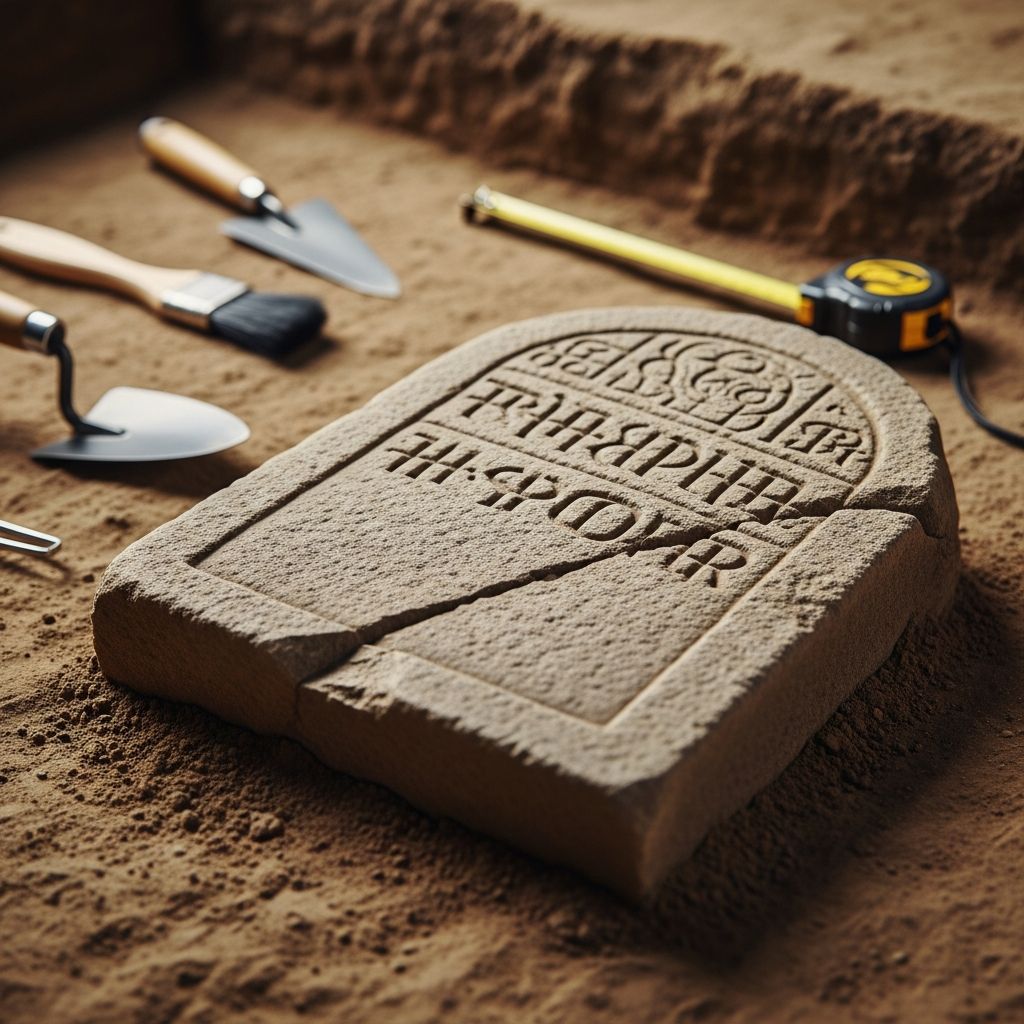
Post-processual archaeology represents a transformative shift in how scholars interpret the material remains of ancient societies, moving beyond rigid scientific models to embrace nuanced, context-driven narratives.
Origins and Historical Context of a Paradigm Shift
The late 20th century marked a pivotal moment in archaeological theory when post-processual approaches gained prominence. Emerging primarily in the 1980s, this movement arose as a direct intellectual rebellion against the dominant processual archaeology of the 1960s and 1970s. Processual archaeology, often called the ‘New Archaeology,’ sought to apply scientific rigor, hypothesis testing, and systems theory to uncover universal laws of human behavior and cultural adaptation.
Key figures like Ian Hodder in Britain and Mark Leone in the United States spearheaded this critique, arguing that processual methods overly simplified complex human experiences by prioritizing adaptive processes over meaning and individuality. They contended that archaeology is not a purely objective science but an interpretive endeavor shaped by the archaeologist’s own cultural and historical biases.
This shift was influenced by broader intellectual currents, including postmodernism, feminism, and post-positivist philosophy, which questioned grand narratives and emphasized relativism. Unlike its predecessor, post-processualism is not a monolithic theory but a diverse collection of perspectives unified by their dissatisfaction with positivism—the belief in verifiable, objective truths derived from empirical data.
Core Principles: Interpretation Over Objectivity
At its heart, post-processual archaeology insists that artifacts and sites are not mere data points but carriers of symbolism, meaning, and intentionality. Practitioners argue that material culture must be understood within its specific historical and cultural contexts, rejecting cross-cultural generalizations in favor of localized interpretations.
- Emphasis on Symbolism: Objects like pottery or monuments are seen as imbued with social significance, rituals, or ideologies rather than just functional tools.
- Contextual Analysis: Every find is evaluated against its unique temporal and spatial setting, acknowledging how power dynamics, gender roles, and ideologies shaped its creation and use.
- Rejection of Single Truths: Multiple valid interpretations of the same evidence are possible, encouraging pluralism and debate.
This approach transforms archaeology from a quest for universal laws into a dialogue about human experiences, where the past is reconstructed through layered, subjective lenses.
Key Theoretical Pillars: Agency, Power, and Ideology
Post-processual thinkers introduced concepts that redefined archaeological inquiry. Central among them is agency, the idea that individuals actively shape their social worlds rather than passively adapting to environmental or systemic forces. This contrasts sharply with processual views of humans as cogs in larger adaptive systems.
Power relations and ideology also feature prominently. Archaeologists examine how elites manipulated symbols to maintain dominance or how marginalized groups expressed resistance through subtle material choices. Feminist post-processualism, for instance, highlights gender as a structuring force, revealing women’s roles often obscured in traditional analyses.
| Concept | Processual View | Post-Processual View |
|---|---|---|
| Human Behavior | Driven by adaptation and systems | Shaped by agency and intentionality |
| Material Culture | Functional and systemic evidence | Symbolic and meaningful expressions |
| Interpretation | Objective hypothesis testing | Subjective, multiple narratives |
These pillars encourage archaeologists to explore cognitive landscapes, rituals, and embodied experiences, treating sites as dynamic arenas of social negotiation.
Major Influences from Interdisciplinary Fields
Post-processual archaeology drew heavily from external disciplines, enriching its theoretical toolkit. Structuralism inspired analyses of binary oppositions in artifacts, while postmodernism promoted deconstruction of authoritative narratives. Marxist influences focused on class struggles embedded in the archaeological record, and feminist theory brought attention to embodied experiences and patriarchy.
Additionally, hermeneutics—the art of interpretation—became a cornerstone, viewing archaeological work as an iterative process of understanding texts (artifacts) through ongoing dialogue. Landscape archaeology, influenced by phenomenology, treats environments as cultural constructs laden with memory and meaning, as seen in studies of prehistoric monuments.
Strengths: A Richer, More Inclusive Past
One of post-processualism’s greatest assets is its ability to humanize the past. By focusing on individuals and diverse viewpoints, it uncovers stories of resistance, identity, and creativity that processual methods overlooked.
- Promotes interdisciplinary integration, blending archaeology with anthropology, history, and literary theory for holistic insights.
- Challenges ethnocentric biases, amplifying voices from non-Western or marginalized contexts.
- Fosters reflexivity, requiring archaeologists to acknowledge their own influence on interpretations.
This has led to vibrant studies of topics like embodiment, memory, and materiality, making archaeology more relevant to contemporary social issues.
Criticisms and Limitations: Relativism and Practical Challenges
Despite its innovations, post-processual archaeology faces significant critiques. Detractors argue it veers into extreme relativism, where ‘anything goes’ undermines testable knowledge. Without clear methodologies, interpretations can seem arbitrary or ungrounded.
Processual archaeologists counter that emphasizing subjectivity dilutes scientific credibility, making it hard to distinguish robust claims from speculation. Additionally, its pluralism can complicate consensus on site management or heritage preservation.
Practical Applications in Modern Excavations
In practice, post-processual methods shine in collaborative, community-engaged projects. For example, analyzing Catalhoyuk in Turkey, Ian Hodder integrated local knowledge and reflexive techniques to explore symbolic house use. Such approaches prioritize stakeholder input, turning digs into dialogues about living heritage.
Today, digital tools like GIS aid in mapping experiential landscapes, blending post-processual nuance with processual precision.
Frequently Asked Questions (FAQs)
What is the main difference between processual and post-processual archaeology?
Processual archaeology uses scientific methods for objective laws of behavior, while post-processual emphasizes interpretive, context-specific meanings and agency.
Who are the founders of post-processual archaeology?
Ian Hodder and Mark Leone are key early proponents, with contributions from Michael Shanks and others.
Is post-processual archaeology anti-science?
No, it critiques naive positivism but supports rigorous, reflexive science informed by theory.
How does it impact heritage management?
It promotes inclusive narratives, involving communities in interpreting and preserving sites.
Can post-processual and processual methods coexist?
Yes, many archaeologists adopt a hybrid approach, combining empirical data with interpretive depth.
Legacy and Future Directions
Post-processual archaeology has profoundly shaped the discipline, encouraging ongoing theoretical diversity. As global challenges like climate change demand nuanced views of human-environment relations, its focus on agency and context remains vital. Future integrations with AI-driven analysis and indigenous knowledge promise even richer reconstructions of the past.
(Word count: 1678)
References
- 3.3 Post-Processual Archaeology — Fiveable. Accessed 2026. https://fiveable.me/introduction-archaeology/unit-3/post-processual-archaeology/study-guide/30CZSXijH37Kafaa
- Post-Processual Archaeology Explained — Scribd (citing academic module by Priyanka E.K., Little Flower College). 2022. https://www.scribd.com/document/636436892/Untitled
- Post Processual archaeology and after — Michael Shanks, Stanford University. Pre-2007 (authoritative theoretical overview). https://web.stanford.edu/~mshanks/MichaelShanks/files/140558.pdf
- Post-processual archaeology (Chapter 9) — Cambridge University Press (Reading the Past). Ongoing access. https://www.cambridge.org/core/books/reading-the-past/postprocessual-archaeology/530EB376BC173A61EEAFAF62E4DC1E7F
- ‘New’/Processual Archaeology – an introduction — An Oxford Historian. Recent analysis. https://www.anoxfordhistorian.com/post/new-processual-archaeology-an-introduction
- Post-Processual Archaeology — Anthropological Theory Wiki. Conceptual summary. https://anthropological-theory.fandom.com/wiki/Post-Processual_Archaeology

- Integrated M.A. in Applied Linguistics, University of Hyderabad
- 5+ years in editorial, instructional, SEO, and research-based writing
Sneha is a relationships and lifestyle writer with a strong foundation in applied linguistics and certified training in relationship coaching. She brings over five years of writing experience to theskillvault, crafting thoughtful, research-driven content that empowers readers to build healthier relationships, boost emotional well-being, and embrace holistic living. Her writing and insights reflect the belief that beauty, happiness, and wellness…