
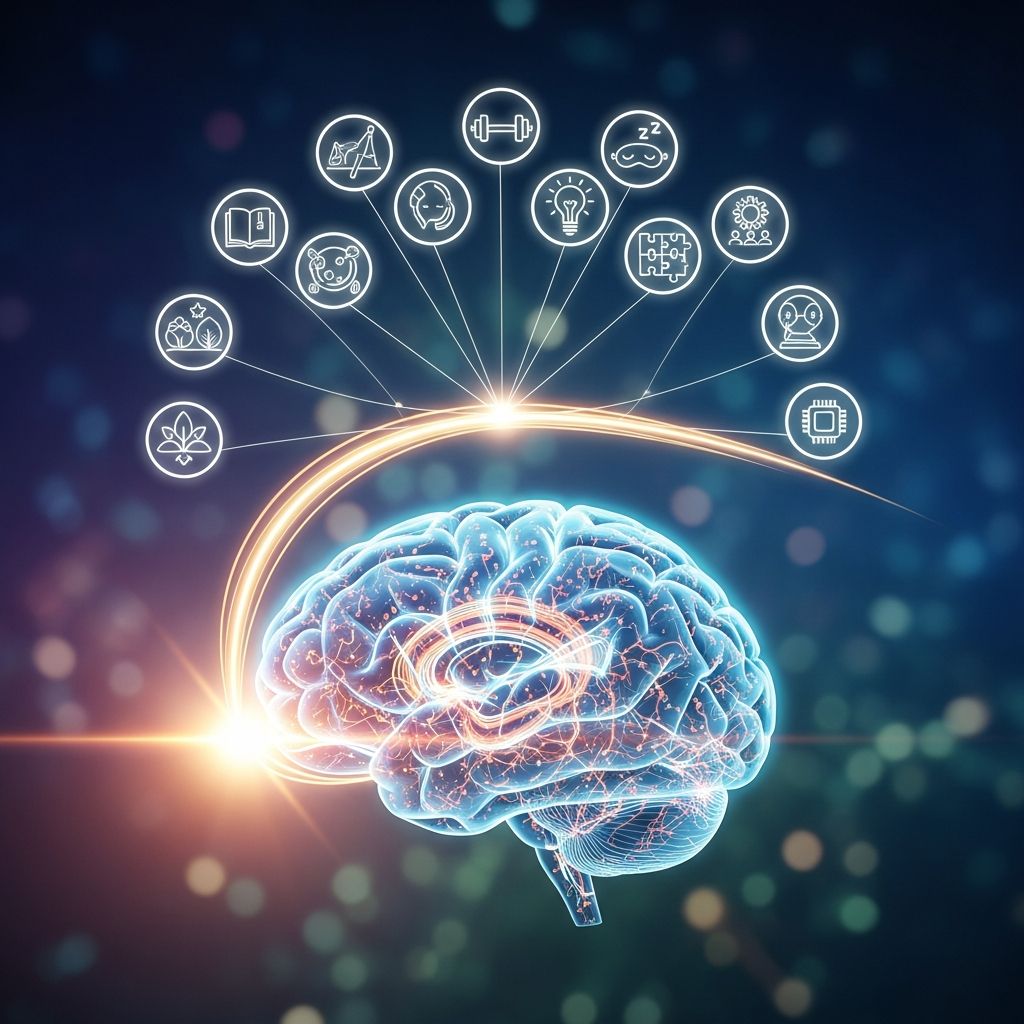
Your brain is the most powerful tool you possess, yet it often operates on autopilot, limited by habits and environmental cues. By understanding core principles of neuroscience, you can rewire neural pathways to achieve heightened focus, memory retention, and creative problem-solving. This article explores 10 accessible strategies drawn from rigorous research on cognitive enhancement, emphasizing behavioral and physical interventions over pharmacological ones for sustainable results.
Understanding Cognitive Enhancement Basics
Cognitive enhancement involves targeted interventions to improve mental functions like attention, working memory, and executive control. Research categorizes these into biochemical, physical, and behavioral clusters, with behavioral strategies showing the broadest accessibility and lowest risk. Studies highlight how everyday practices like exercise and mindfulness amplify baseline cognitive performance, particularly in those with higher initial abilities. Unlike passive methods such as nootropics, active techniques demand engagement but yield lasting neural adaptations.
Key benefits include sharper decision-making and reduced mental fatigue. A review of non-invasive methods confirms physical activities enhance visuospatial skills and memory via neuroplasticity. Before diving into techniques, note individual factors like age and health influence efficacy—younger adults often see amplified gains from training.
1. Harness the Power of Visualization for Goal Achievement
Visualization activates the same brain regions as real experiences, priming your mind for success. Athletes and executives use this to bridge intention and action. Start by closing your eyes daily for 5-10 minutes, vividly imagining desired outcomes with sensory details—sights, sounds, emotions.
Neuroimaging shows this boosts motivation by engaging the reticular activating system, filtering reality to spotlight opportunities. Pair it with affirmations for reinforcement. Track progress in a journal to solidify pathways. Over weeks, this shifts subconscious biases toward achievement.
2. Build Lasting Habits Through Tiny Incremental Changes
The brain resists big shifts but thrives on micro-adjustments. Begin with ‘habit stacking’—attach a new behavior to an existing routine, like meditating for 1 minute post-brushing teeth. This leverages dopamine loops for automaticity.
Research on behavioral strategies underscores how small, consistent actions rewire the basal ganglia for habit formation. Gradually scale up; consistency trumps intensity. Apps can cue reminders, but internal cues foster independence. Expect plateaus—persistence activates prefrontal cortex growth.
3. Leverage Music to Elevate Mood and Cognitive Flow
Strategic music listening synchronizes brainwaves, enhancing focus and creativity. Upbeat tracks with 50-80 BPM match alpha states for learning; classical pieces aid memory consolidation.
Acoustic stimulation, including binaural beats, modulates theta rhythms for better attention. Curate playlists for tasks: instrumental for deep work, lyrical for brainstorming. Avoid over-reliance—silence builds resilience. Studies link musical training to broad cognitive gains beyond music skills.
4. Declutter Your Environment to Free Mental Bandwidth
A chaotic space mirrors a cluttered mind. Minimalism reduces cognitive load, allowing prefrontal resources for high-value tasks. Adopt the ‘one-touch rule’: handle items once—file, trash, or delegate.
Spatial organization influences stochastic resonance in motor control, indirectly sharpening cognition. Weekly purges sustain clarity. Digital detox complements: limit tabs to three. This practice echoes neurofeedback principles, passively training focus.
5. Practice Gratitude to Rewire for Positivity
Daily gratitude journaling counters negativity bias, flooding the brain with serotonin and dopamine. List three specifics each evening—what, why it matters, felt impact.
Meditation-like practices enhance mindfulness and attention. fMRI data reveals strengthened prefrontal-limbic connections, buffering stress. Share entries for social amplification. Over months, this shifts default mode network toward optimism, boosting resilience.
6. Embrace Nature Exposure for Neural Reset
Forest bathing or green walks lower cortisol, restoring executive function. Aim for 20 minutes daily amid trees or water—nature’s fractals captivate without overload.
Physical interventions like outdoor activity parallel whole-body vibrations for indirect enhancement. Biodiversity engages senses restoratively. Urban dwellers: parks suffice. Research ties nature to improved working memory via reduced rumination.
7. Take Strategic Breaks to Supercharge Productivity
Pomodoro-style intervals—25 minutes work, 5-minute breaks—prevent burnout. Use breaks for movement or breathwork, not screens.
Sleep and rest oscillations enhance consolidation. EEG studies show micro-breaks sustain theta waves for creativity. Customize ratios; track output. This embodies behavioral timing scales for acute gains.
8. Use Positive Self-Talk to Overcome Limiting Beliefs
Replace ‘I can’t’ with ‘I am learning.’ Recorded affirmations played during commutes embed them subconsciously.
Neurofeedback in alpha bands mirrors this for memory boosts. Affirmations during stress activate self-efficacy circuits. Evidence from mnemonic training shows personalization amplifies effects. Monitor mood shifts weekly.
9. Fuel Your Brain with Optimal Nutrition and Hydration
Hydrate first—dehydration shrinks cognition by 2%. Prioritize omega-3s, antioxidants from berries, nuts; stable blood sugar via complex carbs.
| Brain-Boosting Food | Key Nutrient | Benefit |
|---|---|---|
| Blueberries | Antioxidants | Memory protection |
| Salmon | Omega-3s | Neural inflammation reduction |
| Dark Chocolate | Flavonoids | Focus enhancement |
| Green Tea | L-Theanine | Calm alertness |
Biochemical enhancers like oxygen parallel nutrient effects. Time meals; intermittent fasting may aid via BDNF upregulation.
10. Prioritize Quality Sleep for Cognitive Consolidation
Sleep prunes synapses, encoding day’s learning. Target 7-9 hours; wind down with dim lights, no devices post-8 PM.
Enhancement via sleep slow oscillations is robust. Naps under 30 minutes recharge without grogginess. Track cycles with wearables. Age modulates benefits, peaking in youth.
Integrating Strategies for Maximum Impact
Combine techniques: visualize during walks, gratitude pre-sleep. Personalize via journaling—what works? Behavioral clusters synergize; exercise plus music yields outsized gains. Monitor via weekly cognitive tests for objective progress.
Challenges: motivation dips. Counter with accountability partners. Long-term: neuroplasticity builds resilience.
Frequently Asked Questions (FAQs)
Q: How quickly do these brain tricks show results?
A: Behavioral methods yield noticeable shifts in days to weeks with consistency; sustained practice (months) cements changes via neuroplasticity.
Q: Are these techniques safe for everyone?
A: Yes, focusing on non-invasive behavioral strategies minimizes risks, though consult professionals for health conditions.
Q: Can I combine them with supplements?
A: Prioritize lifestyle first; caffeine may enhance working memory in extraverts, but basics suffice.
Q: What’s the best for memory improvement?
A: Sleep, visualization, and nutrition target consolidation effectively.
Q: Do these work for older adults?
A: Yes, though gains vary; exercise and sleep show strong age-independent effects.
References
- Hacking the Brain: Dimensions of Cognitive Enhancement — Dresler M et al. PMC. 2019-03-14. https://pmc.ncbi.nlm.nih.gov/articles/PMC6429408/
- Can neurotechnology revolutionize cognitive enhancement? — Medaglia JD et al. PLOS Biology. 2024-05-28. https://journals.plos.org/plosbiology/article?id=10.1371/journal.pbio.3002831
- Who Wants to Enhance Their Cognitive Abilities? Potential Users of Enhancement Technologies and Civil Drones — Lieb M et al. PMC. 2023-06-09. https://pmc.ncbi.nlm.nih.gov/articles/PMC10299699/
- Cognitive enhancement by brain stimulation techniques — Frontiers Research Topic. 2024. https://www.frontiersin.org/research-topics/69024/cognitive-enhancement-by-brain-stimulation-techniques

- Integrated M.A. in Applied Linguistics, University of Hyderabad
- 5+ years in editorial, instructional, SEO, and research-based writing
Sneha is a relationships and lifestyle writer with a strong foundation in applied linguistics and certified training in relationship coaching. She brings over five years of writing experience to theskillvault, crafting thoughtful, research-driven content that empowers readers to build healthier relationships, boost emotional well-being, and embrace holistic living. Her writing and insights reflect the belief that beauty, happiness, and wellness…