
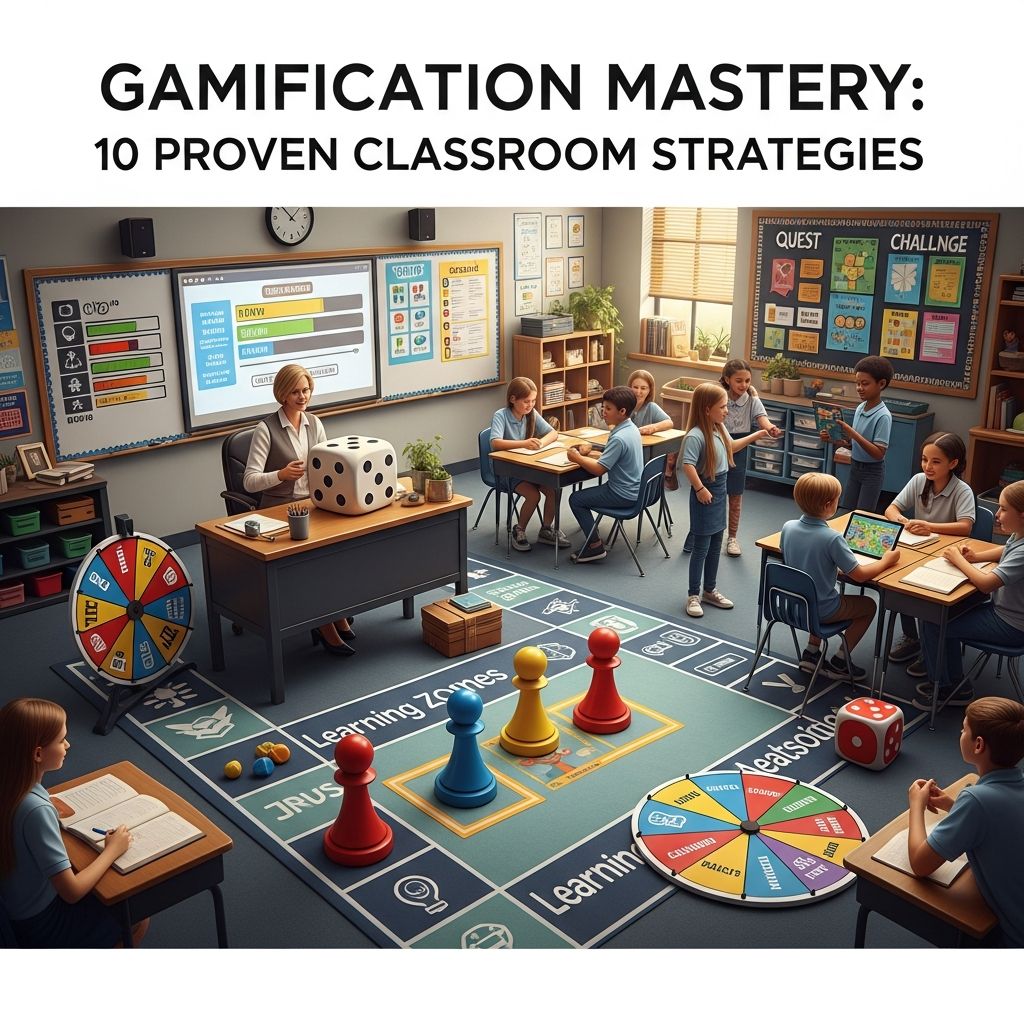
Gamification integrates game-like elements into education to captivate students, enhance motivation, and deepen understanding. By applying these principles thoughtfully, educators can create dynamic environments where learning feels like play. This article outlines 10 effective strategies drawn from educational research and practical applications, ensuring every lesson sparks enthusiasm and progress.
Understanding the Power of Gamification in Education
Gamification leverages psychological drivers like achievement, competition, and progression to make abstract concepts tangible and exciting. Studies show it boosts enjoyment by 67%, motivation by 50%, and learning outcomes by over 60%. Core elements include points for tasks, badges for milestones, leaderboards for recognition, and narratives for immersion. When implemented well, these foster intrinsic motivation, turning passive learners into active participants.
Strategy 1: Build Clear Objectives and Progression Paths
Start every gamified lesson with a defined goal, mirroring game design principles. Transform passive activities into personal quests, such as ‘Conquer Algebra Mountain’ where students advance levels by mastering equations. This scaffolds the main objective, providing visible progress through tracks or digital bars. Students unlock harder challenges upon completion, maintaining momentum and celebrating small wins.
Strategy 2: Implement Points, Badges, and Leaderboards
A robust points system rewards homework (5 points), vocabulary mastery (50 points), or discussions (bonus points). Badges like ‘Grammar Wizard’ or ‘Math Star’ mark achievements, with golden tiers for advanced mastery. Display leaderboards weekly, including categories like ‘Most Improved’ to ensure inclusivity. This public recognition drives competition while highlighting diverse strengths.
Strategy 3: Design Narrative-Driven Quests and Missions
Wrap lessons in stories to create immersion. In literature, students become detectives solving mysteries through chapter analyses, earning ‘clues’ and tools like virtual magnifying glasses. History quests might involve time-travel adventures decoding events. Visual aids like maps and props enhance the narrative, helping students connect tasks to a larger purpose and think critically.
Strategy 4: Launch Interactive Challenges and Competitions
Weekly math challenges or science bridge-building contests pit teams against objectives, with points for accuracy, creativity, and teamwork. Test structures for weight capacity, awarding ‘Master Builders.’ Include time limits for urgency and categories like ‘Best Collaboration’ to value all contributions, building skills in problem-solving and cooperation.
Strategy 5: Create Scavenger Hunts for Discovery Learning
Introduce units with hunts: geography students match flags to continents via clues like ‘Tallest mountain nation’ leading to Nepal. Groups use maps, progressing clue-to-clue to a ‘treasure’ revealing the unit theme. This 20-30 minute activity activates prior knowledge, promotes movement, and sets an adventurous tone.
Strategy 6: Track Progress with Visual Bars and Milestones
Reading challenges feature progress bars for pages or books, updated on posters or apps. Hitting milestones unlocks stickers, choice privileges, or group reads. In language classes, track vocabulary goals visually. This tangible feedback reinforces persistence, making long-term goals feel achievable.
Strategy 7: Foster Collaboration Through Team-Based Games
Divide classes into teams for quests, allocating roles like strategist or artist. Compete in Kahoot! quizzes or real-world simulations like budgeting car purchases, applying concepts interactively. Feedback loops and shared rewards emphasize collective success, nurturing social skills and diverse perspectives.
Strategy 8: Embrace Trial, Error, and Instant Feedback
Design lessons allowing safe failures, like multiple quiz attempts with immediate corrections. Use ‘I Do, We Do, You Do’ in hands-on activities: demonstrate, guide practice, then independent application. Tools like live-updating leaderboards provide real-time insights, encouraging resilience and iterative improvement.
Strategy 9: Incorporate Real-World Simulations and Immersion
Simulate scenarios: physics students build rollercoasters for velocity lessons using household items, or math classes solve budgeting with candies. Language immersion via story-based problems accelerates proficiency. These bridge theory to practice, boosting retention through contextual relevance.
Strategy 10: Leverage Tools and Flexibility Without Tech Overload
Combine low-tech (board games, Jenga rewards) with digital (LMS pathways, crosswords from vocab lists). Personalize paths in platforms like Canvas, adapting to paces. Involve students as co-designers for buy-in. Flexibility ensures accessibility, proving gamification thrives offline too.
Benefits and Research-Backed Impact
Gamification enhances retention, creativity, and interest while providing feedback. A Harvard Business Publishing study highlights healthy competition’s role in engagement without harming dynamics.[10] Primary research from institutions confirms progression mechanics reduce cognitive load, easing entry into complex topics.
| Strategy | Key Benefit | Example Subject |
|---|---|---|
| Points & Badges | Motivation Boost | Language Arts |
| Quests | Critical Thinking | History |
| Team Challenges | Collaboration | Science |
| Progress Bars | Persistence | Reading |
| Scavenger Hunts | Discovery | Geography |
Frequently Asked Questions (FAQs)
What is gamification in education?
Gamification applies game elements like points, levels, and challenges to non-game contexts like classrooms to increase engagement and learning.
Does gamification work for all age groups?
Yes, adaptable from elementary quests to high school simulations, with research showing broad efficacy across K-12.
Can gamification be done without technology?
Absolutely; use boards, cards, and physical games for equal impact, as proven in diverse classroom settings.
How do I avoid over-competition?
Include inclusive categories like ‘Most Improved’ and emphasize team efforts to foster positive dynamics.[10]
What tools are best for beginners?
Start with free options like Kahoot!, Google Classroom badges, or printable leaderboards for quick wins.
Integrate these strategies gradually, observing student responses to refine your approach. Gamification isn’t a one-size-fits-all; tailor to your class’s needs for maximum impact.
References
- What is gamification? 10 ways to use this technique in your classroom — Conecta TEC de Monterrey. 2023. https://conecta.tec.mx/en/news/national/education/what-gamification-10-ways-use-technique-your-classroom
- 10 Gamification in Education Ideas to Make Learning Fun — University of San Diego PCE. 2024. https://pce.sandiego.edu/gamification-in-education/
- 20 Ways to Gamify Your Classroom — Ditch That Textbook. 2023. https://ditchthattextbook.com/15-ways-to-gamify-your-class/
- 10 Effective ways to use gamification in your online classroom — Outschool Teach Handbook. 2024. https://teach.outschool.com/handbook/10-effective-ways-to-use-gamification-in-your-online-classroom/
- 10 Ways to Gamify Your Classroom with an LMS — Instructure. 2023-10-15. https://www.instructure.com/resources/blog/10-ways-gamify-your-classroom-lms
- 8 Ways to Gamify Your Classroom Instruction — Discovery Education. 2023. https://www.discoveryeducation.com/blog/teaching-and-learning/8-ways-to-gamify-your-classroom-instruction/
- Engage Your Students with Some Healthy Competition — Harvard Business Publishing Education. 2024. https://hbsp.harvard.edu/inspiring-minds/boost-student-engagement-gamification-strategies

Medha Deb is an editor with a master's degree in Applied Linguistics from the University of Hyderabad. She believes that her qualification has helped her develop a deep understanding of language and its application in various contexts. Medha specializes in the areas of beauty, health, sports, and wellness and is committed to ensuring that the content on the website is…