
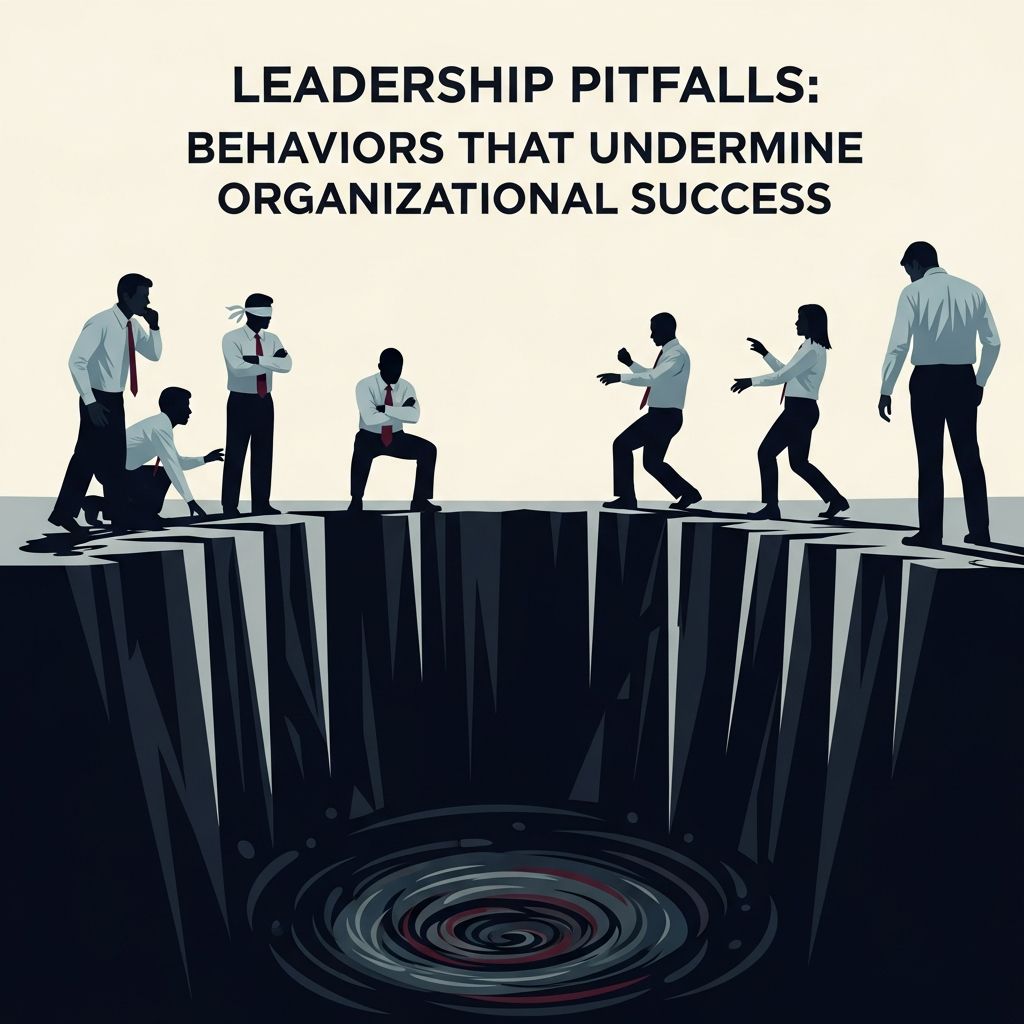
Leadership is fundamentally about influence and impact. While countless articles focus on what great leaders should do, understanding what they deliberately avoid is equally critical to developing executive excellence. The most respected leaders across industries recognize that certain behaviors erode trust, diminish team morale, and ultimately sabotage organizational performance. By examining these counterproductive patterns, emerging and seasoned leaders alike can make deliberate choices that strengthen their teams and accelerate organizational outcomes.
The Paradox of Avoidance: Why Knowing What Not to Do Matters
Leadership effectiveness isn’t simply about accumulating positive behaviors—it’s equally about recognizing and eliminating practices that contradict core leadership principles. Research from the Center for Creative Leadership demonstrates that leaders who possess self-awareness and regularly reflect on their impact are substantially more effective at identifying blind spots and correcting course. The most successful leaders don’t just focus on what they should do; they actively work to eliminate behaviors that undermine their credibility and effectiveness.
Consider this framework: if leadership is about building trust, fostering innovation, and enabling others to succeed, then any behavior that contradicts these objectives creates organizational friction. This friction manifests as decreased engagement, higher turnover, reduced innovation, and ultimately, financial underperformance. Understanding the specific behaviors that create this friction is therefore not optional for leaders serious about their impact.
Abandoning Clear Communication in Favor of Ambiguity
Exceptional leaders communicate with precision and directness. They articulate expectations, provide transparent feedback, and address challenges head-on rather than through passive-aggressive channels or vague directives. The inverse—muddled communication—represents one of the most damaging leadership mistakes.
Leaders who avoid clarity create several organizational pathologies:
- Misaligned execution: Team members operating under different interpretations of priorities and expectations inevitably pull in conflicting directions
- Eroded trust: When leaders fail to communicate transparently about challenges, setbacks, or organizational changes, employees develop skepticism about leadership motives
- Reduced psychological safety: Teams unsure about how their contributions are valued or how decisions are made become risk-averse and withhold ideas
- Inefficient decision-making: Without clear communication about rationale and context, teams waste energy second-guessing decisions rather than executing them
Leaders who excel in this area say what they mean and mean what they say. They don’t shy away from difficult conversations; instead, they address challenges directly and constructively. This clarity, though sometimes uncomfortable in the moment, builds credibility and accelerates organizational progress.
Failing to Demonstrate Genuine Empathy and Compassion
Empathy and compassion represent more than soft skills—they are foundational to leadership effectiveness. Yet many leaders fall into the trap of viewing emotional intelligence as optional or even weak. This represents a fundamental misunderstanding of human motivation and organizational dynamics.
Compassionate leadership requires active engagement with team member concerns. Research indicates that compassion isn’t merely about understanding struggles; it requires leaders to act meaningfully on what they learn. When employees share concerns and leaders acknowledge them without taking substantive action, employees feel unheard and disengaged. This gap between acknowledgment and action is a primary driver of lost organizational trust.
Leaders who avoid compassion typically exhibit these patterns:
- Making decisions without considering human impact
- Failing to recognize when team members are struggling
- Prioritizing metrics over people development
- Creating distance between themselves and their teams
- Dismissing employee concerns as “not my department”
Conversely, leaders who cultivate compassion build deeper connections, foster stronger psychological safety, and create environments where people bring their full selves to work. This translates directly to higher engagement, improved retention, and better performance.
Neglecting Personal Development and Growth Mindset
Truly great leaders recognize that leadership effectiveness is not static—it requires continuous evolution and learning. Leaders who avoid development stagnate and ultimately become liabilities to their organizations. The world changes rapidly, teams evolve, and leaders must evolve with them.
Leaders who dodge personal growth typically demonstrate these characteristics:
- Believing they’ve already mastered essential skills
- Resisting feedback as threat rather than opportunity
- Maintaining rigid approaches despite changing contexts
- Failing to develop emotional intelligence
- Avoiding challenging assignments that would stretch capabilities
In contrast, leaders with high learning agility remain adaptable, accept feedback gracefully, and continuously refine their approaches. They invest in understanding themselves—their strengths, weaknesses, and impact on others. This self-awareness becomes the foundation for genuine leadership development and continued effectiveness across evolving circumstances.
Avoiding Accountability and Responsibility
Leaders who deflect blame, make excuses, or shift responsibility undermine the trust that’s essential for effective leadership. Integrity—the alignment between words and actions—forms the cornerstone of leadership credibility. When leaders fail to demonstrate integrity by avoiding accountability, they send a clear message: accountability is for others, not for those at the top.
This creates a corrosive organizational culture where:
- Team members become defensive rather than solution-oriented
- Mistakes multiply because people hide them rather than address them
- Innovation stagnates because failure becomes something to conceal
- Trust erodes rapidly
Leaders who embrace accountability take responsibility for outcomes—both successes and failures. When projects fail, they examine their own role in the failure, learn from the experience, and focus on solutions. This behavior sets a moral compass for the entire organization, encouraging everyone to operate with similar integrity and accountability.
Dismissing Employee Input and Alternative Perspectives
Leaders who make decisions in isolation miss critical information, alienate talented team members, and limit organizational innovation. Great leaders remain receptive to new ideas and actively seek perspectives different from their own. They understand that the best solutions emerge from diverse thinking and collaborative problem-solving.
Leaders who avoid this approach typically:
- Announce decisions without input from those who’ll execute them
- Respond dismissively to ideas that challenge their thinking
- Create hierarchical decision-making structures that inhibit contribution
- Assume they possess the expertise to make all important decisions
Leaders who excel in this domain build strong relationships across their organizations, actively solicit input, and create psychological safety where people feel comfortable sharing candid perspectives. This approach doesn’t mean consensus-based decision-making—great leaders still make decisive calls—but it means making those decisions with better information and greater buy-in from those involved.
Failing to Invest in Others’ Development
Leadership extends beyond individual performance; it’s fundamentally about enabling others to succeed. Leaders who avoid investing in their teams’ development create stunted organizations where talent leaves, innovation stalls, and succession pipelines remain empty.
Great leaders focus explicitly on developing others. They provide coaching, mentoring, and growth opportunities. They recognize individual contributions and create pathways for advancement. By empowering team members and providing them with resources and autonomy, they build confidence, capability, and ownership.
This investment doesn’t happen by accident—it requires intentional effort, time allocation, and genuine belief in people’s potential. Leaders who skip this step may achieve short-term results, but they sacrifice long-term organizational strength and sustainability.
Overlooking the Power of Positive Influence and Leading by Example
Leaders set organizational tone through their behavior. Those who avoid leading by example create a credibility gap that undermines all other leadership efforts. When leaders ask their teams to do things they themselves won’t do, hypocrisy becomes organizational currency.
Conversely, leaders who demonstrate commitment through their actions earn respect and inspire similar commitment in others. Whether staying late to help meet critical deadlines, treating others with respect and kindness, or maintaining positive outlook during challenging times, these behaviors communicate that leadership isn’t about special privileges—it’s about service to the organization’s mission.
Avoiding Strategic Thinking and Vision Articulation
Teams need direction and purpose. Leaders who fail to articulate a clear vision leave their organizations adrift, making decisions in the absence of unifying purpose. A well-articulated vision provides context for decisions, aligns effort across the organization, and creates meaning in work.
Leaders who shortcut this responsibility typically focus exclusively on tactical execution at the expense of strategic positioning. While execution matters, without strategic clarity, organizations optimize for the wrong outcomes.
Neglecting Resilience and Emotional Regulation
Leadership during challenging times requires more than competence—it requires resilience and emotional intelligence. Leaders who avoid cultivating resilience project anxiety and fear to their teams. Conversely, leaders who demonstrate adaptive responses to challenges help their teams maintain emotional strength and commitment to shared goals.
Resilience isn’t about denying challenges; it’s about responding constructively to them and projecting confidence that obstacles can be overcome. This emotional regulation during difficulty becomes particularly critical to organizational morale and performance.
Frequently Asked Questions
Q: What’s the difference between knowing what to do and knowing what not to do in leadership?
A: Positive leadership skills (communication, vision-setting) are essential, but understanding what to avoid prevents you from actively undermining your effectiveness. Many leaders derail not because they lack capabilities but because certain behaviors—blame-shifting, poor communication, lack of empathy—actively erode the trust and engagement they’ve built. Avoiding these pitfalls protects your leadership foundation.
Q: Can leaders change deeply ingrained behavioral patterns?
A: Yes, but it requires deliberate effort and often external support. Self-awareness is the first step. Leaders who understand their impact and commit to change can work with coaches, mentors, or through structured development programs to build new patterns. The key is recognizing the gap between current behavior and desired impact, then executing a sustained change strategy rather than expecting overnight transformation.
Q: How do I know if I’m exhibiting these avoidance behaviors?
A: Seek direct feedback from your team, peers, and mentors. Create psychological safety for honest input, then listen without defensiveness. You might also consider 360-degree feedback assessments or executive coaching. Pay attention to outcomes: high turnover, low engagement scores, or repeated execution failures often signal that core leadership behaviors need examination.
Q: Are these pitfalls equally damaging across different organizational contexts?
A: While the fundamental damage is consistent, context matters. In fast-paced environments, unclear communication becomes more costly. In highly collaborative organizations, avoiding empathy creates more friction. However, the core pitfalls—lack of integrity, poor communication, failure to develop others—undermine effectiveness in virtually every organizational setting.
Conclusion: Deliberate Leadership Through Avoidance
Great leadership isn’t accidental. It results from deliberate choices about how to show up, how to communicate, how to treat people, and how to approach challenges. Understanding what to avoid—the behaviors that erode trust, stifle innovation, and undermine engagement—provides a clarity that focusing only on positive behaviors sometimes misses.
By recognizing these pitfalls and consciously working to eliminate them, leaders create organizational cultures where people thrive, innovation flourishes, and performance accelerates. The most respected leaders across industries share this commitment to continuous improvement and intentional elimination of counterproductive behaviors.
References
- 12 Essential Qualities of Effective Leadership — Center for Creative Leadership. Accessed January 2026. https://www.ccl.org/articles/leading-effectively-articles/characteristics-good-leader/
- What Makes A Good Leader? 10 Essential Qualities To Learn — Walden University. Accessed January 2026. https://www.waldenu.edu/programs/business/resource/what-makes-a-good-leader-ten-essential-qualities-to-learn
- Top 5 Leadership Qualities to Prepare You for Success — Northeastern University Graduate Programs. Accessed January 2026. https://graduate.northeastern.edu/knowledge-hub/top-5-leadership-qualities/
- What makes a great leader? 6 important leadership qualities — Workleap. Accessed January 2026. https://workleap.com/blog/leadership-guide
- 22 Essential Leadership Qualities You Can’t Afford to Miss — Our Lady of the Lake University. August 7, 2024. https://www.ollusa.edu/blog/leadership-qualities.html

- Integrated M.A. in Applied Linguistics, University of Hyderabad
- 5+ years in editorial, instructional, SEO, and research-based writing
Sneha is a relationships and lifestyle writer with a strong foundation in applied linguistics and certified training in relationship coaching. She brings over five years of writing experience to theskillvault, crafting thoughtful, research-driven content that empowers readers to build healthier relationships, boost emotional well-being, and embrace holistic living. Her writing and insights reflect the belief that beauty, happiness, and wellness…