
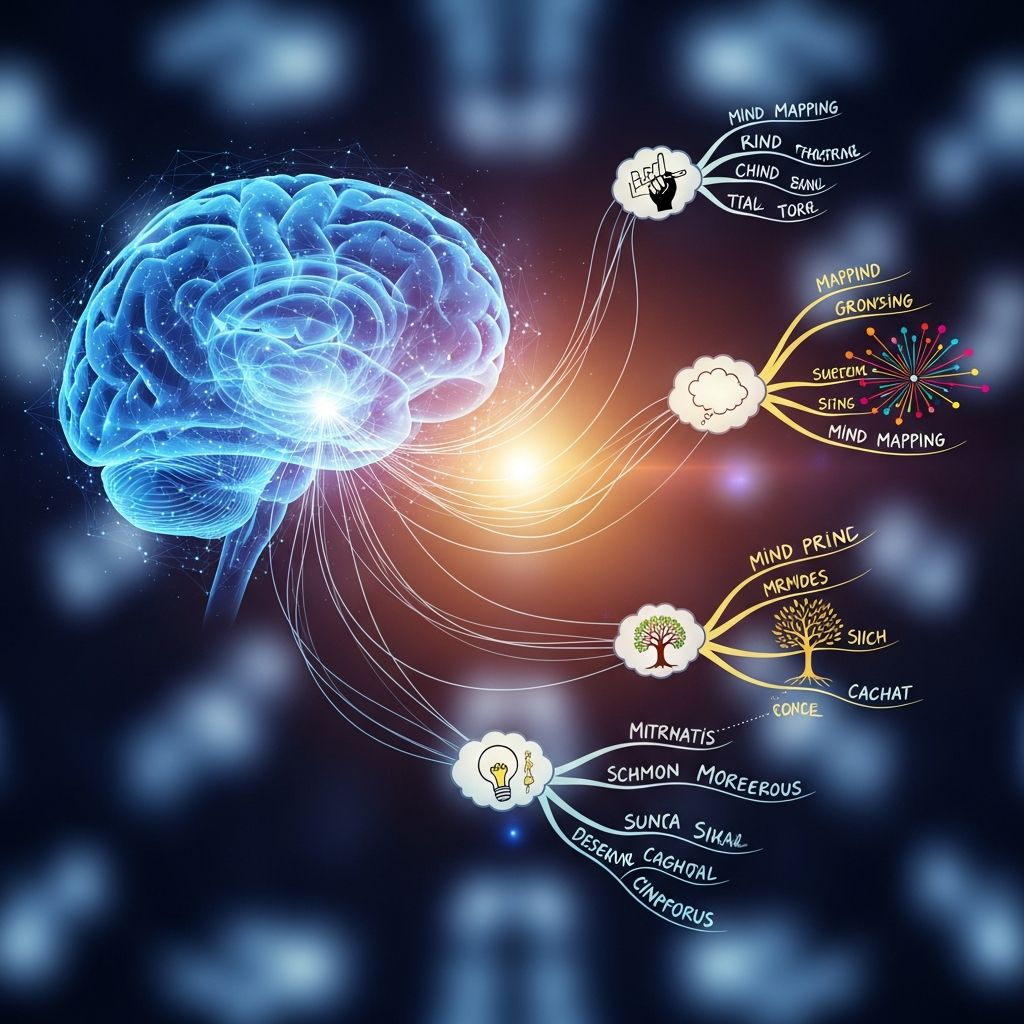
Mind mapping harnesses the brain’s natural affinity for visual and associative thinking to dramatically improve memory retention. By creating radial diagrams with a central idea branching into related concepts, colors, images, and keywords, learners can organize complex information intuitively. Research from Queen Mary University of London demonstrates that mind mapping boosts retention by 10-15% compared to traditional note-taking. This article explores 10 innovative applications, drawing on visual stimulation and nodal structures to enhance recall, creativity, and understanding.
Why Mind Maps Excel for Memory Enhancement
The human brain processes visuals 60,000 times faster than text, making mind maps ideal for memory. They encourage active engagement through colors, symbols, and spatial arrangements, which strengthen neural pathways. Studies confirm mind maps significantly improve recall over linear notes, with visual elements like lines depicting relationships aiding comprehension. Unlike rigid outlines, mind maps mimic how thoughts naturally branch, reducing cognitive load and promoting long-term retention.
1. Dynamic Brainstorming Sessions
Start with a core concept in the center and radiate ideas freely to ignite creativity. This technique is perfect for generating unlimited possibilities in group or solo settings. Use bold colors for main branches and icons for sub-ideas to make connections pop visually. For memory, review the map repeatedly, adding layers to reinforce associations. Students brainstorming essay topics or professionals ideating projects find this method unlocks hidden insights, with the nodal structure ensuring no idea is forgotten.
2. Visual Note-Taking Revolution
Transform lectures or meetings into vibrant diagrams rather than linear scribbles. Position key points as branches from the main topic, incorporating doodles and highlights. This visual approach tracks information holistically, making it easier to memorize during reviews. A history class example: centralize the era, branch to events with timelines and images—recall improves as spatial memory kicks in.
3. Task Mastery Through Planning Maps
Break overwhelming projects into manageable visuals. Central node: project goal; branches: steps, deadlines, resources. Color-code priorities (red for urgent) and link dependencies with arrows. This not only organizes but embeds sequences in memory via repetition and hierarchy. Daily to-do lists become less intimidating, boosting completion rates and recall of responsibilities.
4. Compelling Presentation Blueprints
Craft slides from mind maps by exporting branches as sections, retaining images for impact. The diagram’s flow ensures logical progression, while visuals aid audience retention. Presenters remember content effortlessly as the map serves as a mental anchor. For school reports or business pitches, this method amplifies message delivery and personal recall.
5. Strategic Problem Decomposition
Map dilemmas centrally, branching causes, effects, and solutions. Visualizing the full picture reveals patterns invisible in text. Use symbols for emotions or stakes to deepen encoding. Problem-solvers in personal or professional contexts report clearer paths forward, with the map acting as a memorable roadmap.
6. Language Acquisition Accelerators
Centralize vocabulary themes (e.g., food), branch words with translations, images, and example sentences. Grammar rules link as sub-branches. This multisensory method enhances word recall, as visuals tie abstracts to concretes. Learners of new languages experience faster fluency and retention.
7. Spaced Repetition Integration
Combine mind maps with spaced review: number revisits with Roman numerals on nodes. Optimize long-term memory by spacing sessions. This technique, detailed in memory expert guides, turns static maps into dynamic recall tools.
8. Geographical and Spatial Drills
For geography, center countries, branch capitals, landmarks, and routes with maps or sketches. Visual cues like flags solidify locations in memory. Trip planners use this for itineraries, memorizing paths effortlessly.
9. Lab and Experiment Summaries
Structure hypotheses, methods, results, and conclusions radially. Diagrams clarify processes, aiding hypothesis recall and experimental understanding. Science students simplify complex labs, improving retention of procedures.
10. Goal-Setting and Org Structures
Map personal objectives or organizational hierarchies from a core vision. Branches detail milestones and roles. This visual hierarchy fosters motivation and memory of structures.
Proven Benefits: A Data-Driven Overview
| Benefit | Description | Evidence |
|---|---|---|
| Improved Retention | 10-15% boost over notes | Queen Mary Study |
| Visual Processing | 60,000x faster than text | Learning Research |
| Recall Enhancement | Via colors/images | UBC Studies |
| Creativity Surge | Free-form branching | Zenkit Insights |
| Stress Reduction | Holistic organization | Student Reports |
This table summarizes key advantages, supported by credible research, highlighting mind mapping’s edge in learning efficiency.
Practical Tips for Maximum Impact
- Use Colors Strategically: Group themes for instant recognition.
- Incorporate Images: Doodles encode info 65% better.
- Review Actively: Quiz yourself on branches daily.
- Digital Tools: Apps like XMind enable easy edits and sharing.
- Combine Techniques: Pair with Memory Palaces for elite recall.
Frequently Asked Questions
Can mind mapping help with exam preparation?
Yes, by condensing syllabi into visual overviews, it simplifies revision and boosts recall through associations.
Is mind mapping suitable for group activities?
Absolutely; collaborative mapping fosters idea sharing and collective memory building.
How does mind mapping reduce study stress?
Visual organization makes tasks feel achievable, minimizing overwhelm.
What’s the best way to start a mind map?
Place the main idea in the center on a blank page, then branch outward freely.
Do digital or paper mind maps work better for memory?
Both excel; paper suits tactile learners, digital offers flexibility—choose based on preference.
References
- 8 Creative Ways to Use a Mind Map — Zenkit. 2023-05-15. https://zenkit.com/en/blog/8-creative-ways-to-use-a-mind-map/
- 15 Creative Mind Map Ideas for Students to Boost Memory — 21K School. 2024-02-10. https://www.21kschool.com/us/blog/creative-mind-map-ideas-for-students/
- 6 Benefits of Mind Mapping With 6 Personal Mind Map Examples — Magnetic Memory Method. 2023-11-20. https://www.magneticmemorymethod.com/benefits-of-mind-mapping/
- Using Mind Maps: Visualizing Your Mind — UBC Learning Commons (.edu). 2022-09-01. https://learningcommons.ubc.ca/using-mind-maps-visualizing-your-mind/
- Mind Mapping: The Right Way — Inspiration Software (.edu referenced study). 2023-07-12. https://www.inspiration-at.com/mind-mapping-the-right-way/

- Integrated M.A. in Applied Linguistics, University of Hyderabad
- 5+ years in editorial, instructional, SEO, and research-based writing
Sneha is a relationships and lifestyle writer with a strong foundation in applied linguistics and certified training in relationship coaching. She brings over five years of writing experience to theskillvault, crafting thoughtful, research-driven content that empowers readers to build healthier relationships, boost emotional well-being, and embrace holistic living. Her writing and insights reflect the belief that beauty, happiness, and wellness…