
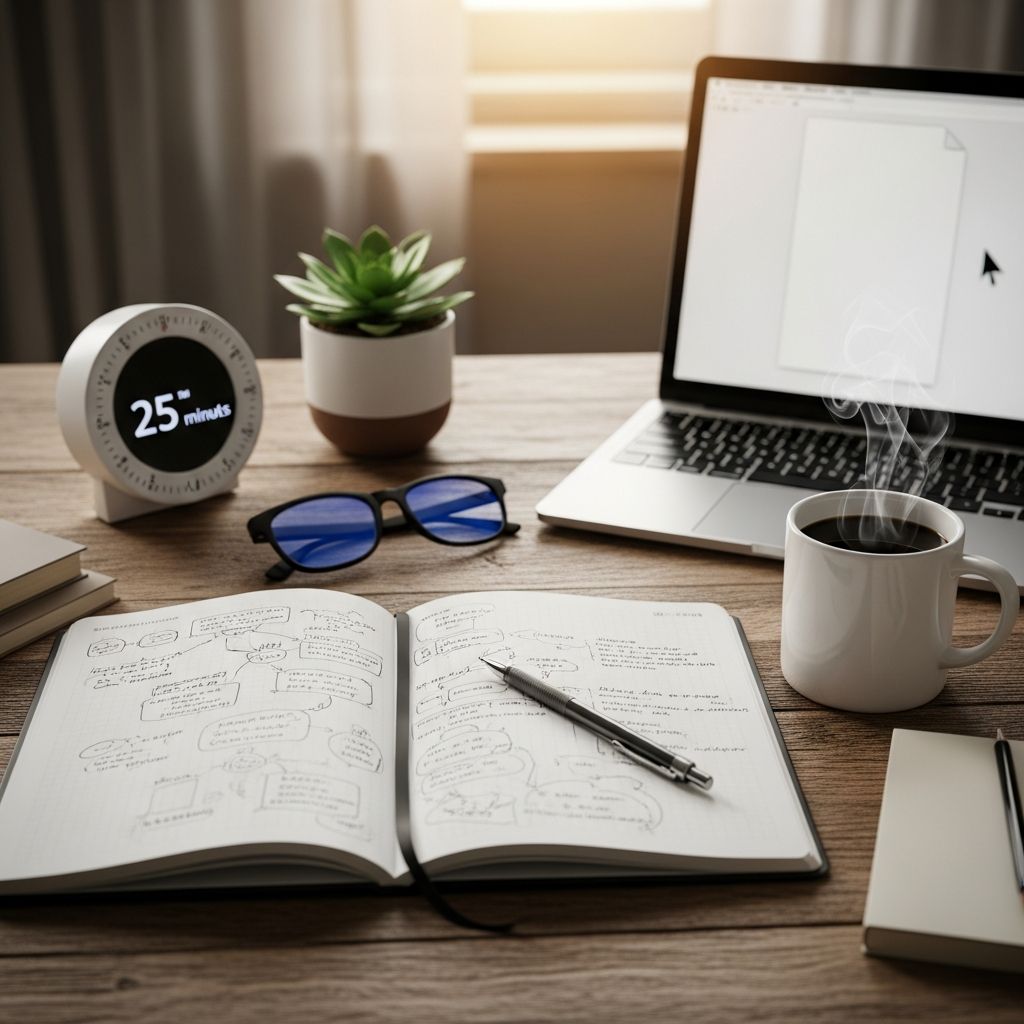
Creative writers and bloggers often struggle with inconsistent output, battling procrastination, perfectionism, and fleeting inspiration. This guide shares **10 actionable hacks** drawn from established techniques used by prolific authors and productivity specialists. These methods help you write faster, produce higher-quality work, and maintain momentum over time.
Master Your Schedule with Peak Performance Windows
Identify your most productive hours when ideas flow effortlessly and focus peaks. Writing during these times allows you to complete daily targets swiftly, leaving room for rest or other pursuits. Track your energy levels over a week by experimenting with morning, afternoon, and evening sessions to pinpoint when your mind is sharpest.
- Log output quality and speed for each time slot.
- Avoid forcing writing during low-energy periods.
- Reserve peak windows exclusively for drafting, not editing.
Prolific writers like Anthony Trollope thrived by aligning sessions with personal rhythms, producing thousands of words daily through disciplined timing.
Implement Timed Writing Sprints for Laser Focus
Short, intense bursts combat distraction and build momentum. The **Pomodoro Technique**—25 minutes of uninterrupted writing followed by a 5-minute break—trains your brain for efficiency, mimicking high-intensity interval training for the mind. Customize durations to fit your flow: some prefer 50-minute sprints.
| Method | Duration | Breaks | Best For |
|---|---|---|---|
| Pomodoro | 25 min | 5 min | Beginners building habit |
| Extended Sprint | 50 min | 10 min | Deep immersion tasks |
| Countdown | Variable | None until done | Deadline pressure simulation |
Use apps like Focus Booster to track cycles and prevent burnout.
Create Pre-Writing Rituals to Prime Your Mind
A consistent ritual signals your brain it’s time to create, bypassing resistance. Spend 5-10 minutes on activities like brewing coffee, stretching, or freewriting nonsense. Over time, this cues automatic focus, much like Pavlovian conditioning.
- Light a specific candle or play instrumental music.
- Review yesterday’s work briefly.
- Journal three ideas before diving in.
Authors report that rituals gear the mind for output, turning sporadic efforts into reliable habits.
Set Micro-Deadlines and Specific Assignments
Fake urgency propels progress. Assign concrete goals like “500 words on chapter outline” or “blog intro draft” tied to calendar slots. Designate days for tasks—e.g., Mondays for plotting—to eliminate decision fatigue.
Productivity coach Paula Rizzo schedules Fridays for targeted writing, ensuring readiness without morning hesitation. Track completion rates to refine goals, celebrating small wins to sustain motivation.
Embrace ‘Scratchy’ Starts to Beat Perfectionism
Begin with messy notes, sketches, or mind maps instead of polished prose. This non-linear approach mirrors brain activity, sidestepping analysis paralysis. Jot fragments, draw timelines, or voice-record ideas for later refinement.
- Use index cards for scene shuffling.
- Sketch character interactions visually.
- Limit to 10 minutes to force momentum.
This technique fosters flow, allowing subconscious processing while producing raw material.
Leverage Accountability Partners and Communities
Solitary writing invites procrastination; shared commitments enforce discipline. Pair with a buddy for daily check-ins, join online groups, or use apps like Focusmate for virtual co-working sessions.
Communities provide feedback loops and motivation, turning isolation into collaborative energy. Literary citizenship—sharing tips and critiques—builds lasting networks.
Gamify Your Process for Fun and Consistency
Transform writing into play with apps like Write or Die, which penalizes pauses with alarming sounds, or Productivity Challenge for escalating timers. Draw from Oblique Strategies cards for unexpected prompts, sparking creativity.
- Reward word counts with treats.
- Track streaks on habit apps.
- Compete in group sprints.
Gamification bypasses overthinking, making output addictive.
Optimize Your Writing Environment and Tools
A distraction-free space amplifies focus. Dedicate a “writing altar” with minimalism: noise-cancelling headphones, full-screen editors like Scrivener, and ergonomic setups. Handle admin tasks first to clear mental space.
Prep with quick exercises tailored to your project, ensuring purposeful sessions.
Adopt Big-Picture Planning Before Details
Outline plot, characters, and themes first to avoid mid-draft stalls. Tools like story starter kits flesh out foundations swiftly, preventing granular overload.
This macro-to-micro flow accelerates drafting.
Stop at Momentum and Use Dead Time Wisely
End sessions mid-sentence to ease re-entry, letting your subconscious simmer overnight. Capture ideas during commutes or chores—keep a voice recorder handy. Ernest Hemingway swore by this for sustained flow.
FAQs
What if I miss my peak writing time?
Shift non-creative tasks there and protect peak slots fiercely. Consistency builds flexibility over time.
How many Pomodoros should I do daily?
Start with 4-6, adjusting based on energy. Quality trumps quantity.
Can these hacks work for non-fiction bloggers?
Absolutely—adapt prompts for topics and sprints for posts.
What if perfectionism persists?
Layer scratchy starts with gamification; progress erodes the urge.
How do I find accountability partners?
Join Reddit’s r/Writing or NaNoWriMo forums for matches.
References
- Productivity Hacks to Write Faster Than Ever — Writer’s Digest, Paula Rizzo. 2023. https://www.writersdigest.com/productivity-hacks-to-write-faster-than-ever
- Writing productivity – the power of ‘just start’ — Method Writing. 2023. https://method-writing.com/writing-productivity-the-power-of-just-start/
- Effective Techniques to Increase Your Productivity as a Writer — Writing Cooperative. 2023. https://writingcooperative.com/effective-techniques-to-increase-your-productivity-as-a-writer-e62492adb9e2
- Powerful Productivity Strategies of Famous Writers — Nicole Bianchi. 2023. https://nicolebianchi.com/powerful-productivity-strategies-of-famous-writers/
- 4 Simple Productivity Hacks for Creative Writers — Novlr. 2023. https://www.novlr.org/the-reading-room/4-simple-productivity-hacks-for-creative-writers/

Medha Deb is an editor with a master's degree in Applied Linguistics from the University of Hyderabad. She believes that her qualification has helped her develop a deep understanding of language and its application in various contexts. Medha specializes in the areas of beauty, health, sports, and wellness and is committed to ensuring that the content on the website is…