
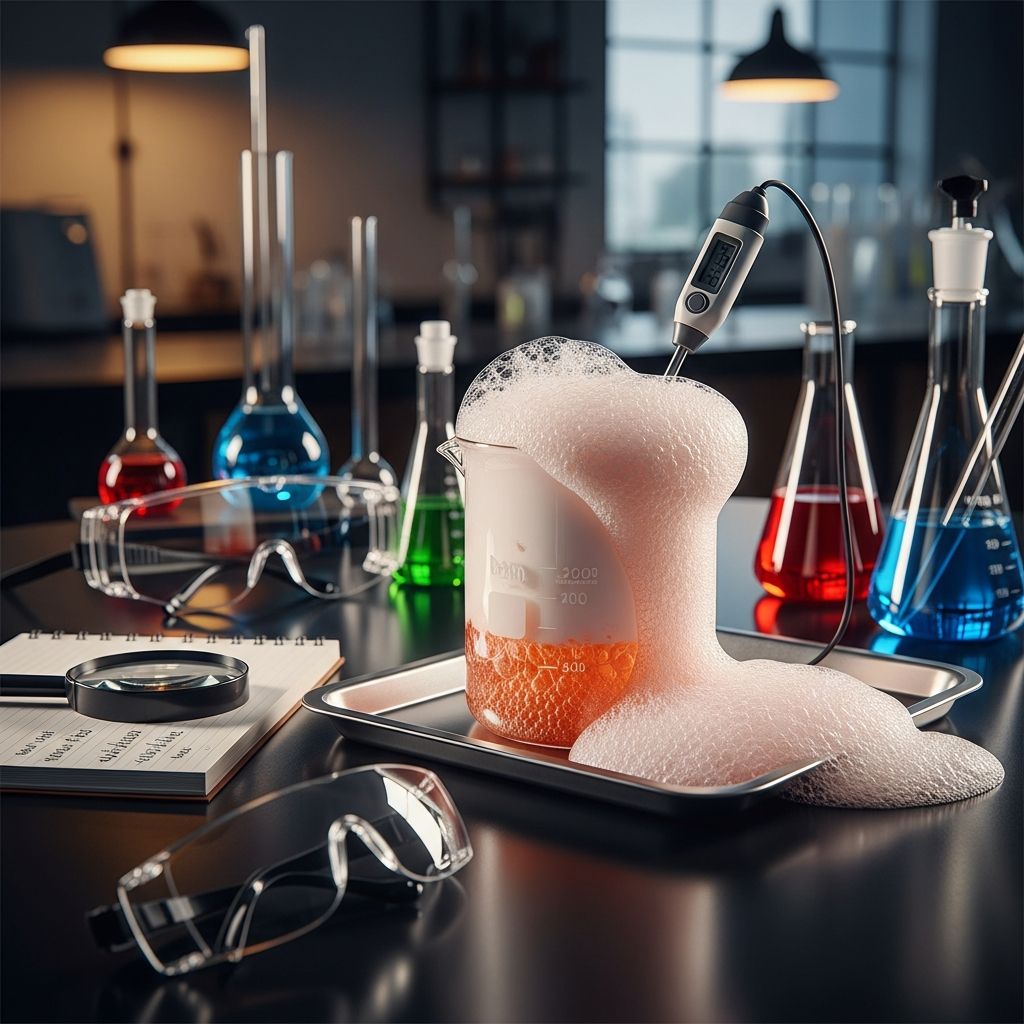
Hydrogen peroxide, a staple in medicine cabinets worldwide, holds remarkable potential for educational exploration. This colorless liquid, chemically known as H2O2, decomposes into water and oxygen gas, driving spectacular reactions when catalyzed. Educators and parents can leverage its properties for memorable learning experiences that teach core chemistry concepts like oxidation, catalysis, and gas production. These activities not only entertain but also build scientific inquiry skills.
Before diving in, prioritize safety: use 3% household hydrogen peroxide unless specified, wear protective gloves and goggles, and conduct experiments in well-ventilated areas or outdoors. Higher concentrations (e.g., 6-12%) amplify reactions but increase risks like skin irritation or bleaching. Always supervise children closely.
Understanding the Chemistry Behind the Magic
The key to hydrogen peroxide’s reactivity lies in its instability. The decomposition reaction is: 2H2O2 → 2H2O + O2. This process accelerates dramatically with catalysts—substances that speed reactions without being consumed. Yeast, enzymes, or manganese dioxide serve this role effectively. Oxygen gas release creates visible effects like foam eruptions or pressure builds, making abstract concepts tangible.
In classrooms, these demos illustrate exothermic reactions (heat-releasing) and demonstrate how everyday items influence chemical kinetics. Students can hypothesize outcomes, test variables, and record data, fostering the scientific method.
Explosive Foam Volcano: A Classroom Spectacle
Transform a simple bottle into a towering foam volcano, mimicking lava flows on a grand scale. This experiment showcases rapid gas evolution and surfactant action.
Materials Needed
- 16-20 oz plastic bottle
- 1/2 cup 3% hydrogen peroxide
- 1 packet active dry yeast
- 2 tbsp warm water
- 1/4 cup dish soap
- Food coloring (optional)
- Tray for containment
Step-by-Step Procedure
- Place the bottle on a tray outdoors or in a sink.
- Add dish soap and food coloring to the bottle.
- Pour in hydrogen peroxide carefully.
- In a separate cup, dissolve yeast in warm water; let activate for 2 minutes.
- Quickly pour yeast mixture into the bottle and step back.
Watch as thick, colorful foam erupts dramatically, sometimes reaching several feet! The yeast’s catalase enzyme breaks down peroxide, releasing oxygen that gets trapped in soap bubbles for the foam effect. Experiment variations: Try different soaps or peroxide volumes to observe changes in foam height and speed.
Mystical Gas Escape: The Bottle Specter
Witness a whooshing vapor cloud emerge from a flask, evoking ancient alchemy. This demo highlights high-concentration peroxide’s power.
Materials Needed
- Erlenmeyer flask or heat-safe bottle
- 1/2 cup 6-12% hydrogen peroxide (higher for better effect)
- 2-3 g manganese dioxide (or potassium permanganate)
- Safety funnel or foil cover
Step-by-Step Procedure
- Place flask in a sink or outdoors.
- Add manganese dioxide to the flask.
- Quickly pour in hydrogen peroxide.
- Observe the rapid steam-like cloud billowing out.
The catalyst triggers ultra-fast decomposition, producing hot oxygen vapor that expands explosively. Discuss heat generation and why dark bottles store peroxide—to block light-catalyzed breakdown.
| Peroxide Concentration | Reaction Intensity | Safety Notes |
|---|---|---|
| 3% | Mild foam | Household safe |
| 6% | Moderate vapor | Gloves required |
| 12%+ | Intense whoosh | Adult only, ventilated |
Propulsion Power: Noodle-Powered Rockets
Launch pasta pieces skyward using peroxide-fueled combustion, exploring rocketry basics.
Materials Needed
- Anise pasta or spaghetti (dry)
- 3% hydrogen peroxide
- Potassium iodide crystals
- Test tube or small vial
- Safety gear
Step-by-Step Procedure
- Insert pasta into test tube as a plug.
- Add 2-3 ml peroxide.
- Sprinkle iodide catalyst.
- Pasta ejects forcefully from oxygen pressure.
Oxygen gas builds pressure behind the pasta “rocket,” propelling it like a mini engine. Relate to real propulsion systems in space travel.
Oxidation in Action: Everyday Stain Fighters
Harness peroxide’s bleaching power to erase stains, linking chemistry to practical life skills.
Materials Needed
- Stained fabrics (ketchup, wine, etc.)
- 3% hydrogen peroxide
- Spray bottle
- Baking soda (optional)
Step-by-Step Procedure
- Blot excess stain.
- Spray peroxide generously.
- Let sit 5-10 minutes; agitate if needed.
- Rinse and repeat.
Peroxide oxidizes chromophores (color molecules), breaking them down. Test on various stains to compare efficacy.
Fire Revival Trick: Relighting Flames
Extinguish and reignite a flame using invisible gases—a mesmerizing optics and chemistry blend. Caution: Fire involved.
Materials Needed
- Long candle or splint
- 3% hydrogen peroxide
- Steel wool or sodium chloride
- Glass tube
Step-by-Step Procedure
- Light candle; extinguish after brief burn.
- Bubble peroxide through steel wool in tube.
- Blow oxygen-rich gas toward flame.
- Watch it relight!
Oxygen sustains combustion; peroxide supplies it post-extinguishment.
Nature’s Catalysts: Potato Power Unleashed
Use raw potato to fizz peroxide, introducing biological enzymes.
Materials Needed
- Fresh potato
- 3% hydrogen peroxide
- Blender or grater
- Measuring cup
Step-by-Step Procedure
- Grate or blend potato; squeeze juice into cup.
- Add peroxide to potato puree.
- Observe vigorous bubbling.
Catalase in potato cells decomposes peroxide rapidly. Compare with boiled potato (denatured enzymes) for no reaction.
Enzyme Endurance Test: Liver Lab Comparison
Contrast fresh and cooked liver to reveal enzyme sensitivity to heat.
Materials Needed
- Fresh liver (small pieces)
- Boiled liver
- 3% hydrogen peroxide
- Test tubes
Step-by-Step Procedure
- Place fresh liver in tube 1, add peroxide.
- Place boiled liver in tube 2, add peroxide.
- Compare foam production.
Fresh liver’s catalase produces massive foam; boiled lacks activity due to protein denaturation. Ties to biology and cooking science.
Advanced Variations and Classroom Extensions
Enhance learning by varying catalysts (e.g., liver vs. potato), measuring foam volume, or timing reactions. Create data tables:
| Catalyst | Foam Height (cm) | Reaction Time (sec) |
|---|---|---|
| Yeast | 50 | 10 |
| Potato | 30 | 5 |
| Liver | 80 | 3 |
Discuss applications: peroxide in wastewater treatment, rocketry, or medicine. Encourage student hypotheses like “Does temperature affect speed?”
Frequently Asked Questions
What concentration of hydrogen peroxide is safest for kids’ experiments?
Stick to 3% household grade for minimal risks; higher needs expert supervision.
Can these experiments be done without catalysts?
Yes, but reactions are too slow to observe effectively; catalysts are essential for demos.
Why does foam form in most activities?
Dish soap traps oxygen bubbles, creating stable foam structures.
Is hydrogen peroxide toxic if ingested?
Small amounts cause vomiting; never ingest. Use externally only.
How do I clean up after experiments?
Foam decomposes to water and oxygen; wipe surfaces, rinse thoroughly.
Are there green alternatives to these demos?
Yes, explore enzyme-rich fruits like pineapple for eco-friendly catalysis.
These experiments ignite passion for science, proving household items unlock profound discoveries. Adapt for ages 5+ with guidance.
References
- 7 Exciting Science Experiments with Hydrogen Peroxide — Education Corner. 2023. https://www.educationcorner.com/hydrogen-peroxide-science-experiments/
- 4 Science Experiments You Can Do At Home — WonderLab. 2023. https://wonderlab.org/4-science-experiments-you-can-do-at-home/
- Elephant Toothpaste — USDA AgLab. 2023. https://aglab.ars.usda.gov/let-s-get-to-work/elephant-toothpaste

Medha Deb is an editor with a master's degree in Applied Linguistics from the University of Hyderabad. She believes that her qualification has helped her develop a deep understanding of language and its application in various contexts. Medha specializes in the areas of beauty, health, sports, and wellness and is committed to ensuring that the content on the website is…