
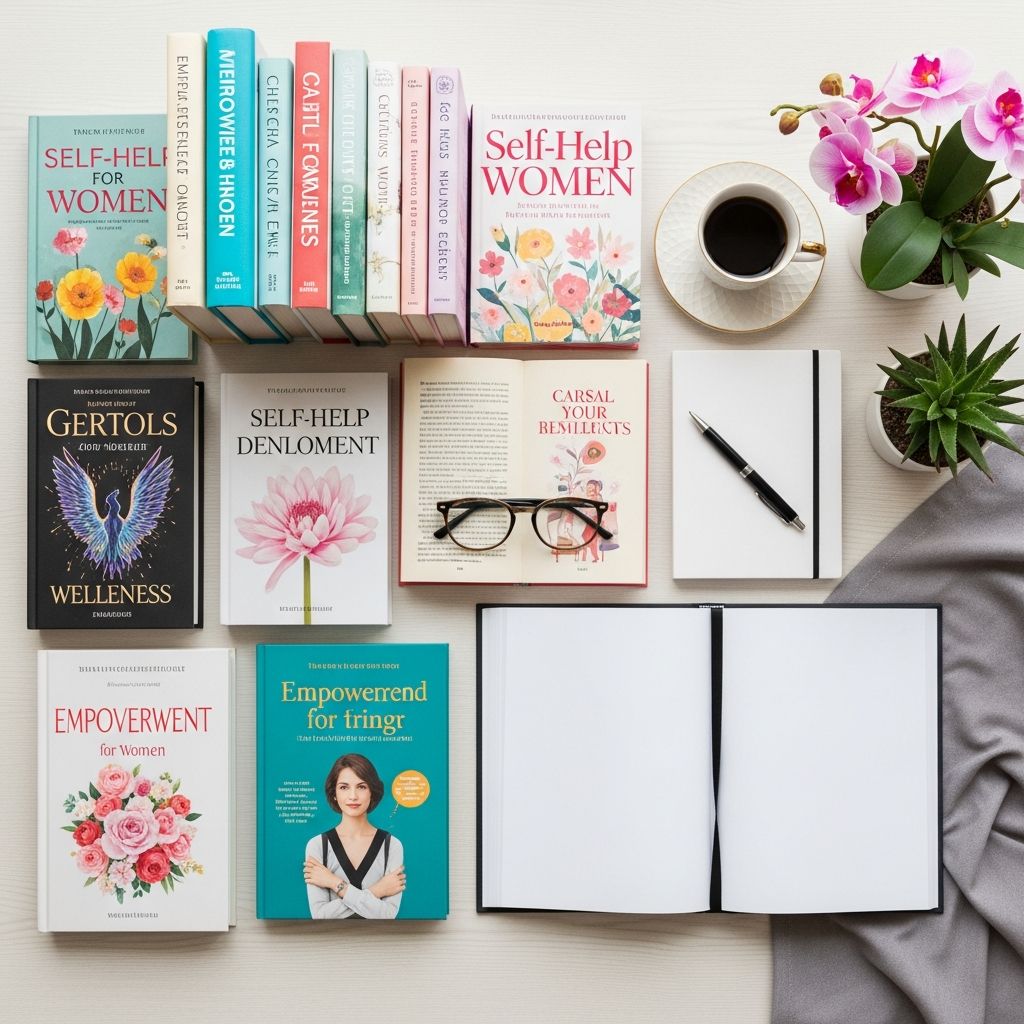
Why Self-Help Books Matter for Women Today
In a world that often demands perfection while offering little support, self-help books have become more than just a trend—they’re essential tools for clarity, resilience, and growth. For women navigating careers, relationships, identity, and societal expectations, the right book can be a quiet but powerful companion. These aren’t about quick fixes or unrealistic promises; they’re about building a deeper understanding of oneself, learning to set boundaries, and reclaiming agency over one’s life.
What makes a self-help book truly valuable for women isn’t just its popularity, but whether it speaks to real experiences: the pressure to do it all, the internalized criticism, the struggle to say no, and the desire to live authentically. The best books in this space combine practical strategies with emotional intelligence, offering both insight and actionable steps.
Books That Build Unshakable Self-Worth
Self-worth isn’t something you’re born with—it’s something you cultivate. These books focus on rewiring the inner critic, embracing imperfection, and developing a relationship with yourself that’s rooted in kindness rather than judgment.
1. The Self-Love Workbook for Women by Megan Logan
This workbook is designed for women who are tired of feeling like they’re never enough. Instead of vague affirmations, it offers structured exercises that guide readers through identifying negative self-talk, challenging limiting beliefs, and practicing daily self-compassion.
What sets it apart is its focus on doing, not just reading. Journal prompts, reflection questions, and small behavioral experiments help internalize the lessons. It’s especially helpful for those who struggle with people-pleasing, perfectionism, or feeling like they have to earn their worth through achievement.
2. You Are a Badass by Jen Sincero
A modern classic in the self-help space, this book blends humor, honesty, and tough love. Sincero doesn’t sugarcoat the work required to change your life, but she makes it feel possible. She tackles fear, self-doubt, money blocks, and the importance of taking responsibility for your choices.
The tone is conversational and energizing, making it ideal for women who want a motivational kickstart. It’s less about clinical psychology and more about mindset shifts that can lead to real-world changes in career, relationships, and self-image.
3. The Courage to Be Yourself by Judy Ford
Originally published in the 1990s but still deeply relevant, this book is a guide to emotional strength and self-esteem. Ford walks readers through the process of identifying who they are beneath societal expectations, family roles, and relationship dynamics.
It’s particularly useful for women who feel stuck in roles that no longer fit—whether as a partner, parent, or employee. The exercises encourage introspection and help build the confidence to make choices that align with personal values rather than external approval.
Books That Help Women Navigate Modern Challenges
Today’s women face unique pressures: digital overload, burnout, the mental load of managing multiple roles, and the constant comparison culture. These books address those realities with practical tools and a realistic understanding of what it means to be a woman in the 21st century.
4. A Radical Guide for Women with ADHD by Sari Solden and Michelle Frank
ADHD in women is often misunderstood, misdiagnosed, or dismissed as simply being “scatterbrained” or “emotional.” This book is a game-changer for women who suspect or know they have ADHD and are tired of feeling like they’re failing at life.
It reframes ADHD not as a flaw but as a different way of thinking and processing the world. The authors provide strategies for time management, emotional regulation, and relationship dynamics, all tailored to how ADHD shows up in women. It’s validating, empowering, and full of concrete tools that can be applied immediately.
5. How to Do Nothing: Resisting the Attention Economy by Jenny Odell
In a culture that glorifies productivity and constant busyness, this book is a radical act of resistance. Odell argues that true self-care isn’t about optimizing every minute, but about reclaiming attention and presence.
She explores how social media, work culture, and consumerism pull us away from what truly matters. For women who feel overwhelmed by the pressure to be always “on,” this book offers a philosophical and practical framework for stepping back, reconnecting with the present, and defining success on their own terms.
6. Big Magic: Creative Living Beyond Fear by Elizabeth Gilbert
While not exclusively for women, this book resonates deeply with many who have been conditioned to see creativity as a luxury or something only for the “talented.” Gilbert dismantles the myth of the tortured genius and instead presents creativity as a joyful, accessible part of everyday life.
She encourages readers to pursue curiosity, embrace imperfection, and detach from the need for external validation. For women who have put their creative dreams on hold for practical reasons, this book can be a gentle but powerful invitation to start again.
Books That Support Emotional and Mental Well-Being
Emotional health is the foundation of everything else. These books help women understand their emotions, manage anxiety, and build resilience in a world that often feels chaotic and demanding.
7. Maybe You Should Talk to Someone by Lori Gottlieb
Written by a therapist who is also in therapy, this book offers a rare dual perspective. It’s part memoir, part psychology lesson, and entirely human. Gottlieb shares stories from her therapy room while also being honest about her own struggles and blind spots.
It normalizes the idea that everyone, even experts, need help sometimes. For women who are curious about therapy but unsure where to start, or who want to understand their own patterns in relationships and self-sabotage, this book is both comforting and illuminating.
8. The Worry-Free Mind by Carol Vivyan
Anxiety isn’t just about feeling nervous—it’s about how the mind interprets threat, safety, and control. This book breaks down the mechanics of anxiety in a clear, accessible way and offers practical CBT-based techniques to manage it.
It’s especially helpful for women who experience chronic worry, rumination, or health anxiety. The exercises are simple but effective, focusing on changing thought patterns, reducing avoidance behaviors, and building tolerance for uncertainty.
9. After the Rain: Gentle Reminders for Healing, Courage, and Self-Love by Alexandra Elle
Written in a poetic, reflective style, this book is like a series of letters to the self. It’s short, digestible, and deeply compassionate, making it ideal for moments of emotional exhaustion or transition.
Elle addresses themes like healing from trauma, rebuilding trust in oneself, and learning to speak kindly to the inner voice. It’s not a step-by-step guide, but rather a companion for those in the process of emotional recovery and self-reclamation.
Books That Inspire Purpose and Leadership
For women who want to lead, create change, or simply live with more intention, these books focus on purpose, influence, and the courage to step into one’s power.
10. The Moment of Lift: How Empowering Women Changes the World by Melinda French Gates
Based on years of work in global development and gender equality, this book is both a memoir and a call to action. Gates shares stories from women around the world and connects them to broader themes of equity, education, and economic opportunity.
It’s a powerful reminder that personal growth and social change are intertwined. For women in leadership roles or those aspiring to make a difference, this book offers inspiration and a framework for using one’s voice and resources to lift others.
11. She Deserves Better: Raising Girls to Resist Toxic Teachings on Sex, Self, and Speaking Up by Sheila Wray Gregoire
This book is essential reading for parents, mentors, and anyone invested in the next generation of women. Gregoire examines how traditional teachings about purity, modesty, and obedience can harm girls’ self-worth and ability to set boundaries.
She offers alternatives that promote self-respect, bodily autonomy, and the courage to speak up. It’s not just about parenting—it’s about unlearning harmful norms and creating a culture where girls are taught to value themselves first.
12. Down Girl: The Logic of Misogyny by Kate Manne
A more academic but deeply important read, this book analyzes how misogyny functions in everyday life—not just as overt hatred, but as a system that polices women’s behavior and enforces traditional roles.
It helps women understand why they might feel guilty for being assertive, why they’re expected to be nurturing above all else, and how to recognize and resist these patterns. It’s a challenging but necessary read for those who want to understand the structural forces behind personal struggles.
How to Choose the Right Book for You
With so many options, it can be overwhelming to decide where to start. Here are a few questions to help narrow it down:
- What’s the biggest challenge I’m facing right now? (e.g., self-doubt, anxiety, burnout, career confusion)
- Do I want something practical and workbook-style, or something more reflective and narrative-based?
- Am I looking for motivation, emotional healing, or a deeper understanding of societal dynamics?
- Do I prefer a conversational tone, a clinical approach, or a philosophical perspective?
Matching the book to your current needs increases the likelihood that it will actually make a difference in your life.
Creating a Personal Reading Plan
Reading one self-help book a month can be a powerful way to grow without feeling overwhelmed. Here’s a simple framework:
- Identify a theme (e.g., self-worth, anxiety, creativity, leadership).
- Pick one book that aligns with that theme.
- Set a realistic goal (e.g., 10–15 pages a day, or one chapter per week).
- Take notes on insights, quotes, and actions you want to try.
- Apply at least one idea from the book each week.
Over time, this consistent, intentional approach builds lasting change far more effectively than reading dozens of books without implementation.
FAQs About Self-Help Books for Women
Are self-help books actually effective?
Research in psychology and behavioral science shows that self-help books can be effective, especially when they are based on evidence-based approaches like cognitive behavioral therapy (CBT), mindfulness, or acceptance and commitment therapy (ACT). Their impact is greatest when readers actively engage with the material—doing exercises, reflecting, and applying what they learn.
How do I know if a self-help book is credible?
Look for authors with relevant expertise (e.g., therapists, psychologists, researchers) and books that are grounded in research rather than anecdote alone. Check reviews from reputable sources and see if the book cites studies or established frameworks. Be cautious of books that promise quick fixes or blame the reader for not “working hard enough.”
Can self-help books replace therapy?
No. While self-help books can be incredibly helpful, they are not a substitute for professional mental health care. If you’re struggling with severe anxiety, depression, trauma, or other mental health concerns, working with a licensed therapist is essential. Books can complement therapy, but they shouldn’t replace it when clinical support is needed.
What if I don’t have time to read?
Even 10–15 minutes a day can make a difference. Consider audiobooks during commutes, walks, or chores. You can also focus on one chapter at a time and revisit it over several days. The goal isn’t to finish the book quickly, but to absorb and apply what resonates with you.
How do I avoid feeling worse after reading self-help books?
It’s common to feel discouraged if a book makes you aware of problems without offering realistic solutions. Choose books that balance honesty with compassion and practicality. If a book leaves you feeling judged or inadequate, it’s okay to set it aside and try something else. Self-help should empower, not shame.
Final Thoughts: Growth Is a Journey, Not a Destination
The best self-help books for women in 2025 aren’t about becoming someone else—they’re about becoming more fully yourself. They help you see your strengths, understand your struggles, and take small, meaningful steps toward a life that feels authentic and fulfilling.
Whether you’re rebuilding confidence, managing anxiety, exploring creativity, or preparing to lead, there’s a book that can meet you where you are. The key is to choose wisely, read with intention, and give yourself grace along the way.
References
- Cognitive Behavioral Therapy for Anxiety Disorders — National Institute of Mental Health. 2023. https://www.nimh.nih.gov/health/topics/therapy
- Effectiveness of Self-Help Interventions for Psychological Problems — World Health Organization. 2022. https://www.who.int/publications/i/item/9789240041820
- Women and Mental Health — American Psychological Association. 2023. https://www.apa.org/topics/women-mental-health

Medha Deb is an editor with a master's degree in Applied Linguistics from the University of Hyderabad. She believes that her qualification has helped her develop a deep understanding of language and its application in various contexts. Medha specializes in the areas of beauty, health, sports, and wellness and is committed to ensuring that the content on the website is…