
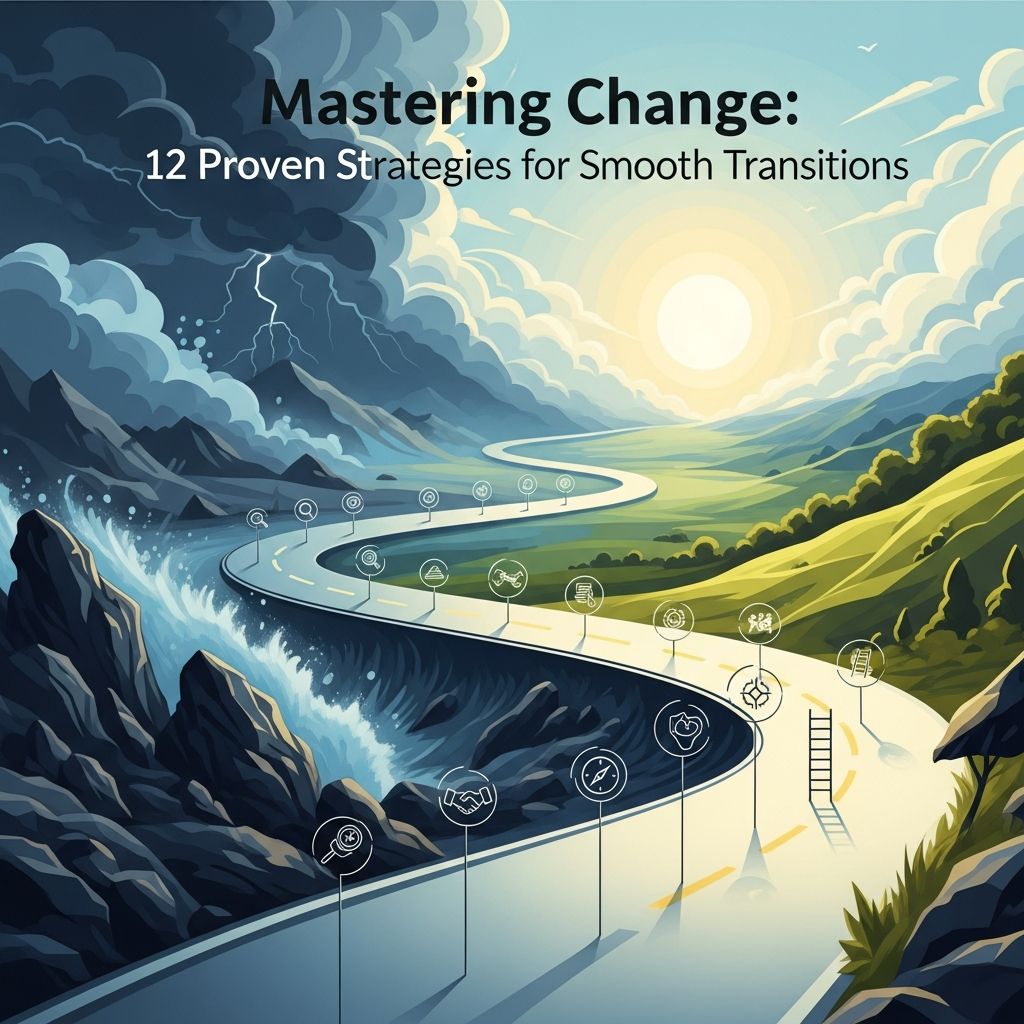
Change is an inevitable part of life and work, yet it often triggers discomfort, resistance, and setbacks. Whether shifting habits, adopting new technologies, or restructuring teams, effective strategies can transform chaos into opportunity. Drawing from established models like Prosci’s ADKAR and Kotter’s 8-Step Process, this guide outlines 12 actionable approaches to facilitate seamless transitions, supported by research from credible sources.
Understanding the Foundations of Successful Change
At its core, successful change management addresses both individual and organizational dynamics. Research identifies key elements such as awareness of the need for change, clear communication, and sustained reinforcement as critical for adoption. A study of change practitioners found that strategies involving stakeholder engagement and alignment with organizational vision are used most frequently, with over 40 participants reporting consistent application. By prioritizing these, you minimize disruption and maximize buy-in.
Change doesn’t happen in isolation; it requires a holistic approach. Models like Lewin’s three-phase process—unfreeze, change, refreeze—emphasize preparation and stabilization, while the McKinsey 7-S Model aligns strategy, structure, and shared values. These frameworks provide a roadmap, ensuring efforts are targeted and measurable.
Strategy 1: Establish a Compelling Rationale
Begin by creating a sense of urgency. Without understanding why change matters, efforts falter. Kotter’s model stresses communicating the risks of inaction and opportunities ahead, rallying support early. For instance, in organizational settings, leaders should quantify impacts, such as potential productivity gains or competitive edges, to motivate action.
On a personal level, reflect on your motivations—perhaps health improvements from a new routine or career advancement. Document these drivers to revisit during doubts, fostering intrinsic commitment.
Strategy 2: Craft a Crystal-Clear Vision
A vivid vision acts as a north star. Define specific, measurable goals that everyone can grasp, such as “reduce project turnaround by 20% in three months”. Harvard Business School Online highlights crafting this vision collaboratively to ensure relevance and excitement.
Share it through visuals, stories, or town halls. This alignment with mission and values, as noted in practitioner surveys, boosts engagement significantly.
Strategy 3: Communicate Transparently and Frequently
Open communication is non-negotiable. Prosci emphasizes proactive, tailored messaging to build awareness and trust, addressing concerns head-on via Q&A sessions and updates. HR Morning advises multi-channel delivery—emails, meetings, apps—for reinforcement.
- Explain the ‘what,’ ‘why,’ and ‘how’ upfront.
- Use feedback loops to adjust messaging.
- Celebrate milestones to maintain momentum.
This approach reduces anxiety, with studies showing frequent communicators experience 24% higher success rates.
Strategy 4: Engage Stakeholders Actively
Involve those affected from the start. Inviting participation uncovers blind spots and builds ownership, as per Champlain College’s strategies. Prosci’s stakeholder engagement tactics, like co-creating solutions, minimize resistance.
• Form cross-functional teams for input.
• Solicit feedback through surveys or workshops.
• Recognize contributors publicly.
Practitioners report listening to concerns as a top-used tactic.
Strategy 5: Build Essential Skills and Knowledge
Knowledge gaps breed fear. Provide targeted training to bridge them, aligning with ADKAR’s ‘Knowledge’ and ‘Ability’ phases. Berkeley’s toolkit recommends pre-work assessments to customize support.
| Phase | Training Focus | Example Tools |
|---|---|---|
| Awareness | Need for change | Workshops, videos |
| Knowledge | How-to guides | E-learning modules |
| Ability | Hands-on practice | Simulations, coaching |
This equips individuals for success.
Strategy 6: Roll Out in Manageable Phases
Avoid overload by phasing implementation. Gradual rollouts allow adjustment, as recommended by multiple models. Start with pilots in one department, gather insights, then scale.
Benefits include early wins and issue resolution, preventing overwhelm. Track progress with dashboards for real-time tweaks.
Strategy 7: Generate Quick Victories
Short-term wins fuel momentum. Set achievable milestones, like Kotter’s ‘Generate Short-Term Wins,’ to demonstrate progress. Celebrate them to reinforce behavior.
- Week 1: Complete training for 50% of team.
- Month 1: Achieve 10% efficiency gain.
These build confidence and counter skepticism.
Strategy 8: Empower Leaders and Champions
Frontline leaders drive adoption. Train managers to model behaviors and address hurdles, per HR strategies. Identify ‘change champions’—enthusiastic influencers—to amplify efforts.
Deloitte notes empowering these roles humanizes change, fostering autonomy and growth.
Strategy 9: Monitor Progress and Adapt
Regular check-ins are vital. Use metrics like adoption rates and sentiment surveys to gauge impact. Prosci’s feedback loops enable course corrections.
Adjust based on data: if resistance persists, intensify training or communication.
Strategy 10: Reinforce New Behaviors
Sustain change through reinforcement. Update policies, rewards, and culture to embed habits, as in HBS’s embedding phase. ADKAR’s ‘Reinforcement’ prevents backsliding.
Rewards like bonuses for milestones solidify gains.
Strategy 11: Address Resistance Proactively
Anticipate barriers by analyzing root causes—fear, loss of control—and counter with empathy. Strategies include one-on-one coaching and transparent discussions.
Practitioner data shows addressing concerns early yields smoother transitions.
Strategy 12: Foster a Resilient Culture
Culture is the bedrock. Align changes with core values, promoting adaptability. Ongoing focus on growth mindset ensures long-term agility.
Frequently Asked Questions (FAQs)
What is the most important first step in change management?
Creating awareness and urgency about the need for change sets the foundation for buy-in.
How long does it typically take to implement organizational change?
Timelines vary, but phased approaches over 3-12 months allow for adoption without disruption.
Can individuals apply these strategies personally?
Yes, personal change benefits from vision-setting, skill-building, and reinforcement, mirroring ADKAR.
What if resistance persists despite efforts?
Deepen engagement through targeted interventions like coaching and revisit root causes.
How do you measure change success?
Track metrics like adoption rates, productivity gains, and employee sentiment via surveys.
Implementing these 12 strategies equips you to handle change effectively. By blending planning, empathy, and persistence, transitions become opportunities for growth. (Word count: 1678)
References
- The 10 Best Organizational Change Management Strategies — Champlain College Online. 2023. https://online.champlain.edu/blog/best-organizational-change-management-strategies
- Lost Without a Map? A Change Strategy to Guide Your Success — Prosci. 2023. https://www.prosci.com/blog/change-management-strategy
- Effective Change Management Strategies for HR Professionals — HR Morning. 2023. https://www.hrmorning.com/articles/articles-change-management-strategies-hr/
- Change Management: From Theory to Practice — PMC/NCBI (NIH). 2022-09-26. https://pmc.ncbi.nlm.nih.gov/articles/PMC9462626/
- 5 Steps in the Change Management Process — Harvard Business School Online. 2023. https://online.hbs.edu/blog/post/change-management-process
- Change Management Toolkit — UC Berkeley HR. 2023. https://hr.berkeley.edu/sites/default/files/change_management_toolkit.pdf
- Developing effective change management strategies — Deloitte Insights. 2023. https://www.deloitte.com/us/en/insights/topics/operations/developing-more-effective-change-management-strategies.html
- The 8-Step Process for Leading Change — Kotter Inc. 2023. https://www.kotterinc.com/methodology/8-steps/

Medha Deb is an editor with a master's degree in Applied Linguistics from the University of Hyderabad. She believes that her qualification has helped her develop a deep understanding of language and its application in various contexts. Medha specializes in the areas of beauty, health, sports, and wellness and is committed to ensuring that the content on the website is…