
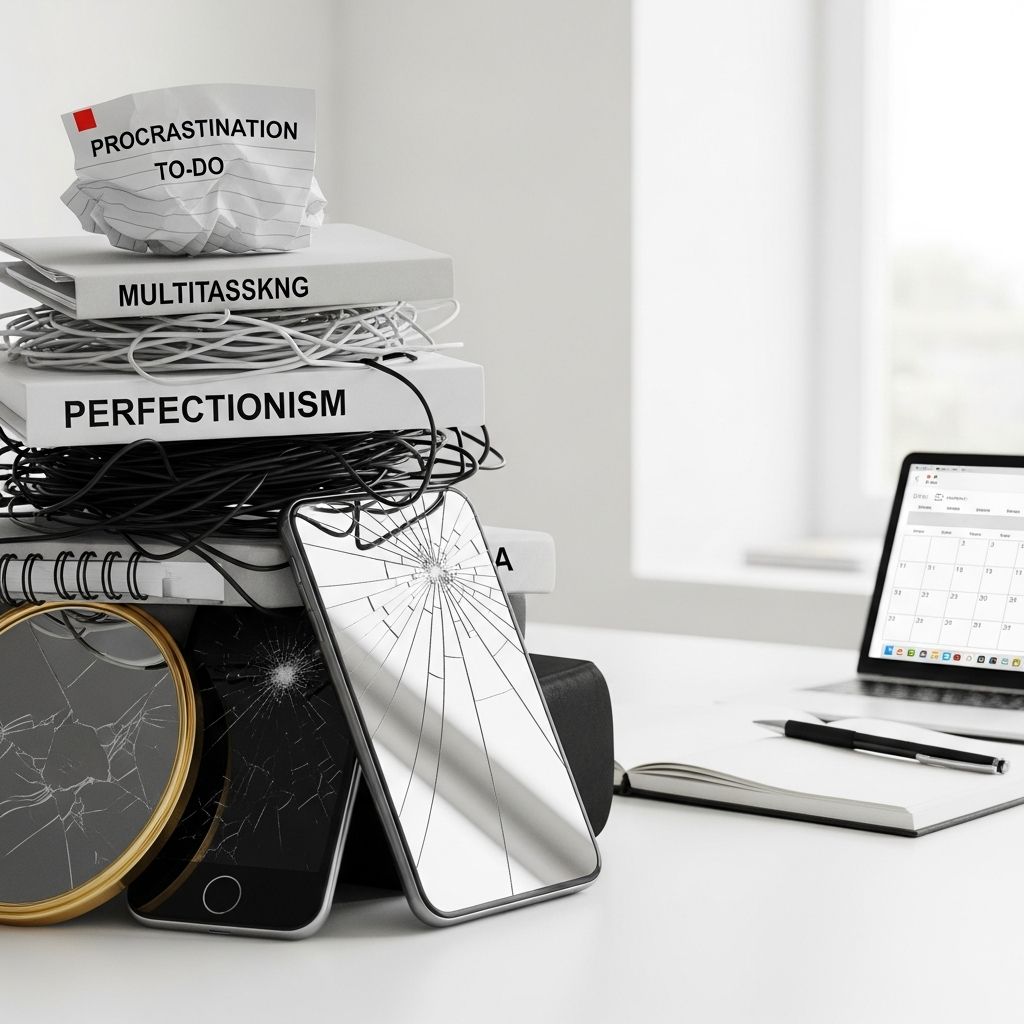
Highly productive individuals don’t just follow positive routines—they actively avoid counterproductive behaviors that drain time and energy. By steering clear of these pitfalls, they maintain laser focus, achieve more in less time, and sustain peak performance without burnout. This article explores 12 habits to eliminate, drawing from proven strategies used by top performers.
Chasing Busyness Over Impactful Results
Productivity isn’t measured by how busy you appear, but by the tangible outcomes you deliver. Highly productive people reject the myth that constant activity equals success. For instance, replying to thousands of low-value emails daily creates an illusion of progress, yet yields minimal results compared to completing one high-impact task.
Instead, they prioritize tasks with the greatest leverage. Research supports this: only 20% of efforts produce 80% of results, a principle known as the Pareto principle. Ruthlessly evaluate your to-do list daily—circle high-priority items, rank them, and challenge if they’re the best use of time. Dump urgent but low-value tasks into a separate list for batched processing later.
Clinging to Multitasking Myths
Multitasking is a productivity killer that fragmented attention and slows cognitive processing. Studies show it wastes time and leads to mental exhaustion, as switching tasks incurs a ‘context-switching cost’ equivalent to minutes lost per interruption.
Productive people commit to single-tasking, immersing in one activity to enter a deep flow state. They organize simple lists, tackle one item at a time, and resist the urge to juggle responsibilities. This approach fosters creativity and superior output, turning routine work into breakthroughs.
- Avoid email ping-pong: Don’t check inboxes constantly; batch responses.
- Embrace deep work: Dedicate uninterrupted blocks for complex tasks.
- Break projects down: Reduce overwhelming jobs into manageable steps.
Endless Work Without Scheduled Pauses
Working non-stop like a machine reduces efficiency per hour and invites fatigue. Productive people strategically insert breaks to recharge, recognizing that brain energy consumption spikes during sustained focus—up to 20% of daily expenditure.
Techniques like Pomodoro—25 minutes of intense work followed by 5-minute rests—prevent burnout and boost recharge. Experiment with walks, short naps, or colleague chats during slumps. Data from personal experiments confirms: spaced breaks yield higher output than marathon sessions.
| Break Type | Duration | Benefits |
|---|---|---|
| Quick Walk | 5-10 min | Boosts circulation, clears mind |
| Deep Breathing | 2-5 min | Reduces stress hormones |
| Power Nap | 10-20 min | Enhances memory consolidation |
| Social Chat | 5 min | Provides fresh perspectives |
Letting Distractions Dominate the Workspace
Notifications, open tabs, and cluttered environments fragment focus. Top performers eliminate these by unplugging internet during deep work, relocating to distraction-free zones, or tweaking setups.
Observe your routine: when does output dip? Remove triggers like email alerts or noisy surroundings. Silence fosters insights; even extroverts value quiet walks for mental clarity, as research on brain recovery affirms.
Neglecting Morning Rituals for Peak Energy
Skipping structured mornings disrupts circadian rhythms, linked to health and focus. Productive people start with nutritious meals, movement, and planning to prime their day.
Avoid sedentary evenings too—replace couch time with restorative activities like mindfulness or light exercise to combat 21-hour daily inactivity in desk jobs. This builds resilience for high-output days.
Prioritizing Perfection Over Progress
Perfectionism stalls momentum, trapping people in endless revisions. Highly effective individuals ship imperfect work and iterate, understanding that done is better than perfect. They relish small wins to fuel motivation, balancing micro-tasks with big goals.
Ignoring Inspiration as a Fuel Source
Without tapping creativity, output plateaus. Inspired minds produce transformative work—programmers build life-changing apps, writers flow effortlessly. Productive people cultivate this through environment tweaks, reading, or passion pursuits, avoiding rote drudgery.
Overloading with Unnecessary Operational Details
Top performers balance strategic vision with operations, avoiding day-to-day minutiae that dilute focus. Reevaluate goals regularly, question status quo, and delegate low-leverage work. Exercise and mental health check-ins sustain this clarity.
Undervaluing Evening Recovery Practices
Evening habits set tomorrow’s tone. Avoid stress-eating or screen marathons; opt for movement and reflection to restore energy. Consistent exercise and aspiration reviews keep successful people ahead.
Confusing Urgent with Important
Urgent tasks masquerade as priorities, but they rarely drive long-term success. Productive people use separate lists for urgents, clearing them in batches to protect core 20% efforts.
Resisting Environmental Optimization
A suboptimal setup sabotages flow. Experiment boldly: change locations, adjust lighting, or minimize tools to eliminate pit-stops.
Failing to Harness Quiet Reflection
In a noisy world, silence is gold. Productive people schedule it for insights, countering cultural bias against downtime.
Frequently Asked Questions (FAQs)
What is the biggest productivity myth?
The myth that busyness equals productivity. Focus on high-impact tasks instead, per the 80/20 rule.
How do breaks improve output?
Strategic pauses prevent fatigue, recharge the brain, and sustain focus, outperforming non-stop work.
Why avoid multitasking?
It slows processing, exhausts mental resources, and reduces quality—single-tasking enables deep work.
What’s deep work?
Undistracted, high-concentration effort on cognitively demanding tasks for superior results.
How to start a productive morning?
Fuel with nutrition, move mindfully, and plan priorities to align with natural rhythms.
Can perfectionism help productivity?
No—it delays progress. Embrace ‘good enough’ and iterate for momentum.
References
- The 8 Habits of Highly Productive People (Part 1) — ProductiveMag. 2010-10-01. http://productivemag.com/10/the-8-habits-of-highly-productive-people-part-1
- Six Habits of Highly Productive People — Blanchard LeaderChat. 2023-05-15. https://resources.blanchard.com/blanchard-leaderchat/six-habits-of-highly-productive-people
- 8 Powerful Habits of Highly Productive People — Working Spaces. 2024-08-20. https://wspaces.com/8-powerful-habits-of-highly-productive-people/
- Habits of Highly Productive People — Sophilabs. 2022-11-10. https://sophilabs.com/blog/habits-of-highly-productive-people
- 8 Things Highly Successful People Do Daily — University of Washington PCE. 2024-03-05. https://www.pce.uw.edu/news-features/articles/things-highly-successful-people-daily

Medha Deb is an editor with a master's degree in Applied Linguistics from the University of Hyderabad. She believes that her qualification has helped her develop a deep understanding of language and its application in various contexts. Medha specializes in the areas of beauty, health, sports, and wellness and is committed to ensuring that the content on the website is…