
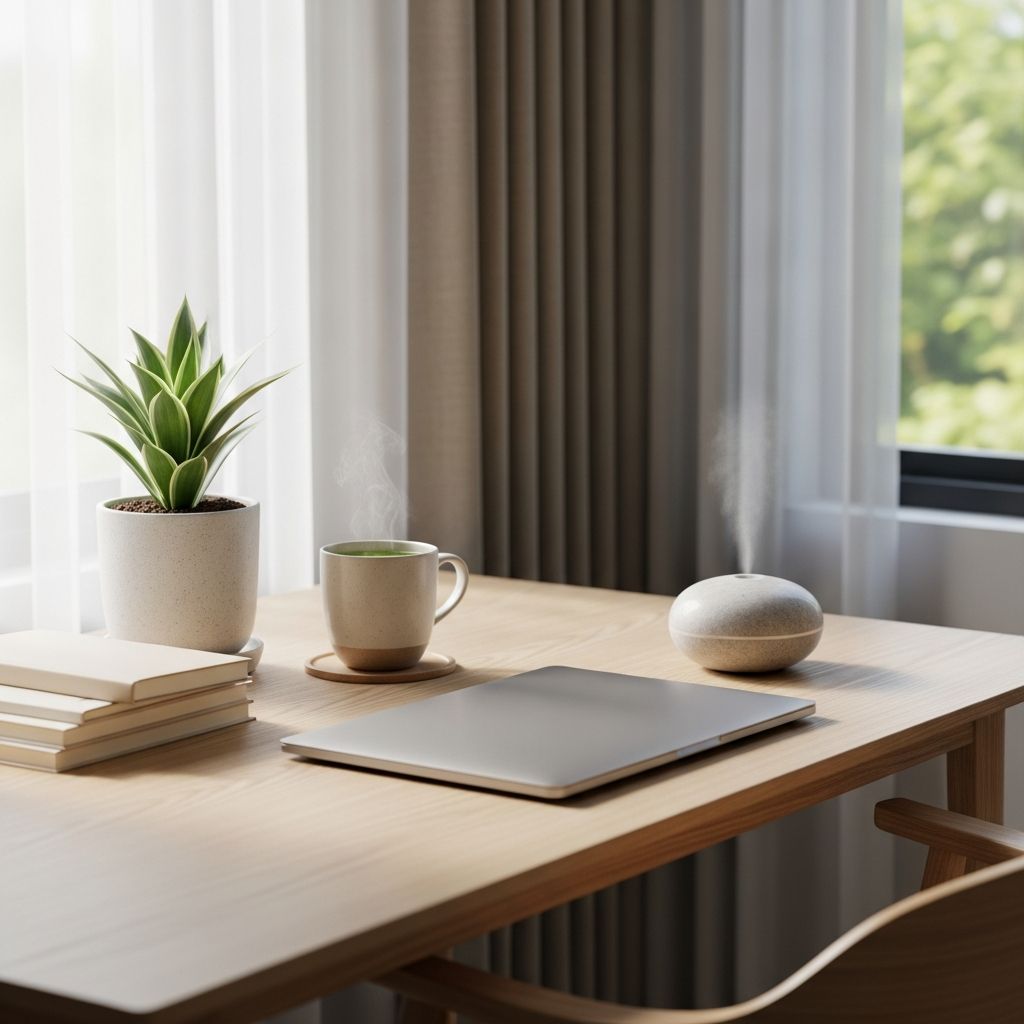
Transforming your work environment into a serene sanctuary can profoundly influence your daily performance and mental state. Drawing from principles of mindfulness and simplicity, a well-designed workspace minimizes distractions, fosters concentration, and nurtures well-being. This guide outlines 12 practical strategies to cultivate such a space, whether for a home office or corporate setting.
Understanding the Essence of a Serene Workspace
A serene workspace embodies balance, clarity, and harmony, rooted in philosophies that emphasize presence and minimalism. Such environments reduce cognitive overload by eliminating excess, allowing the mind to thrive in focused tranquility. Research highlights how these designs lower stress hormones and improve cognitive function, making them essential in today’s fast-paced world.
Key benefits include heightened productivity, as calm spaces enable deeper work sessions without interruptions. Employees in serene settings report up to 20% higher output due to reduced anxiety. Moreover, these spaces promote long-term health by encouraging mindful breaks and ergonomic practices.
Strategy 1: Embrace Radical Minimalism
Start by stripping your workspace to its core essentials. Remove non-essential items like excess paperwork, decorative gadgets, or unused supplies. This creates visual breathing room, where every object serves a purpose. Opt for multifunctional furniture, such as desks with built-in storage, to maintain order effortlessly.
- Sort items into keep, store, or discard categories weekly.
- Limit desk surfaces to computer, notebook, and one personal item.
- Use digital tools to minimize physical files.
Minimalism isn’t deprivation; it’s liberation, freeing mental energy for creative tasks.
Strategy 2: Curate a Neutral Color Palette
Colors profoundly affect mood. Choose soft neutrals like beiges, soft grays, and whites for walls and furniture. These hues evoke calmness without overwhelming the senses. Avoid bold primaries that can agitate; instead, introduce subtle accents in earthy tones for warmth.
| Color | Effect | Best Use |
|---|---|---|
| Soft White | Clarity, openness | Walls, ceilings |
| Beige/Taupe | Warmth, grounding | Furniture, rugs |
| Pale Green | Relaxation, nature link | Accents, plants |
Neutral palettes align with natural surroundings, promoting sustained focus.
Strategy 3: Integrate Natural Elements
Bring the outdoors in with plants, wood grains, and stone textures. Indoor greenery purifies air and lowers stress, as studies from environmental psychology confirm. Position low-maintenance plants like snake plants or pothos near workstations for constant biophilic connection.
- Wooden desks and bamboo shelves for organic feel.
- Stone coasters or small pebble displays for tactile serenity.
- A tabletop fountain for gentle water sounds.
These elements ground users, mimicking nature’s restorative power.
Strategy 4: Prioritize Ergonomic Comfort
Physical ease is foundational to serenity. Invest in adjustable chairs supporting the spine’s natural curve and height-variable desks to alternate postures. Proper setup prevents strain, allowing prolonged focus without discomfort.
Ensure monitors are at eye level, keyboards promote neutral wrist positions, and footrests accommodate shorter users. Ergonomics reduces fatigue, enhancing endurance for demanding tasks.
Strategy 5: Designate Quiet Retreat Areas
Even in open offices, carve out soundproof nooks for deep work. Use partitions, heavy curtains, or phone booths equipped with noise-canceling features. These zones offer respite from chatter, enabling recharge through meditation or solitary tasks.
Equip with dimmable lamps, cushioned seats, and minimal decor to encourage introspection.
Strategy 6: Optimize Lighting for Mood
Harsh fluorescents disrupt calm; replace with layered lighting. Combine natural daylight via large windows or skylights with warm LED task lights. Dimmers allow adjustment from bright for detail work to soft for reflection.
- Full-spectrum bulbs mimic sunlight.
- Avoid glare with matte screens and shades.
- Position desks to maximize morning light.
Balanced illumination sustains alertness without eye strain.
Strategy 7: Streamline Layout for Intuitive Flow
A thoughtful arrangement prevents frustration. Position high-use items within arm’s reach, creating ergonomic triangles between printer, phone, and files. Ensure pathways are unobstructed for smooth movement.
Zone areas: focused work near windows, collaborative spots centrally. This respects natural human navigation, minimizing subconscious stress.
Strategy 8: Harness Sensory Harmony
Engage all senses thoughtfully. Diffuse calming essential oils like lavender; play ambient nature tracks softly. Textured fabrics on chairs invite touch, while fresh air circulation via fans or open vents completes the experience.
Such multi-sensory curation fosters immersion in the present moment.
Strategy 9: Establish Decluttering Rituals
Daily habits sustain serenity. End each day with a 5-minute tidy: file papers, wipe surfaces, align objects. Weekly deep cleans reset the space. Digital decluttering—organizing files and emails—extends this practice virtually.
Strategy 10: Infuse Personal Mindfulness Practices
Dedicate a corner for breathing exercises or short meditations. Simple cushions and timers suffice. Apps guiding sessions integrate seamlessly, training the mind for work focus.
Strategy 11: Foster Organizational Systems
Clear containers, labeled drawers, and vertical storage maximize utility without visual chaos. Modular shelving adapts to needs, embodying flexibility in design.
Strategy 12: Cultivate a Culture of Presence
Beyond physical setup, encourage breaks for stretching or walks. Set boundaries like no-email hours to honor the space’s intent. Collective buy-in amplifies benefits in team environments.
Measuring Success in Your Serene Space
Track progress via journals noting focus duration or stress levels pre- and post-changes. Surveys in corporate settings reveal improved satisfaction scores. Adjust iteratively for personalization.
Frequently Asked Questions (FAQs)
What is the first step to creating a serene workspace?
Begin with decluttering to remove distractions and establish a minimalist foundation, paving the way for all other enhancements.
Can these strategies work in small home offices?
Yes, vertical storage, multifunctional furniture, and strategic plant placement make serenity achievable in compact areas.
How do plants contribute to a zen-like atmosphere?
Plants improve air quality, reduce stress through biophilia, and add natural texture without cluttering space.
Is ergonomic furniture worth the investment?
Absolutely; it prevents health issues and sustains productivity, offering long-term returns on comfort.
How often should I maintain my serene workspace?
Daily quick tidies and weekly deep cleans keep the environment calming and functional.
References
- Zen Workplaces: Boosting Health, Comfort and Productivity — Zyeta. 2023-05-15. https://www.zyeta.com/blogs/how-can-zen-like-workplaces-boost-employee-health-comfort-and-productivity/
- Design Better Workplaces with These Three Zen Principles — Work Design Magazine. 2015-03-01. https://www.workdesign.com/2015/03/how-to-apply-zen-principles-to-workplace-design/
- Creating A Zen Workspace For Increased Focus — Ace Office Furniture. 2024-02-20. https://aceofficesystems.com/blogs/news/creating-a-zen-workspace-for-increased-focus
- Zen Office Ideas: How to Design a Wellness-Focused Workspace — Alen. 2023-11-10. https://alen.com/blogs/health-benefits/zen-office-ideas
- 10 Ideas to Design for Workplace Zen — Haworth. 2018-10-01. https://www.haworth.com/na/en/spark/articles/2018/10-ideas-to-design-for-workplace-zen.html

Medha Deb is an editor with a master's degree in Applied Linguistics from the University of Hyderabad. She believes that her qualification has helped her develop a deep understanding of language and its application in various contexts. Medha specializes in the areas of beauty, health, sports, and wellness and is committed to ensuring that the content on the website is…