
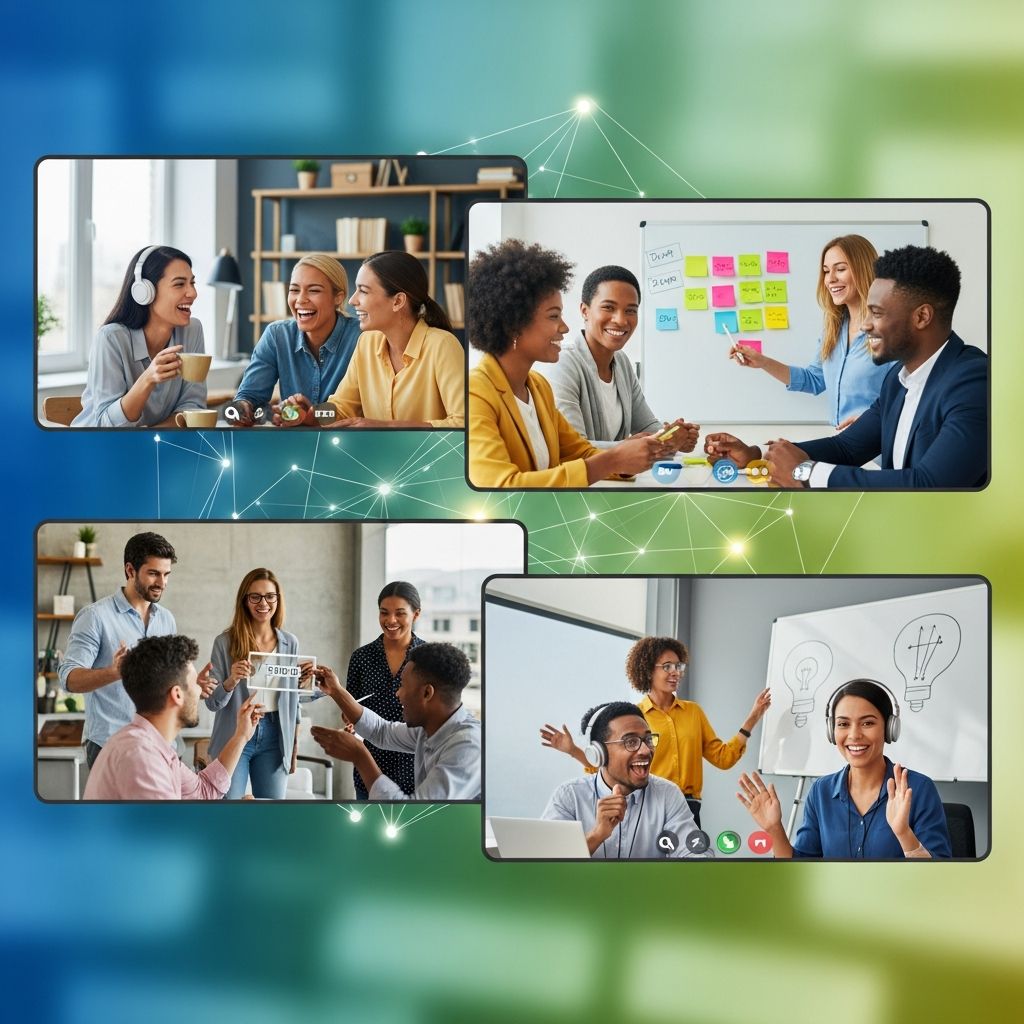
Remote and hybrid work are no longer an exception; they are a core part of how many organizations operate. Yet when people are dispersed across cities, countries, and time zones, leaders must be far more intentional about how they build trust, connection, and collaboration. Thoughtful team building is one of the most effective ways to do this, and it has measurable links to engagement and performance when done well.
This article explores practical, research-informed activities for remote and hybrid teams, along with guidance on how to choose and run them so they feel meaningful rather than forced.
Why Remote Team Building Matters
Virtual team building is not about filling calendars with games. It is about creating regular touchpoints that reinforce psychological safety, shared purpose, and a sense of belonging—factors that research associates with higher performance and creativity.
| Goal | What It Looks Like in Remote Teams | Team Building Focus |
|---|---|---|
| Trust | People feel safe speaking up, asking for help, and admitting mistakes. | Activities that encourage vulnerability and shared experiences. |
| Connection | Colleagues know each other beyond job titles and tasks. | Informal social rituals, stories, and personal sharing. |
| Collaboration | Teams solve problems together and coordinate smoothly. | Group challenges, simulations, and cross-functional projects. |
| Well-being | Employees feel supported, not drained, by work patterns. | Mindfulness, movement, and realistic workload discussions. |
Done consistently, these elements are associated with higher engagement and lower turnover, especially in flexible work environments.
Principles for Effective Virtual Team Activities
Before diving into specific ideas, it helps to align on a few principles so activities feel purposeful rather than performative.
- Align each session with a clear objective — for example, “build cross-team familiarity” or “practice fast decision-making.”
- Respect time zones and workloads — rotate times or run more than one slot if your team spans regions.
- Prioritize inclusivity — ensure activities are accessible regardless of mobility, background, or household situation.
- Invite, don’t force — strongly encourage participation but make it safe to opt out occasionally.
- Debrief briefly — spend a few minutes connecting what you did to how you work together day to day.
Collaboration & Problem-Solving Challenges
These activities mimic the pressures and complexity of real work in a lower-stakes environment, giving people a chance to practice communication, planning, and shared decision-making.
1. Online Escape or Puzzle Missions
Virtual escape-style experiences require teams to interpret clues, test hypotheses, and agree on solutions under time pressure. Studies suggest that cooperative games can strengthen social bonds and improve communication patterns within teams.
- Split into small groups of 4–6 to keep everyone engaged.
- Rotate the facilitator so different people lead the thinking process.
- Wrap up with questions like:
- “Where did we communicate well?”
- “Where did we talk over each other or get stuck?”
2. Rapid Design Sprints
Short, time-boxed design challenges simulate real cross-functional work, especially helpful for hybrid teams that collaborate asynchronously.
- Present a fictional scenario tied loosely to your business, such as designing a new user onboarding concept.
- Give 30–40 minutes for teams to sketch, storyboard, or outline a solution in a shared whiteboard tool.
- Ask each group to pitch their concept in three minutes, followed by a quick Q&A.
This helps team members experience each other’s thinking styles and strengths in a creative setting, which can translate to smoother project work later.
3. Collaborative Strategy Simulations
Lightweight strategy games, such as resource allocation or scenario-planning exercises, build systems thinking and negotiation skills.
- Give each group a fictional budget and a list of initiatives to prioritize.
- Ask them to agree on trade-offs and present their final portfolio of choices.
- Compare how different groups interpreted the same constraints.
Connection & Culture-Building Rituals
Remote workers often report feeling less connected socially than on-site peers, especially when informal “hallway conversations” are missing. These rituals help rebuild that connective tissue.
4. Structured “Coffee Roulette” Chats
Randomized one-to-one or small-group conversations are a low-pressure way to build relationships across teams and levels.
- Use a simple pairing tool or spreadsheet to match people every two weeks.
- Provide 3–4 optional starter questions (for example, “What’s a hobby you picked up recently?”).
- Limit slots to 20–25 minutes to respect calendars.
Internal data from several large organizations suggests that peer connection programs can increase perceived belonging and information-sharing across silos.
5. Story Spotlights
Stories are powerful vehicles for conveying values and building empathy. Dedicate a recurring slot where one team member shares a short story about a personal or professional experience.
- Suggested prompts:
- “A mistake that taught me something important.”
- “A moment I felt most proud of my work.”
- “An unexpected career turn and what I learned.”
- Keep each story to 5–7 minutes, followed by questions.
- Encourage volunteers rather than assigning people.
6. Culture Map Show-and-Tell
In globally distributed teams, surfacing cultural differences and similarities can improve understanding and reduce misinterpretations.
- Ask participants to share one custom, tradition, or everyday habit from where they live.
- Invite people to show an object, photo, or snack that represents their context.
- Summarize commonalities and unique aspects, emphasizing respect and curiosity.
Intercultural awareness is increasingly recognized as a key capability for global collaboration and inclusive workplaces.
Creativity, Learning & Skill-Sharing Sessions
When team building is tied to learning, it feels more purposeful and can contribute directly to development goals.
7. Peer-Led “Teach Me Something” Labs
Employees often have hidden expertise outside their formal roles. Short, peer-led micro-workshops turn those skills into shared learning moments.
- Invite volunteers to run a 20–30 minute session on a topic they know well (for example, “data visualization basics” or “intro to storytelling with slides”).
- Schedule one lab each month and record sessions for those in other time zones.
- Encourage interactive elements like live demos or mini-exercises.
8. Creative Maker Hours
Hands-on creative work can lower stress and support well-being, and shared creative experiences give colleagues a new way to connect.
- Choose low-barrier activities such as simple drawing prompts, origami, or basic DIY crafts.
- Encourage people to join with whatever materials they have at home—no special kits required.
- Invite participants to hold up their creations at the end and briefly describe what they made.
9. Concept Debates
Friendly debates sharpen critical thinking and help people practice disagreement in a psychologically safe setting.
- Pick prompt questions that relate loosely to your work, such as “Is asynchronous work more productive than synchronous work?”
- Assign sides randomly so people can experiment with different perspectives.
- Debrief by reflecting on how it felt to argue a position they may not personally hold.
Well-Being & Mindful Break Activities
Remote employees can struggle with blurred boundaries and prolonged screen time. Incorporating well-being into team activities signals that people are valued as humans, not just as outputs. Organizational research links well-being programs to reduced burnout and improved job satisfaction.
10. Guided Micro-Mindfulness Sessions
Short, simple mindfulness practices can help reduce stress and support focus, particularly in digital environments filled with interruptions.
- Offer 10-minute guided breathing or body-scan sessions at the start or end of team meetings.
- Rotate who reads a script or invite a trained facilitator occasionally.
- Frame participation as optional and judgment-free.
11. Movement & Stretch Break Challenges
Regular movement during the workday can reduce musculoskeletal strain and improve mood.
- Schedule short “reset breaks” where everyone stands, stretches, or walks around their space.
- Experiment with friendly step-count or movement streak goals, focusing on encouragement instead of competition.
- Provide alternatives for those with limited mobility, such as seated stretches or breathing exercises.
12. Energy Check-In Rounds
Simple verbal or visual check-ins help leaders understand how people are doing beneath the surface.
- Use quick prompts like, “On a scale from 1–5, how is your energy today?” or “What’s one word for how you’re arriving?”
- Remind the team that low scores are not a problem to fix instantly but information that can guide priorities.
- Notice patterns over time and adjust workloads or expectations as needed.
Hybrid-Friendly Activities for Mixed Settings
Hybrid teams face an additional challenge: ensuring that in-office and remote participants have an equitable experience. Research on hybrid models suggests that without deliberate design, remote employees can feel excluded from informal networks and decisions.
13. “One Remote, All Remote” Facilitation
When any participant is remote, design activities as if everyone is remote.
- Have all participants (including those in the office) join individually from their laptops for certain sessions.
- Use digital whiteboards and shared documents instead of physical flipcharts.
- Rotate who is physically present and who is remote for different meetings when possible.
14. Hybrid Buddy Walk-and-Talks
Encourage pairs (remote–remote or remote–office) to take a phone call while walking, if circumstances allow.
- Provide 3–4 conversation prompts related to work and life.
- Keep calls to 20–30 minutes and avoid screen-sharing so people can move freely.
- Ask for feedback on whether this format supports energy and connection.
15. Shared Rituals Across Locations
Hybrid teams benefit from consistent rituals that everyone participates in, regardless of physical location.
- Examples include end-of-week wins roundups, monthly learning hours, or recognition circles.
- Use the same agenda, timing, and technology for both office-based and remote participants.
- Invite remote colleagues to host or co-host ceremonies, not only those on site.
Planning a Sustainable Team Building Calendar
Rather than running isolated events, consider building a simple, sustainable rhythm that supports your culture throughout the year.
Sample Quarterly Rhythm
- Weekly: 5–10 minute check-in question at the start of a recurring team meeting.
- Monthly: One 60-minute session (for example, a puzzle challenge, learning lab, or culture map activity).
- Quarterly: A longer 90-minute retrospective focused on how the team collaborates, interspersed with one deeper relational activity.
Measure impact over time by tracking a small number of indicators, such as:
- Self-reported sense of belonging or connection.
- Perceptions of psychological safety (for example, comfort speaking up).
- Participation rates and qualitative feedback on sessions.
Frequently Asked Questions (FAQs)
How often should remote teams do team building activities?
For most remote or hybrid teams, short connection rituals weekly and one longer session each month strike a good balance. Over-scheduling can create fatigue, but infrequent activities make it hard to see real impact.
What if some people dislike games or social activities?
Offer variety and choice. Mix problem-solving tasks, learning sessions, and low-key social time so people can engage in ways that feel authentic. Explain the purpose of each activity clearly so it feels meaningful, not frivolous.
How can we include people across multiple time zones?
Rotate session times, record activities that do not rely on live participation, and occasionally run the same activity in two smaller groups at different times. Asynchronous elements—like shared documents or discussion boards—help everyone contribute.
Do virtual team building activities really improve performance?
On their own, activities are not a magic solution. However, when aligned with clear goals and supported by healthy management practices, research links strong team relationships and psychological safety to improved collaboration, creativity, and results.
How can we tell if our approach is working?
Ask for feedback regularly, track simple engagement metrics, and look for qualitative shifts: richer conversations, more cross-team help, and increased willingness to raise issues early. Adjust the mix of activities based on what people find valuable.
References
- Employee Engagement & Job Satisfaction — Society for Human Resource Management (SHRM). 2016-01-01. https://www.shrm.org/hr-today/trends-and-forecasting/research-and-surveys/pages/employee-job-satisfaction-and-engagement-report-2016.aspx
- Psychological Safety and Learning Behavior in Work Teams — Amy C. Edmondson, Administrative Science Quarterly. 1999-06-01. https://doi.org/10.2307/2666999
- Hybrid Working: What is the Future of the Office? — Chartered Institute of Personnel and Development (CIPD). 2021-04-01. https://www.cipd.org/en/knowledge/reports/hybrid-working
- The Social Side of Gaming: A Study of Interaction Patterns in an Online Game — Nick Yee, The Daedalus Project. 2006-06-01. https://www.nickyee.com/daedalus/archives/pdf/Social%20Dynamics.pdf
- Developing Cultural Intelligence for Global Leadership — P. Christopher Earley & Soon Ang, Stanford Business Books. 2003-01-01. https://www.sup.org/books/title/?id=4420
- Mental Health in the Workplace — World Health Organization. 2022-09-28. https://www.who.int/publications/i/item/9789240053052

- Integrated M.A. in Applied Linguistics, University of Hyderabad
- 5+ years in editorial, instructional, SEO, and research-based writing
Sneha is a relationships and lifestyle writer with a strong foundation in applied linguistics and certified training in relationship coaching. She brings over five years of writing experience to theskillvault, crafting thoughtful, research-driven content that empowers readers to build healthier relationships, boost emotional well-being, and embrace holistic living. Her writing and insights reflect the belief that beauty, happiness, and wellness…