
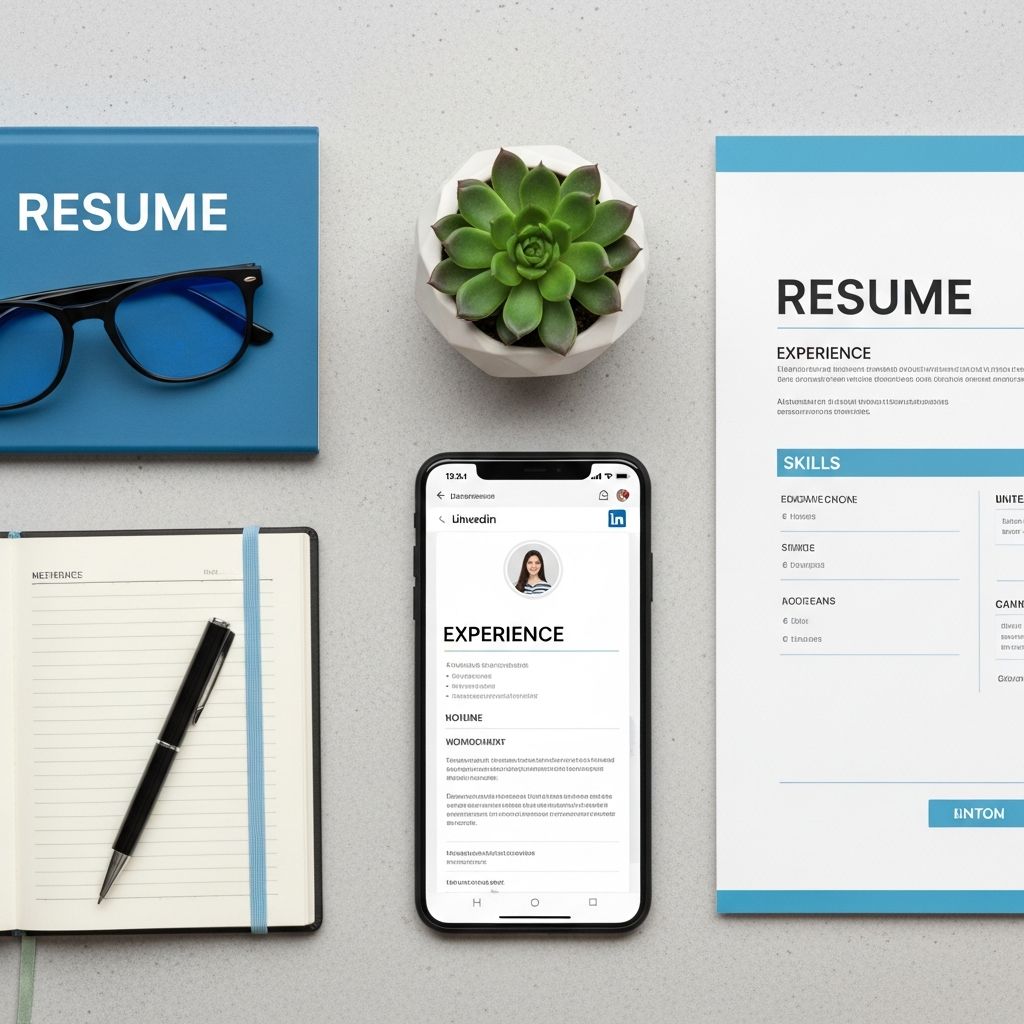
The resume is not dead, but it has changed dramatically. In 2025, employers, recruiters, and applicant tracking systems (ATS) expect a document that is clean, targeted, data-driven, and aligned with skills-based hiring. This guide explains the most important resume trends and shows how to adapt your resume so it works for both algorithms and humans.
Why Resume Trends Matter in Today’s Job Market
Hiring is now heavily influenced by technology and global competition. Many employers use ATS software to automatically screen resumes, and recruiters often have just seconds to decide whether to keep reading. At the same time, organizations are shifting toward skills-first hiring, focusing less on job titles and more on what candidates can actually do.
That means a resume that worked five years ago can quietly fail today—even if your experience is strong. Understanding current resume expectations helps you:
- Pass automated screening and avoid early rejection.
- Showcase skills and achievements that match how companies really hire.
- Communicate your professional brand clearly and quickly.
Key Features of a Modern 2025 Resume
Most successful resumes in 2025 share several core characteristics. Instead of elaborate designs or dense text, they prioritize clarity, relevance, and impact.
| Modern Resume Feature | What It Looks Like | Why It Matters |
|---|---|---|
| Minimal, clean layout | One or two columns, clear headings, consistent fonts, plenty of white space. | Improves readability for recruiters and reduces parsing errors in ATS. |
| Strong summary, not an objective | 3–5 line snapshot of value, skills, and context instead of generic career goals. | Helps hiring managers instantly see who you are and what you offer. |
| Metrics and outcomes | Bullets that highlight results (e.g., “increased revenue by 18%”). | Shows concrete impact instead of vague responsibilities. |
| Skills-forward structure | Dedicated skills section and skills woven into achievements. | Aligns with skills-based hiring and makes qualifications scannable. |
| ATS-friendly formatting | Standard headings, no text boxes, simple fonts, keyword-rich content. | Ensures your resume is searchable and not rejected by software. |
Trend 1: Clean, Minimal Layouts Over Complex Designs
Busy, heavily styled resumes are out. Minimalism has become the default look for professional resumes because both humans and ATS tools handle them better. A clean layout helps the reader quickly identify whether you meet the requirements without fighting decorative elements.
To align with this trend, focus on:
- Standard fonts like Arial, Calibri, or Helvetica in 10–12 pt size.
- Consistent section headings (e.g., “Experience,” “Education,” “Skills”).
- Simple emphasis tools such as bold and bullet points, not graphics.
- Ample white space between sections and around text blocks.
Color can still be used sparingly—for section titles or subtle lines—but clarity should always come before aesthetics.
Trend 2: ATS-Friendly Structure and Smart Keyword Use
Many employers now rely on ATS tools to filter resumes based on keywords, job titles, and skills before a human ever reads them. If your resume is not formatted to be machine-readable, it may never reach a recruiter’s inbox.
Key practices for an ATS-ready resume include:
- Using standard headings like “Work Experience” instead of creative labels that software may not recognize.
- Avoiding text boxes, graphics, or columns built from shapes that can confuse parsers.
- Mirroring keywords from the job posting when they accurately describe your skills and experience.
- Spelling out acronyms at least once (e.g., “Customer Relationship Management (CRM)”).
Most modern ATS systems are designed to handle well-structured Word or PDF files. Complex layouts, images, and unusual fonts increase the risk that important information will be missed by the system.
Trend 3: A Concise, Brand-Focused Professional Summary
Traditional “objective statements” that focus on what you want from the employer are being replaced by professional summaries that spotlight what you offer. Career guidance from European career services and HR professionals emphasizes the importance of a short profile that highlights skills and achievements rather than generic phrases.
A strong summary typically:
- Runs 3–5 lines at the top of your resume.
- States your role or level (e.g., “Senior Marketing Analyst”).
- Highlights 2–4 key skills or areas of expertise.
- Mentions 1–2 measurable achievements or outcomes.
- Touches briefly on your industry or focus area.
This section serves as your elevator pitch, allowing busy hiring managers to quickly understand where you fit and why you are relevant to the role.
Trend 4: Results and Metrics Instead of Task Lists
Modern resumes increasingly focus on impact rather than tasks. Employers are less interested in a list of responsibilities and more concerned with what you accomplished and how it affected the organization. This aligns with broader management and HR research that emphasizes measurable performance indicators in hiring decisions.
Transform your bullets by asking three questions:
- What problem did I help solve?
- What action did I take?
- What measurable result or benefit did that action create?
Then write bullets that highlight the result, not just the duty. Numbers do not need to be perfect; reasonable estimates and ranges are better than no metrics at all.
Trend 5: Emphasis on Technical and Digital Skills
As organizations invest more in digital tools, data, and automation, they increasingly expect candidates to demonstrate technical competence, even outside traditional tech roles. This includes software, platforms, and data literacy relevant to your field.
To reflect this trend, your resume should:
- Include a dedicated technical skills or tools section when appropriate.
- Mention how you used those tools in your experience bullets (e.g., “analyzed survey data in Excel to identify trends”).
- Highlight examples of learning new technology or adapting to new systems.
Digital fluency is no longer limited to software engineers. Many roles now require comfort with remote collaboration tools, data dashboards, and workflow software.
Trend 6: Skills-First and Hybrid Resume Formats
In 2025, resumes that combine a clear work history with a strong emphasis on skills are particularly effective. Research and industry guidance describe a growing preference for combination or hybrid formats that showcase skills and achievements while still presenting roles in reverse chronological order.
Common modern formats include:
- Enhanced chronological – Classic reverse-chronological experience, but with results-focused bullets and strategic keywords.
- Hybrid (combination) – Prominent skills section near the top, followed by chronological work history.
- Skills-forward for career changers – Grouped skills and relevant projects to show fit when titles are less aligned.
Purely functional resumes (which hide dates and job titles) are less favored because they can raise questions about transparency. A hybrid format communicates both your track record and your capabilities.
Trend 7: Tailored, Role-Specific Versions Instead of One Master Resume
A single generic resume for every application is increasingly ineffective. Career services and hiring experts consistently recommend customizing resumes to specific roles and employers.
Practical ways to tailor your resume include:
- Aligning your summary with the role’s main focus (e.g., “B2B sales” vs. “retail sales”).
- Reordering bullets so the most relevant achievements appear first for each role.
- Adding or emphasizing keywords that appear in the job description and reflect genuine experience.
- Highlighting recent, related experience while trimming less relevant older roles.
This level of customization signals that you understand the role and have taken the time to present the most relevant evidence of your fit.
Trend 8: Integrated Online Presence and Portfolio Links
Including links to professional online profiles is now standard for many roles. Guidance from resume-writing platforms highlights LinkedIn and portfolios as important elements of a modern application. These links offer extra depth without crowding your resume.
Consider adding:
- LinkedIn profile that is complete and consistent with your resume.
- Online portfolio or personal site for design, writing, engineering, or project-based roles.
- GitHub or code repositories for technical positions.
Place links near your name and contact information, and ensure that your profiles are up to date before including them.
Trend 9: Transparency About Career Gaps and Nonlinear Paths
Modern career paths are rarely straight lines. Time spent on caregiving, education, relocation, or contract work is increasingly common, and employers are becoming more open to diverse histories when candidates explain them clearly.
On your resume, you can handle gaps or unconventional moves by:
- Using brief explanations in parentheses or short phrases (e.g., “Family caregiving” or “Full-time study”).
- Highlighting skills you maintained or gained during that period, such as volunteering or part-time consulting.
- Ensuring dates are accurate and avoiding attempts to hide entire years.
Clarity builds trust. Recruiters often prefer a concise, honest note to unexplained gaps.
Trend 10: Balancing AI Tools With Authenticity
AI-based tools for resume writing, formatting, and optimization are becoming more common. Analysts point out that automation is reshaping how resumes are screened and evaluated. Used thoughtfully, AI can help you brainstorm keywords or improve structure—but over-reliance can produce generic or inaccurate content.
To use AI responsibly in your resume process:
- Treat AI-generated text as a draft, not a final version.
- Edit every line to ensure it is accurate, specific, and in your own voice.
- Verify that all described skills and achievements are truthful and supported by your experience.
Employers increasingly value authenticity and role-specific detail. Your resume should sound like you, not like a template.
Frequently Asked Questions About 2025 Resume Trends
Q1: What is the ideal length for a modern resume?
Most professionals aim for one page early in their careers and up to two pages for more experienced roles. The key is relevance: if a detail does not support your fit for the target role, it can usually be shortened or removed.
Q2: Do I still need a cover letter if my resume is strong?
While some employers do not require cover letters, many still use them to assess communication skills and motivation. A tailored cover letter can reinforce your value, explain career transitions, and highlight 1–2 examples that connect directly to the role.
Q3: Should I include a profile photo on my resume?
In many regions, especially North America and the UK, photos are discouraged to reduce bias in hiring and minimize legal risk. In other regions, photos are more common but still not mandatory. If you are unsure, research norms in your target country and industry before adding a photo.
Q4: How often should I update my resume?
A good practice is to review your resume every few months and after any major project, promotion, or skills gain. Updating regularly prevents important achievements from being forgotten and makes it easier to tailor for new opportunities quickly.
Q5: Are creative or infographic resumes ever appropriate?
Highly visual resumes can work for some design, marketing, or creative roles when they are submitted directly to a person and not through an ATS. For most applications, it is safer to use a clean, ATS-friendly version and reserve more creative formats for portfolios or direct presentations.
References
- 5 Resume Formats That Will Dominate 2025 (And 3 That Are Dead) — The Interview Guys. 2024-06-10. https://blog.theinterviewguys.com/5-resume-formats-that-will-dominate/
- Current Resume Trends for 2025 — ResumeBuilder.com. 2024-03-01. https://www.resumebuilder.com/career-center/resume-trends/
- Resume Trends in 2025: What to Keep, What to Ditch, and What to Highlight — Elevate Career Services. 2025-05-23. https://elevatecareerservices.com.au/2025/05/23/resume-trends-in-2025-what-to-keep-what-to-ditch-and-what-to-highlight/
- 10 Resume Trends You Can’t Ignore in 2025 (Beyond the Bullet Points) — Careers by Design. 2025-04-15. https://www.careersbydesign.ca/blog/resume-trends-you-cant-ignore/
- The Ideal Resume 2025: The Most Important Trends and Tips — Schulmeister Management Consulting. 2024-11-05. https://www.schulmeister-consulting.com/en/magazine/overview/detail/this-is-what-the-ideal-resume-will-look-like-in-2025-the-most-important-trends-and-tips
- Top 5 Resume Trends for 2025 (New Styles and What to Avoid) — ResumeMaker.online. 2024-09-18. https://www.resumemaker.online/blog/resume-trends-2025

- Integrated M.A. in Applied Linguistics, University of Hyderabad
- 5+ years in editorial, instructional, SEO, and research-based writing
Sneha is a relationships and lifestyle writer with a strong foundation in applied linguistics and certified training in relationship coaching. She brings over five years of writing experience to theskillvault, crafting thoughtful, research-driven content that empowers readers to build healthier relationships, boost emotional well-being, and embrace holistic living. Her writing and insights reflect the belief that beauty, happiness, and wellness…