
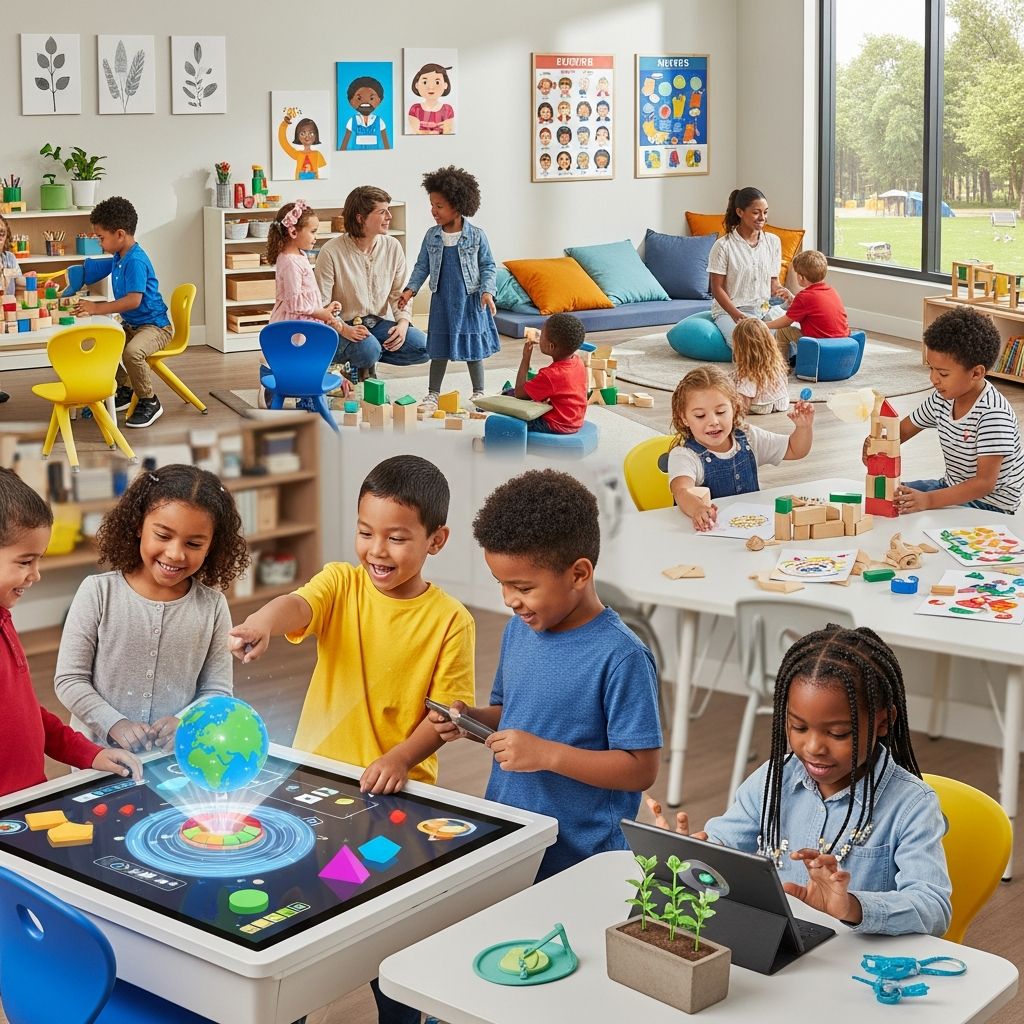
In 2026, preschool education is evolving to prioritize holistic child development through intentional, evidence-based practices. Programs balance structured learning with joyful exploration, addressing modern family needs while fostering foundational skills.
Why Preschool Trends Matter in 2026
The early years are critical for brain development, with 90% of neural connections forming by age five. As societal demands shift, preschools adapt by integrating timeless play with emerging priorities like emotional resilience and digital literacy boundaries. Parents seek programs that prepare children not just academically, but for life’s complexities.
Economic pressures, including post-pandemic funding changes, push innovation. States like New Mexico and California expand universal pre-K, influencing national trends toward accessible, high-quality care. This creates a dynamic landscape where educators refine approaches to maximize impact.
1. Play-Based Learning Takes Center Stage
Hands-on play remains the cornerstone of preschool curricula in 2026. Rather than rote drills, children build cognitive, social, and motor skills through blocks, sensory bins, and dramatic play. This method enhances creativity, problem-solving, and teamwork.
- Block building: Develops spatial reasoning and engineering basics.
- Sensory exploration: Boosts fine motor skills and emotional regulation.
- Group games: Teaches sharing, negotiation, and empathy.
Research from the American Academy of Pediatrics underscores play’s role in executive function development, recommending at least 60 minutes daily. Top programs schedule dedicated play blocks, blending free choice with guided facilitation.
2. Social-Emotional Learning (SEL) as a Core Pillar
SEL dominates 2026 agendas, teaching children to identify emotions, build relationships, and self-regulate. Curricula incorporate daily check-ins, emotion charades, and conflict resolution circles. This proactive approach reduces behavioral issues by 20-30%, per studies from the Collaborative for Academic, Social, and Emotional Learning (CASEL).
| SEL Component | Preschool Activity Example | Expected Outcome |
|---|---|---|
| Self-Awareness | Feeling wheels and journals | Children name emotions accurately |
| Social Awareness | Perspective-taking stories | Increased empathy in peer interactions |
| Relationship Skills | Partner games and buddy systems | Stronger friendships and cooperation |
| Responsible Decision-Making | Choice boards with consequences | Better impulse control |
| Self-Management | Breathing exercises and calm corners | Reduced tantrums and meltdowns |
Inclusive SEL extends to diverse needs, with quiet zones for neurodiverse learners. Educators report calmer classrooms and happier children.
3. Mindful Technology Integration
While screens abound, 2026 preschools limit passive use to under 15 minutes daily, favoring interactive tools. Tablets aid individualized assessments, projectors enhance group stories, and apps track progress for parents. The focus shifts to teacher-led tech supporting human connection.
- Guided video modeling for social skills.
- Digital portfolios showcasing child work.
- Parent communication apps for real-time updates.
This balanced approach aligns with NAEYC guidelines, ensuring technology amplifies—not replaces—face-to-face engagement.
4. Outdoor and Nature Immersion Programs
Nature is no longer recess; it’s curriculum. Daily outdoor blocks build gross motor skills, focus, and resilience. Mud kitchens, forest scavenger hunts, and garden tending teach science and responsibility organically.
Benefits include improved attention spans (up 20% post-outdoor time) and lower stress hormones, as evidenced by University of California studies. Programs adapt with weather-proof gear and inclusive designs for all abilities.
5. Targeted Early Literacy Foundations
Preschoolers master phonemic awareness, vocabulary, and comprehension via songs, rhymes, and interactive reads—no worksheets needed. Programs emphasize oral language richness, with educators modeling rich dialogue.
- Rhyme circles for sound blending.
- Picture walks sparking predictions.
- Vocabulary games tied to daily themes.
This intentional focus predicts third-grade reading success, per National Early Literacy Panel findings.
6. Personalized Learning Pathways
One-size-fits-all fades as observation-driven plans tailor experiences. Teachers use data to group flexibly, offering extensions for advanced learners and scaffolds for others. Child-led projects reflect interests, boosting engagement.
7. Inclusivity and Cultural Representation
Diverse materials, multilingual resources, and anti-bias training ensure every child sees themselves. Programs partner with families for cultural insights, fostering belonging.
8. Wellness and Mindfulness Practices
Daily yoga, breathing breaks, and sensory diets combat overstimulation. Nutrition-integrated snacks teach healthy habits, with many centers fine-tuning menus for allergies and preferences.
9. STEAM Exploration for Young Minds
STEM evolves to STEAM, weaving arts into science, tech, engineering, math. Simple experiments like sink-float tests spark inquiry without overwhelming young attention spans.
10. Sustainability and Eco-Education
Greening classrooms with recycling projects and nature stewardship instills environmental responsibility early.
Navigating Funding and Policy Shifts
2026 brings budget challenges as pandemic funds dry up, yet expansions in pre-K inclusion demand innovative designs like low-ratio spaces. Providers adapt with enrollment tech and wellness staffing.
Choosing the Right Preschool for 2026
Look for play-rich routines, SEL integration, outdoor commitment, and tech boundaries. Visit during peak times, review teacher training, and check family feedback.
Frequently Asked Questions (FAQs)
Q: How much screen time is ideal in preschool?
A: Limit to 15 minutes of guided, interactive use daily, per expert recommendations.
Q: What does SEL look like in a preschool day?
A: Morning meetings, emotion check-ins, and resolution circles build skills seamlessly.
Q: Are outdoor activities daily in 2026 programs?
A: Yes, scheduled blocks ensure consistent nature exposure regardless of weather.
Q: How is early literacy taught without worksheets?
A: Through rhymes, stories, and conversations focusing on sounds and words.
Q: What funding changes affect preschool access?
A: Post-relief budget shifts challenge affordability, but universal pre-K grows.
References
- 2026 Trends in Preschool Education: What Parents Should Know — The School House Anywhere. 2026. https://www.tshanywhere.org/post/current-trends-early-childhood-education
- 9 Childcare Industry Trends You Need to Know in 2026 — Ducklings Franchise. 2026. https://ducklingsfranchise.com/blog/childcare-industry-trends/
- Innovative Early Childhood Education Trends to Watch for in 2026 — Creme de la Creme. 2026. https://cremedelacreme.com/blog/innovative-early-childhood-education-trends-to-watch-for-in-2026/
- Top Trends and Issues in Early Childhood Education in 2026! — 21K School. 2026. https://www.21kschool.com/us/blog/trends-and-issues-in-early-childhood-education/
- Early Childhood Experts Expect to Hit ‘Tipping Point’ in 2026 — EdSurge. 2026-01-13. https://www.edsurge.com/news/2026-01-13-early-childhood-experts-expect-to-hit-tipping-point-in-2026
- Top Pre-K-12 School Design Trends for 2026 — School Construction News. 2026-02-04. https://schoolconstructionnews.com/2026/02/04/top-pre-k-12-school-design-trends-for-2026/

Medha Deb is an editor with a master's degree in Applied Linguistics from the University of Hyderabad. She believes that her qualification has helped her develop a deep understanding of language and its application in various contexts. Medha specializes in the areas of beauty, health, sports, and wellness and is committed to ensuring that the content on the website is…