
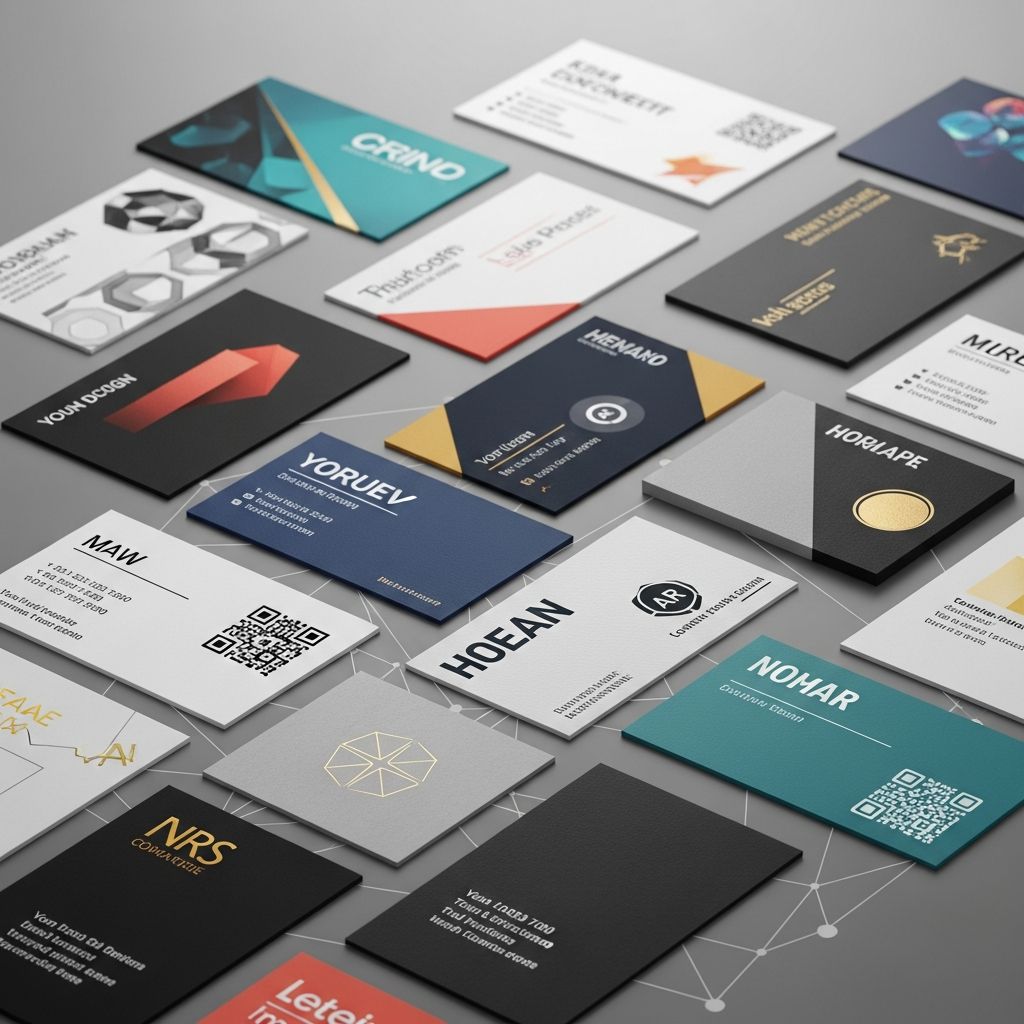
In 2026, business cards remain a cornerstone of professional networking despite digital dominance. A well-crafted card bridges physical and virtual worlds, encapsulating your brand in a tangible form that sparks conversations and memories. This guide outlines 25 original strategies drawn from current trends, ensuring your card not only impresses but actively works to advance your professional goals.
Establishing a Strong Brand Foundation
Your business card is a miniature billboard for your personal or company brand. Start by defining core elements that reflect your identity.
- Align with Brand Identity: Select colors, fonts, and imagery consistent with your website and marketing materials. Tech professionals might opt for sleek blues evoking trust, while creatives lean into vibrant gradients.
- Define Your Unique Value: Incorporate subtle motifs repeating your brand’s key symbols, like interlocking gears for engineering firms, to reinforce recognition without clutter.
- Choose a Signature Color Palette: Limit to 2-3 colors; use tools like brand guidelines to ensure harmony. Earthy tones suit sustainable businesses, while metallics convey luxury.
Optimizing Layout and Typography
Effective layout ensures scannability, guiding the viewer’s eye to essential information in seconds.
| Element | Best Practice | Why It Works |
|---|---|---|
| Font Limit | 2-3 fonts max | Prevents visual chaos; enhances readability |
| Font Sizes | Name: 14-18pt; Details: 10-12pt | Hierarchy emphasizes key info |
| White Space | 30-40% of card | Allows elements to breathe, feels premium |
- Embrace Vertical Orientations: Flip traditional horizontal layouts for a modern, smartphone-like feel that stands out in stacks.
- Bold Typography Trends: Pair sans-serif (e.g., Helvetica) with serif accents for contrast, creating dynamic yet professional text.
- Minimalist Hierarchies: Make your name the largest element, followed by title and contacts, using size and weight for instant prioritization.
Innovative Material and Finish Choices
The tactile experience can elevate a card from forgettable to cherished. In 2026, sustainability and texture dominate.
- Eco-Friendly Stocks: Opt for recycled cotton or seed paper that grows plants when planted, appealing to environmentally conscious clients.
- Industrial Matte and Metallics: Uncoated papers with spot gloss or metal foils add durability and sophistication.
- Textured Emulations: Fashion-inspired finishes like soft-touch lamination mimicking leather or denim for tactile storytelling.
- Holographic and Fine-Line Etching: Subtle shimmers or embossed details reveal themselves upon closer inspection, rewarding engagement.
Integrating Digital and Interactive Features
Blend analog charm with digital utility to future-proof your card.
- Strategic QR Codes: Place a small, branded QR linking to your LinkedIn, portfolio, or a personalized landing page for seamless follow-up.
- NFC Chips: Embed near-field communication for instant digital business card sharing via smartphone tap—ideal for tech-savvy networks.
- Augmented Reality Links: QR scans triggering AR previews of your work, turning a static card into an immersive experience.
Curating Essential and Strategic Content
Avoid information overload; include only what drives action.
- Core Essentials: Name, title, phone, email, website, social handles—prioritize based on your industry.
- Back-Side Storytelling: Use the reverse for a tagline, services list, or motivational quote reinforcing your expertise.
- Custom URLs: Shortened links like yourname.com/card for trackable analytics on scans and visits.
Avoiding Common Design Pitfalls
Steer clear of errors that undermine professionalism.
| Pitfall | Consequence | Fix |
|---|---|---|
| Thin Stock | Feels cheap, bends easily | 14pt+ premium paper |
| Blurry Graphics | Unprofessional appearance | 300 DPI minimum |
| Overcrowding | Hard to read | Ruthless editing |
| No Branding | Forgettable | Consistent motifs |
2026 Trend Spotlights: Standout Innovations
Embrace these forward-looking aesthetics to position your brand as cutting-edge.
- Blueprint Aesthetics: Technical line drawings mimicking architectural plans, perfect for architects and engineers.
- Collectible Series: Numbered editions or die-cut shapes turning cards into keepsakes for creative industries.
- Gradient Dynamics: Smooth color transitions from bold hues, adding depth without complexity.
- Motif Repeats: Seamless patterns of icons or textures derived from your logo for immersive branding.
Production and Printing Checklist
Follow this step-by-step process for flawless execution.
- Design Phase: Sketch thumbnails focusing on balance and brand alignment.
- Proof Iterations: Print low-res proofs to check colors and cuts.
- Select Printer: Choose POD services supporting specialty finishes like foiling.
- Final QA: Verify bleeds (0.125in), safe zones, and typos.
- Quantity Planning: Order 500+ for cost-efficiency; replenish based on networking volume.
Leveraging Cards for Networking Success
Design is half the battle; strategic use maximizes ROI.
- Personalized Handovers: Jot recipient’s name or meeting note on the back for memorability.
- Display Strategically: Keep stacks in clear cases at events to prevent bending.
- Track Engagement: Use QR analytics to follow up on hot leads promptly.
Frequently Asked Questions (FAQs)
What size should a standard business card be in 2026?
Stick to 3.5 x 2 inches (standard) or explore slim (3.375 x 1.75in) for wallets, ensuring printer compatibility.
Are plastic or metal cards worth the investment?
Yes, for high-value clients; they convey premium quality and durability, though costs 5-10x more than paper.
How do I make my card eco-friendly?
Select FSC-certified recycled stocks or plantable papers; avoid plasticky laminates favoring natural textures.
Should I include social media icons?
Only top 1-2 platforms; use custom icons matching your brand, placed unobtrusively.
What’s the best way to test my design?
Print samples on target stock, share with peers for feedback, and scan QR codes to verify links.
Measuring Your Card’s Impact
Success metrics include scan rates, follow-up conversions, and compliments received. Iterate annually to align with evolving trends. A masterful business card isn’t just shared—it’s collected, scanned, and sparks deals.
References
- What Makes a Good Business Card in 2026? Design Rules — card.biz. 2026. https://card.biz/blog/what-makes-a-good-business-card/
- Top Business Card Trends for 2026 — Square Signs. 2026. https://www.squaresigns.com/blog/business-card-trends/
- 30 business card ideas to make your brand stand out — Printify. 2026. https://printify.com/blog/business-card-ideas/
- Popular Business Card Design Ideas in 2026 — Print247. 2026. https://print247.us/post/popular-business-card-design-ideas
- 8 Business Card Trends 2026 — VistaPrint. 2026. https://www.vistaprint.com/hub/business-card-trends

- Integrated M.A. in Applied Linguistics, University of Hyderabad
- 5+ years in editorial, instructional, SEO, and research-based writing
Sneha is a relationships and lifestyle writer with a strong foundation in applied linguistics and certified training in relationship coaching. She brings over five years of writing experience to theskillvault, crafting thoughtful, research-driven content that empowers readers to build healthier relationships, boost emotional well-being, and embrace holistic living. Her writing and insights reflect the belief that beauty, happiness, and wellness…