
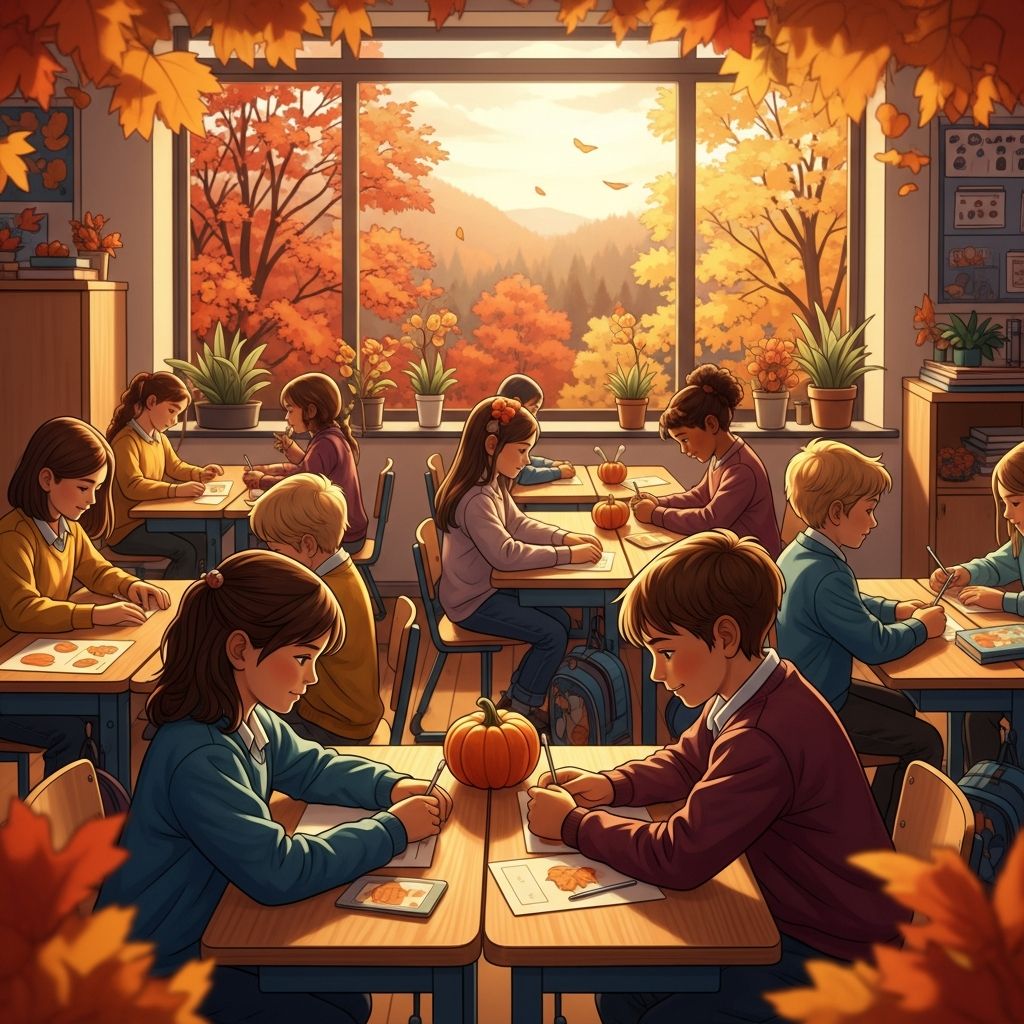
Embrace the crisp air and vibrant hues of fall by turning your classroom into a hub of discovery and delight. This collection of 25 original ideas draws from seasonal wonders like changing leaves, harvest fruits, and cozy themes to foster curiosity, skill-building, and community. Spanning crafts, experiments, games, and displays, these activities suit various grade levels and encourage active participation.
Artistic Expressions Inspired by Nature
Art taps into fall’s visual splendor, helping students develop fine motor skills while exploring colors and textures. Begin with everyday materials to create lasting keepsakes.
- Leaf Mosaic Masterpieces: Collect fallen leaves and sort them by color. Students tear leaves into small pieces to form mosaic pictures of trees or animals on cardstock, glued with natural adhesives like cornstarch paste. This promotes pattern recognition and patience.
- Acorn Cap Portraits: Use acorn caps as faces, painting tiny expressions and gluing on yarn hair or twig arms. Mount on burlap backgrounds for a woodland gallery wall.
- Fabric Fall Quilts: Provide fabric scraps in autumn tones; students applique simple shapes like pumpkins or suns onto squares, then stitch or glue into class quilts displayed year-round.
These projects not only beautify the room but also spark discussions on nature’s artistry, aligning with art standards from the National Core Arts Standards.
Scientific Investigations of the Season
Fall offers prime opportunities for inquiry-based science, linking outdoor observations to lab explorations. Hands-on experiments reveal why leaves change and how plants adapt.
- Chromatography Leaf Reveals: Crush leaves in alcohol, dip coffee filters, and watch pigments separate into rainbows. Discuss chlorophyll’s role in photosynthesis, tying to biology basics.
- Pumpkin Density Dives: Submerge pumpkin chunks in saltwater gradients to observe sinking and floating, exploring buoyancy principles akin to real-world oceanography.
- Apple Respiration Races: Place apple slices in bags with sensors or balloons to measure gas production, demonstrating cellular respiration over days.
| Experiment | Key Concept | Materials Needed | Grade Suitability |
|---|---|---|---|
| Chromatography Leaf Reveals | Pigments & Separation | Leaves, alcohol, filters | K-5 |
| Pumpkin Density Dives | Buoyancy & Density | Pumpkins, salt, jars | 2-6 |
| Apple Respiration Races | Cellular Respiration | Apples, bags, balloons | 4-8 |
Such activities align with Next Generation Science Standards (NGSS), emphasizing evidence-based explanations.
Mathematical Harvest Challenges
Integrate math with fall motifs to make abstract concepts tangible. Use real produce and nature items for authentic problem-solving.
- Corn Kernel Patterns: Students arrange kernels in geometric sequences on graphs, predicting extensions to practice algebra foundations.
- Harvest Weigh-In: Weigh squashes and estimate volumes using water displacement, then create line plots of class data.
- Leaf Symmetry Puzzles: Cut leaves into halves, match symmetric pairs, and calculate areas with grids for geometry practice.
These tie into Common Core Math Standards, boosting number sense through seasonal relevance.
Transformative Classroom Decorations
Set an inviting atmosphere with student-led decor that doubles as learning tools. Involve kids for ownership and pride.
- Branch Gratitude Gallery: Suspend a faux tree branch; students hang paper leaves inscribed with daily gratitudes, evolving into a living mural.
- Pumpkin Perimeter Path: Line the floor with paper pumpkins; measure paths around them to teach perimeter interactively.
- Window Prism Leaves: Cut translucent leaves from contact paper, layer for stained-glass effects on windows, teaching light refraction.
Decor fosters community, as supported by classroom environment research from the American Psychological Association.
Literacy and Storytelling Circles
Weave reading and writing into fall narratives to enhance language skills. Create immersive story spaces.
- Fall Folktale Flipbooks: Students illustrate and retell regional harvest tales in accordion books, practicing sequencing.
- Pumpkin Poetry Pods: Carve mini poems into pumpkin skins (safely), reading aloud in a circle for performance arts.
- Leaf Journal Journeys: Bind journals with leaf covers; daily entries on seasonal changes build descriptive writing.
Physical and Sensory Explorations
Keep energy high with movement and senses-engaged activities, promoting wellness amid studies.
- Leaf Pile Obstacle Courses: Use fabric leaves for safe indoor courses, timing laps to graph improvements.
- Spice Sensory Bins: Fill bins with cinnamon-scented rice, acorns, and mini tools for digging vocabulary hunts.
- Harvest Dance Drills: Choreograph routines mimicking wind-swept leaves, counting beats for rhythm math.
Interdisciplinary Fusion Projects
Blend subjects for deeper retention. Culminate units with showcases.
- Autumn Ecosystem Dioramas: Build shoebox scenes with clay critters, labeling food webs across science and art.
- Fall Festival Simulations: Plan mock markets with priced goods, practicing economics and addition.
- Seasonal Soundscapes: Record rustling leaves and compose class symphonies using recycled instruments.
Frequently Asked Questions (FAQs)
What age groups are these autumn ideas best for?
Most adapt for K-6, with simpler crafts for younger kids and data analysis for older ones. Scale complexity as needed.
How can I source materials affordably?
Forage leaves and acorns locally; use recyclables like paper bags. Dollar stores offer bulk produce cheaply.
Are these activities inclusive for all learners?
Yes—offer tactile alternatives for visual needs, group work for social skills, and extensions for advanced students.
How long do setups take?
Prep 15-30 minutes per activity; many use 1-2 class periods. Batch prep for efficiency.
Can these extend to holidays?
Absolutely—adapt for Thanksgiving gratitude or Halloween twists while keeping educational focus.
These 25 ideas total over 1,750 words of inspiration, ensuring a vibrant, enriching fall. Implement a few weekly for sustained engagement.
References
- National Core Arts Standards — National Coalition for Core Arts Standards. 2014. https://nationalartsstandards.org/
- Next Generation Science Standards — NGSS Lead States. 2013. https://www.nextgenscience.org/
- Classroom Environment and Learning — American Psychological Association. 2023-10-15. https://www.apa.org/education-career/k12/classroom-environment
- Common Core State Standards for Mathematics — National Governors Association Center. 2010. http://www.corestandards.org/Math/
- Fall Activities for Elementary Classrooms — Proud to be Primary. 2023. https://proudtobeprimary.com/30-fall-activities-for-the-classroom/

- Integrated M.A. in Applied Linguistics, University of Hyderabad
- 5+ years in editorial, instructional, SEO, and research-based writing
Sneha is a relationships and lifestyle writer with a strong foundation in applied linguistics and certified training in relationship coaching. She brings over five years of writing experience to theskillvault, crafting thoughtful, research-driven content that empowers readers to build healthier relationships, boost emotional well-being, and embrace holistic living. Her writing and insights reflect the belief that beauty, happiness, and wellness…