
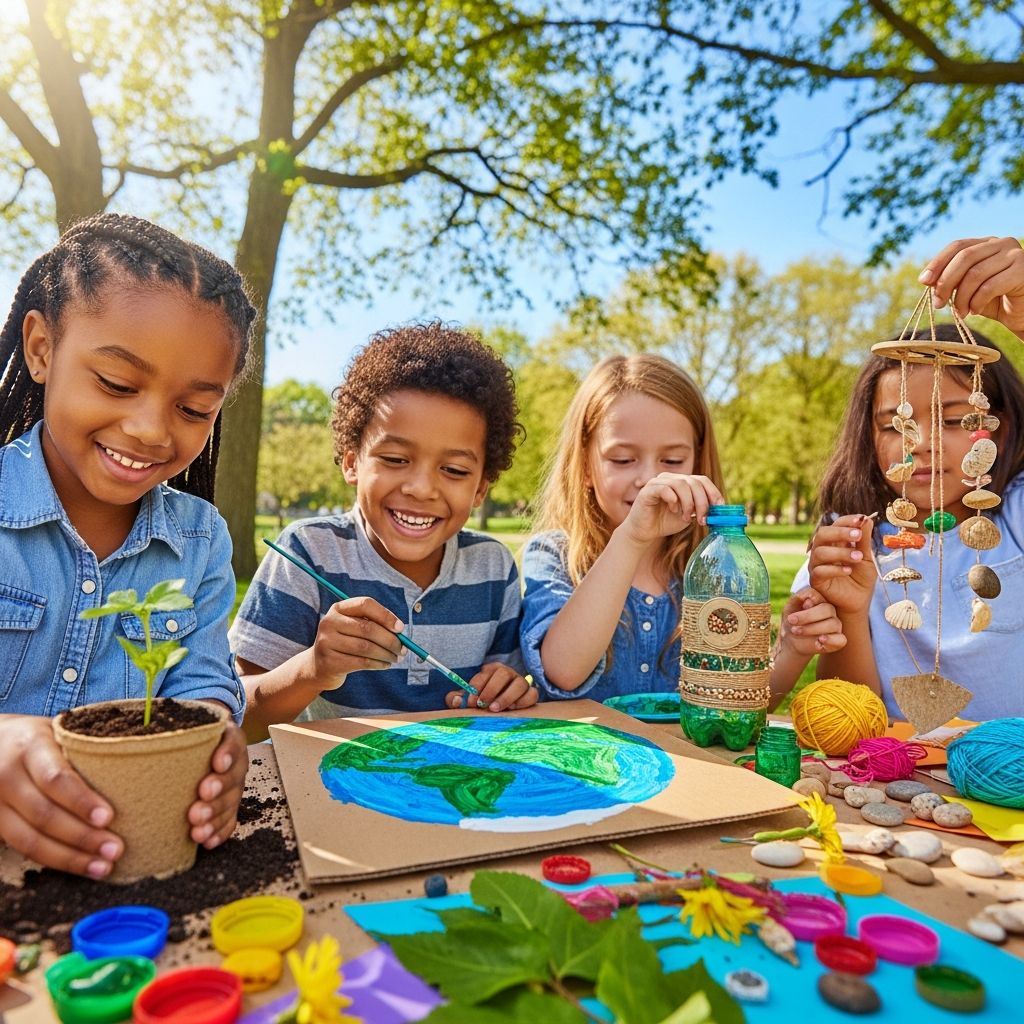
Earth Day offers a perfect opportunity to introduce children to the wonders of our planet while encouraging habits that protect it. These projects combine creativity, science, and outdoor exploration to make learning about sustainability exciting and memorable. Designed for various ages, they use simple household items to spark curiosity and action.
Understanding Our Planet Through Hands-On Science
Science activities help kids grasp environmental concepts like pollution and conservation in an interactive way. These experiments reveal how human actions impact nature, fostering a sense of responsibility.
Simulating Acid Rain Effects
Create a simple setup to demonstrate acid rain’s harm to plants. Fill clear cups with water and vinegar (representing acidic rain), then place small plant clippings or flowers in them alongside control cups with plain water. Observe changes over days, discussing how pollution from factories acidifies rain, damaging ecosystems. This teaches pH basics and pollution sources.
Modeling Stormwater Pollution
Build a model to show how rainwater carries pollutants. Use a tray with soil, toy cars, and colored water to mimic runoff. Watch as “pollutants” flow into a “stream,” highlighting the need for clean streets and green infrastructure. Kids can experiment with barriers like grass or gravel to reduce flow.
Exploring Carbon Footprints
Introduce the idea of personal environmental impact with a footprint calculator worksheet. List daily activities like driving or eating meat, assigning point values. Discuss reduction strategies such as walking or planting trees. This builds awareness of climate change contributors.
Creative Crafts from Recycled Materials
Transform trash into treasure with crafts that promote recycling. These projects reinforce the reduce-reuse-recycle mantra while boosting artistic skills.
Earth-Inspired Collage Art
Draw a large Earth circle on paper and let kids collage it using shredded recycled paper in blues and greens. Add details with markers. This sensory activity connects to planetary features while using waste materials.
Paint Chip Planet Models
Collect paint sample chips in earth tones. Cut and assemble them into a 3D globe or layered landscape. Discuss biomes as kids layer deserts, oceans, and forests, learning about global diversity.
Mud Painting Nature Scenes
Mix dirt with water to make natural paint. Use it on paper to create landscapes. Explore soil colors and textures, turning a messy play into lessons on earth’s resources.
| Project | Materials Needed | Skills Developed | Environmental Lesson |
|---|---|---|---|
| Earth Collage | Paper scraps, glue, markers | Fine motor, creativity | Recycling benefits |
| Paint Chip Globe | Paint chips, scissors, tape | Spatial awareness, assembly | Resource upcycling |
| Mud Art | Soil, water, paper | Sensory exploration, color mixing | Natural pigments |
Growing Green: Planting and Gardening Fun
Planting activities connect children directly to nature’s cycles. Watching growth teaches patience and the importance of green spaces.
- DIY Seed Bombs: Mix clay, compost, and seeds into balls. Dry and toss in garden spots. Ideal for wildflower propagation in hard-to-reach areas.
- Grass Head Planters: Stuff pantyhose with soil and grass seed, tie off, and decorate faces. Water to grow “hair,” learning germination.
- Seed Jar Observation: Layer beans in a jar with paper towels and water. Watch roots sprout, discussing photosynthesis and plant needs.
Extend by creating a class or family garden. Track growth in journals, noting weather effects.
Outdoor Adventures for Environmental Awareness
Stepping outside amplifies learning. These activities encourage exploration and cleanup.
Backyard Scavenger Hunts
List items like leaves, rocks, or recyclables. Kids hunt, sketch findings, and sort into categories. Discuss habitats and litter impact.
Building Insect Habitats
Stack sticks, pinecones, and bamboo into a bug hotel. Place in a garden to attract pollinators, teaching biodiversity.
Community Cleanups
Equip with gloves and bags for litter picks. Sort trash, recycle what can, and chart reductions. Instills civic duty.
Sensory Play with Eco-Twists
Sensory experiences engage multiple senses, making abstract concepts tangible.
Frozen Earth Painting
Freeze water in trays, sprinkle salt, drip colored water. Play with animals on the “globe,” sorting by biomes.
Earth Slime Creation
Mix glue, baking soda, and green glitter for slime mimicking forests and oceans. Explore non-Newtonian fluids while discussing ecosystems.
Coffee Filter Water Cycles
Dip filters in watercolors, spray water to diffuse. Represents evaporation and continents.
Games and Challenges for Group Fun
Turn learning into play with games that reinforce habits.
Recycling Sorting Relay
Set stations with mixed items. Teams sort into bins. Time for competition, review rules.
Pledge Boards
Kids draw commitments like “turn off lights” on paper leaves for a tree display. Track weekly.
| Age Group | Game | Objective |
|---|---|---|
| Preschool | Sensory Sort | Identify recyclables by touch |
| Elementary | Footprint Challenge | Minimize daily impact points |
| Tweens | Design Contest | Build eco-gadgets from trash |
FAQs
What age are these activities suitable for?
Most adapt for ages 3-12. Simplify for toddlers (sensory focus), add complexity for older kids (data tracking).
Do I need special supplies?
No, use household recyclables, soil, seeds. Budget under $10 for groups.
How can I tie activities to school curriculum?
Align with science (ecosystems), math (measuring growth), art (designs), and social studies (sustainability).
Can these be done indoors?
Yes, many like slime or collages. Outdoor ones adapt to balconies or tubs.
What if it rains on Earth Day?
Shift to indoor crafts or virtual tours of biomes.
Extending the Celebration Beyond One Day
Make Earth Day a launchpad for habits. Create monthly challenges: plastic-free weeks, tree-planting drives. Partner with locals for ongoing cleanups. Track family carbon reductions yearly. Resources from EPA (epa.gov) offer free guides[primary]. Arbor Day (last Friday in April) complements with tree focus.
These projects not only entertain but empower kids as stewards. By blending fun with facts, they internalize care for our planet.
References
- 35 Earth Day Activities For Kids — Little Bins for Little Hands. Accessed 2026. https://littlebinsforlittlehands.com/hands-on-earth-day-activities-for-kids/
- Educational Earth Day Activities for Kids — BrightPath Kids. 2022-04-01. https://brightpathkids.com/family-blog/earth-day-activities-for-kids
- 10 Earth Day Activities & Games for Elementary Students — HMH Co. Accessed 2026. https://www.hmhco.com/blog/earth-day-activities-games-for-elementary-students
- Earth Day Activities for Families — TulsaKids Magazine. Accessed 2026. https://www.tulsakids.com/7-earth-day-activities/
- Earth Day Activities for Kids — Yale Sustainability. Accessed 2026. https://sustainability.yale.edu/blog/earth-day-activities-kids

Medha Deb is an editor with a master's degree in Applied Linguistics from the University of Hyderabad. She believes that her qualification has helped her develop a deep understanding of language and its application in various contexts. Medha specializes in the areas of beauty, health, sports, and wellness and is committed to ensuring that the content on the website is…