
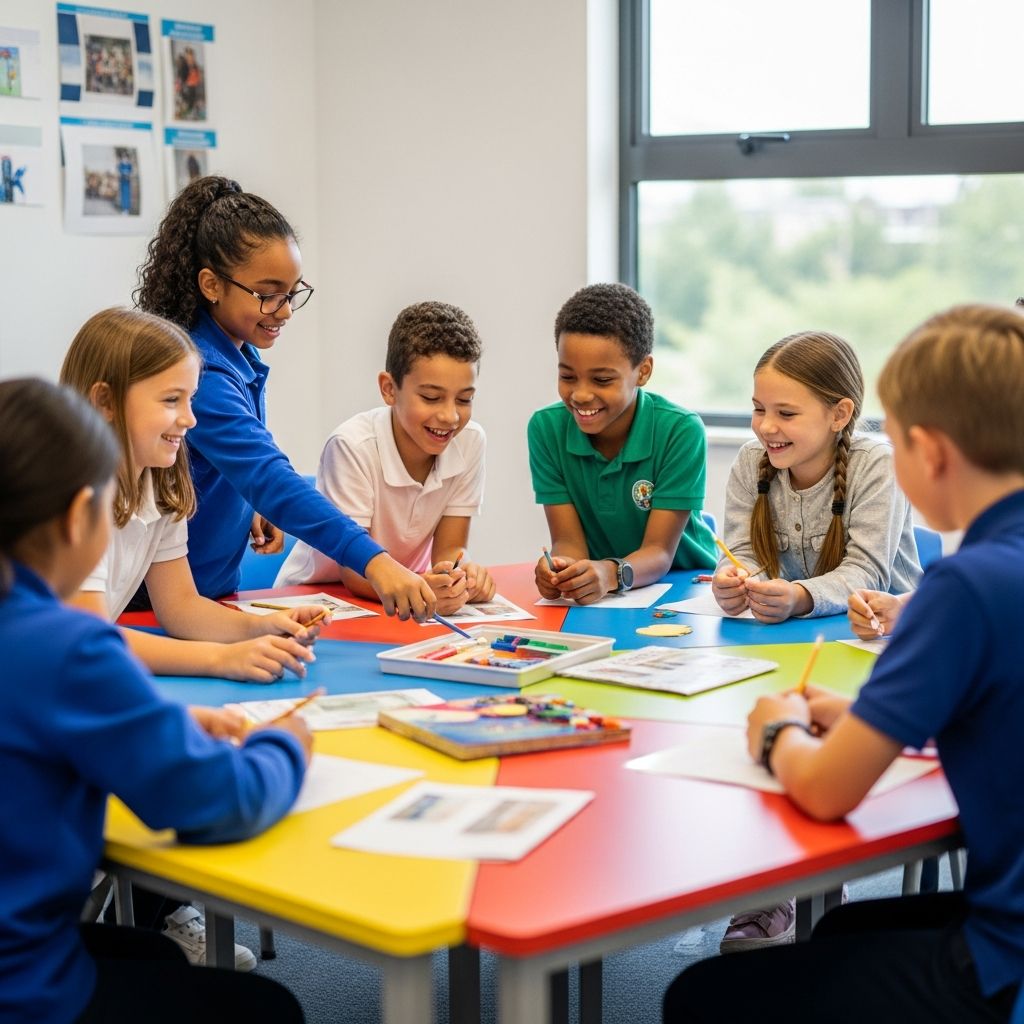
Group work stands as a cornerstone of modern education, transforming passive learners into active participants who build essential social and cognitive skills. By integrating thoughtful collaborative activities, educators can create inclusive environments where students thrive through interaction, problem-solving, and shared discovery. This article delves into a fresh collection of group work ideas, drawing from established pedagogical approaches to help teachers implement effective strategies that enhance retention, motivation, and peer learning.
Building Foundations: Icebreaker Activities to Spark Connections
Starting with icebreakers sets the tone for trust and openness in group settings. These low-pressure tasks help students overcome initial shyness and discover common ground, paving the way for deeper collaboration later in lessons.
- Tower of Shared Traits: Divide the class into small teams and provide stacks of note cards and markers. In a timed challenge of 10 minutes, groups brainstorm and record traits or experiences every member shares, stacking cards into a tower. The tallest stable tower wins, celebrating unity in diversity.
- Birthday Sequence Challenge: Without speaking, students form lines by birthdate within groups. This nonverbal exercise hones communication skills and quick thinking, perfect for early-year bonding.
- Common Denominator Hunt: Groups list unique facts about themselves, then identify overlaps. Sharing findings class-wide reinforces empathy and reveals hidden connections among peers.
These activities require minimal materials and yield immediate rapport, making them ideal for the first week or after breaks. Research from educational leadership programs highlights how such exercises reduce anxiety and boost group cohesion from day one.
Core Collaborative Techniques: Proven Methods for Any Subject
At the heart of effective group work lie versatile techniques adaptable across disciplines. These structures ensure equitable participation and scaffold complex thinking.
| Technique | Group Size | Duration | Best For |
|---|---|---|---|
| Think-Pair-Share | Pairs to full class | 5-10 minutes | Idea generation, confidence building |
| Buzz Groups | 3-6 | 3-10 minutes | Quick brainstorming, re-energizing discussions |
| Jigsaw Puzzle Learning | 4-6 | 20-40 minutes | Deep topic mastery, interdependence |
| Rotating Trios | 3 | 10-15 minutes | Broadening perspectives, diverse input |
Think-Pair-Share in Action: Pose a provocative question, allow individual reflection, then pair discussions, culminating in voluntary shares. This sequence validates personal ideas before group exposure, increasing participation rates significantly.
Buzz Groups for Rapid Ideation: Small clusters tackle open-ended prompts, generating a flurry of ideas before reporting back. Suited for gauging comprehension or igniting debates, this method keeps energy high without overwhelming logistics.
Jigsaw for Expertise Sharing: Assign each student a unique info segment on a topic; they master it individually, then regroup to teach peers. This fosters accountability and comprehensive understanding, as no one can succeed alone.
Creative and Kinesthetic Group Challenges
Movement and imagination invigorate group dynamics, catering to kinesthetic and visual learners while reinforcing abstract concepts through tangible creation.
- Human Knot Untangle: In circles of 5-10, students grasp random hands across the group, then untangle into a circle without releasing grips. Laughter ensues as teams communicate and maneuver, building trust and problem-solving prowess.
- Hula Hoop Pass: Students form a circle, fingertips supporting a hula hoop aloft. The challenge: lower it to the ground collaboratively, using only fingers—no grabbing. Variations with one hand amp up difficulty, promoting precision and unity.
- Cooperative Tableau Scenes: Groups interpret book scenes, historical events, or scientific processes into frozen “living pictures.” Peers pose interlocked, refining through feedback. This visual storytelling sharpens analysis and artistic expression.
- Mirror Drawing Pairs: Partners face off, one leading slow movements while the other mirrors on paper. Switching roles develops observation, coordination, and non-verbal syncing.
These physical tasks break monotony, channeling energy productively. Studies from teaching excellence centers note improved focus post-movement, with kinesthetic activities enhancing memory retention by up to 20%.
Tech-Infused and Digital Group Innovations
Incorporating technology amplifies group work’s reach, enabling real-time collaboration and multimedia output.
Quizlet Live Competitions: Groups craft digital flashcard sets on lesson content, then compete in auto-shuffled teams via Quizlet Live. Real-time scoring on a shared screen gamifies review, with upbeat music heightening excitement.
Digital Story Chains: Using collaborative apps, each group member adds to a shared narrative or diagram, rotating contributions. This builds digital literacy alongside content mastery.
Virtual Replicate Builds: One student describes a complex structure (from cards or screens) while blindfolded peers construct it using blocks or straws. Echoing games like Mental Blox, it sharpens descriptive language and listening.
Platforms like these democratize participation, especially for remote or hybrid classes, aligning with evolving edtech standards from university teaching centers.
Advanced Strategies for Deeper Discussions and Projects
For upper grades or extended units, sophisticated formats cultivate critical discourse and project-based outcomes.
- Snowball Discussions: Start with pairs debating questions, merge into fours to refine ideas, then snowball to larger groups. Final reps present vetted conclusions, honing consensus skills.
- Circle of Voices: In trios arranged circularly, each speaks in turn on prompts, rated 0-2 by peers for rotation. Ensures balanced airtime and exposure to varied viewpoints.
- Napkin Innovation Challenge: Groups receive everyday items like napkins or straws, brainstorming novel uses silently via demonstrations. Translates to resourceful problem-solving in resource-limited scenarios.
- Golf Ball Drop Containers: With tape and straws, teams engineer catchers for falling balls in 10 minutes. Tests design thinking, iteration, and team roles.
These scale complexity, preparing students for real-world teamwork as per leadership development guides.
Implementation Tips for Seamless Group Work
Success hinges on preparation: define roles (e.g., facilitator, recorder, timekeeper), set clear norms, and debrief learnings. Rotate groupings to broaden networks, and use timers for pacing. Adapt for inclusivity—pair strengths with needs, provide sentence starters for shy voices. Track engagement via quick reflections: “What worked? What to tweak?”
Benefits abound: enhanced social skills, deeper processing, and positive interdependence, as validated by cooperative learning research from academic centers.
Frequently Asked Questions (FAQs)
What makes group work effective in classrooms?
Effective group work promotes active learning, peer teaching, and accountability, leading to better retention and social development when structured with clear goals and roles.
How do I handle dominant students in groups?
Assign rotating roles like timekeeper or note-taker to balance contributions, and use techniques like Circle of Voices for equal turns.
Are these activities suitable for all ages?
Yes, scale complexity—simplify for elementary (e.g., drawing), deepen for secondary (e.g., Jigsaw projects).
What if students are off-task?
Incorporate accountability via shared products, timers, and post-activity shares to maintain focus.
Can group work integrate with curriculum standards?
Absolutely; align activities to objectives, like using Jigsaw for standards-based topics.
References
- Types of Small Group Learning Activities for Students: A Guide — The Schoolhouse. 2023. https://www.theschoolhouse.org/post/small-group-learning-activities-preschoolers-students
- 22 Fun Ways to Spark Classroom Connections — Edutopia. 2023-10-12. https://www.edutopia.org/article/fun-ways-students-get-to-know-each-other/
- Group Work in the Classroom: Types of Small Groups — University of Waterloo Centre for Teaching Excellence. 2024. https://uwaterloo.ca/centre-for-teaching-excellence/catalogs/tip-sheets/group-work-classroom-types-small-groups
- 17 Fun Team Building Activities for Kids in Your Classroom — Prodigy Game. 2024. https://www.prodigygame.com/main-en/blog/team-building-activities-for-kids
- 24 Classroom Games to Make Student Learning FUN — Truth for Teachers. 2023. https://truthforteachers.com/classroom-games-to-make-student-learning-fun/
- 10 Groupwork Activities That Can Be Applied to Any Subject Area — Richard James Rogers. 2021-07-03. https://richardjamesrogers.com/2021/07/03/10-groupwork-activities-that-can-be-applied-to-any-subject-area/
- 16 Fun Classroom Team-Building Games and Icebreaker Activities — Mrs. Beattie’s Classroom. 2023. https://mrsbeattiesclassroom.com/classroom-team-building-games-icebreakers/
- 30 Team-Building Games, Activities, and Ideas — Texas Tech University Division of Student Life. 2022. https://www.depts.ttu.edu/provost/studentlife/Involvement/Leadership/documents/team_buildinggamesactivitiesideas.pdf

- Integrated M.A. in Applied Linguistics, University of Hyderabad
- 5+ years in editorial, instructional, SEO, and research-based writing
Sneha is a relationships and lifestyle writer with a strong foundation in applied linguistics and certified training in relationship coaching. She brings over five years of writing experience to theskillvault, crafting thoughtful, research-driven content that empowers readers to build healthier relationships, boost emotional well-being, and embrace holistic living. Her writing and insights reflect the belief that beauty, happiness, and wellness…