
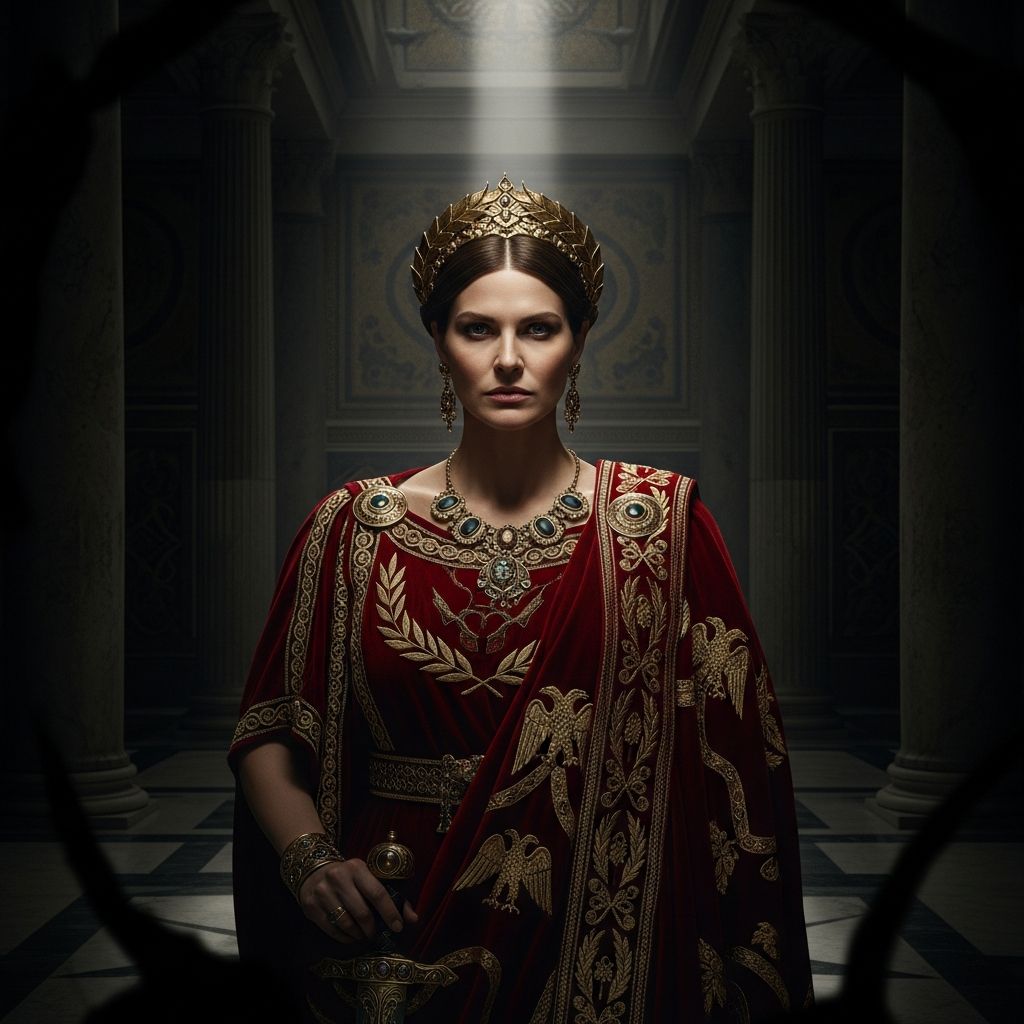
In the opulent courts of ancient Rome, power was a double-edged sword, especially for the women who wielded it. While emperors commanded legions and decreed laws, empresses often pulled strings from the shadows, their ambitions leading to betrayal, bloodshed, and infamy. This article delves into five of the most perilous Roman empresses—women whose actions made them untouchable allies and deadly foes. Their stories, drawn from classical historians like Suetonius, Tacitus, and Cassius Dio, blend fact with sensationalism, yet reveal timeless truths about unchecked authority.
The Shadows of Imperial Influence
Roman empresses operated in a patriarchal world where formal power eluded them, yet informal sway could topple dynasties. Marriage to an emperor granted proximity to the throne, but survival demanded cunning. These women navigated poisonings, adulteries, and coups, often emerging as architects of chaos. Their notoriety stems not just from deeds but from how male chroniclers portrayed them—villainized to excuse imperial failures. Understanding their eras requires context: the Julio-Claudian dynasty’s decadence, the Flavian paranoia, and later Severan brutalities.
- Key Traits of Infamous Empresses: Ruthless ambition, mastery of intrigue, alliances with the Praetorian Guard, and willingness to eliminate rivals.
- Historical Sources: Primary accounts from Suetonius (Lives of the Caesars) and Tacitus (Annals) provide vivid, if biased, narratives.
1. Livia Drusilla: The Poisoner’s Prototype
Livia Drusilla, wife of Augustus, set the template for the scheming empress. Married to the first emperor from 39 BC, she bore Tiberius and allegedly orchestrated deaths to secure his succession. Tacitus accuses her of poisoning her husband and stepsons, earning whispers of uxoricide—wife-killing via toxin. Her image as a virtuous mother goddess contrasted with rumors of eliminating Marcellus, Agrippa, and even Augustus himself through tainted figs.
Livia’s influence peaked post-Augustus (14 AD), advising Tiberius while amassing estates and honors. She meddled in senatorial affairs, prompting Tiberius to distance her. Her deification after death fueled cults, but her legacy is one of calculated ruthlessness. Modern scholars debate the poison tales as propaganda, yet her survival amid purges cements her danger.
| Era | Key Actions | Alleged Victims |
|---|---|---|
| 39 BC – 29 AD | Secured Tiberius’s throne | Augustus, stepsons |
| Influence | Land grants, deification | Rivals to dynasty |
2. Valeria Messalina: Nymphomaniac of the Night
Valeria Messalina, third wife of Claudius (41-48 AD), embodied sexual excess. Young and beautiful, she reportedly challenged Rome’s prostitutes to endurance contests, bedding 25 men in 24 hours. Suetonius details her brothel visits disguised as Lycisca, prostituting for pleasure amid palace orgies. Her appetites threatened stability; she bigamously married Gaius Silius while Claudius campaigned in Ostia.
The plot unraveled when Silius donned Claudius’s cloak, signaling usurpation. Messalina’s execution followed—Claudius’s freedmen Narcissus orchestrated it to prevent her pleas. Her children, Octavia and Britannicus, suffered indirectly; Nero later avenged her indirectly. Messalina’s tale warns of lust-fueled folly in power’s corridors.
- Scandals: Prostitution rings, bigamy, public debauchery.
- Downfall: Treasonous marriage, swift decapitation.
3. Agrippina the Younger: The Ultimate Kingmaker
Agrippina the Younger, mother of Nero (49-59 AD), clawed her way to dominance. Sister-incest rumors with Caligula preceded her marriage to Claudius, whom she likely poisoned with mushrooms in 54 AD to crown 17-year-old Nero. As Augusta, she appeared on coins, governed provinces, and allegedly ordered the captain to drown a sinking ship carrying Britannicus’s supporters.
Her control irked Nero, who exiled then murdered her in 59 AD— a botched shipwreck failed, so assassins finished her. ‘I have a ship’s hull for a mother!’ Nero quipped. Tacitus portrays her as domineering, breastfeeding grown Nero in propaganda. Her naval engineering plots highlight ingenuity in villainy.
Agrippina’s brief regency showcased women’s potential, terrifying the patriarchy.
4. Domitia Longina: Paranoia’s Consort
Domitia Longina, wife of Domitian (81-96 AD), mirrored her husband’s tyranny. Married after abduction, she joined his purges, plotting with actors like Paris, her lover. Exiled briefly for adultery, Domitia returned, implicated in nephew Annius Mutius’s execution and niece Julia’s death—possibly from forced pregnancy or poison.
Domitian’s paranoia consumed them; courtiers assassinated him in 96 AD, with Domitia possibly complicit, gaining Flavian villa. Her survival and honors post-assassination suggest deeper involvement. Like Domitian’s senatorial terror, her role amplified familial horror.
| Empress | Spouse | Notable Crimes |
|---|---|---|
| Domitia | Domitian | Adultery plots, family murders |
| Messalina | Claudius | Bigamy, prostitution |
5. Julia Soaemias: High Priestess of Excess
Julia Soaemias, mother of Elagabalus (218-222 AD), elevated debauchery to divinity. With aunt Julia Maesa, she backed her son’s coup, installing the Syrian teen emperor who declared himself sun god Elagabal. Soaemias became high priestess, promoting Heliogabalus cult over Jupiter, wedding Elagabalus to a Vestal Virgin in sacrilege.
Palace orgies, gender-fluid experiments (Elagabalus offered gold for sex change), and noble purges alienated Rome. In 222 AD, Praetorians slew Elagabalus and Soaemias, dragging their bodies through streets. Her Syrian influences clashed with Roman piety, marking cultural peril.
Common Threads of Infamy
These empresses shared patters: familial betrayal, sexual license, divine pretensions, and violent ends. Livia’s subtlety contrasted Messalina’s brazenness, Agrippina’s intellect Domitia’s complicity, Soaemias’s exoticism. They exploited Praetorians, poisoned foes, and defied norms, often as mothers securing sons’ thrones—yet birthed monsters.
- Power Tools: Marriage alliances, eunuch networks, religious manipulation.
- Downfalls: Overreach, military revolt, senatorial backlash.
Historiography biases amplify vices; Suetonius sensationalized for elite readers. Archaeology, like Livia’s villa frescoes or Messalina’s damnatio traces, corroborates partially.
Lasting Impact on the Empire
These women destabilized dynasties: Agrippina birthed Nero’s tyranny, Messalina eroded Claudian trust. Their scandals fueled damnatio memoriae, erasing names from arches (e.g., Severan parallels with Geta). Yet they advanced women’s visibility—Agrippina’s coinage unprecedented.
Rome’s fall isn’t theirs, but they exemplified how personal vices corroded imperial glue. Byzantine empresses like Irene echoed them, blinding sons for power.
Frequently Asked Questions (FAQs)
Who was the most scandalous Roman empress?
Valeria Messalina tops lists for alleged prostitution marathons and bigamous treason, per Suetonius.
Did empresses really poison emperors?
Rumors abound—Livia and Agrippina accused—but toxicology unproven; likely senatorial smears.
How did empresses gain power?
Through sons’ successions, Praetorian bribes, and husbands’ weaknesses, bypassing legal bars.
Are these stories reliable?
Ancient sources biased; cross-reference with inscriptions, coins for balance.
Any positive legacies?
Livia’s philanthropy; Agrippina’s administration—nuance tempers infamy.
References
- The Worst Roman Emperors: Mad, Bad & Dangerous To Know — Carpe Diem Tours. 2023-05-15. https://carpediemtours.com/blog/worst-roman-emperors
- The 5 Worst Roman Emperors — History Hit. 2022-07-20. https://www.historyhit.com/worst-roman-emperors/
- Top 10 Infamous Roman Emperors and Empresses — YouTube (History channel). 2021-11-10. https://www.youtube.com/watch?v=5EmUKrzpK7s
- Lessons From the ‘Empresses’ of Ancient Rome — TIME Magazine. 2022-03-08. https://time.com/6104511/roman-empress-history/
- Lives of the Caesars (Suetonius) — Loeb Classical Library (Harvard University Press). 1997 (orig. c. 121 AD). https://www.loebclassics.com

Medha Deb is an editor with a master's degree in Applied Linguistics from the University of Hyderabad. She believes that her qualification has helped her develop a deep understanding of language and its application in various contexts. Medha specializes in the areas of beauty, health, sports, and wellness and is committed to ensuring that the content on the website is…