
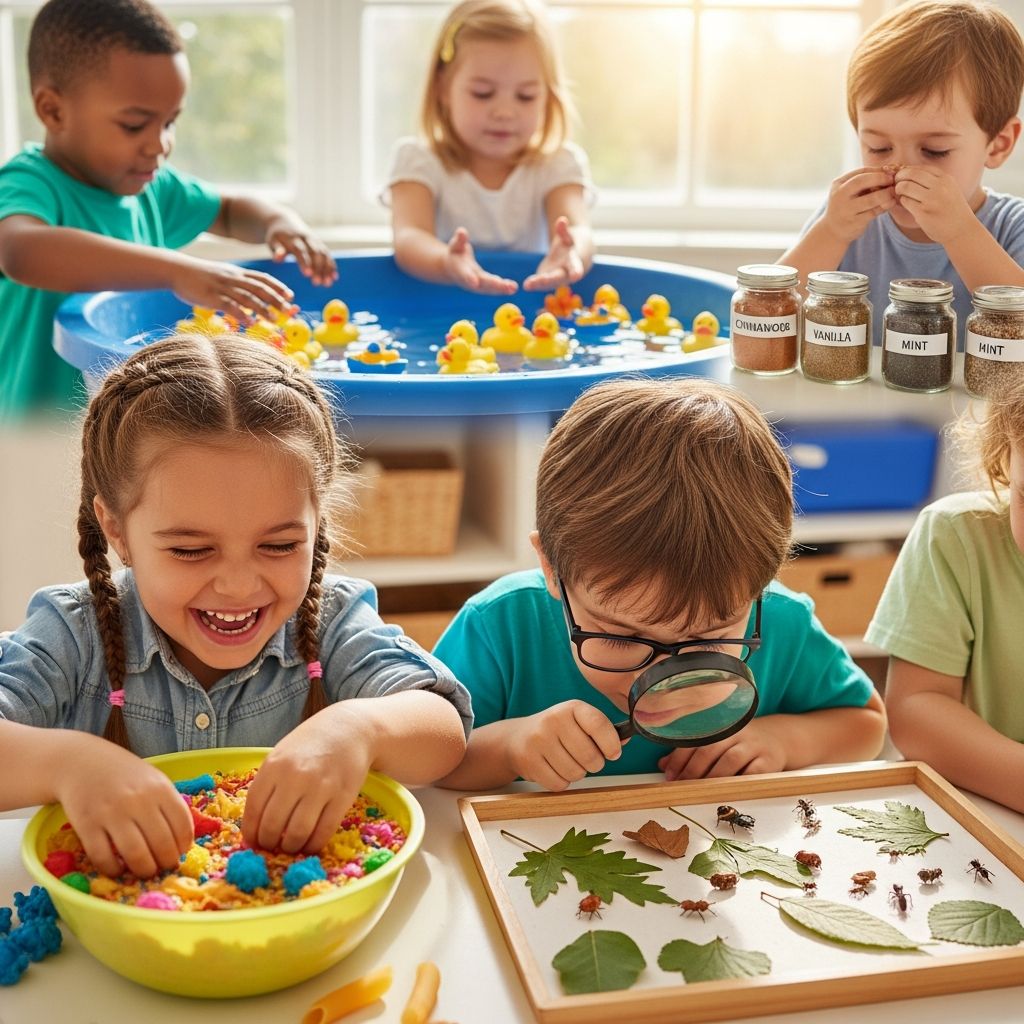
Young children naturally explore the world through their senses, making sensory-based science activities an ideal way to introduce scientific concepts. These experiments encourage close observation, prediction, and discovery while building foundational skills in STEM. By focusing on sight, hearing, smell, taste, and touch, caregivers and educators can create memorable learning moments that align with early childhood development standards.
Why Sensory Experiments Matter for Early Development
Sensory activities stimulate brain growth by connecting sensory input to cognitive processing. Research shows that multisensory learning enhances memory retention and problem-solving abilities in preschoolers. These experiments go beyond play, teaching children to hypothesize, test, and conclude based on evidence they gather with their own senses.
For instance, when children manipulate materials, they develop fine motor skills alongside scientific reasoning. Activities that combine senses, like observing color changes while feeling textures, reinforce neural pathways essential for later academic success.
Visual Wonders: Experiments with Sight
Sight is the primary sense for observation in science. Activities that highlight colors, shapes, light, and shadows captivate attention and teach properties of matter.
- Color Fusion Magic: Fill clear glasses with water and add drops of food coloring. Let children mix primary colors to create secondaries, observing how red and yellow blend into orange. This demonstrates light absorption and mixture principles visually.
- Shadow Puppets and Light Play: Use a flashlight in a darkened room with toys or hands to create shadows on a wall. Experiment with distance to see shadows grow or shrink, introducing concepts of light rays and projection.
- Rainbow in a Jar: Layer liquids of different densities like honey, dish soap, water, oil, and rubbing alcohol (dyed for visibility). Children watch as layers separate, learning about density without mixing.
These visual tasks prompt questions like “Why does the color disappear?” fostering descriptive language and pattern recognition.
Sound Explorations: Listening to Science
Hearing helps children detect vibrations and pitch variations, key to understanding sound waves. Simple setups turn everyday items into sound labs.
- Water Chimes: Arrange bottles filled with varying water levels and tap with spoons. Higher water means lower pitch; children listen and compare, grasping frequency basics.
- Vibration Drums: Stretch balloons over bowls and sprinkle rice on top. Hum or speak loudly to watch rice dance, revealing how sound travels through air to surfaces.
- Nature Symphony Walk: Outdoors, identify sounds like rustling leaves or chirping birds. Record and playback to discuss volume and source direction.
Encourage predictions: “Will more water make it louder?” This builds auditory discrimination and scientific inquiry.
Smell Sensations: Aromatic Discoveries
The sense of smell connects to memory and emotion, making scent experiments particularly engaging. They introduce chemistry through evaporation and molecular detection.
- Scent Guessing Game: Blindfold children and present jars with lemon, cinnamon, vanilla, or mint. Identify and describe scents, exploring how aromas disperse in air.
Herb Infusion Test:
Soak cotton balls in essential oils or crushed herbs in water. Sniff over time to observe fading intensity, teaching diffusion.
- Smelly Science Slime: Mix clear glue, baking soda, and scented extracts. Knead while noting how smells intensify with warmth from hands.
| Scent Source | Intensity Level | Observation Notes |
|---|---|---|
| Lemon | High | Citrusy, sharp; fades quickly |
| Cinnamon | Medium | Warm, spicy; lingers |
| Mint | High | Cool, fresh; refreshing |
This table helps track observations, promoting data organization skills.
Taste Tests: Flavorful Science Lessons
Taste experiments safely explore chemical reactions on the tongue, distinguishing sweet, sour, salty, bitter, and umami. Use edible items only.
- Flavor Wheel Challenge: Offer apple slices dipped in sugar (sweet), lemon juice (sour), salt (salty), and cocoa (bitter). Discuss sensations and rank preferences.
- Baking Soda Surprise: Mix vinegar with baking soda on crackers for a fizzy taste reaction, showing acid-base interactions safely.
- Fruit Dissolve Race: Place sugar cubes, salt crystals, and fruit pieces in water; taste samples over time to detect dissolving flavors.
Supervise closely; these activities teach solubility and sensory adaptation.
Touch Investigations: Tactile Textures
Touch reveals material properties like texture, temperature, and state changes. Hands-on bins immerse children fully.
- Melting Moments: Place ice cubes on plates with salt or warm water nearby. Feel the slick cold melt and compare speeds.
- Texture Treasure Hunt: Fill bins with sand, rice, water beads, or slime. Dig for hidden objects, describing rough, smooth, sticky qualities.
- Sink or Soar Test: In a water tub, drop objects like balls, keys, leaves. Feel drag on floaters vs. sinkers, exploring buoyancy.
Tactile feedback strengthens cause-effect understanding.
Integrating All Senses: Multisensory Masterpieces
Combine senses for holistic learning. A “Mystery Box” with scented, textured items engages multiple inputs simultaneously.
- Bubble Bonanza: Blow bubbles outdoors; watch iridescence (sight), listen to pops (sound), feel slipperiness (touch), smell soap (smell).
- Volcano Eruption: Mold clay around a bottle with baking soda; add vinegar for foam. Observe colors, hear fizz, feel warmth, smell vinegar.
These amplify engagement and retention.
Setting Up for Success: Practical Tips
Create dedicated science zones with washable surfaces and accessible supplies. Rotate materials weekly to maintain interest.
- Supervise water play to prevent slips.
- Use trays to contain messes.
- Prompt questions: “What do you notice? What next?”
Incorporate nature walks for real-world extension.
Benefits Backed by Evidence
Sensory science boosts cognitive, social, and emotional growth. Children gain resilience from failed predictions and confidence from discoveries.
Frequently Asked Questions
What age group are these experiments for?
Ideal for ages 2-6, adaptable for skill levels.
Are special materials needed?
No—use household items like food coloring, ice, and jars.
How to encourage observation?
Ask open-ended questions and provide journals for drawings.
Can these fit into homeschooling?
Yes, align with standards for hands-on STEM curricula.
What if a child has sensory sensitivities?
Offer choices and gentler alternatives, like dry textures.
References
- Easy Science Activities For Toddlers That Spark Curiosity — Childrens Corner Group. 2023. https://childrenscornergroup.com/science-activities-for-toddlers/
- 25+ Sensory Science Activities for Preschool Using the 5 Senses — Little Bins for Little Hands. 2024. https://littlebinsforlittlehands.com/best-kids-science-activities-sensory-play/
- 20 science activities for preschoolers — Bright Horizons. 2023. https://www.brighthorizons.com/article/education/science-for-preschoolers
- The 5 Senses Science Experiments & Lessons for Elementary — Home Science Tools Learning Center. 2022. https://learning-center.homesciencetools.com/article/five-senses-lesson-projects/
- Engaging 5 Senses Experiments for Kids — I’m the Chef Too. 2024. https://www.imthecheftoo.com/blogs/stem-for-kids/engaging-5-senses-experiments-for-kids

Medha Deb is an editor with a master's degree in Applied Linguistics from the University of Hyderabad. She believes that her qualification has helped her develop a deep understanding of language and its application in various contexts. Medha specializes in the areas of beauty, health, sports, and wellness and is committed to ensuring that the content on the website is…