
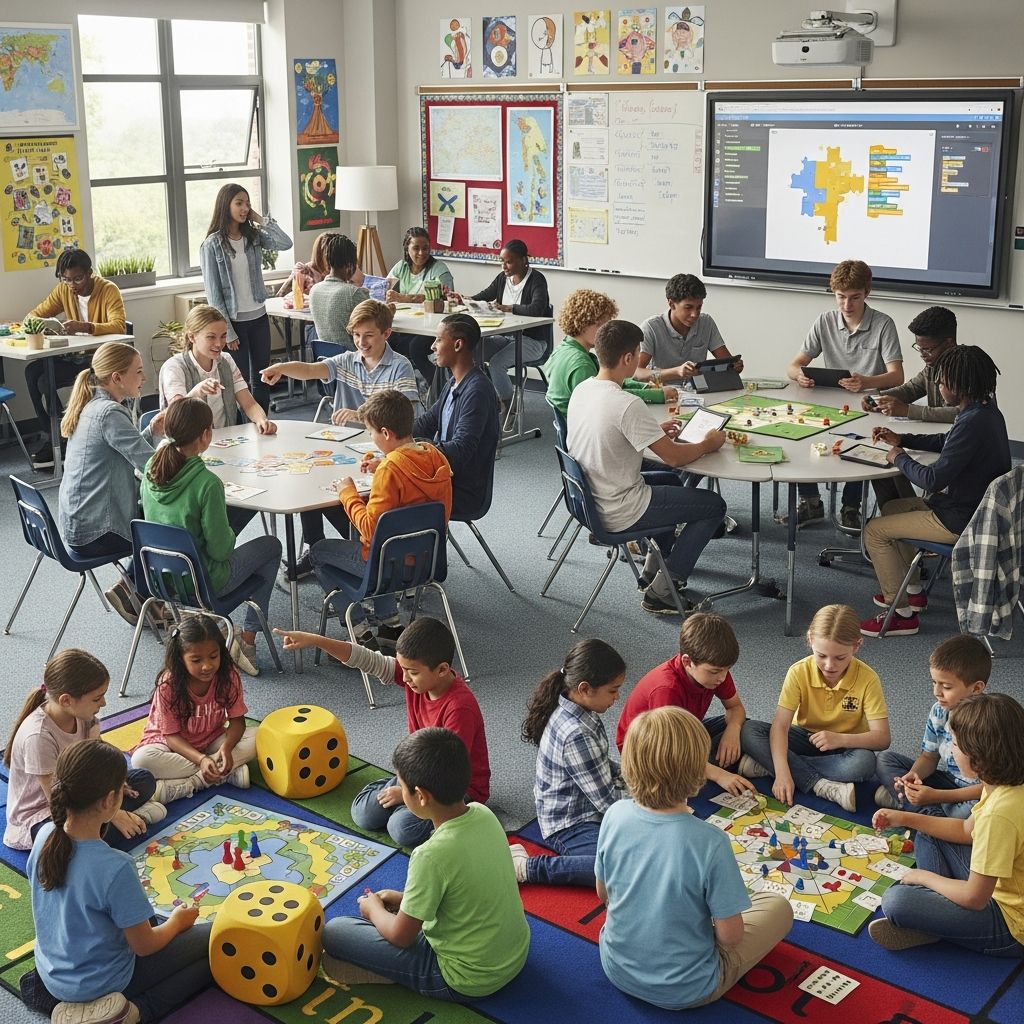
Keeping students energized and focused throughout the school day is a constant challenge for educators. Incorporating playful activities into routines not only breaks monotony but also reinforces academic skills, builds social bonds, and improves physical coordination. This collection of 50 original games spans all grade levels and subjects, from quick brain breaks to full-lesson integrations. Each game requires minimal setup, adapts easily to classroom constraints, and targets key developmental areas like problem-solving, literacy, numeracy, and motor skills.
Why Games Transform Learning Environments
Research from educational bodies highlights how play-based learning enhances retention and motivation. Games stimulate multiple brain regions simultaneously, fostering creativity and resilience. They create safe spaces for risk-taking, where mistakes become learning opportunities rather than failures. In diverse classrooms, these activities level the playing field, allowing introverted students to shine through strategy or observation. Teachers report reduced behavioral issues and heightened participation when fun elements are woven into curricula.
Games for Building Literacy and Vocabulary
Language development thrives in interactive settings. These 10 games sharpen spelling, reading comprehension, and word association without feeling like drills.
- Word Duel Dictionaries: Divide students into pairs, each with a dictionary. Call out challenging words; first to locate and define wins a point. Builds research speed and depth of vocabulary knowledge.
- Mystery Phrase Chain: Students whisper a phrase to the next classmate, who writes it down and passes it along. Last student reveals the often hilariously altered message, teaching phonics and listening accuracy.
- Synonym Speedway: In a circle, name a word; next player provides a synonym within 5 seconds or sits out. Accelerates verbal fluency and semantic understanding.
- Story Builder Relay: Teams construct sentences adding one word at a time. Prompts creativity and grammar reinforcement through collective storytelling.
- Alphabet Avalanche: Chant alphabet backward while passing an object; dropper restarts. Enhances memory sequencing and quick recall.
- Rhyme Race: Call a word; students race to shout rhyming pairs. Strengthens phonological awareness essential for early readers.
- Definition Draw-Off: Describe a word without naming it; others sketch interpretations. Merges art with language precision.
- Scramble Sprint: Jumble letters on board; teams unscramble fastest. Ideal for spelling bees prep.
- Idiom Hunt: Hide idiom cards; finders act them out for group guesses. Introduces figurative language playfully.
- Poetry Ping-Pong: Alternate lines to build nonsensical poems. Sparks rhythmic expression and collaboration.
Math and Logic Challenges Disguised as Play
Numeracy games make abstract concepts tangible. These 10 activities target arithmetic, geometry, and strategic thinking for grades K-12.
- Number Knockout: Pass a ball naming multiples of a number; miss and you’re out. Reinforces multiplication tables dynamically.
- Shape Shift Showdown: Describe transformations (e.g., rotate triangle); drawers replicate. Teaches geometry vocabulary hands-on.
- Fraction Feast: Divide play food into fractions matching cards. Visualizes parts of wholes concretely.
- Pattern Parade: Clap rhythms; repeaters extend sequences. Develops algebraic pattern recognition.
- Equation Escape: Solve chained equations to ‘unlock’ next clue. Builds sequential problem-solving.
- Probability Pit: Predict outcomes from jar draws; track accuracy. Introduces data analysis empirically.
- Logic Ladder: Climb rungs by solving peer-posed puzzles. Encourages deductive reasoning.
- Measurement Marathon: Estimate then measure classroom objects. Hones practical metric skills.
- Base Ten Battle: Use blocks to represent and compare numbers. Deepens place value comprehension.
- Graph Gossip: Survey peers, plot data on human graphs. Links stats to real interactions.
Physical Activity Games for Energy Bursts
Movement combats sedentary learning. These 10 no-equipment games fit tight spaces, promoting fitness and focus.
- Freeze Frame Fitness: Music plays, dance; stop for pose holds. Improves endurance and body control.
- Mirror Moves: Pairs mimic leader’s actions silently. Enhances observation and coordination.
- Balloon Bonanza: Keep airborne without hands using creative methods. Boosts agility and teamwork.
- Human Pretzel: Link arms in circle, untangle without release. Fosters problem-solving through physicality.
- Simon Says Sprint: Command relays with twists like animal walks. Reinforces listening with motion.
- Jump Rope Jumpstart: Imaginary ropes for skill drills. Builds rhythm without props.
- Obstacle Odyssey: Navigate taped paths with challenges. Develops spatial awareness.
- Yoga Storytime: Pose to match narrative elements. Combines mindfulness with literacy.
- Tag Team Twist: Tagged players freeze till teammates ‘thaw’ with questions. Integrates Q&A with activity.
- Breath Bounce: Sync jumps to breathing counts. Regulates energy levels effectively.
Teamwork and Social Skill Builders
Collaboration games nurture empathy and communication. Perfect for 10 group-oriented activities.
- Blindfold Brigade: Verbal guides navigate mazes. Builds trust and clear instruction.
- Group Juggle: Toss named objects in patterns. Teaches role interdependence.
- Consensus Quest: Agree on top 3 category items silently. Sharpens negotiation.
- Pantomime Panels: Act scenes for team guesses. Encourages expressive support.
- Resource Rally: Build structures from shared supplies. Promotes equitable sharing.
- Debate Dash: Quick pros/cons rounds on fun topics. Hones respectful discourse.
- Compliment Circle: Pass positives around. Boosts class morale instantly.
- Role Reversal: Swap student-teacher roles briefly. Cultivates perspective-taking.
- Mystery Partner Pairs: Clue-based matching games. Sparks introductory dialogues.
- Group Groove: Invent dances collectively. Celebrates diverse contributions.
Creative Arts and Imagination Sparks
Artistic games unlock innovation. These 10 fuel visual and performative expression.
- Squiggle Stories: Turn random lines into drawings with tales. Ignites narrative invention.
- Soundtrack Symphony: Compose class soundscapes for stories. Explores auditory creativity.
- Collage Chaos: Theme scraps into group murals. Encourages aesthetic decisions.
- Puppet Parley: Sock puppets debate topics. Merges drama with rhetoric.
- Invention Station: Design solutions to silly problems. Stimulates engineering mindset.
- Comic Strip Chain: Sequential panel additions. Builds visual sequencing.
- Mask Maker Mayhem: Face crafts for emotion charades. Links art to feelings.
- Rap Round Robin: Rhyme facts in cyphers. Infuses curriculum with rhythm.
- Dreamscape Doodles: Blind contour then embellish. Fosters uninhibited artistry.
- Theater Tableau: Frozen scenes from prompts. Captures dramatic composition.
Brain Breaks for Quick Refocus
Short 5-minute resets prevent burnout. These 10 are instant mood lifters.
- Whisper Challenge: Lip-read garbled words. Heightens attention sharply.
- Emoji Encode: Guess emotions from faces. Tunes emotional intelligence.
- Thumb War Tournament: Paired battles with cheers. Quick physical outlet.
- Breath Balloon: Inflate/deflate imaginary orbs. Calms via visualization.
- Name That Tune: Hum snippets for guesses. Activates memory banks.
- Stretch Symphony: Led full-body stretches synced to counts. Releases tension.
- Laugh Leader: Escalate giggles contagiously. Diffuses stress chemically.
- Eye Spy Elite: Detail hunts in room. Refreshes visual scanning.
- Finger Flicks: Dexterity patterns mirrored. Wakes fine motors.
- Gratitude Snap: Share appreciations rapidly. Shifts to positivity.
Adapting Games Across Grade Levels
Flexibility ensures inclusivity. Younger grades emphasize basics; older ones add complexity like timers or scoring. Use tables for quick adaptations:
| Game Type | Grades K-2 Focus | Grades 3-5 Focus | Grades 6+ Focus |
|---|---|---|---|
| Literacy | Letter sounds | Spelling patterns | Advanced vocab |
| Math | Counting | Operations | Algebra/Logic |
| Physical | Basic moves | Coordination | Strategy fitness |
Frequently Asked Questions (FAQs)
What materials do most games need?
Minimal: paper, markers, or none. Adapt with what’s available for zero-prep fun.
Can these work for large classes?
Yes, scale via teams or rotations to include everyone actively.
How often should games be played?
Daily brain breaks; integrate 1-2 per lesson for optimal engagement.
Do they align with curriculum standards?
Absolutely—tie to objectives in math, ELA, PE for seamless standards met.
What if a student sits out?
Offer observer roles like scorekeeper to maintain inclusion.
References
- 50 Fun Teaching Activities and Games for Children — Twinkl Educational Publishing. 2023-05-15. https://www.twinkl.com/blog/fun-games-for-children-in-the-classroom
- 42 Classroom Games Students Will Want To Play Again and Again — WeAreTeachers. 2024-02-10. https://www.weareteachers.com/classroom-games/
- 40 Quick Games to Play in the Classroom at the End of the Day — Education to the Core. 2023-08-20. https://educationtothecore.com/40-quick-games-to-play-in-the-classroom-at-the-end-of-the-day/
- Classroom Games to Boost Learning, Engagement, and Focus — SimpleK12. 2024-01-12. https://www.simplek12.com/blog/classroom-games-to-boost-learning-engagement-and-focus
- 24 Classroom Games to Make Student Learning FUN — Truth for Teachers. 2023-11-05. https://truthforteachers.com/classroom-games-to-make-student-learning-fun/

Medha Deb is an editor with a master's degree in Applied Linguistics from the University of Hyderabad. She believes that her qualification has helped her develop a deep understanding of language and its application in various contexts. Medha specializes in the areas of beauty, health, sports, and wellness and is committed to ensuring that the content on the website is…