
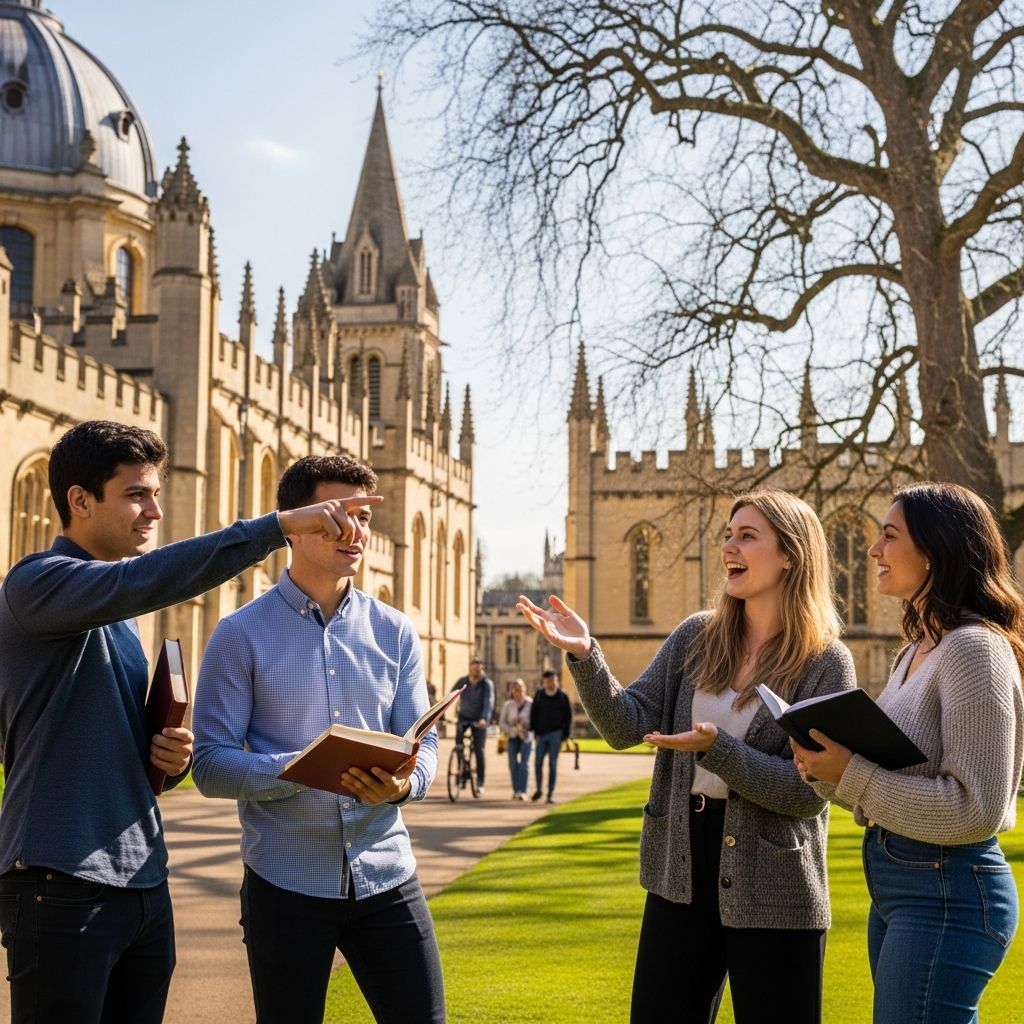
Every year, Oxford University receives over 20,000 undergraduate applications for roughly 3,300 places, leading to a rejection rate exceeding 80%. Yet, those who secure offers possess distinct qualities that align perfectly with the university’s rigorous demands. This article explores the six core attributes shared by successful candidates, drawing from official admissions data and expert insights to help prospective students stand out.
Understanding Oxford’s Competitive Landscape
Oxford’s admissions process is holistic and subject-specific, emphasizing potential over mere achievements. The university’s Common Framework ensures selection based on academic ability and aptitude, regardless of background. Applications are pooled across colleges, with shortlisting informed by grades, tests, written work, and interviews. Official statistics show A-level applicants dominate, with 3,003 offers and 2,604 acceptances in recent cycles, alongside international qualifications like the IB (244 acceptances).
Success hinges not just on top grades—predicted A*AA or equivalent—but on demonstrating excellence in interviews and personal statements. Accepted students excel in these areas, showcasing traits that predict thriving in Oxford’s tutorial system.
Trait 1: Unwavering Academic Excellence
At the foundation of every Oxford offer is superior academic performance. Successful applicants typically achieve or predict the highest grades in their qualifications. For A-levels, this means multiple A*s; for IB, scores above 38/45 are common. Oxford’s data confirms that even with limited places, only those with top predictions compete effectively.
Beyond numbers, academics reflect deep subject mastery. Admissions tutors seek evidence of consistent high achievement, often from challenging schools. Contextual data on school performance aids fairness, but raw excellence remains non-negotiable. Successful students prepare rigorously for admissions tests like the TSA or MAT, scoring in the upper bands to secure interviews.
Trait 2: Genuine Passion for the Subject
Oxford prioritizes students with burning enthusiasm for their field, far beyond classroom requirements. Tutors, as noted by Pembroke College’s Peter Claus, value ‘independent intellectual fervour’ over generic accolades. This manifests in personal statements detailing super-curricular pursuits: books read, podcasts devoured, or projects undertaken outside the syllabus.
For history applicants, it might mean analyzing primary sources from obscure archives; for physicists, deriving equations from first principles. Interviews test this passion—candidates who articulate why a theorem captivates them or debate philosophical implications shine. Passion fuels the self-directed learning essential to Oxford’s model.
Trait 3: Profound Critical Thinking Skills
Great Oxford students question everything, dissecting ideas with originality. This trait elevates applicants from good to exceptional. Rather than rote recall, tutors probe how candidates connect concepts to broader contexts—linking a biology paper to ethics or a literature text to socio-political shifts.
In interviews, this means offering novel insights, not textbook answers. The Common Framework stresses aptitude testing to identify such thinkers. Successful applicants demonstrate intellectual agility, challenging assumptions and synthesizing diverse viewpoints, preparing them for tutorials where debate drives discovery.
Trait 4: Extensive Independent Exploration
Accepted students are voracious learners, engaging deeply with their subject independently. They read widely—academic journals, monographs, even opposing scholarly views—evidenced in applications. A medicine hopeful might discuss recent trials from The Lancet; an economist, behavioral models from Kahneman.
This exploration builds ‘subject culture’ awareness, as Claus emphasizes. It signals readiness for Oxford’s research-led teaching, where students pursue unsupervised inquiry. Data shows interviewed candidates (about one-third of applicants) are banded by faculties based on such evidence, prioritizing depth over breadth.
Trait 5: Resilience and Self-Motivation
Oxford demands relentless drive; accepted students embody hard work and determination. Courses involve heavy independent study, with pioneers as tutors expecting similar initiative. Self-motivation shines in sustaining super-curriculars amid school pressures and excelling in high-stakes interviews.
Socio-economic data reveals challenges: only 76% of disadvantaged offer-holders met conditions in 2018 versus 86% overall, underscoring resilience’s role. Yet, Oxford’s framework promotes equity via contextual offers, rewarding grit in overcoming barriers.
| Group | Offer Achievement Rate (2018) |
|---|---|
| All Applicants | 86% |
| Socio-Economically Disadvantaged | 76% |
Source: Adapted from Oxford access statistics.
Trait 6: Articulate Expression and Interpersonal Skills
Finally, successful applicants communicate with clarity and confidence. Personal statements must convey complex ideas succinctly; interviews require defending arguments under scrutiny. Oxford values expressive thinkers who thrive in tutorials—small-group discussions demanding precision.
Activities like debating or leadership in subject societies bolster this, but relevance matters: a politics student’s Model UN experience trumps unrelated sports captaincy. This trait ensures candidates can engage tutors, turning potential into offers.
How to Cultivate These Traits
- Academics: Aim for top predictions; practice admissions tests via official resources.
- Passion: Document super-curriculars in a reading log for your statement.
- Thinking: Practice essay writing that challenges norms; join discussion groups.
- Exploration: Follow faculty reading lists; attend webinars.
- Resilience: Build study routines; seek mentorship.
- Expression: Hone via mock interviews or public speaking.
Admissions Statistics at a Glance
| Qualification | Offers | Acceptances |
|---|---|---|
| A-level | 3003 | 2604 |
| International Baccalaureate | 291 | 244 |
| US APTs/SATs | 147 | 101 |
| Singaporean SIPCAL | 65 | 55 |
Oxford welcomes diverse qualifications, but competition is fierce across all.
Frequently Asked Questions (FAQs)
What grades do I need for Oxford?
Predicted A*AA (excluding General Studies) or equivalent; top performers only.
Do extracurriculars matter?
Subject-relevant ones show passion; generic awards less so.
How important are interviews?
Crucial—around one-third of applicants interview, and offers follow strong performances.
Does background affect chances?
Contextual data helps, but academic potential is key.
Can I apply open?
Yes; strong candidates are reassigned if needed.
References
- What are the characteristics of students accepted to Oxford? — CollegeVine. 2023. https://www.collegevine.com/faq/7528/what-are-the-characteristics-of-students-accepted-to-oxford
- What Will Make You a Great Oxford Student? — Oxford Royale Academy. 2023. https://www.oxford-royale.com/articles/what-will-make-you-a-great-oxford-student
- Common Framework — University of Oxford. 2023-10-01. https://www.ox.ac.uk/admissions/undergraduate/applying-to-oxford/decisions/common-framework
- University access statistics disguising the truth — The Oxford Student. 2020-02-28. https://www.oxfordstudent.com/2020/02/28/university-access-statistics-disguising-the-truth/
- Qualifications | University of Oxford — University of Oxford. 2025. https://www.ox.ac.uk/about/facts-and-figures/admissions-statistics/undergraduate-students/current/overall-numbers/qualifications
- Undergraduate Admissions Statistics – Notes and definitions — University of Oxford. 2025. https://www.ox.ac.uk/about/facts-and-figures/admissions-statistics/undergraduate-students/current/notes-and-definitions

Medha Deb is an editor with a master's degree in Applied Linguistics from the University of Hyderabad. She believes that her qualification has helped her develop a deep understanding of language and its application in various contexts. Medha specializes in the areas of beauty, health, sports, and wellness and is committed to ensuring that the content on the website is…