
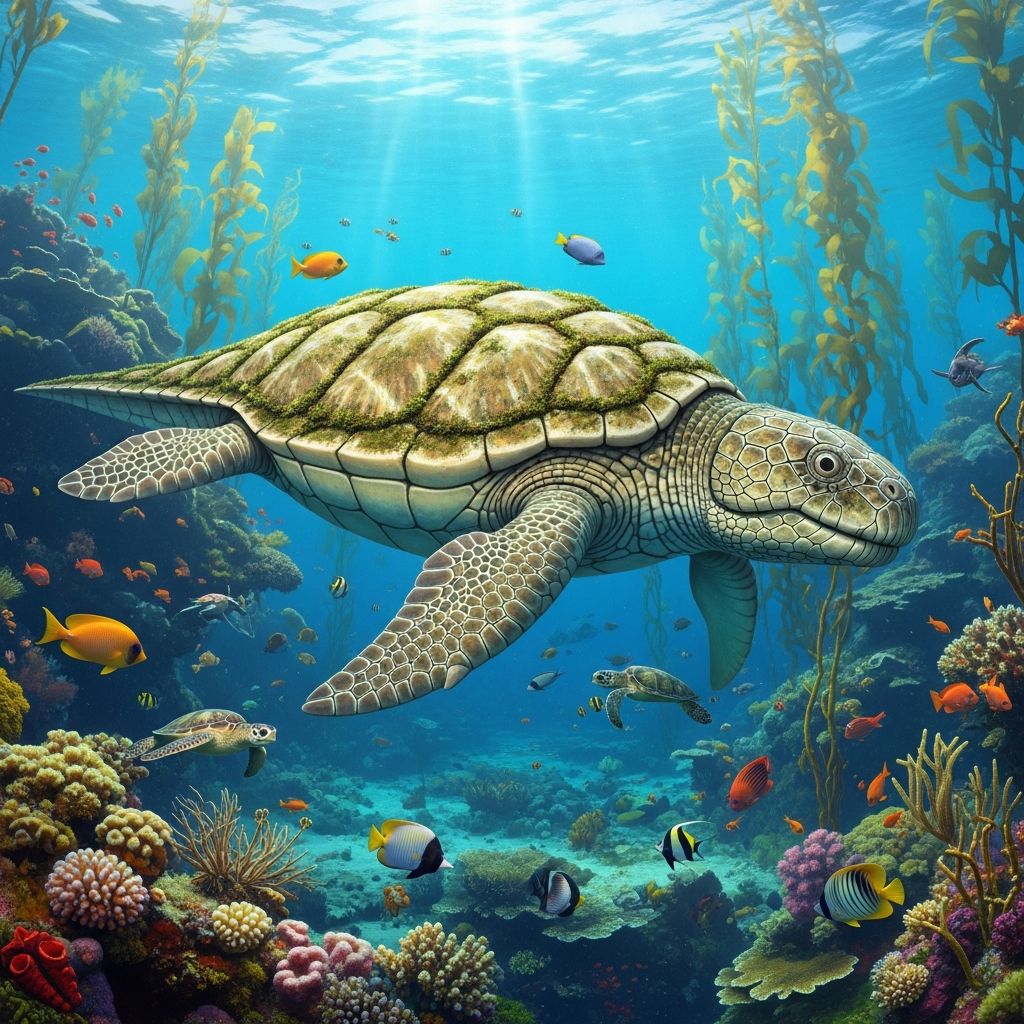
An Introduction to Ocean’s Most Ancient Mariners
Sea turtles represent one of Earth’s most fascinating groups of marine reptiles, with a lineage extending back at least 110 million years. These remarkable creatures belong to the order Testudines and suborder Cryptodira, making them true reptiles perfectly adapted to oceanic life. Currently, seven distinct species of sea turtles inhabit the world’s oceans, each possessing unique characteristics that enable them to thrive in diverse marine environments. These ancient mariners play crucial ecological roles in maintaining the health of ocean ecosystems, from coral reefs to open ocean waters. Understanding the distinctions between these species is essential for appreciation and conservation efforts aimed at protecting these vulnerable animals.
Structural Classification: Two Fundamental Categories
Sea turtles are scientifically divided into two primary families based on their shell structure. The first family, Cheloniidae, encompasses six species characterized by hard, bony shells composed of overlapping or non-overlapping scutes. The second family, Dermochelyidae, consists of a single species distinguished by its unique leathery carapace rather than a rigid bony structure. This fundamental difference represents an evolutionary adaptation that has allowed different species to exploit various oceanic niches and feeding strategies. The hard-shelled varieties generally maintain a more conservative body temperature range, while the single leathery-shelled species possesses thermoregulatory capabilities that permit survival in cooler waters.
The Colossus of the Sea: Leatherback Characteristics
The leatherback turtle stands as the largest sea turtle species and represents the sole member of the Dermochelyidae family. These magnificent creatures can reach lengths exceeding six and a half feet and weigh nearly 2,000 pounds, comparable to a concert grand piano in dimensions. Unlike their hard-shelled relatives, leatherbacks possess a distinctive dark, leathery carapace adorned with longitudinal ridges that run along the dorsal surface. This unique shell composition allows leatherbacks to regulate body temperature more effectively than other sea turtles, enabling them to venture into colder oceanic regions near the North and South poles where other turtle species cannot survive.
Leatherback feeding habits reflect their specialized physiological adaptations. Their relatively weak jaws prevent them from consuming hard-bodied prey, so they concentrate on gelatinous organisms, primarily jellyfish and salps. During extended migrations, leatherbacks regularly descend to depths exceeding 1,000 meters in pursuit of gelatinous zooplankton. These turtles rank among the most highly migratory animals on Earth, traversing up to 10,000 miles annually between feeding grounds and nesting beaches. Unfortunately, leatherback populations face rapid decline across many regions, with conservation status listed as vulnerable to extinction.
Herbivorous Grazers: The Green Sea Turtle
Green sea turtles represent the second-largest marine turtle species, reaching lengths of approximately five feet and weighing up to 700 pounds. These turtles derive their common name from the distinctive green coloration of fat deposits beneath their shells, a characteristic resulting from their primarily vegetarian diet. Their physical structure reflects herbivorous specialization, featuring small, blunt heads paired with serrated jaws perfectly designed for grazing on marine vegetation. The carapace displays an oval configuration with coloring that varies between green and yellow hues, frequently exhibiting a striking radiating pattern reminiscent of tie-dye designs.
Green turtles possess four pairs of costal scutes on each side of their carapaces, which do not overlap. These turtles inhabit bays and protected coastal regions throughout temperate and tropical waters globally. Their herbivorous lifestyle has shaped their digestive and behavioral adaptations, allowing them to thrive in environments rich with seagrass meadows and algal beds. Despite their vegetarian preferences, green turtles occasionally supplement their diets with jellyfish and other marine organisms when plant matter becomes scarce.
Powerful Predators: Loggerhead Identification and Behavior
Loggerhead turtles earned their distinctive name from exceptionally large heads housing powerful jaw muscles capable of crushing hard-shelled prey. These carnivorous reptiles typically weigh up to 350 pounds and achieve lengths around four feet, making them moderate-sized within the sea turtle spectrum. Loggerheads display heart-shaped carapaces with reddish-brown coloration and feature five pairs of non-overlapping costal scutes arranged along the shell’s sides.
The robust jaw structure permits loggerheads to consume mollusks, crustaceans, and other hard-bodied organisms that other sea turtle species cannot access. Their primary food sources include clams, mussels, and horseshoe crabs, though they demonstrate opportunistic feeding behavior when encounters present themselves. Loggerheads number among the most abundant sea turtle species globally, frequently inhabiting shallow coastal waters, bays, and estuaries across the Atlantic, Pacific, and Indian Oceans. These turtles demonstrate remarkable navigational abilities, returning to natal beaches to reproduce after years spent foraging in distant waters.
Australia’s Endemic Species: The Flatback Turtle
Flatback turtles possess a distinctive geographic distribution, occurring naturally only in waters surrounding Australia and Papua New Guinea, with limited populations extending to Indonesian waters. These turtles were not formally recognized as a distinct species until 1988, contributing to relative scientific scarcity regarding their biology and ecology. Reaching approximately 3.3 to 3.5 feet in length and weighing roughly 198 pounds, flatbacks represent smaller members of the sea turtle family.
The flatback’s distinguishing feature is its characteristically flat, olive-gray carapace with a smooth surface and distinctive upturned edges. Their thin shells contain four pairs of costal scutes rather than the five or six pairs found in most other species. Flatback turtles specialize in consuming sea cucumbers, mollusks, and jellyfish, dietary preferences reflecting their coastal and shallow-water habitats. These turtles are rarely encountered in areas like Florida or the broader Atlantic region, making them less familiar to casual observers than species with wider distributions.
Reef Specialists: Hawksbill Ecology and Characteristics
Hawksbill turtles hold the distinction of being the most tropical sea turtle species, with populations concentrated in coral reef environments across the Atlantic, Pacific, and Indian Oceans. These distinctive reptiles derive their name from narrow heads and distinctive beak-like jaws resembling avian morphology. This specialized beak structure enables hawksbills to extract food from confined reef crevices inaccessible to other turtle species. Their primary food sources include sponges, anemones, and squid, dietary specialization that places them in an ecological role distinct from other sea turtles.
Hawksbill carapaces typically display amber-colored overlapping scutes with streaked or marbled patterns creating visually striking appearances. These smaller to medium-sized turtles demonstrate remarkable site fidelity, repeatedly returning to the same reef systems across years. Their reef-dependent lifestyle makes them particularly vulnerable to habitat degradation, coral bleaching, and destructive fishing practices that damage coral ecosystems. Conservation efforts specifically targeting hawksbill protection have become increasingly critical as coral reef ecosystems face mounting environmental pressures.
Versatile Wanderers: Olive Ridley Distribution and Adaptations
Olive ridley turtles are characterized by olive-green, relatively flat heart-shaped carapaces featuring six or more pairs of costal scutes, distinguishing them from most other species. These turtles remain relatively small, typically growing to approximately 2.5 feet in length and weighing around 100 pounds. Their omnivorous feeding strategy encompasses algae, crabs, shrimp, and various fish species, providing dietary flexibility that supports survival across diverse environments.
Olive ridleys are highly migratory species, frequently traversing thousands of kilometers between coastal bays and offshore waters across the South Atlantic, Pacific, and Indian Oceans. This extensive migratory behavior demonstrates remarkable navigational capacity and enables these turtles to exploit seasonal feeding opportunities across vast geographic ranges. Their adaptability to diverse food sources and coastal environments has allowed olive ridleys to maintain more stable populations than many other sea turtle species, though they still face significant conservation challenges.
The Smallest Marine Turtles: Kemp’s Ridley Overview
Kemp’s ridley turtles represent the smallest sea turtle species, with average weights around 100 pounds and lengths approximately two feet. These diminutive marine reptiles possess grayish-green carapaces displaying an almost perfectly circular configuration, with five pairs of costal scutes arranged along the dorsal surface. Despite their modest size, Kemp’s ridleys demonstrate robust predatory behavior and feeding efficiency.
These turtles prefer shallow waters featuring sandy or muddy substrates, environments where their primary prey items concentrate. Their diet consists of crabs, mussels, fish, and sea urchins, reflecting opportunistic benthic feeding strategies. Adult Kemp’s ridleys congregate primarily in the Gulf of Mexico, while juvenile populations disperse across the northwest Atlantic and eastern United States coastal waters, suggesting ontogenetic habitat shifts associated with growth and maturation. Kemp’s ridleys have faced severe population declines historically but have shown recovery responses to intensive conservation interventions.
Geographic Distribution and Oceanic Preferences
Sea turtle distribution patterns reflect complex interactions between temperature preferences, food availability, and reproductive requirements. While most sea turtle species occur throughout tropical and subtropical oceans, their specific habitat preferences demonstrate remarkable specialization. Six of the seven sea turtle species are encountered in United States waters, with only the flatback remaining absent from American marine territories. Conversely, flatbacks maintain exclusive distributions in Australian and nearby Indo-Pacific waters, representing a unique biogeographic pattern within the sea turtle family.
Migratory behaviors connect disparate ocean basins, with some species traversing ocean basins hundreds or even thousands of miles between feeding grounds and nesting beaches annually. Leatherbacks exemplify extreme migration, with individuals recorded traveling distances exceeding 10,000 miles yearly. These movements facilitate nutrient transfer across ocean systems and demonstrate the interconnected nature of marine ecosystems at global scales.
Conservation Status and Threatened Populations
Five of the seven extant sea turtle species are currently listed as threatened with extinction on the International Union for Conservation of Nature Red List of Threatened Species. Only two species, the flatback and one additional species, are not formally considered globally threatened, though this designation does not indicate thriving population status. All six sea turtle species found in United States waters receive protection under the Endangered Species Act, recognizing the severity of conservation challenges these animals face. Threats to sea turtles encompass multiple anthropogenic sources including fishing net entanglement, habitat degradation, climate change, coastal development, and pollution from ocean plastics.
Evolutionary Significance and Marine Ecosystem Roles
Sea turtles represent living links to the distant reptilian past, with fossil evidence indicating their evolutionary lineage extends back minimally 110 million years. This exceptional temporal persistence demonstrates the evolutionary success of sea turtle body plans and behavioral strategies. Within modern marine ecosystems, sea turtles fulfill diverse ecological functions. Herbivorous species like green turtles maintain seagrass meadow structure through selective grazing, influencing nutrient cycling and habitat structure. Carnivorous species control populations of prey organisms including jellyfish, crustaceans, and mollusks, helping maintain ecosystem balance. Omnivorous species like olive ridleys demonstrate dietary plasticity permitting survival across varied environmental conditions.
Frequently Asked Questions
Q: How many sea turtle species exist today?
A: Seven sea turtle species currently inhabit Earth’s oceans: the leatherback, green, hawksbill, loggerhead, flatback, olive ridley, and Kemp’s ridley turtles.
Q: Which sea turtle species is the largest?
A: The leatherback turtle is the largest sea turtle species, reaching lengths exceeding six and a half feet and weighing up to 2,000 pounds.
Q: What distinguishes the leatherback turtle from other sea turtles?
A: Leatherback turtles uniquely possess a leathery carapace instead of a hard bony shell, enabling them to survive in colder oceanic waters and dive to extreme depths exceeding 1,000 meters.
Q: Which sea turtle species is exclusively found in Australian waters?
A: The flatback turtle naturally occurs only in waters surrounding Australia, Papua New Guinea, and Indonesia, making it geographically restricted compared to globally distributed species.
Q: How do sea turtles navigate between feeding and nesting grounds?
A: Sea turtles utilize sophisticated navigational mechanisms involving geomagnetic sensing, solar orientation, and possibly olfactory cues to locate natal beaches after years foraging in distant oceanic regions.
Q: What is the smallest sea turtle species?
A: Kemp’s ridley turtles represent the smallest sea turtle species, typically weighing around 100 pounds and reaching approximately two feet in length.
References
- From Head to Scute: Identifying the Seven Species of Sea Turtles — Go Broad Reach. 2024. https://www.gobroadreach.com/blog/sea-turtle-id/
- Sea Turtle — Wikipedia. 2024. https://en.wikipedia.org/wiki/Sea_turtle
- Meet the Seven Sea Turtle Species — Smithsonian Institution Ocean Portal. 2024. https://ocean.si.edu/ocean-life/reptiles/meet-seven-sea-turtle-species
- Sea Turtles of the World — Olive Ridley Project. 2024. https://oliveridleyproject.org/sea-turtles-of-the-world/
- Sea Turtle Species — NOAA Fisheries. 2024. https://www.fisheries.noaa.gov/sea-turtles
- Sea Turtle Species — The State of the World’s Sea Turtles — SWOT (The State of the World’s Turtles). 2024. https://www.seaturtlestatus.org/meet-the-turtles
- Basic Biology of Caribbean Sea Turtles — WIDECAST (Wider Caribbean Sea Turtle Conservation Network). 2024. https://www.widecast.org/biology/

Medha Deb is an editor with a master's degree in Applied Linguistics from the University of Hyderabad. She believes that her qualification has helped her develop a deep understanding of language and its application in various contexts. Medha specializes in the areas of beauty, health, sports, and wellness and is committed to ensuring that the content on the website is…