
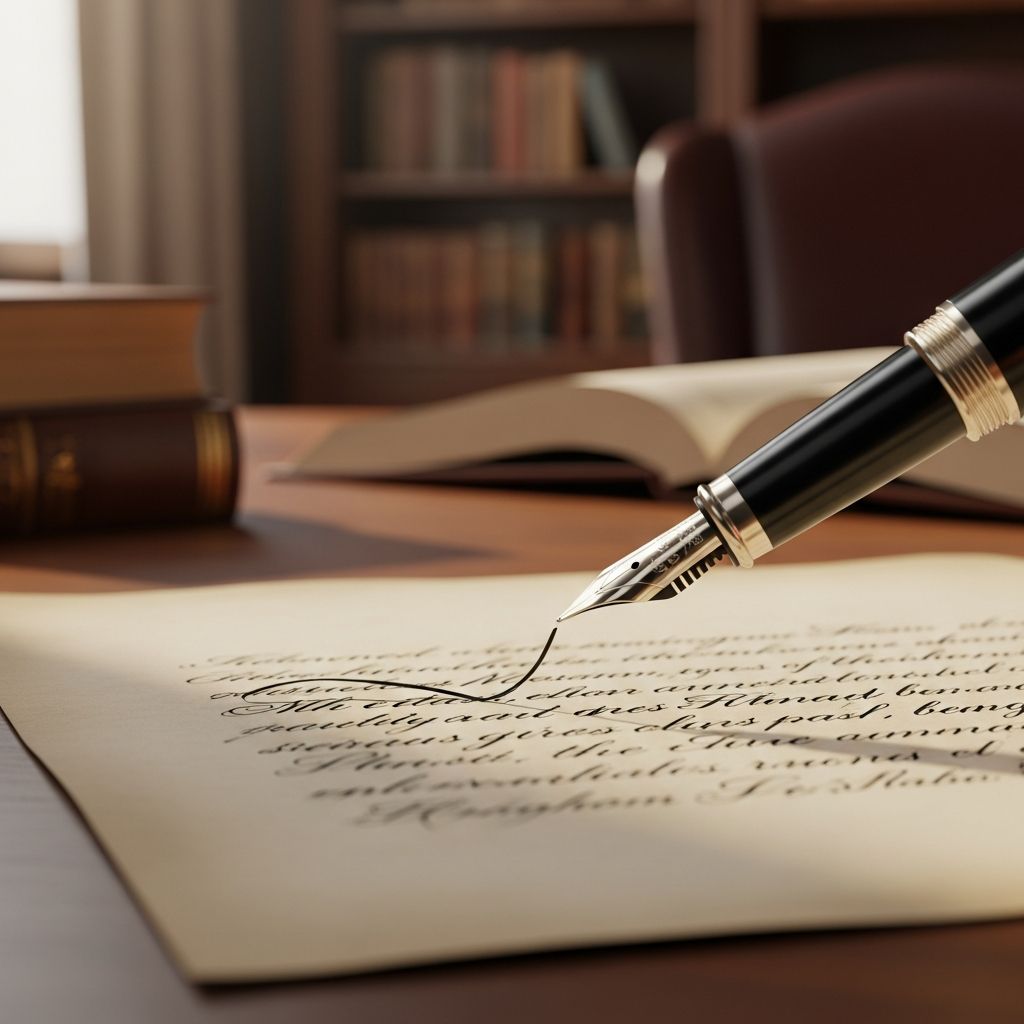
In a world dominated by digital devices, the simple act of putting pen to paper might seem archaic. Yet, emerging research reveals that handwriting offers unique cognitive advantages that keyboards struggle to match, particularly in tasks demanding deep processing, retention, and innovation. This article delves into seven compelling scenarios where opting for a pen enhances performance, drawing on neuroscientific insights and practical applications to help you integrate this timeless tool into your routine.
The Science of Handwriting: Why It Engages the Brain Differently
Handwriting activates multiple brain regions simultaneously, including those responsible for motor control, memory formation, and conceptual understanding. Unlike typing, which is primarily a rapid input method, writing by hand slows the process, forcing summarization and rephrasing that lead to deeper encoding of information. A landmark study involving over 300 students at Princeton and UCLA demonstrated that handwritten notes resulted in superior conceptual grasp compared to laptop-typed ones, as typists often transcribed verbatim without processing.
This “generation effect”—where self-producing information strengthens neural pathways—explains handwriting’s edge in memory tasks. Neuroimaging shows cursive writing recruits broader networks in the motor cortex and cerebellum, enhancing fluidity and recall. Even digital handwriting on tablets with pressure-sensitive pens mimics these benefits, bridging analog tradition with modern tech. However, critics note that strategy matters more than medium; deliberate summarization on a keyboard can rival handwriting, though the physical act inherently promotes it due to speed differences.
Scenario 1: Capturing Lectures and Meetings for Lasting Recall
During fast-paced lectures or meetings, typing tempts verbatim capture, but this shallow transcription overloads notes without comprehension. Handwriting’s slower pace compels listeners to distill key points, fostering active engagement. Princeton-UCLA research confirmed handwritten note-takers scored higher on factual and conceptual tests, as they rephrased content for understanding.
In professional settings, this translates to sharper meeting insights. Jotting bullet points by hand during brainstorming keeps you present, minimizing distractions like email pings. Studies highlight how this method reduces cognitive load, allowing real-time synthesis over rote recording. For best results, review handwritten notes soon after—the study phase amplified pen users’ advantages.
Scenario 2: Brainstorming Ideas Without Digital Distractions
Idea generation thrives on flow, yet keyboards invite multitasking—checking notifications or jumping to research. A notebook provides a distraction-free zone, where sketching connections and doodles sparks nonlinear thinking. Handwriting encourages diverse vocabulary and obscure terms, as the deliberate pace allows mental lexicon exploration.
- Free-flow mapping: Draw arrows between concepts, impossible in linear docs.
- Visual cues: Circles, underlines, and margins capture spatial relationships.
- Reduced inhibition: No autocorrect or formatting slows raw creativity.
Professionals report handwriting unlocks innovative solutions in planning sessions, with the tactile feedback grounding abstract thoughts.
Scenario 3: Deep Learning and Exam Preparation
Students handwriting notes process material deeply, leading to better long-term retention. The slower speed filters essentials, mimicking teaching oneself. Scientific American notes handwriting demands unique cognitive processing, unlike typing’s mechanical efficiency.
| Method | Memory Retention | Conceptual Understanding | Distraction Risk |
|---|---|---|---|
| Handwriting | High (deeper encoding) | Superior (summarization) | Low |
| Typing | Moderate (verbatim volume) | Lower (shallow processing) | High |
This table summarizes key studies; pen users excel when studying notes pre-exam. For complex subjects like math or history, rewrite formulas or timelines by hand to internalize patterns.
Scenario 4: Journaling for Emotional Clarity and Stress Relief
Expressive writing by hand processes emotions more profoundly than typing. The physical motion externalizes thoughts, reducing anxiety—studies show even 20 minutes daily improves mood. Unlike digital journals prone to over-editing, paper invites unfiltered honesty.
Track gratitude or reflections: Bullet daily wins, cross out negatives. This ritual builds resilience, with handwriting’s rhythm akin to meditation.
Scenario 5: Planning Tasks and Goals with Tactile Precision
To-do lists on apps get buried in notifications; handwritten ones demand review, boosting completion rates. Strike through tasks for dopamine hits, visualizing progress. For projects, outline hierarchies in margins—far more intuitive than digital indents.
- Daily agendas: Prioritize with numbers and stars.
- Long-term goals: Mind-map milestones.
- Habit trackers: Fill grids for motivation.
This method aligns with productivity systems emphasizing analog capture for capture-and-process flows.
Scenario 6: Editing Drafts Without Cluttered Interfaces
Digital track changes litters screens with strikethroughs, disrupting flow. Print drafts or handwrite revisions: Cross out, insert arrows—edits feel organic. This reveals structural flaws typing hides behind easy deletes. Authors praise handwriting first drafts for fluid prose, typing later for speed.
Experiment: Write a page by hand, transcribe, then revise analog-style for polished output.
Scenario 7: Creative Writing and Storytelling Bursts
Novels or scripts demand immersion; keyboards enable endless tweaks, stalling momentum. Handwriting mimics thought speed, capturing voice authentically. Research links it to richer vocabulary and narrative depth. Doodle characters in margins for holistic development.
Pro writers alternate: Pen for discovery, keyboard for expansion.
Hybrid Approaches: Best of Both Worlds
Combine tools—handwrite ideas, scan to apps for searchability. Tablets with styluses offer handwriting recognition, retaining cognitive perks digitally. Train typing summarization to match pen benefits. Ultimately, match method to task: Pens for depth, keyboards for volume.
Frequently Asked Questions (FAQs)
Does handwriting always beat typing for memory?
No, but it excels in deep processing tasks; deliberate typing strategies can compete.
What’s the best pen for productivity?
Any smooth-writing pen with good grip; fountain pens add tactile pleasure for flow.
Can digital handwriting replicate paper benefits?
Yes, pressure-sensitive tablets engage similar brain areas.
How long to see handwriting’s advantages?
Immediate for focus; weeks for habituated recall gains.
Is handwriting slower for professionals?
Yes, but quality trumps quantity in ideation and learning.
References
- Which is better — a keyboard or a pen? — Publication Coach. 2014-04. https://www.publicationcoach.com/best-tool-for-writing/
- Pen Or Keyboard — Which Is Mightier? — Royal Literary Fund. N/A. https://www.rlf.org.uk/posts/pen-or-keyboard-which-is-mightier/
- Pen vs. Keyboard: Why Writing Boosts Creativity and Memory — Makoba. N/A. https://makoba.com/blogs/the-writers-colony/pen-vs-keyboard-why-handwriting-boosts-creativity-and-memory
- 6 Times When Using A Pen Is Better Than Using A Keyboard — Lifehack. 2014. https://www.lifehack.org/articles/productivity/6-times-when-using-pen-better-than-using-keyboard.html
- Note Taking-by hand or by keyboard? — McGee’s Musings. 2019-05-04. https://mcgeesmusings.net/2019/05/04/note-taking-by-hand-or-by-keyboard/
- Pen vs. Keyboard? Why the Tool Doesn’t Matter as Much — Note Lab. N/A. https://notelab.hypotheses.org/2910
- Pen and Paper Versus Laptop: Is There a Clear Winner — McGill Office for Science and Society. N/A. https://www.mcgill.ca/oss/article/technology-general-science/pen-and-paper-versus-laptop-there-clear-winner-note-taking-olympics

Medha Deb is an editor with a master's degree in Applied Linguistics from the University of Hyderabad. She believes that her qualification has helped her develop a deep understanding of language and its application in various contexts. Medha specializes in the areas of beauty, health, sports, and wellness and is committed to ensuring that the content on the website is…