
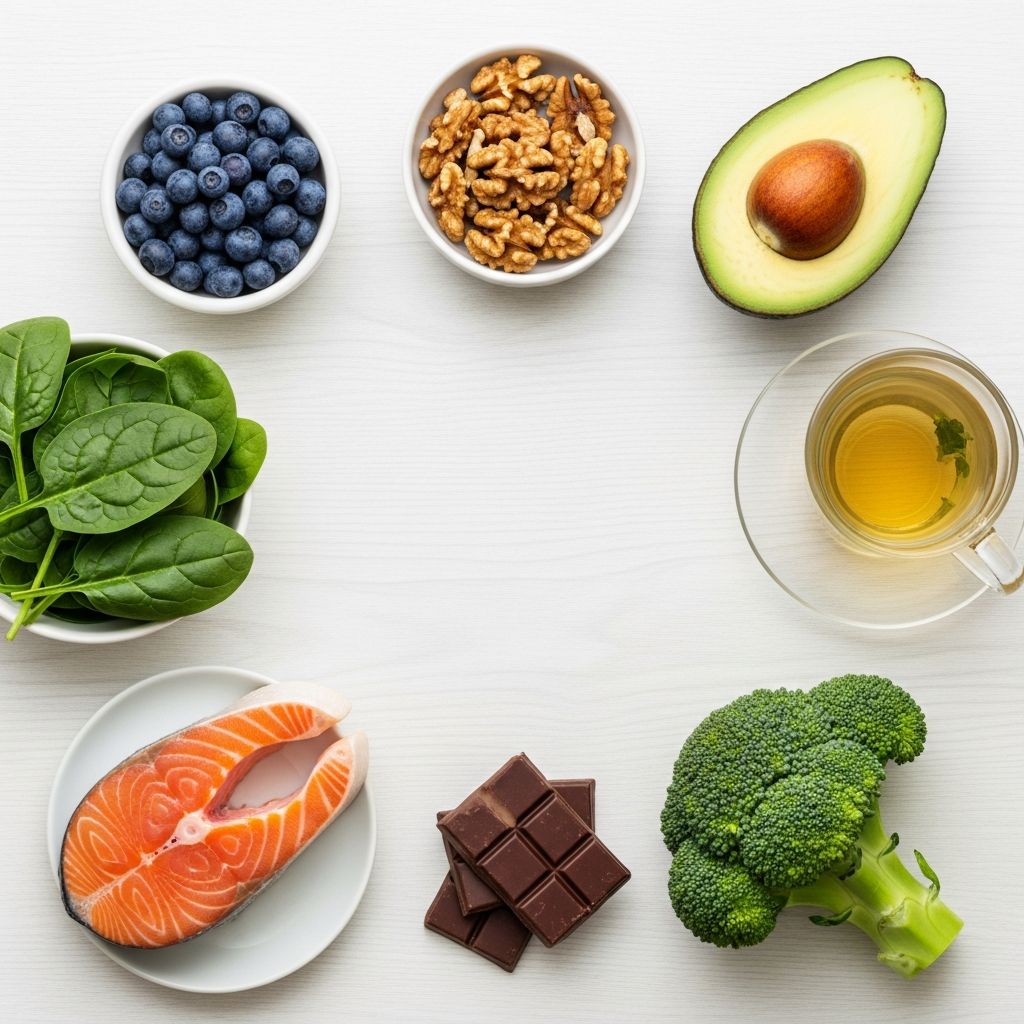
Enhancing cognitive abilities through diet is a proven strategy grounded in nutritional science. Certain foods deliver essential nutrients that support neuron health, reduce inflammation, and promote neuroplasticity, leading to better memory, focus, and overall brain function. This article details eight standout foods, explaining their benefits, mechanisms, and practical ways to incorporate them into your routine for sustained mental sharpness.
Why Nutrition Drives Brain Health
The brain consumes about 20% of the body’s energy despite comprising only 2% of body weight. It relies on steady glucose, healthy fats, antioxidants, and vitamins to function optimally. Diets like the Mediterranean and MIND emphasize fruits, vegetables, whole grains, and omega-3-rich foods, which correlate with lower dementia risk and preserved cognitive function.
Oxidative stress and inflammation damage brain cells over time. Antioxidant-rich foods neutralize free radicals, while omega-3s build cell membranes. B vitamins aid neurotransmitter production, and steady blood sugar from complex carbs prevents mental fog. Prioritizing these nutrients can enhance memory consolidation, learning, and alertness.
1. Berries: Antioxidant Guardians of Memory
Berries such as blueberries, strawberries, and blackberries are powerhouse antioxidants, particularly flavonoids like anthocyanins. These compounds cross the blood-brain barrier to protect neurons from oxidative damage and improve communication between brain cells.
Studies show regular berry consumption slows age-related cognitive decline and enhances memory performance. In animal models, berry polyphenols boost hippocampal plasticity, crucial for learning. For humans, they reduce brain inflammation linked to dementia.
- Key Nutrients: Anthocyanins, vitamin C, fiber
- Daily Tip: Add 1 cup to yogurt or smoothies
- Benefit: Improves short-term memory by up to 20% in trials
2. Fatty Fish: Omega-3 Powerhouses for Neuron Repair
Salmon, mackerel, sardines, and tuna provide DHA and EPA, omega-3 fatty acids vital for brain structure. DHA forms 25% of brain fat, supporting synaptic function and reducing cognitive decline risk.
Consuming fatty fish twice weekly lowers triglycerides without raising LDL cholesterol and preserves memory in older adults. These fats combat inflammation and promote new neuron growth.
| Fish Type | DHA per 3oz Serving (mg) | Bonus Nutrients |
|---|---|---|
| Salmon | 1,200-2,000 | Protein, B12 |
| Sardines | 900-1,500 | Calcium, selenium |
| Mackerel | 1,000-1,800 | Vitamin D |
Incorporate grilled salmon salads or canned sardines for easy omega-3 boosts.
3. Leafy Greens: Folate and Nitrate Boost for Circulation
Spinach, kale, collards, and broccoli deliver folate, vitamin K, and nitrates. Folate decreases inflammation and homocysteine levels, linked to memory loss, while nitrates dilate blood vessels for better brain oxygenation.
Dark greens’ antioxidants, like vitamin C, mitigate age-related decline. One study found higher leafy green intake equates to being 11 years younger cognitively.
- Prep Ideas: Sauté with garlic, blend into soups
- Portion: 2 cups daily
4. Nuts and Seeds: Mineral-Rich Concentration Aids
Walnuts, almonds, chia, flaxseeds, and sesame seeds offer vitamin E, zinc, magnesium, and tyrosine. These support dopamine production for alertness and protect against oxidative stress.
Sesame seeds provide tyrosine for sharp memory, while walnuts mimic brain shape with their DHA content. A handful daily reduces cognitive decline by 40% in some cohorts.
Snack Smart: Mix trail mix with berries for synergistic effects.
5. Whole Grains and Pseudograins: Steady Energy Suppliers
Oats, quinoa, brown rice, and sweet potatoes furnish complex carbs, B vitamins, and fiber for sustained glucose release. Low-GI foods stabilize blood sugar, preventing focus dips.
These grains’ anti-inflammatory properties ward off dementia. Oats’ beta-glucan enhances concentration during demanding tasks like exams.
- Breakfast Hack: Overnight oats with nuts
- Evidence: Improves working memory via folate
6. Avocados and Olives: Healthy Fats for Blood Flow
Monounsaturated fats in avocados improve cholesterol profiles, enhancing cerebral blood flow. They provide steady energy without spikes.
Olives and olive oil, Mediterranean staples, reduce inflammation and support neuroplasticity.
7. Eggs: Choline Source for Neurotransmitter Synthesis
Eggs are rich in choline, a precursor to acetylcholine, essential for memory and learning. Eating them 1-2 times weekly bolsters brain function.
Whole eggs offer B vitamins and lutein for eye-brain health synergy.
8. Dark Chocolate and Cocoa: Flavonoid Focus Enhancers
Cocoa’s flavonoids improve arterial health, increasing brain blood flow. Arginine aids vessel dilation for better concentration.
Opt for 70%+ cacao; small squares daily enhance mood and cognition via dopamine support.
Building a Brain-Boosting Meal Plan
Combine these foods for maximum impact:
- Breakfast: Oatmeal with berries, walnuts, chia
- Lunch: Salmon salad with greens, avocado dressing
- Snack: Dark chocolate, nuts, apple
- Dinner: Quinoa stir-fry with broccoli, eggs
Aim for variety to cover nutrient bases. Hydrate well, as dehydration impairs cognition.
Foods to Limit for Optimal Brain Function
Avoid pro-inflammatory items:
- Processed meats, sugary drinks, refined grains
- Fried foods, excessive alcohol
These spike inflammation, hastening decline.
Frequently Asked Questions
How quickly do these foods impact brain function?
Benefits appear in weeks with consistent intake; long-term adherence yields profound effects.
Can vegetarians get enough omega-3s?
Yes, via algae supplements, flaxseeds, chia, walnuts.
What’s the ideal daily berry amount?
1-2 cups for optimal flavonoid delivery.
Do cooking methods reduce benefits?
Steaming preserves nutrients; avoid over-boiling greens.
Can these foods prevent Alzheimer’s?
They lower risk via reduced inflammation but aren’t cures.
Synergistic Diets for Longevity
Mediterranean and ketogenic diets amplify effects. Mediterranean’s whole foods preserve memory; keto’s ketones fuel brain during glucose scarcity.
Pair with exercise, sleep, stress management for holistic gains.
References
- 5 Brain-Boosting Foods — University Hospitals. 2024-06-01. https://www.uhhospitals.org/blog/articles/2024/06/5-brain-boosting-foods
- Maximize memory function with a nutrient-rich diet — Mayo Clinic Health System. 2023-01-15. https://www.mayoclinichealthsystem.org/hometown-health/speaking-of-health/maximize-memory-function-with-a-nutrient-rich-diet
- Feeding Your Body, Feeding Your Brain — Academy of Nutrition and Dietetics. 2024-05-20. https://www.eatright.org/health/wellness/healthful-habits/feeding-your-body-feeding-your-brain
- Foods That Improve Memory — Mass General Brigham. 2023-11-10. https://www.massgeneralbrigham.org/en/about/newsroom/articles/foods-that-improve-memory
- Brain foods: the effects of nutrients on brain function — PMC (National Library of Medicine). 2008-07-16. https://pmc.ncbi.nlm.nih.gov/articles/PMC2805706/
- The Brain-Food Connection — Stanford Lifestyle Medicine. 2024-02-28. https://lifestylemedicine.stanford.edu/brain-food-connection/
- 5 foods to boost your concentration — University of Wollongong. 2018-05-01. https://www.uow.edu.au/the-stand/2018/5-foods-to-boost-your-concentration.php

Medha Deb is an editor with a master's degree in Applied Linguistics from the University of Hyderabad. She believes that her qualification has helped her develop a deep understanding of language and its application in various contexts. Medha specializes in the areas of beauty, health, sports, and wellness and is committed to ensuring that the content on the website is…