
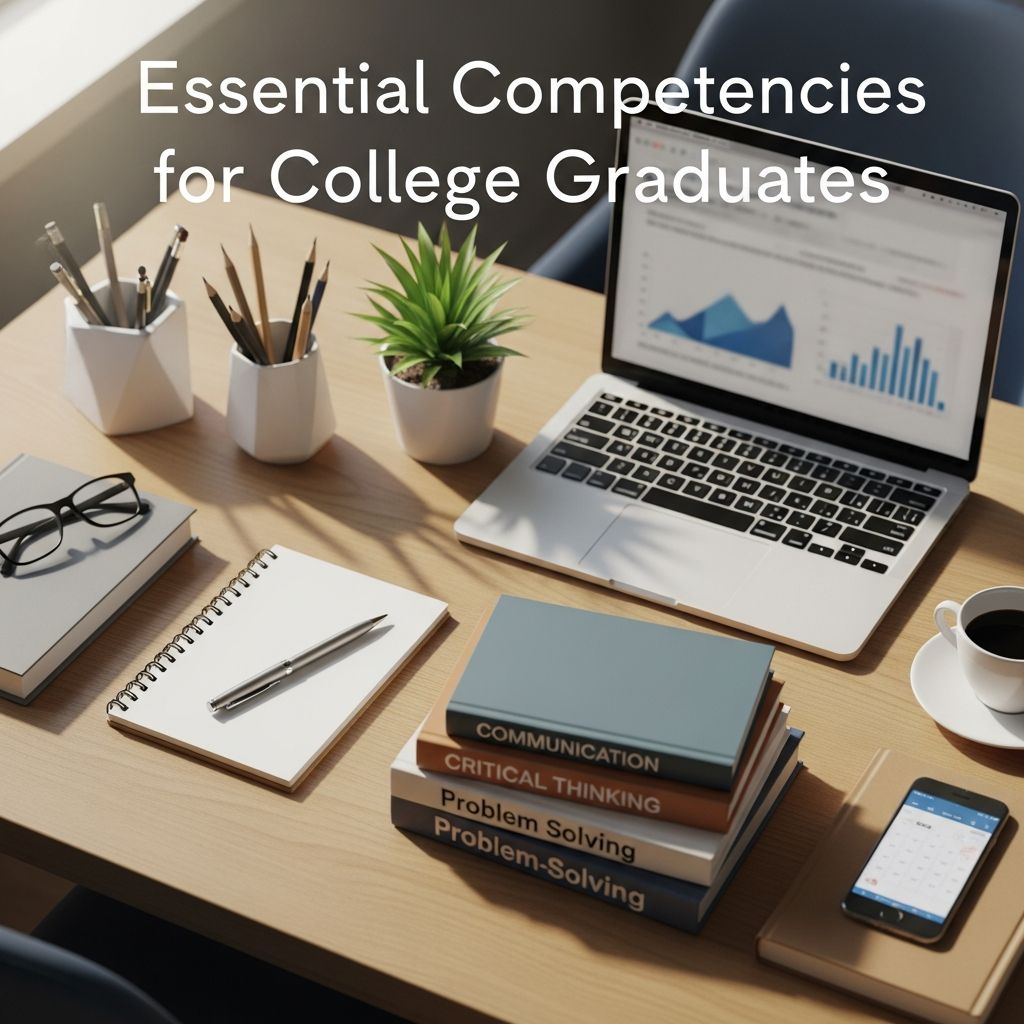
Building a Foundation for Professional Success During College
The transition from college to the professional world represents one of the most significant shifts in a young person’s life. While academic knowledge forms the backbone of your educational experience, employers increasingly emphasize practical competencies that extend far beyond textbook learning. According to career readiness research, the most successful college graduates enter the workforce equipped not just with subject matter expertise, but with a comprehensive set of skills that enable them to adapt, collaborate, and thrive in real-world business environments.
Developing these competencies during your college years provides a crucial advantage. Rather than scrambling to learn essential workplace behaviors after graduation, proactive students integrate skill-building into their university experience. This strategic approach allows you to enter the job market as a well-rounded professional rather than someone who must learn critical lessons through trial and error on company time.
Understanding Career Readiness and Employer Expectations
Career readiness extends beyond possessing technical knowledge in your field. It encompasses the attainment and demonstration of competencies that broadly prepare graduates for successful workplace transitions. Employers today evaluate candidates not only on their academic credentials but on their ability to demonstrate eight core competencies that research has identified as essential for professional success. These competencies represent the difference between graduates who advance rapidly in their careers and those who struggle to gain traction despite strong academic records.
The gap between educational preparation and workplace expectations has widened in recent years, making skill development during college increasingly critical. Employers report that they frequently encounter recent graduates with impressive GPA scores but significant deficiencies in practical competencies. Understanding what employers genuinely want, and intentionally developing these capabilities before graduation, positions you for immediate impact and career acceleration.
The Eight Core Competencies Employers Value Most
Communication Excellence Across Contexts
Effective communication stands as perhaps the most universally valued competency across industries and organizational levels. However, workplace communication differs substantially from academic communication. Rather than writing research papers or delivering class presentations, professionals must clearly and effectively exchange information, ideas, facts, and perspectives with diverse audiences inside and outside their organizations.
College students can develop this competency by participating in cross-functional projects, joining professional organizations, and seeking opportunities to present ideas to varied audiences. Practicing how to tailor messages for maximum impact—explaining technical concepts to non-experts, presenting executive summaries to senior leadership, or facilitating discussions among diverse team members—builds the adaptability that employers highly value.
Leadership Capacity and Initiative
Leadership doesn’t exclusively apply to formal management positions. Modern employers seek professionals who can recognize and capitalize on personal and team strengths to achieve organizational goals, regardless of their job title. This competency involves taking initiative, stepping forward when opportunities arise, and demonstrating the drive to accomplish meaningful work.
During college, you can cultivate leadership capacity through student organizations, team projects, volunteer positions, and internships. Look for situations where you can take ownership, motivate others toward common objectives, and demonstrate commitment to achieving results. This proactive approach builds the initiative employers identify as essential for advancement.
Critical Thinking and Strategic Problem-Solving
In an increasingly complex business environment, the ability to identify needs, understand situational context, and develop logical solutions based on thorough analysis distinguishes exceptional professionals from average performers. Critical thinking involves more than simply solving problems; it requires analyzing situations systematically, developing optimal solutions that consider all stakeholders and long-term implications, and thinking creatively to find breakthrough approaches that standard procedures might miss.
Build this competency by actively engaging with case studies, participating in strategy discussions, and seeking internships where you encounter real business challenges. Developing your capacity to analyze options systematically, evaluate information sources critically, and make sound judgments despite incomplete information positions you as a valuable problem-solver.
Professional Teamwork and Collaboration
Almost no meaningful work happens in isolation. Employers consistently emphasize that they need professionals who can build and maintain collaborative relationships, work effectively toward common goals, appreciate diverse viewpoints, and share responsibilities equitably. Teamwork extends beyond simply cooperating with colleagues; it involves understanding diverse perspectives, managing conflict constructively, and recognizing how individual contributions combine to achieve greater outcomes.
College group projects, team sports, study groups, and collaborative internships all develop this competency. Seek situations where you must coordinate with people from different backgrounds, resolve disagreements constructively, and contribute your strengths while learning from others’ capabilities.
Professionalism and Work Ethic
Professionalism encompasses understanding that work environments differ greatly and require demonstrating effective work habits while acting in the interest of the larger community and workplace. This competency involves punctuality, reliability, appropriate workplace behavior, maintaining composure under pressure, and demonstrating commitment to organizational success alongside personal development.
Develop professionalism through internships, part-time work, and leadership positions. Consistently meet commitments, maintain professional communication standards, demonstrate respect for organizational norms, and show genuine interest in contributing to team success beyond minimum requirements.
Technological Competency and Digital Literacy
In today’s digital-first business environment, technology competency represents a fundamental requirement rather than a luxury. This competency involves understanding and leveraging technologies ethically to enhance efficiencies, complete tasks, and accomplish goals. You need not become a coding expert, but developing strong proficiency with professional tools—whether Excel for data analysis, Adobe Creative Suite for design, or industry-specific software—demonstrates commitment to professional development.
During college, familiarize yourself with industry-standard tools in your field. Pursue online certifications, take technology courses, and practice with software you’ll encounter in your professional career. Additionally, develop troubleshooting skills for common technical issues and commit to continuous learning as technology evolves.
Career Self-Development and Continuous Learning
The most valuable professionals proactively develop themselves and their careers through continual personal and professional learning, awareness of their strengths and weaknesses, strategic navigation of career opportunities, and deliberate relationship-building within and beyond their organizations. This competency reflects an understanding that your education doesn’t end with graduation; it represents an ongoing commitment to growth and adaptation.
Demonstrate this competency by seeking mentorship, pursuing additional certifications, attending professional conferences, reading industry publications, and actively networking. Identify your skill gaps honestly, develop learning plans to address them, and maintain curiosity about your field’s evolving landscape.
Equity, Inclusion, and Ethical Decision-Making
Modern organizations increasingly prioritize professionals who demonstrate awareness, attitude, knowledge, and skills required to equitably engage and include people from different local and global cultures. This competency involves engaging in ethical practices that actively challenge systems and structures that marginalize groups, while fostering inclusive environments where diverse perspectives strengthen decision-making and innovation.
Develop this competency by participating in diversity initiatives, studying different cultures and perspectives, engaging in difficult conversations about equity, and examining your own biases and assumptions. Seek opportunities to work with diverse teams and demonstrate genuine commitment to creating inclusive environments.
Building Adaptability: Your Professional Shock Absorber
Beyond the eight core competencies, adaptability emerges as a meta-skill that enables success across all others. The most valuable employees maintain composure when high-priority projects shift direction, pivot focus immediately to address urgent situations, and work effectively despite incomplete information and uncertainty. Think of adaptability as your professional shock absorber system—it enables smooth navigation through challenges and continued progress toward goals, transforming transitions into opportunities rather than obstacles.
During college, deliberately expose yourself to situations requiring flexibility. Take courses outside your major, work on cross-functional teams, pursue internships in different industries, and practice accepting change gracefully. This intentional exposure builds the resilience and flexibility that modern workplaces demand.
Integrating Skills Through Strategic College Experiences
Rather than viewing skill development as separate from academic coursework, consider how various college experiences integrate multiple competencies:
- Internships and Work Experience: Simultaneously develop professionalism, teamwork, technical skills, and industry knowledge through practical application.
- Student Organizations and Leadership: Build communication, teamwork, leadership, and initiative while developing professional networks.
- Study Groups and Collaborative Projects: Enhance critical thinking and teamwork while deepening subject mastery.
- Volunteer Work: Demonstrate commitment to communities while developing professionalism, adaptability, and equity awareness.
- International Experiences: Build adaptability, cultural awareness, and global perspective simultaneously.
- Professional Certifications: Develop technology skills and demonstrate commitment to self-development.
Frequently Asked Questions
Q: Which competency matters most to employers?
A: While all eight competencies matter, communication consistently ranks highest across industries and organizational levels. The ability to exchange information clearly with diverse audiences forms the foundation for demonstrating other competencies effectively.
Q: Can I develop these competencies after college?
A: Yes, but developing them during college provides significant advantages. College environments offer structured opportunities for skill-building without the pressure of impressing supervisors or meeting production quotas. Early development also enables you to enter the job market as a polished professional rather than requiring on-the-job training in fundamental workplace behaviors.
Q: How do I demonstrate these competencies on my resume?
A: Rather than stating “excellent communication skills,” provide specific examples: “Led cross-functional team of eight students to complete capstone project, coordinating between technical and non-technical stakeholders.” Use concrete achievements to showcase competency development.
Q: Should I choose experiences specifically to develop these competencies?
A: Yes. Approach your remaining college years strategically. Identify which competencies you’ve already developed and which need strengthening. Then deliberately seek experiences—courses, organizations, internships, volunteer opportunities—that address those gaps.
Q: How quickly do employers expect to see these competencies?
A: Employers expect recent graduates to demonstrate foundational competency in these areas immediately. While expertise develops over time, demonstrating awareness, effort, and capability in communication, teamwork, professionalism, and other core areas distinguishes strong candidates from weak ones.
Your Pathway to Career Readiness
College represents a unique window for intentional skill development. While pursuing your degree, you have access to diverse experiences, supportive mentors, and lower-stakes environments for practicing professional competencies. Rather than viewing college solely as an academic credential-earning exercise, embrace it as your professional foundation-building phase.
The eight core competencies—communication, leadership, critical thinking, teamwork, professionalism, technology competency, self-development, and equity awareness—combine to create the professional foundation that positions graduates for rapid career advancement and sustained success. When you combine effective communication, strategic problem-solving, technology proficiency, adaptability, and collaborative teamwork, you become the kind of professional that organizations actively seek to hire and promote.
Begin now by evaluating your current competency level across all eight areas. Identify gaps, seek experiences that address them, and approach your remaining college time with intentionality. The effort you invest today in developing these competencies will pay dividends throughout your career, enabling you to navigate professional challenges with confidence and achieve the career success you’re working toward.
References
- Skills Employers Want in College Graduates — Western Michigan University Career Services. 2025. https://wmich.edu/career/students/transferableskills
- The Attributes Employers Look for on New Grad Resumes—and How to Showcase Them — National Association of Colleges and Employers (NACE). 2024. https://www.naceweb.org/about-us/press/the-attributes-employers-look-for-on-new-grad-resumes-and-how-to-showcase-them
- What Employers Want Now—And How New Grads Can Stand Out — Fordham University. 2024. https://now.fordham.edu/university-news/what-employers-want-now-and-how-new-grads-can-stand-out/
- Soft Skills Matter Now More Than Ever, According to New Research — Harvard Business Review. 2025. https://hbr.org/2025/08/soft-skills-matter-now-more-than-ever-according-to-new-research
- 10 Emerging Skills for Professionals — Harvard Division of Continuing Education. 2024. https://professional.dce.harvard.edu/blog/10-emerging-skills-for-professionals/
- 5 Essential Skills for Career Growth in 2025 – Deliberate Directions — Deliberate Directions. 2025. https://deliberatedirections.com/essential-skills-career-growth/

- Integrated M.A. in Applied Linguistics, University of Hyderabad
- 5+ years in editorial, instructional, SEO, and research-based writing
Sneha is a relationships and lifestyle writer with a strong foundation in applied linguistics and certified training in relationship coaching. She brings over five years of writing experience to theskillvault, crafting thoughtful, research-driven content that empowers readers to build healthier relationships, boost emotional well-being, and embrace holistic living. Her writing and insights reflect the belief that beauty, happiness, and wellness…