
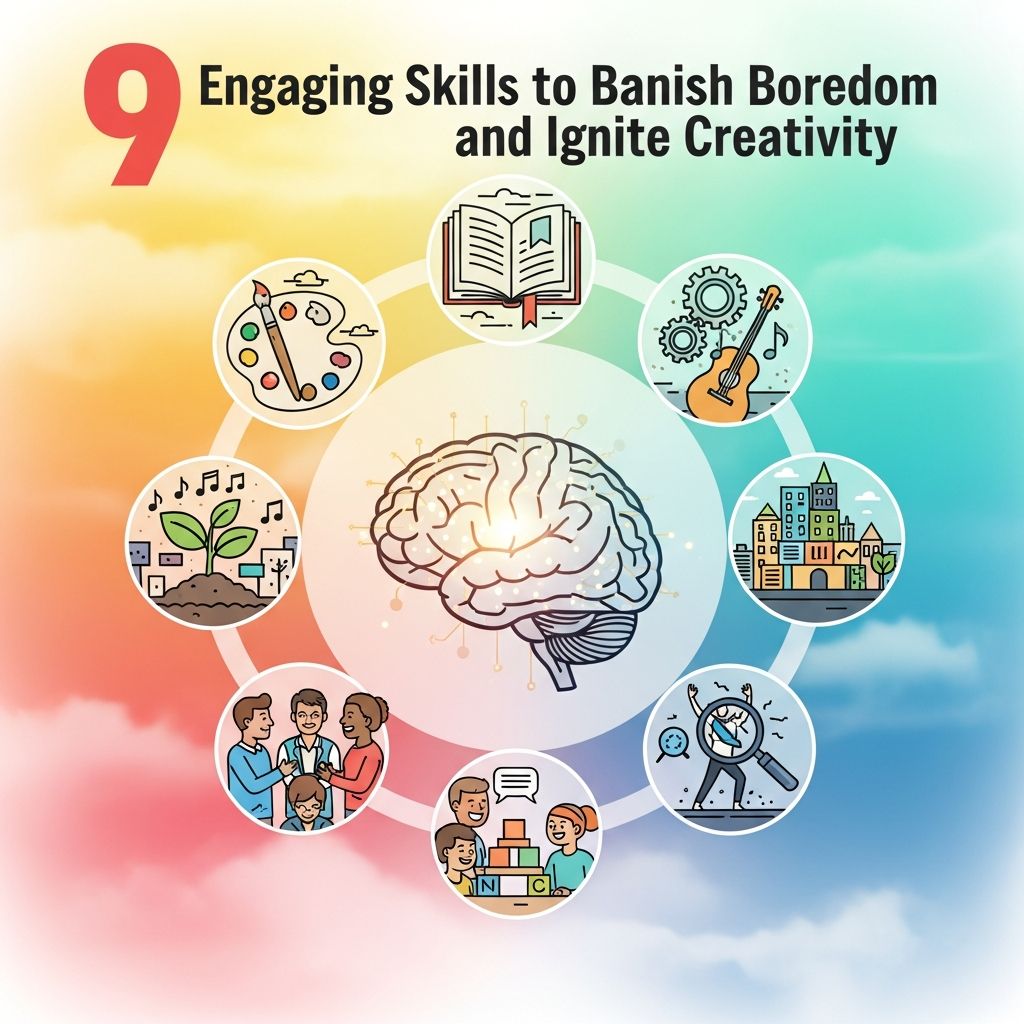
Boredom strikes when routines feel monotonous, but it presents a golden opportunity for growth. By diving into new skills, you can redirect that energy into creative outlets that refresh your mind and spark innovation. These activities not only fill empty time but also build cognitive abilities, emotional resilience, and practical talents applicable in daily life.
Why Mastering New Skills Fights Boredom
Engaging in skill-building turns passive downtime into active exploration. Research shows that purposeful activities during idle periods enhance creative thinking by encouraging daydreaming and novel connections in the brain. Boredom signals a need for change, prompting you to seek fresh ideas and solutions. Incorporating these skills fosters neuroplasticity, the brain’s ability to form new pathways, leading to improved problem-solving and mood regulation.
Start small: dedicate 15-30 minutes daily. You’ll notice increased focus, reduced stress, and a sense of accomplishment. Whether alone or with others, these pursuits offer flexibility for all skill levels.
1. Master the Art of Paper Folding
Paper folding, or origami, transforms simple sheets into intricate sculptures, honing precision and spatial awareness. This meditative practice requires no special tools—just paper and patience—making it ideal for beginners.
Begin with basic shapes like cranes or boats. Follow online guides that break down folds step-by-step. As proficiency grows, tackle complex models such as animals or geometric figures. This skill boosts fine motor control and problem-solving, as each fold demands foresight and adjustment.
- Benefits: Enhances hand-eye coordination and concentration.
- Starter Tip: Use square paper and practice symmetric folds first.
- Advanced Challenge: Create modular pieces that interlock into larger designs.
Origami’s therapeutic rhythm calms the mind, turning frustration into flow states where creativity flourishes.
2. Pick Up a Musical Instrument
Learning guitar, piano, or ukulele opens doors to melodic expression. Music engages multiple brain regions, improving memory, coordination, and emotional processing.
Acquire basics through free apps or tutorials focusing on chords and scales. Practice scales daily to build muscle memory. Soon, compose simple riffs or play favorite songs. Reading sheet music adds a linguistic layer, akin to decoding a new language.
| Instrument | Pros | Cons | Cost Range |
|---|---|---|---|
| Ukulele | Portable, easy chords | Limited range | $30-100 |
| Guitar | Versatile, popular | String changes tricky | $50-200 |
| Piano/Keyboard | Visual notes, full sound | Space needed | $100-300 |
Music theory unlocks endless creativity, allowing personalization of tunes and improvisation.
3. Dive into Visual Arts
Drawing or painting lets imagination spill onto canvas. No prior talent required—start with sketches or watercolors to capture scenes or emotions.
Gather pencils, paper, and paints. Experiment with shading techniques or color blending. Apps offer digital alternatives for mess-free practice. This outlet reduces stress while sharpening observation skills.
- Daily Practice: Sketch everyday objects from unique angles.
- Progression: Move to portraits or landscapes.
- Tools: Invest in quality brushes for better control.
Artistic endeavors nurture emotional growth and fine motor precision, providing a canvas for inner worlds.
4. Try Handcrafting with Yarn
Knitting or crocheting yields wearable art like scarves or blankets. These rhythmic crafts lower anxiety through repetitive motions.
Learn stitches via videos: chain, single crochet for basics. Progress to patterns for amigurumi toys. Customize gifts, blending functionality with creativity.
Benefits extend to preventing cognitive decline; studies link needlework to sustained mental acuity. It’s accessible—yarn and hooks cost little.
5. Develop Juggling Proficiency
Juggling balls or scarves refines reflexes and multitasking. Start with two items, advancing to three or more.
Practice cascades in short bursts. Online tutorials emphasize rhythm. This boosts peripheral vision and timing, transferable to sports or performances.
- Objects to Try: Tennis balls, beanbags, scarves.
- Pro Tip: Film sessions for self-review.
Mastery brings euphoria, combating boredom with physical challenge.
6. Embrace Strategic Gaming
Games like chess or puzzles demand foresight and pattern recognition. Play solo or online against opponents.
Chess teaches sacrifice and long-term planning; apps provide tutorials. Video games with creative modes allow world-building.
Pattern spotting integrates into life, enhancing decision-making across domains.
7. Capture Moments Through Photography
Smartphone photography explores composition and light. Edit shots to amplify vision.
Rule of thirds guides framing; apps like Lightroom refine images. Themes like macro or street shots inspire daily hunts.
This skill heightens environmental awareness, turning mundane views into art.
8. Connect Through Conversations
Meeting diverse individuals sparks perspectives. Attend events or chat online, probing viewpoints.
Ask open questions; adapt humor to bonds. This fuels empathy and idea generation.
9. Curate Creative Exercises
Quick drills like incomplete figure completion ignite lateral thinking. Doodle lines into objects; brainstorm uses for everyday items.
These micro-challenges build ideation speed, applicable professionally.
Frequently Asked Questions (FAQs)
Can beginners start these skills without experience?
Yes, all are designed for novices with free resources accelerating progress.
How much time to see creativity boosts?
Consistent 20-minute sessions yield noticeable gains in weeks.
Do these require expensive equipment?
Most use household items or low-cost supplies under $50.
Are they suitable for all ages?
Absolutely, adaptable for kids to seniors promoting lifelong learning.
Can they improve professional skills?
Yes, enhancing problem-solving and innovation valued in workplaces.
References
- 30 Useful Skills to Learn When Bored — Iris Reading. 2023-05-15. https://irisreading.com/30-useful-skills-to-learn-when-bored/
- 9 Creative Things to Do to Increase Your Creativity — Indeed UK. 2024-02-10. https://uk.indeed.com/career-advice/career-development/creative-things-to-do
- 10 Psychological Tricks to Boost Creativity — Denver Health Medical Plan. 2023-11-20. https://www.denverhealthmedicalplan.org/blog/10-psychological-tricks-boost-creativity
- 9 Creative Skills You Can Learn from Home — Rest Less. 2024-01-05. https://restless.co.uk/leisure-and-lifestyle/learning/creative-skills-that-you-can-learn-from-home/
- 7 Fun Exercises to Quickly Improve Creative Thinking — Artwork Archive. 2022-08-12. https://www.artworkarchive.com/blog/7-fun-exercises-to-quickly-improve-creative-thinking

Medha Deb is an editor with a master's degree in Applied Linguistics from the University of Hyderabad. She believes that her qualification has helped her develop a deep understanding of language and its application in various contexts. Medha specializes in the areas of beauty, health, sports, and wellness and is committed to ensuring that the content on the website is…