
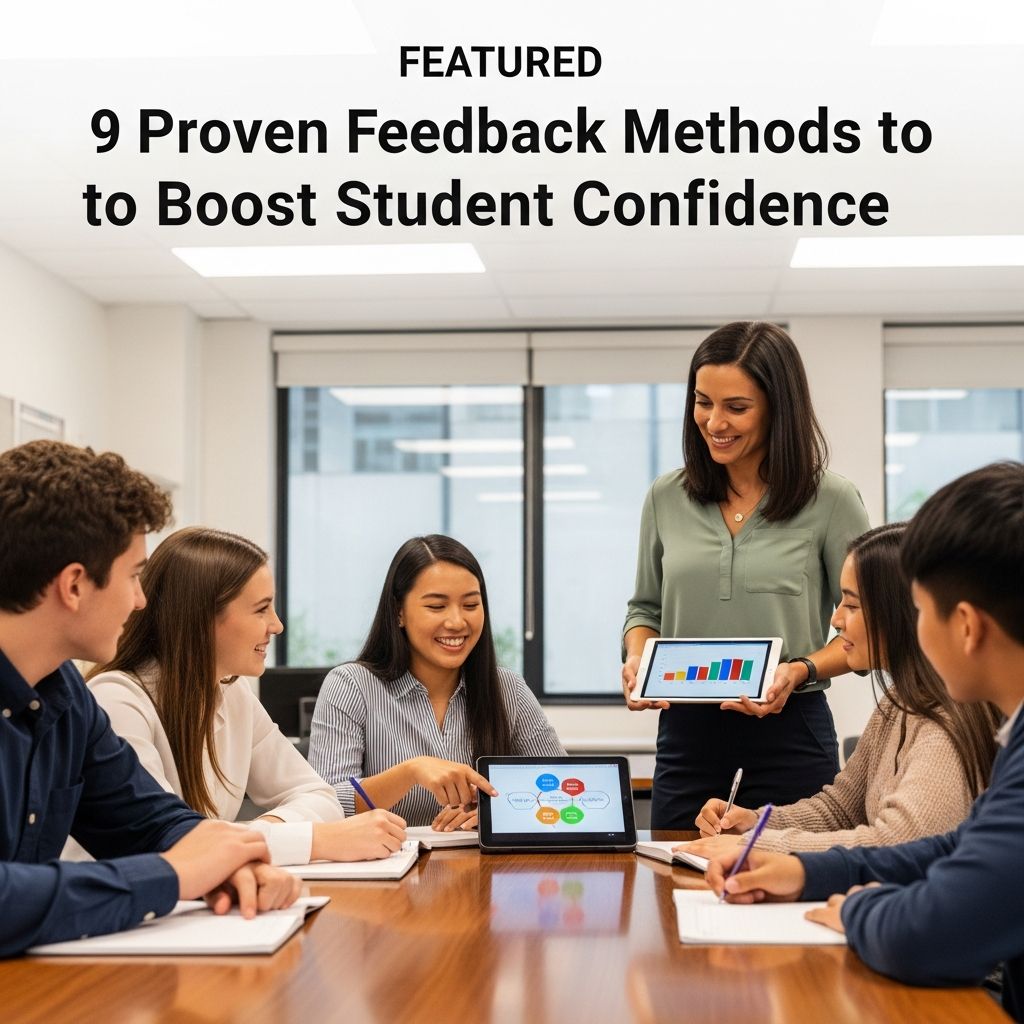
Effective feedback is the cornerstone of student development, transforming uncertainty into capability. When delivered thoughtfully, it not only clarifies expectations but also instills a sense of self-efficacy that propels learners forward. This article outlines nine innovative feedback approaches, drawn from educational best practices, designed to elevate student morale and mastery in the classroom.
Why Feedback Shapes Student Mindsets
Feedback influences how students perceive their abilities, directly impacting motivation and persistence. Research highlights that constructive input, when specific and timely, reinforces neural pathways associated with growth mindset, encouraging students to view challenges as opportunities rather than threats. In contrast, generic praise like “nice work” offers little direction, leaving learners adrift. By prioritizing actionable insights, educators can cultivate resilience, with studies showing up to 30% gains in performance when feedback aligns with clear goals.
Classrooms thrive when feedback fosters autonomy. Students who receive regular, balanced commentary report higher engagement and lower anxiety, as it demystifies the learning process. Integrating these methods requires intentionality, but the payoff is a confident cohort ready to tackle complex tasks independently.
Core Principles of Impactful Feedback
Before diving into techniques, understand the foundational elements that make feedback transformative:
- Specificity: Pinpoint exact strengths and improvements, avoiding ambiguity.
- Timeliness: Deliver promptly to capitalize on fresh recall and momentum.
- Actionability: Provide clear next steps, turning advice into achievable actions.
- Balance: Pair affirmations with guidance to sustain motivation without complacency.
- Student Involvement: Encourage self-reflection to build ownership over learning.
These principles ensure feedback is not just heard but internalized, paving the way for the strategies ahead.
Strategy 1: Craft Precise, Descriptive Comments
Generic compliments erode over time; precise descriptions illuminate paths to excellence. Instead of “good job,” note, “Your use of vivid metaphors in paragraph two strengthened the imagery and reader connection.” This specificity models high standards and equips students with replicable skills. Teachers report that descriptive feedback boosts revision rates by 25%, as learners grasp precisely what elevated their work.
Implement by reviewing assignments with a rubric lens, highlighting one standout element and one tweak. Over time, students internalize these patterns, gaining confidence in self-editing.
Strategy 2: Time Interventions for Maximum Relevance
Fresh insights stick. Provide feedback during or immediately after tasks, when cognitive connections are strongest. For instance, pause mid-lesson to conference with a group struggling on a math concept, offering on-the-spot clarifications. Digital tools enable asynchronous audio notes within hours of submission, maintaining urgency without overwhelming schedules.
Timely input prevents error solidification; delayed comments often arrive too late for adjustment. Principals emphasize same-day walkthrough feedback to align instruction swiftly, fostering a culture of continuous refinement.
Strategy 3: Link Comments to Defined Objectives
Feedback gains power when tethered to learning targets. Begin sessions by restating goals: “Recall our aim for persuasive arguments—strong evidence support. Your second claim shines here; let’s fortify the first with a quote.” This context clarifies progress, reducing confusion and building assurance in meeting standards.
Co-create rubrics with students to heighten relevance. When feedback references shared benchmarks, uptake surges, as learners see direct ties to success metrics.
Strategy 4: Balance Glows with Growth Opportunities
The glow-and-grow model starts with strengths (glows) before suggesting enhancements (grows). Example: “Glow: Your data visualization clearly conveys trends. Grow: Add axis labels for precision.” This sequence preserves dignity while directing effort, countering the sandwich method’s potential dilution of critique.
| Aspect | Glow Example | Grow Example |
|---|---|---|
| Writing | Engaging opening hook | Expand conclusion |
| Math | Accurate calculations | Explain reasoning |
| Projects | Creative design | Strengthen citations |
This table illustrates application across subjects, ensuring equitable growth.
Strategy 5: Spark Reflection Through Probing Questions
Questions shift feedback from directive to dialogic: “How did grouping variables simplify your equation? What alternative might yield the same result?” Such prompts deepen understanding and self-trust, as students articulate rationale. Facilitators note increased engagement when queries challenge assumptions, promoting metacognition.
Use post-task journals for written responses, reviewing to affirm insights and nudge further inquiry. This builds analytical confidence over rote correction.
Strategy 6: Embed Next-Step Directives
Actionable feedback specifies “do this next”: “Revise by incorporating two peer examples, due Friday.” Clarity eliminates guesswork, empowering initiative. Pair with timelines to instill accountability. Research affirms that forward-focused directives enhance resilience, framing setbacks as temporary.
Strategy 7: Harness Peer and Self-Assessment
Distribute checklists for partners to exchange notes, then self-review. “What one strength will you sustain? One area to polish?” Peer input diversifies perspectives, while self-assessment cultivates independence. Best practices include modeling protocols and anonymizing for candor. Communities strengthen as students value collective wisdom.
Strategy 8: Infuse Personal Stories and Encouragement
Share relatable anecdotes: “I once struggled with fractions until visualizing them as pizza slices—try that here.” Authenticity bridges gaps, humanizing educators. Follow with boosters like “You’ve got the persistence; this polish will shine.” These gestures signal investment, amplifying receptivity per wise intervention studies.
Strategy 9: Celebrate Milestones with Autonomy Choices
Highlight wins publicly, then offer options: “Excellent thesis evolution—choose: expand with research or refine voice?” Recognition reinforces efficacy; choices affirm agency. Track progress via goal charts, adjusting collaboratively to sustain momentum.
Comparing Feedback Delivery Modes
| Method | Pros | Cons | Best For |
|---|---|---|---|
| Verbal | Nuanced tone, immediate dialogue | Time-intensive, no record | Small groups |
| Written | Precise, revisitable | Impersonal | Essays |
| Audio/Video | Expressive, efficient | Tech access needed | Remote learning |
| Peer | Relatable, skill-building | Potential bias | Collaborative projects |
Select modes matching context for optimal absorption.
Frequently Asked Questions
What if a student ignores feedback?
Revisit via conference, linking to goals and modeling application. Persistence yields habits.
How often should feedback occur?
Weekly for majors, daily in-class for skills—regularity without overload.
Can tech streamline these methods?
Yes, platforms for audio notes and rubrics save time while personalizing delivery.
Does positive feedback alone suffice?
No—balance with growth areas prevents stagnation.
How to scale for large classes?
Whole-class exemplars plus targeted peer reviews distribute load effectively.
Implementing a Feedback Culture
Transition by piloting two strategies, gathering student input on efficacy. Professional development on these amplifies impact, with schools noting sustained confidence lifts post-adoption. Monitor via surveys: “How has feedback helped your learning?” Adapt iteratively for enduring results.
These methods, rooted in evidence, empower educators to architect environments where confidence flourishes. Consistent application yields empowered learners, poised for lifelong success.
References
- Building Student Confidence: 9 Strategies for Fostering Growth — Science4Us / ExploreLearning. 2023-05-15. https://science4us.explorelearning.com/resources/insights/building-student-confidence-strategies
- Giving Effective Student Feedback in the Classroom — Brisk Teaching. 2024-02-20. https://www.briskteaching.com/post/student-feedback-strategies-and-examples
- 9 Types Of Feedback To Boost Student Engagement — eLearning Industry. 2023-11-10. https://elearningindustry.com/9-types-of-feedback-boost-student-engagement
- 13 Tips to Quickly Deliver Super Effective Feedback — Edutopia. 2024-01-08. https://www.edutopia.org/article/13-tips-to-quickly-deliver-super-effective-feedback/
- Effective Feedback Techniques That Accelerate Student Growth — Calimatic EdTech. 2024-03-12. https://www.calimaticedtech.com/blog/effective-feedback-techniques-accelerate-student-growth
- 10 Tips for Effective Feedback — NAESP (National Association of Elementary School Principals). 2023-09-18. https://www.naesp.org/resource/10-tips-for-effective-feedback/
- 6 Strategies for Effective Feedback in Education — EduStaff. 2024-04-05. https://edustaff.org/blog/6-strategies-for-effective-feedback-in-education/

- Integrated M.A. in Applied Linguistics, University of Hyderabad
- 5+ years in editorial, instructional, SEO, and research-based writing
Sneha is a relationships and lifestyle writer with a strong foundation in applied linguistics and certified training in relationship coaching. She brings over five years of writing experience to theskillvault, crafting thoughtful, research-driven content that empowers readers to build healthier relationships, boost emotional well-being, and embrace holistic living. Her writing and insights reflect the belief that beauty, happiness, and wellness…