
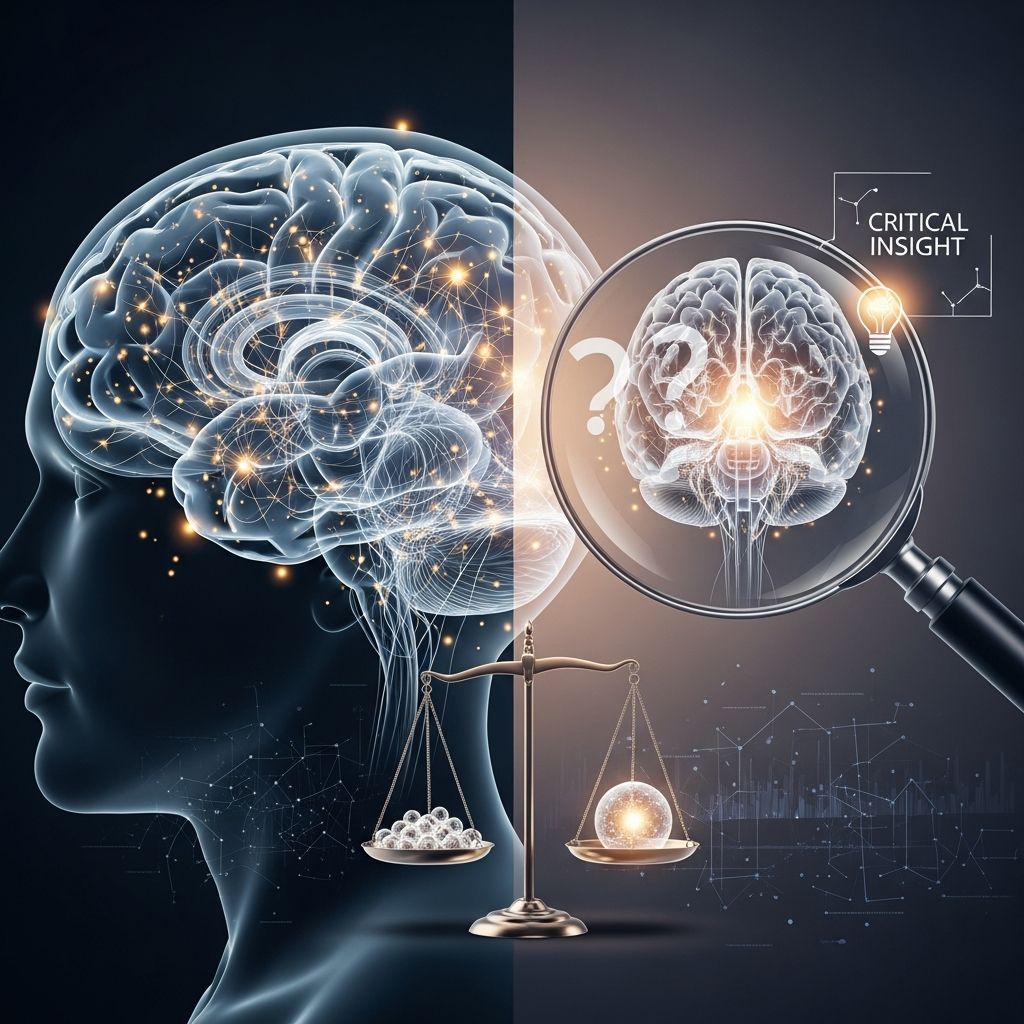
Understanding the Foundations of Neuroscience: A Skeptic’s Primer
In an era where brain imaging and neuroscience findings dominate headlines, from productivity tips to mental health interventions, critical consumers of information need a robust framework for evaluating claims. Neuroscience has undoubtedly revolutionized our understanding of the brain’s structure and function, yet the field carries inherent limitations that often go unexamined in popular discourse. The gap between what neuroscience actually demonstrates and what marketers, journalists, and even some researchers claim it demonstrates has widened considerably. This article explores three foundational concepts that every thoughtful person should understand when encountering neuroscience-based claims.
The Reduction Problem: From Neurons to Experience
At the heart of modern neuroscience lies a foundational assumption: that all mental phenomena ultimately reduce to physical events in the brain and body. While this proposition seems intuitively appealing, it remains fundamentally untested and contains several problematic implications.
Neuroscience operates through reductionism—the practice of explaining complex phenomena by examining their constituent parts. Researchers study individual neurons, measure ion flow across membranes, and map electrical activity patterns. These are legitimate scientific endeavors that have produced genuine insights. However, a critical gap emerges when scientists attempt to leap from understanding these microscopic processes to explaining high-level mental experiences like consciousness, self-awareness, creativity, or subjective emotional states.
Consider an analogy: industrial chemists studying acetylsalicylic acid (aspirin) could theoretically examine the problem at increasingly fundamental levels—molecular, atomic, or even subatomic. Yet at some point, analyzing quarks becomes unhelpful for actually synthesizing the drug. Similarly, studying individual neuron firing patterns may provide limited insight into why a particular piece of music moves us, why we form lasting relationships, or how we construct identity.
The Level-of-Analysis Problem
Neuroscience typically investigates the brain at certain accessible levels: neural circuits, brain regions, and networks. Yet the phenomena psychiatry and psychology seek to understand—depression, anxiety, decision-making, personality—may emerge from levels of organization that current neuroscientific methods cannot adequately address. Mental constructs such as attention, willpower, and love appear to be holistic functions involving the entire person and brain, not discrete phenomena mappable to specific regions.
When a brain imaging study shows that a particular region “lights up” during a cognitive task, what exactly has been demonstrated? The activation reflects correlation, not causation or explanation. The brain region’s involvement in the task does not explain how subjective experience emerges or why that experience feels the way it does to the person undergoing it.
The Consciousness Gap: What Brain Scans Cannot Reveal
Perhaps the most intractable problem facing contemporary neuroscience is the relationship between objective brain measurements and subjective conscious experience. This limitation has profound implications for how we interpret research findings.
Every neuroscience study measuring brain activity must ultimately rely on participants’ verbal reports about their experiences. A researcher cannot directly observe what a person is consciously aware of—they can only measure brain activity and ask subjects to describe what they experienced. This creates a fundamental methodological constraint: neuroscientists can study only the small fraction of brain activity that corresponds to conscious, reportable experience.
The overwhelming majority of brain computation occurs outside consciousness. We cannot report on most of what our brain does. Consequently, researchers attempting to establish correlations between brain activity and mental phenomena work with an incomplete dataset—only the conscious tip of a vast computational iceberg remains accessible. The most meaningful correlations may involve unconscious processes that subjects cannot articulate and researchers cannot directly measure.
Why Brain Scans Miss Self-Awareness
Self-awareness itself represents a particular challenge. Research suggests that self-awareness encompasses multiple “brain senses”—proprioception, interoception, temporal continuity perception, and others. These senses are fundamentally difficult to access through functional brain imaging. As one neuroscientist observed, these aspects of self-awareness are “as opaque to functional brain scans as good ideas are to microscopes.”
This limitation does not mean neuroscience cannot contribute to understanding the brain. Rather, it means that neuroimaging studies cannot directly measure, verify, or falsify claims about subjective conscious experience. They can measure correlates, but correlation remains philosophically distinct from explanation.
Methodology Matters: Distinguishing Research from Rhetoric
A third critical consideration involves recognizing when neuroscience research actually measures what proponents claim it measures. Many popular neuroscience narratives rest on a subtle but significant slippage between what was actually studied and what is claimed.
The Measurement Problem in Practice
Consider a frequently cited study on the effects of digital note-taking versus handwriting on learning. Some interpretations claimed that the research demonstrated that using laptop computers impairs memory formation and learning capacity. However, closer examination reveals that researchers measured specific brain-wave patterns and note-quantity, not actual memory retention or learning outcomes directly. The researchers recorded that students who typed used different brain regions than those who wrote by hand, and that brain-wave activity differed between groups. But this finding—while potentially interesting—does not automatically demonstrate that typing impairs learning or memory.
This represents a common pattern in neuroscience communication: measurement of a neural correlate becomes rhetorically transformed into proof of a behavioral or cognitive claim. The brain-activity finding becomes the foundation for broader assertions about learning, memory, or cognition that the study did not actually test.
Neural Reactivation and Inference
When we recall an experience, we reactivate neural networks associated with the original event. This is a genuine neuroscientific finding. However, the implications are sometimes overstated. Knowing that recall involves neural reactivation does not necessarily tell us about the quality of that memory, its accuracy, or its functional significance for learning and behavior.
Each of these interpretive leaps represents a moment where healthy skepticism becomes essential. Questions to ask about any neuroscience claim include: What exactly was measured? Does the measurement directly assess the claim being made? Could the finding be interpreted differently? What alternative explanations exist?
Practical Applications: Where Neuroscience Actually Succeeds
Despite these limitations, neuroscience has produced evidence-based interventions that genuinely improve outcomes. Understanding when neuroscience delivers reliable knowledge helps distinguish it from speculative applications.
Mindfulness meditation represents one area where neuroscience research aligns with measurable benefits. Studies demonstrate that mindfulness produces changes in brain structure and function, and these changes correlate with improved emotional regulation, reduced anxiety, and enhanced focus. These benefits have been documented not only in people with mental health conditions but also in healthy individuals seeking performance enhancement.
The mechanism involves strengthening metacognitive and executive functions—the brain’s capacity to observe its own processes and correct deficits in thinking and emotion regulation. This application succeeds because researchers measure both neural changes and behavioral outcomes, establishing meaningful connections between the two.
The Social Neuroscience Frontier
Another area where neuroscience provides genuine insight involves social understanding and communication. Mirror neuron systems—neural structures that activate both when we perform an action and when we observe others performing it—contribute to our capacity for empathy and social understanding. This finding explains why we intuitively understand others’ actions and emotions at a level deeper than language alone permits.
When someone communicates something to us, our brain simultaneously processes their words, micro-expressions, posture, tone, and cadence through multiple neural systems. This multimodal processing explains why we often sense inauthenticity or emotional incongruence even when explicit statements sound correct. The neuroscientific insight here directly illuminates everyday social experience in meaningful ways.
What Neuroscience Currently Cannot Answer
The most honest assessment of contemporary neuroscience begins with acknowledging what remains unknown. Currently, neuroscientists and philosophers lack a coherent understanding of how neural activity generates subjective experience. The origin of consciousness—how and why physical brain processes produce the felt quality of experience—remains genuinely mysterious.
This gap has direct implications for psychiatry and clinical psychology. The most straightforward answer to “How does the mind emerge from the brain?” remains “We do not know.” Consequently, claiming that we understand the root causes of mental disorders based on neural correlates alone represents a significant overreach. As one prominent psychiatry researcher noted, “It is venturesome to think that we will get very far in understanding the pathology of the mind without understanding its normal workings.”
Diagnostic Categories and Their Limitations
Psychiatric diagnoses present additional complications. Standard diagnostic manuals like the DSM classify disorders based on symptom clusters rather than underlying biological mechanisms. Researchers and clinicians often assume that DSM diagnostic categories reflect distinct biological entities with specific neural alterations. However, substantial evidence suggests that symptoms-based diagnoses lack clear neurobiological boundaries and may not represent discrete disease entities.
This problematic assumption has led to decades of research searching for the neural basis of disorders as currently defined, despite significant questions about whether those diagnostic categories represent meaningful biological divisions at all.
A Framework for Skeptical Evaluation
When encountering neuroscience claims, readers can apply several critical questions:
- Did the study measure what is being claimed, or only a neural correlate?
- Was conscious, reportable experience actually assessed, or only brain activity?
- Do alternative explanations account for the findings equally well?
- Have the results been independently replicated by other research groups?
- Does the claim require inference leaps beyond what the data directly demonstrates?
- Are benefits attributed to neural mechanisms actually causally dependent on those mechanisms?
The Value of Scientific Humility
Neuroscience represents genuine scientific progress. Brain imaging, electrophysiology, molecular neurobiology, and computational approaches have generated legitimate knowledge about the nervous system’s structure and function. Yet this progress coexists with significant, inherent limitations. The field remains in its relative infancy in many respects. As researchers continue investigating smaller neural structures and complex networks, the field repeatedly encounters unexpected complexity and interactive properties that earlier models did not predict.
The appropriate stance toward neuroscience combines realistic appreciation for its achievements with modest awareness of its limitations. Popular discourse often reverses this balance—offering inflated confidence in neural explanations while downplaying scientific uncertainties. A more intellectually honest approach acknowledges that neuroscience can illuminate many aspects of brain function while remaining transparent about what it cannot yet address.
Frequently Asked Questions
Q: Does brain imaging prove that thoughts cause behavior?
A: No. Brain imaging shows correlations between activity in specific regions and reported experiences or behaviors. Correlation does not establish causation. Other factors—attention, experimental context, participant expectations—may account for both the neural activity and the behavior.
Q: If neuroscience can’t explain consciousness, why study the brain at all?
A: Neuroscience reveals how specific brain structures and networks contribute to perception, memory, emotion, and behavior. These insights are valuable even without a complete theory of consciousness. Understanding neural mechanisms helps develop treatments for neurological and psychiatric conditions.
Q: Are neuroscience-based self-help interventions actually effective?
A: Some are. Interventions like mindfulness meditation have demonstrated benefits in rigorous studies. However, the neural mechanisms described in marketing materials often oversimplify complex processes. Effectiveness depends on the specific intervention and how it’s implemented, not merely on neural explanations.
Q: Why do neuroscience findings often contradict earlier studies?
A: Early findings often use small sample sizes and lack independent replication. As fields mature, researchers identify methodological limitations in previous work. Apparent contradictions frequently reflect refinement of understanding rather than fundamental instability in the science.
Q: Can brain scans diagnose mental illness?
A: Currently, brain imaging cannot reliably diagnose psychiatric conditions. While group-level differences appear between diagnostic categories, individual variation within categories is substantial. Diagnosis remains clinically based on symptoms and history rather than neural imaging.
References
- A Skeptic’s Guide to the Mind: What Neuroscience Can and Cannot Tell Us About Ourselves — Robert Burton. St. Martin’s Press. 2015. https://us.macmillan.com/books/9781250044822/askepticsguidetothemin
- The value of a skeptical approach to neurosciences in psychiatric research and practice — Teitelbaum et al. Canadian Journal of Psychiatry. 2018. https://pubmed.ncbi.nlm.nih.gov/29306308/
- The Neuroscience Trap: When Skeptics Stop Being Skeptical — Learning and the Brain Research. 2024. https://www.learningandthebrain.com/blog/the-neuroscience-trap-when-skeptics-stop-being-skeptical/
- Mindfulness-Based Stress Reduction and Health Benefits: A Meta-Analysis — Goleman & Davidson. Journal of the American Medical Association. 2017. https://pubmed.ncbi.nlm.nih.gov/28586821/

Medha Deb is an editor with a master's degree in Applied Linguistics from the University of Hyderabad. She believes that her qualification has helped her develop a deep understanding of language and its application in various contexts. Medha specializes in the areas of beauty, health, sports, and wellness and is committed to ensuring that the content on the website is…