
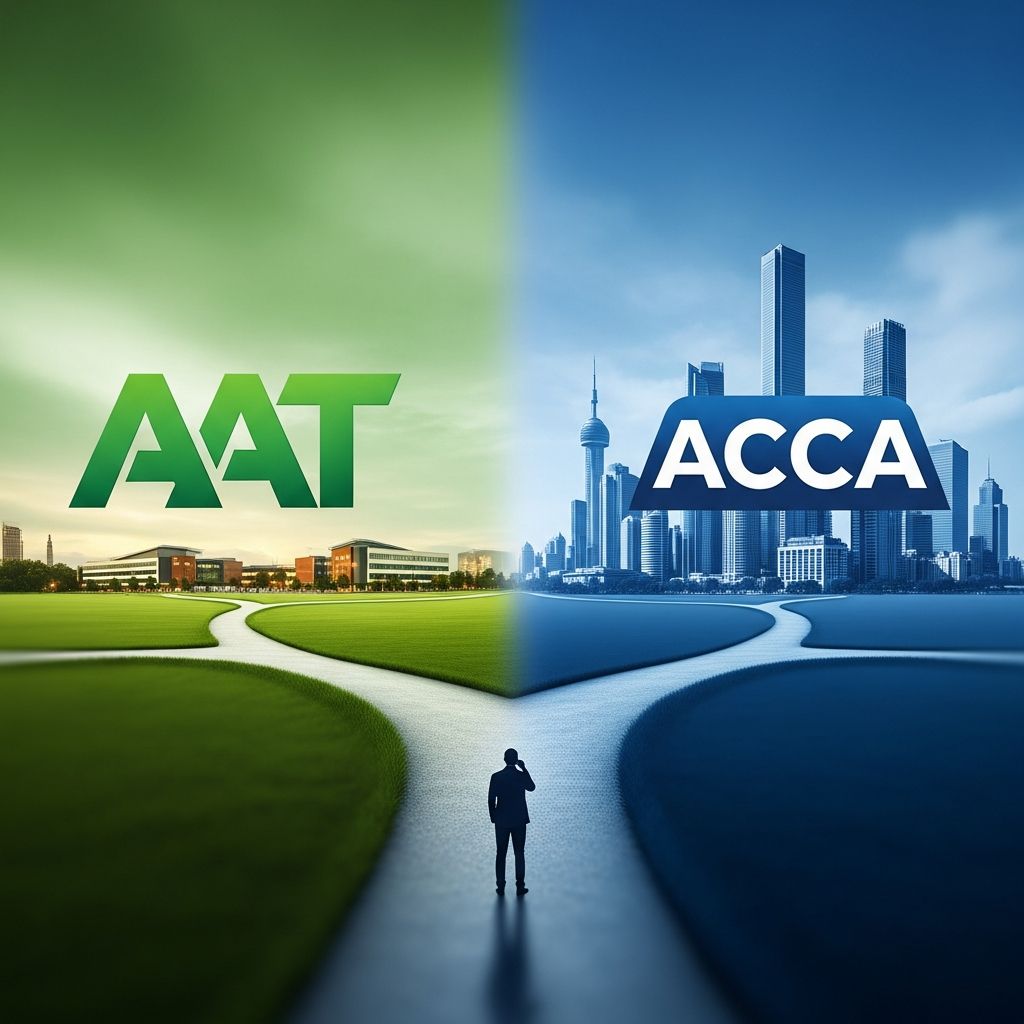
Selecting between AAT and ACCA depends on your current experience, career objectives, and time commitment. AAT offers accessible, practical training for entry-level roles, while ACCA provides advanced, globally recognized expertise for senior positions.
Understanding AAT: Building Practical Foundations
The Association of Accounting Technicians (AAT) qualification targets individuals new to accounting, emphasizing hands-on skills for immediate workplace application. It progresses through structured levels without requiring prior qualifications, making it ideal for school leavers, career changers, or those seeking quick entry into accounting support roles.
AAT’s curriculum covers essential topics like bookkeeping, costing, and financial reporting. Students develop proficiency in accounting software, spreadsheets, and basic tax principles, preparing them for technician-level responsibilities.
AAT Qualification Levels and Content
- Level 2 – Foundation Certificate: Introduces bookkeeping transactions, controls, costing elements, and accounting software usage, culminating in a synoptic assessment.
- Level 3 – Advanced Diploma: Builds on basics with advanced bookkeeping, final accounts preparation, management costing, indirect taxation, ethics, and spreadsheets.
- Level 4 – Professional Diploma: Advanced topics including budgeting, decision-making, limited company financial statements, systems controls, plus optional units like business tax or auditing.
Completion grants professional status such as MAAT or AATQB, enhancing employability in roles like accounts assistant or payroll administrator.
Exploring ACCA: Pathway to Chartered Status
The Association of Chartered Certified Accountants (ACCA) delivers a prestigious qualification for aspiring chartered accountants, focusing on strategic finance, audit, and international standards. It suits those with some background knowledge aiming for leadership roles worldwide.
ACCA’s rigorous program demands dedication, combining theoretical depth with practical ethics and experience requirements. Globally, over 241,000 members and 542,000 students underscore its prestige.
ACCA Structure and Modules
- Applied Knowledge (3 exams): Covers business accounting, financial accounting, and management accounting fundamentals.
- Applied Skills (6 exams): Includes corporate reporting, audit assurance, taxation, and performance management.
- Strategic Professional (4 exams): Advanced strategic business leader, reporting, and optional specialist modules like advanced audit.
Full membership requires 13-14 exams (exemptions possible), an ethics module, and 36 months of relevant experience.
Comprehensive Comparison: AAT vs ACCA
Key distinctions emerge in accessibility, depth, duration, and outcomes. The table below summarizes critical factors:
| Aspect | AAT | ACCA |
|---|---|---|
| Entry Requirements | None required | Prior qualifications or exemptions advised |
| Number of Exams | 6-10 across levels | 13-14 exams |
| Study Duration | 6-24 months | 3-4 years including experience |
| Focus | Practical technician skills | Strategic professional expertise |
| Cost Estimate | £1,000-£3,000 total | £3,000-£6,000+ total |
| Global Recognition | Primarily UK-focused | Worldwide in 180+ countries |
AAT enables faster workforce entry with lower barriers, whereas ACCA demands more investment for elevated credentials.
Career Opportunities and Salary Insights
AAT qualifiers often secure junior positions like bookkeeping clerk or purchase ledger assistant, with UK average salaries around £22,000-£28,000 annually. Progression to supervisory roles follows with experience.
ACCA opens doors to audit senior, financial controller, or CFO paths, boasting averages of £40,000-£60,000 starting, rising to £100,000+ for seniors. International mobility enhances prospects.
- AAT suits local SME roles or apprenticeships.
- ACCA excels in multinational firms, Big Four, and consulting.
Financial Commitment: Costs Breakdown
AAT affordability stems from modular structure; Level 2 costs ~£400-£800 including exams and materials. Full progression totals under £3,000, often employer-sponsored.
ACCA expenses include £100-£200 per exam, registration (£89), and annual subscription (£142), totaling £4,000+ without exemptions. Study providers add £1,500-£3,000 per level.
Consider funding via apprenticeships for AAT or employer support for both.
Time Investment and Study Flexibility
AAT’s part-time options allow 6-12 months per level alongside work. Computer-based exams offer frequent sittings.
ACCA’s four sessions yearly per exam level suit working professionals, but the multi-year span requires sustained effort. Online resources and tuition providers aid flexibility.
Progression Routes and Exemptions
AAT Professional Diploma holders gain exemptions (up to 9 exams) in ACCA, CIMA, or ICAEW, streamlining chartered paths. ACCA foundations align with AAT Level 4, providing entry equivalence.
Many advance from AAT to ACCA, leveraging practical experience for exemptions.
Which Qualification Fits Your Goals?
Choose AAT If:
- You lack accounting experience.
- Seeking rapid employment in support roles.
- Prefer practical over theoretical study.
- Budget and time are limited.
Opt for ACCA If:
- You aim for chartered status and senior finance careers.
- Hold relevant degrees or experience.
- Value global opportunities.
- Ready for intensive exams.
Frequently Asked Questions
What is the main difference between AAT and ACCA?
AAT focuses on foundational practical skills for technicians, while ACCA offers advanced strategic training for chartered accountants.
Can I switch from AAT to ACCA?
Yes, AAT Level 4 provides exemptions for up to 9 ACCA exams, easing transition.
How long does AAT take to complete?
Typically 6-24 months depending on levels and study pace.
Is work experience required for ACCA?
Yes, 36 months of supervised practical experience for full membership.
Which pays better, AAT or ACCA?
ACCA generally offers higher salaries due to its professional status, but AAT provides solid entry-level earnings.
Assess your stage: beginners thrive with AAT’s accessibility; ambitious professionals pursue ACCA’s prestige. Both propel rewarding careers in dynamic finance sectors.
References
- AAT vs ACCA: Unpacking the differences and similarities — Accountancy Learning. 2024. https://www.accountancylearning.co.uk/aat-vs-acca/
- AAT or ACCA: Which Qualification Suits Your Career Goals? — FC Training. 2024. https://www.fctraining.org/aat-or-acca.php
- ACCA versus AAT: What’s the Difference? — VIVA Financial Tuition. 2024. https://www.vivatuition.com/knowledge-centre/resource/acca-versus-aat-whats-the-difference
- The Ultimate Guide to AAT vs ACCA — Total Accountancy Training. 2024. https://totalaccountancytraining.com/the-ultimate-guide-to-aat-vs-acca-which-accounting-qualification-is-right-for-youis-accounting-right-for-you-a-career-change-guide-with-aat-qualifications-2/
- Which accounting qualification is right for you? AAT vs ACCA vs CIMA — Eagle Education. 2024. https://www.eagle-education.co.uk/career/which-accounting-qualification-is-best/

- Integrated M.A. in Applied Linguistics, University of Hyderabad
- 5+ years in editorial, instructional, SEO, and research-based writing
Sneha is a relationships and lifestyle writer with a strong foundation in applied linguistics and certified training in relationship coaching. She brings over five years of writing experience to theskillvault, crafting thoughtful, research-driven content that empowers readers to build healthier relationships, boost emotional well-being, and embrace holistic living. Her writing and insights reflect the belief that beauty, happiness, and wellness…