
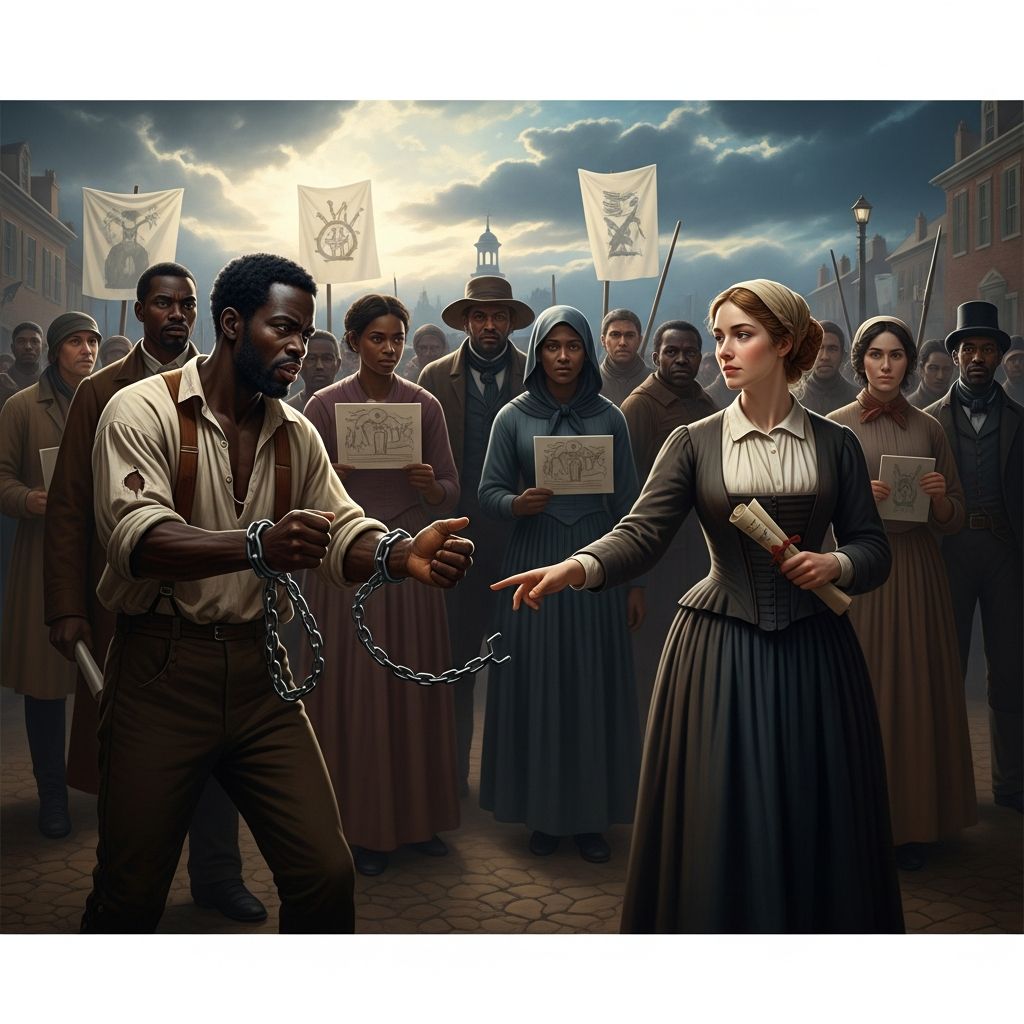
The abolitionist movement emerged as a powerful force in the late 18th century, dedicated to dismantling the transatlantic slave trade and the institution of chattel slavery across Europe and the Americas. Spanning from roughly 1783 to 1888, it created the moral and political momentum necessary to outlaw slavery, culminating in landmark events like the Emancipation Proclamation and the Thirteenth Amendment.
Roots of Human Bondage and Early Resistance
Slavery’s deep history traces back to ancient civilizations, but its modern intensification began in the 15th century with Portuguese explorers trafficking Africans to Europe and later to the Americas. By the 1440s, Portuguese captains like Antam Goncalvez and Nuno Tristao were capturing hundreds of Africans, marking the start of organized slave trading. The demand exploded with European colonial plantations in the New World, where diseases decimated indigenous populations, leading Spain and others to import millions from Africa—estimated at around 15 million victims by United Nations records.
Early resistance flickered in religious and philosophical circles. Enlightenment thinkers criticized slavery as a violation of natural rights, while Quakers and evangelicals condemned it on moral grounds. In 1652, Rhode Island became the first colony to ban all slavery, though enforcement was weak. These seeds of opposition grew amid the horrors of the Middle Passage and plantation life.
The Spark Ignites: Organized Abolition in Britain
Britain, the dominant slave-trading power by the 1700s, saw the first major organized push. In 1787, the Society for the Abolition of the Slave Trade formed, establishing Sierra Leone as a haven for freed slaves. Momentum built through petitions, boycotts of slave-produced goods like sugar, and vivid testimonies from formerly enslaved people. Parliament banned the slave trade in 1807, a victory fueled by this grassroots fervor.
Full emancipation followed in 1833, abolishing slavery across British colonies with compensation to owners—a controversial payout that highlighted economic entanglements. This success inspired global campaigns, proving moral suasion could sway empires.
Abolition Takes Root in America
In the United States, slavery entrenched in Southern economies while Northern states gradually restricted it. The 1619 arrival of 20 Africans in Jamestown marked the beginning, evolving into a cornerstone of cotton production. Early American abolition gained traction post-Revolution, with Pennsylvania passing the first gradual emancipation law in 1780.
By 1833, the American Anti-Slavery Society launched under leaders like Arthur Tappan, publishing The Emancipator to spread the cause. The movement fractured into factions: gradualists favored moral persuasion, while immediatists demanded instant freedom.
Iconic Leaders and Their Strategies
Abolitionism thrived on diverse voices. Frederick Douglass, escaping bondage in 1838, became a masterful orator and publisher of the North Star, arguing slavery contradicted America’s founding ideals. Harriet Tubman, after her own 1849 flight, led 13 rescue missions via the Underground Railroad, freeing over 70 people.
William Lloyd Garrison’s Liberator newspaper (1831) radicalized readers with unyielding calls for immediate emancipation. Women like Prudence Crandall defied norms by admitting Black students to her school in 1833, enduring mob violence. These figures blended speeches, writings, and direct action.
- Frederick Douglass: Autobiographies exposed slavery’s brutality, influencing global opinion.
- Harriet Tubman: ‘Moses of her people,’ risking recapture repeatedly.
- Sojourner Truth: Delivered ‘Ain’t I a Woman?’ in 1851, linking abolition to women’s rights.
- John Brown: 1859 Harpers Ferry raid aimed to arm enslaved revolts, though it ended in execution.
Key Tactics: From Petitions to Print Warfare
Abolitionists wielded ‘moral suasion’—appealing to conscience via pamphlets, lectures, and broadsides. By the 1840s, over 2,000 local societies distributed millions of anti-slavery materials. The Underground Railroad symbolized defiance, ferrying thousands north or to Canada.
Political agitation intensified: the Liberty Party formed in 1840, challenging pro-slavery policies. Boycotts targeted slave goods, while conventions like the 1840 World Anti-Slavery Convention (despite barring women) galvanized networks.
Crisis Points: Laws and Violence Escalate Tensions
Pro-slavery backlash peaked with the 1850 Fugitive Slave Act, mandating Northern aid in recaptures, sparking rescues and riots. The Kansas-Nebraska Act (1854) ignited ‘Bleeding Kansas’ violence over slavery’s expansion.
The 1857 Dred Scott decision denied citizenship to Black Americans, enraging abolitionists and boosting recruitment. Elijah Lovejoy’s 1837 murder for his abolitionist press underscored perils.
| Event | Date | Impact on Abolition |
|---|---|---|
| Gag Rule in Congress | 1836 | Blocked anti-slavery petitions, galvanizing protests. |
| Amistad Revolt | 1839 | Supreme Court victory (1841) freed Africans, inspiring hope. |
| Compromise of 1850 | 1850 | Fugitive Slave Law fueled Northern outrage. |
| John Brown’s Raid | 1859 | Showed potential for armed resistance. |
The Civil War and Path to Emancipation
Secession in 1861 framed the war around slavery. Abolitionists pressured Lincoln, who issued the Emancipation Proclamation on January 1, 1863, freeing slaves in rebel states—an act of war strategy that shifted the conflict’s moral focus. Over 180,000 Black soldiers joined Union ranks, proving their stake.
The Thirteenth Amendment (1865) enshrined nationwide abolition, ending chattel slavery after four years of bloodshed.
Legacy and Modern Abolitionism
Abolition reshaped societies, birthing civil rights struggles. Yet Reconstruction’s failures left systemic racism. Today, ‘new abolitionism’ targets human trafficking, prisons, and policing—echoing calls for total freedom.
Figures like Bryan Stevenson extend the fight, linking historical slavery to mass incarceration. Global efforts combat 40 million in modern slavery per UN estimates.
Frequently Asked Questions (FAQs)
What was the main goal of abolitionism?
The primary aim was to end the slave trade and free all enslaved people immediately, viewing slavery as a moral abomination.
Who were the most influential abolitionists?
Key figures include Frederick Douglass, Harriet Tubman, William Lloyd Garrison, and Sojourner Truth, each using oratory, action, and writing.
How did the Emancipation Proclamation change the Civil War?
It freed slaves in Confederate states, allowed Black enlistment, and redefined the war as anti-slavery.
Did abolitionism succeed everywhere?
Britain and the US achieved legal abolition by 1888, but enforcement and equality lagged; Brazil was last in 1888.
What is contemporary abolitionism?
Modern movements fight human trafficking, forced labor, and carceral slavery under the Thirteenth Amendment’s exceptions.
References
- Abolitionism Timeline — Yale Macmillan Center. Accessed 2026. https://macmillan.yale.edu/glc/abolitionism-timeline
- Abolitionism | Movement, U.S. History, Leaders, & Definition — Encyclopædia Britannica. Accessed 2026. https://www.britannica.com/topic/abolitionism-European-and-American-social-movement
- Abolitionist Movement: History, Main Ideas, and Activism Today — Human Rights Careers. Accessed 2026. https://www.humanrightscareers.com/issues/abolitionist-movement-history-main-ideas-and-activism-today/
- Words to Weapons: A History of the Abolition Movement — Commonplace. Accessed 2026. https://commonplace.online/article/words-to-weapons/
- Abolitionism | History | Research Starters — EBSCO. Accessed 2026. https://www.ebsco.com/research-starters/history/abolitionism
- The Abolitionists — National Endowment for the Humanities. Accessed 2026. https://www.neh.gov/project/abolitionists
- The Long Road to Abolition — National Archives Foundation. Accessed 2026. https://archivesfoundation.org/newsletter/the-long-road-to-abolition/

- Integrated M.A. in Applied Linguistics, University of Hyderabad
- 5+ years in editorial, instructional, SEO, and research-based writing
Sneha is a relationships and lifestyle writer with a strong foundation in applied linguistics and certified training in relationship coaching. She brings over five years of writing experience to theskillvault, crafting thoughtful, research-driven content that empowers readers to build healthier relationships, boost emotional well-being, and embrace holistic living. Her writing and insights reflect the belief that beauty, happiness, and wellness…