
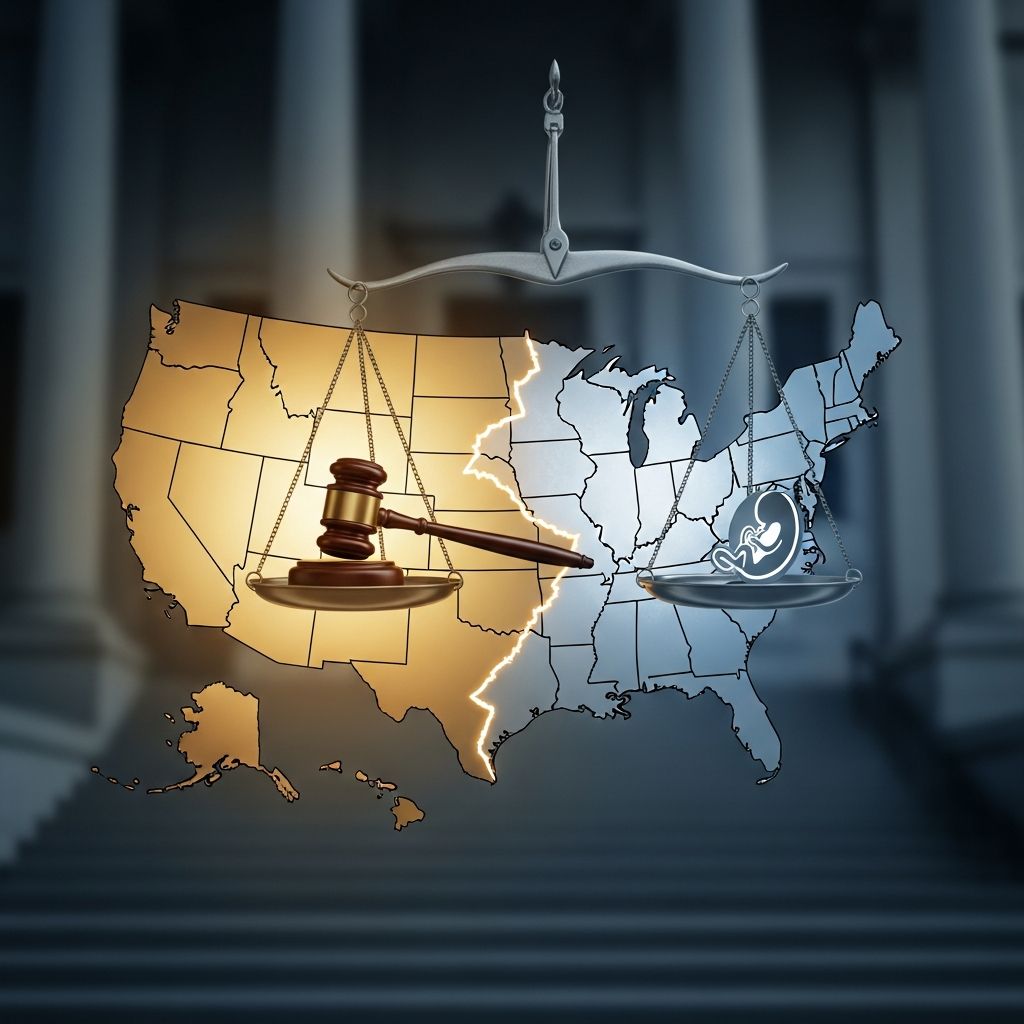
The Constitutional Question: Why Abortion Became a Federal Matter
The fundamental question underlying abortion legality in the United States centers on whether the Constitution protects a right to abortion. Historically, the right to an abortion was not explicitly mentioned in the U.S. Constitution, creating a significant legal vacuum that required judicial interpretation. This absence forced courts to determine whether abortion access could be derived from existing constitutional protections, particularly those related to privacy and personal liberty enshrined in the Due Process Clause of the Fourteenth Amendment.
The constitutional framework evolved through a series of landmark Supreme Court decisions that established, modified, and ultimately reversed federal protections. Before the 1970s, abortion was treated primarily as a matter of state regulation, with individual states enacting their own prohibitions and restrictions. The landscape changed dramatically when the Supreme Court intervened in this deeply divisive issue, creating a national standard that would persist for nearly fifty years before being dismantled.
The Roe v. Wade Decision: Establishing a National Framework
In 1973, the Supreme Court issued a landmark ruling in Roe v. Wade that fundamentally transformed abortion law across the nation. The Court held that the Constitution implicitly protected a woman’s right to terminate her pregnancy as an extension of her right to privacy. This decision invalidated many state laws that had prohibited abortion and established a tiered framework based on pregnancy stages.
The Roe framework divided pregnancy into three trimesters, each with distinct legal implications. During the first trimester, states could not restrict abortion access. In the second trimester, states could regulate abortion to protect maternal health through reasonable restrictions. By the third trimester, after fetal viability, states could prohibit abortion entirely except when necessary to preserve the life or health of the pregnant person. This structure provided pregnant individuals with abortion access while recognizing the state’s evolving interest in protecting potential life.
The decision was controversial from its inception, sparking intense political and social debates that would continue for decades. Supporters argued the ruling protected fundamental autonomy and bodily integrity, while opponents contended the Court had overstepped its authority by creating a right not explicitly found in the constitutional text.
The Undue Burden Standard: Modifying Protections
The constitutional framework governing abortion remained relatively stable until 1992, when the Supreme Court revisited the issue in Planned Parenthood v. Casey. Rather than entirely overturning Roe, the Court modified the legal standard used to evaluate abortion restrictions. The new approach replaced the trimester framework with an “undue burden” test that examined whether a law placed a substantial obstacle in the path of someone seeking an abortion before fetal viability.
Under this modified standard, states retained greater flexibility to regulate abortion compared to the original Roe framework. The decision permitted restrictions such as parental notification requirements for minors, mandatory waiting periods, counseling requirements, and informed consent provisions, provided these measures did not constitute an undue burden on abortion access. This shift reflected a gradual movement toward allowing states more latitude in setting abortion policy while maintaining some federal protection for abortion rights.
The Casey decision preserved what the Court called the “essential holding” of Roe—that pregnant individuals retained a right to abortion before viability—while acknowledging state interests in regulating the procedure. This balance attempted to accommodate both reproductive freedom advocates and those seeking to restrict abortion access, though both sides remained dissatisfied with the compromise.
The Dobbs Decision: Overturning Federal Protection
On June 24, 2022, the Supreme Court fundamentally altered the legal landscape by overturning both Roe v. Wade and Planned Parenthood v. Casey in Dobbs v. Jackson Women’s Health Organization. Writing for the majority, Justice Samuel Alito argued that the Constitution does not confer a right to abortion, reasoning that the issue should be returned to individual states and the democratic process. The Court concluded that because abortion was not explicitly mentioned in the Constitution, and no fundamental right to abortion could be derived from the nation’s history and traditions, the federal government lacked authority to protect abortion access.
The Dobbs decision eliminated nearly fifty years of federal constitutional protection for abortion rights. While the decision technically returned the matter to states, it immediately activated “trigger laws”—legislation that had been passed in anticipation of Roe‘s reversal—causing immediate abortion bans to take effect in numerous states. The ruling unleashed a patchwork of state-level policies ranging from complete prohibitions to robust protections, fragmenting abortion access across the nation.
Why Abortion Became Constitutionally Protected: The Privacy Rationale
Understanding why the Supreme Court initially found abortion protection in the Constitution requires examining the Court’s reasoning about privacy rights. The Court in Roe traced a constitutional lineage through earlier cases establishing privacy as a protected liberty interest. Previous decisions had recognized privacy rights related to contraception, marriage, and family relationships. The Roe Court extended this reasoning to conclude that the decision whether to continue a pregnancy involved similar intimate personal choices deserving constitutional protection.
The privacy framework became controversial because many legal scholars and justices questioned whether privacy was truly the appropriate constitutional anchor for abortion rights. Critics argued the reasoning was tenuous and lacked strong textual or historical support. This vulnerability in the constitutional rationale ultimately contributed to the Dobbs majority’s conclusion that abortion rights could not survive constitutional scrutiny without a more explicit textual basis.
State-Level Responses and the Current Legal Landscape
Following the Dobbs decision, individual states dramatically diverged in their approach to abortion regulation. The resulting landscape reflects profound regional differences in abortion policy and access.
States with Comprehensive Bans
Thirteen states have enacted total or near-total abortion bans, with limited exceptions. These include Alabama, Arkansas, Idaho, Indiana, Kentucky, Louisiana, North Dakota, Mississippi, Oklahoma, South Dakota, Tennessee, West Virginia, and Wisconsin. Most of these bans allow exceptions to preserve the life or health of the pregnant person, with some including narrow exceptions for rape or incest. Several states enforce these bans strictly, leaving virtually no legal pathway to abortion access.
States with Gestational Restrictions
Other states have implemented bans at specific stages of pregnancy rather than complete prohibitions. Florida, Georgia, Iowa, and South Carolina ban abortion after six weeks of gestation, though most include exceptions for medical emergencies, lethal fetal abnormalities, or rape and incest. Massachusetts and Pennsylvania ban abortion at 24 weeks of pregnancy. These restrictions significantly limit abortion access while stopping short of complete bans.
States Protecting Abortion Access
Approximately twenty-five states and the District of Columbia explicitly protect abortion access by state law or constitution. States including California, Colorado, Illinois, Maryland, Minnesota, New York, and Oregon allow abortion throughout pregnancy or until fetal viability with few restrictions. Some states have constitutional protections, while others rely on statutory protections. Several states have explicitly enshrined abortion rights in their state constitutions, including California, Colorado, Kansas, Michigan, Missouri, Montana, Ohio, and Vermont.
Restrictions Within Legal Abortion Access
Even in states where abortion remains legal, numerous restrictions may apply. Common restrictions include mandatory waiting periods between counseling and the procedure, requirements that patients view ultrasounds before abortion, parental notification or consent requirements for minors, and specific counseling content mandates. Some states impose restrictions on medication abortion, such as requiring in-person dispensation by physicians rather than permitting mail delivery. These restrictions operate within states that permit abortion but add procedural and informational requirements that may delay access or present practical obstacles.
The Political Divide on Abortion Regulation
Abortion legality remains deeply intertwined with partisan politics. Since the 1970s, the Republican Party has generally sought to restrict abortion access or criminalize the procedure entirely, often emphasizing the moral status of the fetus and arguments about when life begins. The Democratic Party has generally defended abortion access and made protecting contraception access a priority. This partisan divide has driven the current fragmented state-by-state landscape, with Republican-controlled states largely enacting restrictive policies and Democratic-controlled states protecting access.
Federal Legislation Efforts
Since the Dobbs decision, both parties have introduced federal legislation reflecting their abortion views. In 2022, Republican Senator Lindsey Graham introduced legislation that would ban abortion nationwide after fifteen weeks of gestation with exceptions for rape, incest, and threats to the pregnant person’s life. Democratic-controlled congresses have proposed legislation to codify abortion rights into federal law, though such measures have faced Republican opposition in a divided Congress. These legislative efforts demonstrate ongoing tension between those seeking national protection for abortion access and those advocating for national restrictions.
Interstate Abortion Access and Travel
The current fragmented landscape has created a practical divide in abortion access. Individuals in states with restrictive policies often travel to neighboring states with legal abortion access. This geographic disparity raises concerns about equity, as travel and associated costs may be prohibitive for those with limited financial resources. Additionally, some states have proposed legislation targeting individuals who travel for abortion or healthcare providers who facilitate such travel, creating legal exposure beyond state borders.
Medication Abortion and Regulatory Complexity
Medication abortion—using pills to terminate pregnancy—has emerged as a significant regulatory focus. States with abortion restrictions often specifically regulate medication abortion, requiring in-person dispensation and prohibiting mail delivery. Federal regulation through the FDA has also influenced state policies. The regulatory complexity surrounding medication abortion creates additional barriers in states with restrictions while expanding access options in states where abortion remains legal.
Frequently Asked Questions
Q: Is abortion legal throughout the United States?
A: No. Following the Dobbs decision in 2022, abortion legality varies by state. Approximately thirteen states have comprehensive bans, others have gestational restrictions, and about twenty-five states protect abortion access. There is no uniform federal law governing abortion.
Q: Can the federal government override state abortion laws?
A: Currently, following Dobbs, the federal government lacks constitutional authority to protect abortion as a right, though Congress could potentially enact legislation regulating abortion nationwide. Such legislation would face significant political obstacles.
Q: What exceptions exist in states with abortion bans?
A: Most states with abortion bans include exceptions to preserve the life or health of the pregnant person. Some include exceptions for rape, incest, or lethal fetal abnormalities. The specific exceptions vary considerably among states.
Q: How did Roe v. Wade make abortion legal nationwide?
A: Roe v. Wade (1973) established that the Constitution implicitly protected abortion rights as part of privacy and liberty interests. The decision invalidated state laws prohibiting abortion and created a national framework protecting abortion access, particularly before fetal viability.
Q: What changed with the Dobbs decision?
A: The Dobbs decision (2022) overturned Roe v. Wade and Planned Parenthood v. Casey, eliminating federal constitutional protection for abortion rights. It returned authority over abortion regulation to individual states, allowing many to implement bans or severe restrictions that had been previously prohibited.
Q: Can states protect abortion rights in their own constitutions?
A: Yes. Several states have amended their constitutions to explicitly protect abortion rights, including California, Colorado, Michigan, and Ohio. Others protect abortion through state legislation. These protections operate independently of federal constitutional law.
References
- U.S. Abortion Rights by State — Britannica. 2026. https://www.britannica.com/science/US-abortion-rights-by-state-2236312
- Abortion in the United States — Wikipedia. 2026. https://en.wikipedia.org/wiki/Abortion_in_the_United_States
- Abortion in the United States Dashboard — Kaiser Family Foundation. January 6, 2026. https://www.kff.org/womens-health-policy/abortion-in-the-u-s-dashboard/
- After Roe Fell: U.S. Abortion Laws by State — Center for Reproductive Rights. 2026. https://reproductiverights.org/maps/abortion-laws-by-state/
- Abortion Law in the United States by State — Wikipedia. 2026. https://en.wikipedia.org/wiki/Abortion_law_in_the_United_States_by_state
- Guides: Abortion Laws: General Information — Texas State Law Library. 2026. https://guides.sll.texas.gov/abortion-laws

- Integrated M.A. in Applied Linguistics, University of Hyderabad
- 5+ years in editorial, instructional, SEO, and research-based writing
Sneha is a relationships and lifestyle writer with a strong foundation in applied linguistics and certified training in relationship coaching. She brings over five years of writing experience to theskillvault, crafting thoughtful, research-driven content that empowers readers to build healthier relationships, boost emotional well-being, and embrace holistic living. Her writing and insights reflect the belief that beauty, happiness, and wellness…