
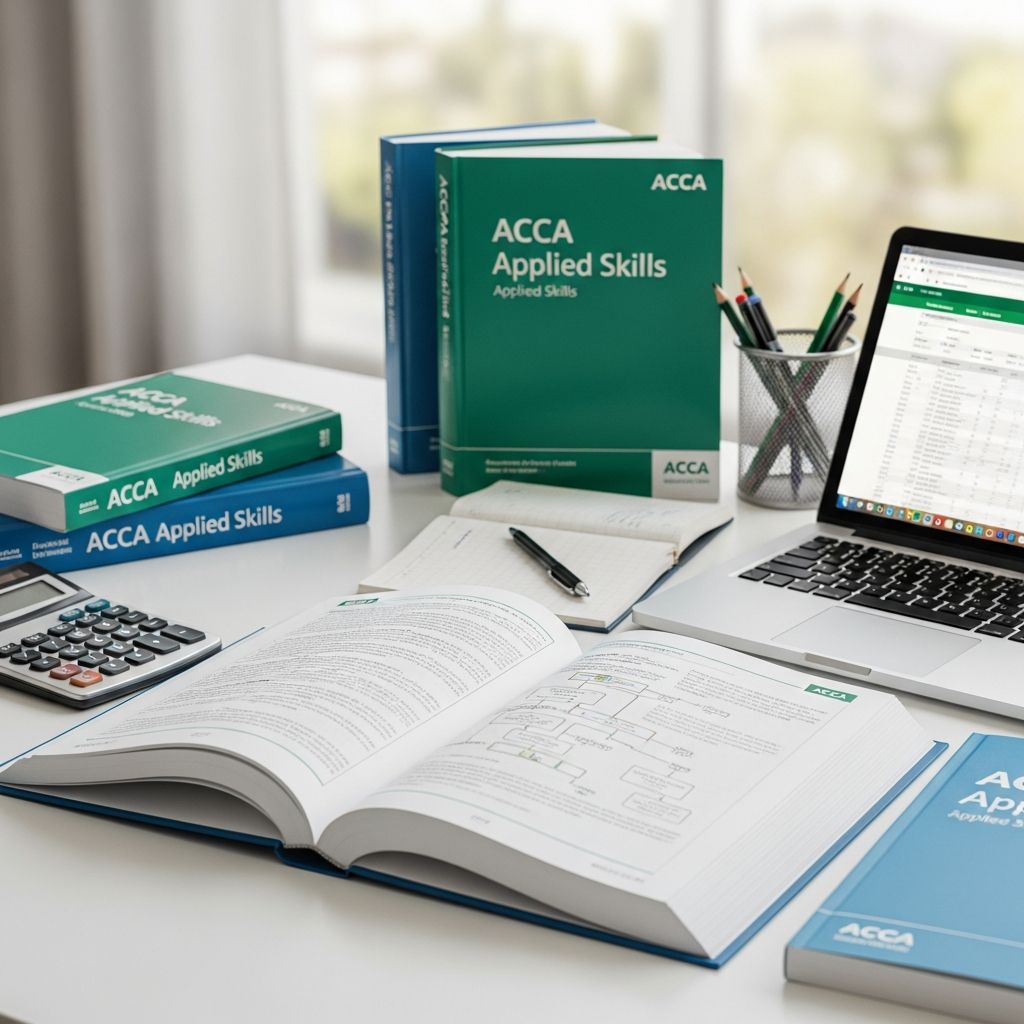
The ACCA Applied Skills level represents a critical bridge in the journey toward becoming a chartered certified accountant. This module builds directly on foundational knowledge, introducing more complex concepts in financial management, taxation, and auditing. Success here equips candidates with practical expertise essential for real-world accounting roles. With six core exams, each demanding a blend of analytical thinking and application, thorough preparation is key to achieving the mandatory 50% pass mark.
Positioning Applied Skills in the ACCA Framework
ACCA’s qualification structure progresses through distinct stages, each escalating in depth and responsibility. The Applied Skills level follows the introductory Applied Knowledge exams and precedes the advanced Strategic Professional papers. Completing this stage, alongside prior modules, earns candidates the Advanced Diploma in Accounting and Business, a recognized milestone.
Prerequisites are straightforward: candidates must pass all three Applied Knowledge papers—Business and Technology (BT), Management Accounting (MA), and Financial Accounting (FA)—with at least 50% in each. This ensures a solid base in core principles before tackling the more integrative challenges of Applied Skills.
Exam Logistics and Scheduling Essentials
Unlike the on-demand Applied Knowledge exams, Applied Skills assessments are session-based, offered four times annually in March, June, September, and December. Each exam lasts three hours and can be taken as computer-based (CBE) or paper-based options, depending on location and availability. Candidates may attempt up to four exams per sitting, allowing strategic planning to manage workload.
Registration occurs via the ACCA website, with deadlines typically two months before each session. Fees vary by location and format, but early booking secures spots at approved centers worldwide. The CBE format provides on-screen calculators and immediate result feedback in some cases, enhancing efficiency.
Overview of the Six Core Subjects
Flexibility defines the Applied Skills module: candidates choose the order of exams, though experts recommend a logical sequence starting with foundational topics. Below is a breakdown of each subject, including syllabus focus and interconnections.
- Corporate and Business Law (LW): Focuses on legal frameworks governing business operations, contracts, and company law. This 2-hour exam is fully objective, easing the transition from Applied Knowledge with 45 multiple-choice questions and five longer-form items.
- Taxation (TX): Covers direct and indirect taxes, including personal, corporate, and VAT computations. Emphasizes practical tax planning and compliance, building standalone skills useful across sectors.
- Financial Reporting (FR): Advances from FA, delving into group accounts, financial statements preparation, and IFRS standards. Essential groundwork for Strategic Professional papers like Strategic Business Reporting.
- Performance Management (PM): Extends MA concepts to advanced costing, budgeting, and performance evaluation using variance analysis and decision tools.
- Financial Management (FM): Explores investment appraisal, risk management, and working capital decisions. Links directly to Strategic Business Leader requirements.
- Audit and Assurance (AA): Introduces auditing processes, internal controls, and assurance engagements. Benefits from prior FR knowledge for effective comprehension.
Decoding Exam Formats Across Subjects
Applied Skills exams blend objective and constructed response questions to test both recall and application. LW stands apart as entirely objective, while others follow a tiered structure:
| Section | Question Type | Marks Allocation | Examples |
|---|---|---|---|
| A | 15 objective test (OT) questions | 30 marks | MCQs, multiple response |
| B | 3 OT cases (4 questions each) | 30 marks | Scenario-based selections |
| C | 2 constructed response questions | 40 marks | Multi-part computations, discussions |
This format, totaling 100 marks, demands time management: allocate roughly 1.8 minutes per mark. Practice with past papers reveals recurring themes, such as ethical scenarios in AA or ratio analysis in FR.
Strategic Study Roadmap for Optimal Results
Average completion spans 12-18 months, though dedicated learners finish faster with mentorship. Begin by reviewing the official syllabus on ACCA’s site, then map a personalized timetable. Dedicate 150-200 hours per subject, prioritizing weak areas via diagnostic mocks.
Recommended sequence: LW → TX → FR → PM → FM → AA. This builds momentum with shorter, familiar formats before computational heavies. Integrate Ethics and Professional Skills Module (EPSM) post-Applied Skills for Strategic Professional prep.
Preparation Techniques and Resources
Effective study combines approved texts, online tuition, and relentless practice. Key strategies include:
- Master technical content using Kaplan or BPP study texts, aligned to the latest syllabus.
- Solve 5-10 past exams per subject, timing yourself to simulate pressure.
- Form study groups for debating constructed responses, honing written skills.
- Use ACCA’s specimen exams and technical articles for updates on standards like IFRS 16.
- Track progress with mock exams; aim for consistent 60-70% scores before sitting.
Digital tools like ACCA’s Practice Platform offer unlimited OT questions, while tuition providers deliver structured courses with tutor support.
Analyzing Difficulty and Pass Rate Trends
Perceptions of difficulty vary, but historical data highlights challenges. AA often ranks toughest with pass rates around 30-40%, due to its conceptual depth and integration of FR topics. LW and TX tend to be more accessible, with higher averages near 50-60%.
Recent sessions show fluctuations: FR and PM hover at 45-55%, FM slightly higher. Low AA rates stem from unfamiliarity with assurance jargon; countermeasures include early FR mastery and ethics focus.
Proven Test-Day Strategies
On exam day, scan the paper first: tackle Section A/B for quick wins, reserving C for depth. In constructed responses, structure answers with headings, workings, and professional tone—examiners reward clarity. For CBEs, flag and review OT items efficiently.
Common pitfalls: poor time allocation (e.g., over-dwelling on Section A) or vague discussions. Always show computations step-by-step, even if partial credit applies.
Post-Exam Progression and Benefits
Passing all six unlocks Strategic Professional entry and the Advanced Diploma. Skills gained—tax advisory, audit planning, performance metrics—translate to roles like financial analyst or auditor, boosting employability globally.
Many employers value partial passes, offering exemptions or sponsorships. Track results via myACCA portal; re-sits target weaknesses without full re-study.
Frequently Asked Questions (FAQs)
How many exams are in ACCA Applied Skills?
There are six exams: LW, TX, FR, PM, FM, and AA.
Can I choose the order of Applied Skills exams?
Yes, ACCA allows flexibility, but a sequenced approach maximizes success.
What is the pass mark for these exams?
All require 50%.
Are Applied Skills exams computer-based?
Primarily CBEs, with paper options available.
How long to prepare for one Applied Skills paper?
Typically 150-200 study hours.
Final Thoughts on Advancing Your Career
Applied Skills forges resilient professionals ready for dynamic finance landscapes. Consistent practice, strategic ordering, and resource leverage pave the path to qualification. Stay updated via ACCA resources and commit to the process for transformative career growth.
References
- A Comprehensive Guide to ACCA Applied Skills Exams — LSBF. 2023. https://www.lsbf.org.uk/blog/online-learning/a-comprehensive-guide-to-acca-applied-skills-exams
- ACCA exam papers details by VLS: How to prepare for exams? — VLS Online. 2023. https://vls-online.com/blog/acca-exam-papers-details-by-vls-how-to-prepare-for-exams
- Fact Sheet, ACCA Applied Skills Level – V130220 — AIE. 2023-02-13. https://aie.ac/Library/Fact-SheetPDF/Fact%20Sheet,%20ACCA%20Applied%20Skills%20Level%20-%20V130220.pdf
- ACCA Syllabus Difficulty Guide: Toughest Papers & Pass Rates — Imarticus. 2023. https://imarticus.org/blog/toughest-acca-syllabus-subjects-revealed-by-experts/
- Mastering the ACCA Exams: Your Guide to Passing First Time — Global APC. 2023. https://www.globalapc.com/blog/mastering-the-acca-exams-your-guide-to-passing-first-time
- Guide to Applied Skills past exams — ACCA Global. 2023. https://www.accaglobal.com/gb/en/student/exam-support-resources/guide-to-past-exams-f5-f9.html
- Applied Skills exams — ACCA Global. 2023. https://www.accaglobal.com/gb/en/qualifications/glance/acca/how/acca-qualification-applied-skills-exams.html

Medha Deb is an editor with a master's degree in Applied Linguistics from the University of Hyderabad. She believes that her qualification has helped her develop a deep understanding of language and its application in various contexts. Medha specializes in the areas of beauty, health, sports, and wellness and is committed to ensuring that the content on the website is…