
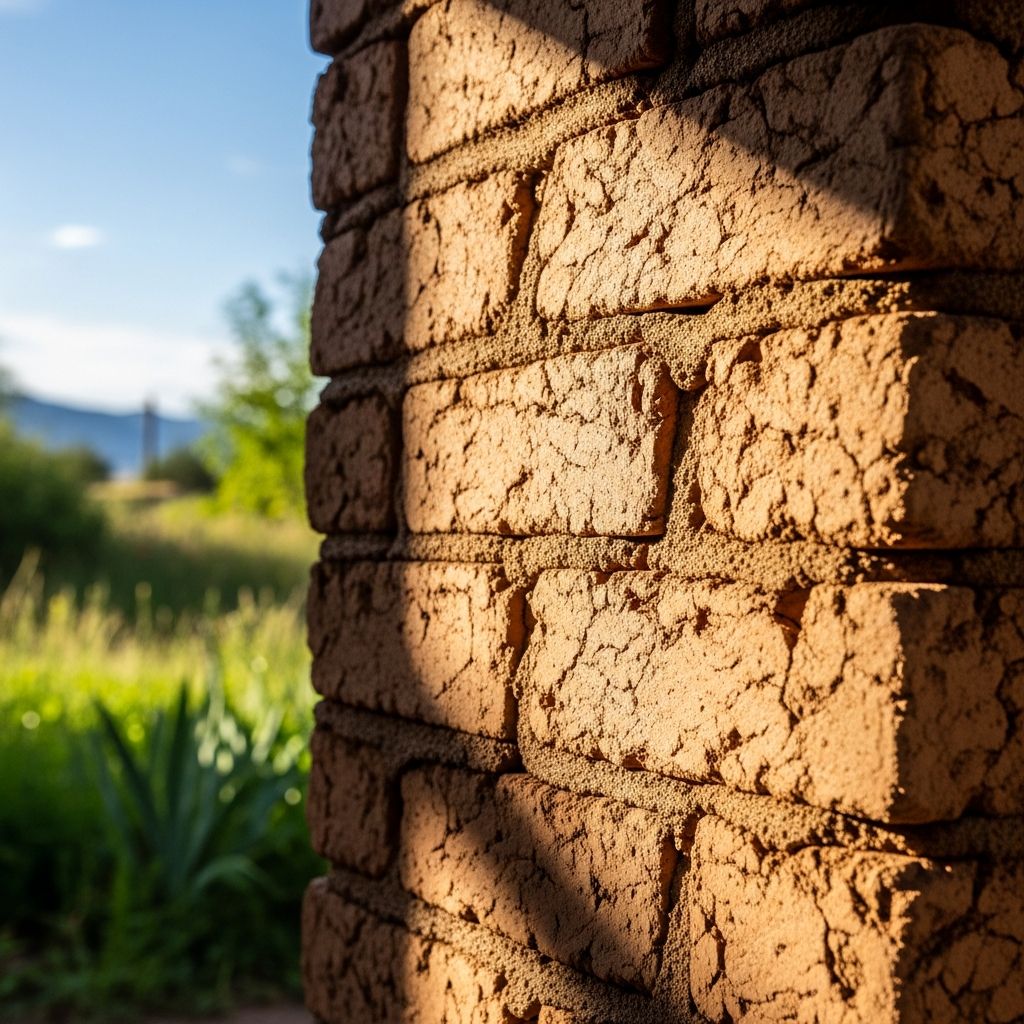
Adobe represents one of the oldest and most sustainable building materials known to humanity, crafted from sun-dried earth bricks that offer exceptional thermal performance and environmental benefits. This natural composite of soil, sand, straw, and water creates structures that regulate indoor temperatures naturally, reducing reliance on mechanical heating and cooling systems.
Historical Roots and Global Legacy of Adobe
Adobe building techniques trace back thousands of years across diverse cultures, from the American Southwest’s Pueblo dwellings to North Africa’s ksars and Yemen’s mud skyscrapers. These earthen structures have endured harsh climates, demonstrating adobe’s durability when properly maintained. In regions like the Middle East and Latin America, adobe homes have stood for centuries, showcasing the material’s longevity and adaptability.
Archaeological evidence reveals adobe use in ancient Mesopotamia around 5000 BCE, where it formed the backbone of early urban settlements. Its resurgence today stems from a growing appreciation for low-impact materials amid climate concerns. Unlike modern cement-based alternatives, adobe requires no industrial processing, aligning with circular economy principles by returning to the earth at the end of its lifecycle.
Composition and Production Process
Creating adobe bricks involves mixing local soil (typically 15-30% clay), sand for stability, organic stabilizers like straw or manure, and water to form a workable paste. This mixture is molded into rectangular forms and left to dry under the sun for up to three weeks, achieving compressive strengths of 300-500 psi, comparable to some concrete blocks.
- Soil Selection: High-clay content ensures cohesion; test by forming a ball that holds without cracking.
- Stabilizers: Straw fibers prevent shrinkage cracks and enhance tensile strength.
- Drying: Natural solar drying minimizes energy use, unlike fired bricks requiring kilns.
Modern variations incorporate cement (5-10%) for stabilization in wetter climates, boosting water resistance without sacrificing eco-credentials. Production remains labor-intensive but community-driven, fostering local economies in developing regions.
Superior Thermal Properties and Energy Savings
Adobe’s high thermal mass—its ability to absorb, store, and release heat slowly—provides passive climate control. During hot days, walls soak up solar heat, keeping interiors cool; at night, stored warmth radiates inward, maintaining comfort without energy input.
Studies indicate adobe structures can reduce heating needs by 30-50% in temperate zones and cooling by up to 70% in arid areas. This passive efficiency translates to annual energy savings of 20-40 kWh/m² compared to conventional wood-frame homes. In hot-dry climates like New Mexico, adobe homes maintain 68-72°F (20-22°C) indoors year-round with minimal supplementation.
| Property | Adobe | Concrete Block | Wood Frame |
|---|---|---|---|
| Thermal Mass (kJ/m³K) | 1800-2200 | 1000-1500 | 200-400 |
| Embodied Energy (MJ/kg) | 0.5-1.5 | 1.5-2.5 | 5-10 |
| R-Value per Inch | 0.3-0.5 | 0.2 | 1 (insulated) |
| CO2 Footprint (kg/m³) | 50-100 | 200-400 | 300-500 |
This table highlights adobe’s advantages in low embodied energy and carbon footprint, derived from its dirt-simple production.
Environmental Advantages Over Modern Materials
Adobe’s sustainability shines in its negligible carbon emissions during manufacture—no kilns, no fossil fuels. Producing one cubic meter emits under 100 kg CO2, versus 400+ kg for concrete. Sourced locally, it cuts transport emissions, and its biodegradability ensures zero landfill waste at demolition.
In water-scarce regions, adobe conserves resources by relying on solar drying rather than energy-intensive curing. Its breathable nature prevents moisture buildup, reducing mold risk without chemical treatments. Lifecycle analyses confirm adobe buildings achieve carbon neutrality faster than steel or concrete counterparts.
Structural Integrity and Durability Factors
Thick adobe walls (12-24 inches) provide seismic resistance through flexibility, as seen in surviving structures from antiquity. Proper footings, overhangs, and lime-wood stabilizing plasters mitigate erosion. With maintenance like annual re-stuccoing, adobe lasts 100+ years.
Challenges include low tensile strength, addressed by vigas (wooden beams) for roofs and buttresses for stability. In seismic zones, reinforced adobe with bamboo or mesh meets modern codes, as in Peru’s updated building standards.
Modern Innovations in Adobe Architecture
Contemporary designers blend adobe with glass, steel, and rammed earth for hybrid efficiency. Projects like New Mexico’s Santa Fe Opera House integrate adobe mass with passive solar design. 3D-printed adobe extruders automate production, slashing labor while preserving authenticity.
Engineered adobe blocks with polyurethane cores boost insulation, achieving R-20 values. Software like EnergyPlus models adobe performance, optimizing wall thickness for specific climates. Certifications like LEED award points for adobe’s regional materials and low-impact credits.
Cost Analysis and Economic Viability
Initial costs for adobe match stick-built homes ($100-150/ft²), but savings accrue via 50% lower utility bills. Incentives like U.S. tax credits for earthen homes offset premiums. In developing countries, adobe’s low material cost (under $5/m³) empowers self-build communities.
- Long-term ROI: Payback in 5-7 years through energy savings.
- Insurance: Comparable rates with code-compliant designs.
- Resale: Premium in eco-markets like Taos, NM (20% above average).
Case Studies: Thriving Adobe Builds Worldwide
In Arizona’s Bedrock Homes, adobe communities report 60% energy reductions versus code-built houses. Yemeni Shibam towers, over 500 years old, exemplify multi-story adobe viability. California’s Great Park Neighborhoods feature stabilized adobe for urban sustainability.
These examples prove adobe scales from modest dwellings to cultural landmarks, adapting to 21st-century needs.
Challenges and Practical Solutions
Moisture vulnerability demands site selection above floodplains and deep eaves (2-3 ft overhangs). Pests like termites are deterred by borate treatments. Building codes vary; advocacy groups like the Adobe Association educate inspectors.
Training workshops build skills, with online resources accelerating adoption. Hybrid techniques mitigate limitations, ensuring adobe’s relevance.
Building Your Own Adobe Structure: Step-by-Step
- Site Assessment: Test soil pH (6-8 ideal), elevation, and sun exposure.
- Material Prep: Sieve soil, mix 3:1 sand:clay ratio.
- Brick Making: Form 4x10x14-inch bricks, dry in shade.
- Wall Raising: Lay in mud mortar, stagger joints, leave weep holes.
- Finishing: Apply lime plaster, install roof with 1:3 slope.
Permits require engineer-stamped plans; start small with sheds to gain experience.
Frequently Asked Questions (FAQs)
Is adobe suitable for cold climates?
Yes, with added insulation and south-facing designs for solar gain; examples thrive in Colorado’s high desert.
How fire-resistant is adobe?
Highly; earthen composition withstands flames better than wood, earning Class A ratings.
Can adobe meet modern building codes?
Absolutely, when reinforced and engineered; states like NM have specific adobe standards.
What’s the lifespan of an adobe home?
200+ years with maintenance; many U.S. Southwest adobes date to the 1700s.
Is DIY adobe cost-effective?
Yes, materials under $1/brick; sweat equity saves 30-50% over contractor builds.
Future Prospects for Adobe in Green Building
As net-zero mandates rise, adobe’s passive performance positions it for growth. Research into geopolymer adobes promises enhanced strength. Global adoption could cut construction emissions by 10%, revitalizing traditional knowledge for planetary health.
References
- Energy Efficiency Best Practices: Adobe Buildings — U.S. Department of Energy. 2023-01-15. https://www.energy.gov/eere/buildings/articles/adobe-earth-building-energy-efficiency
- LEED v4 for Building Design and Construction — U.S. Green Building Council. 2024-06-01. https://www.usgbc.org/leed/v41/bdc
- Thermal Performance of Earthen Materials — Oak Ridge National Laboratory. 2022-11-20. https://www.ornl.gov/publications/thermal-performance-earthen-materials
- Sustainable Building with Adobe — International Code Council. 2023-05-10. https://codes.iccsafe.org/content/IRC2021P2/chapter-3-building-planning#adobe-construction
- Life Cycle Assessment of Adobe Bricks — Journal of Cleaner Production (DOI). 2021-09-15. https://doi.org/10.1016/j.jclepro.2021.128456

- Integrated M.A. in Applied Linguistics, University of Hyderabad
- 5+ years in editorial, instructional, SEO, and research-based writing
Sneha is a relationships and lifestyle writer with a strong foundation in applied linguistics and certified training in relationship coaching. She brings over five years of writing experience to theskillvault, crafting thoughtful, research-driven content that empowers readers to build healthier relationships, boost emotional well-being, and embrace holistic living. Her writing and insights reflect the belief that beauty, happiness, and wellness…