
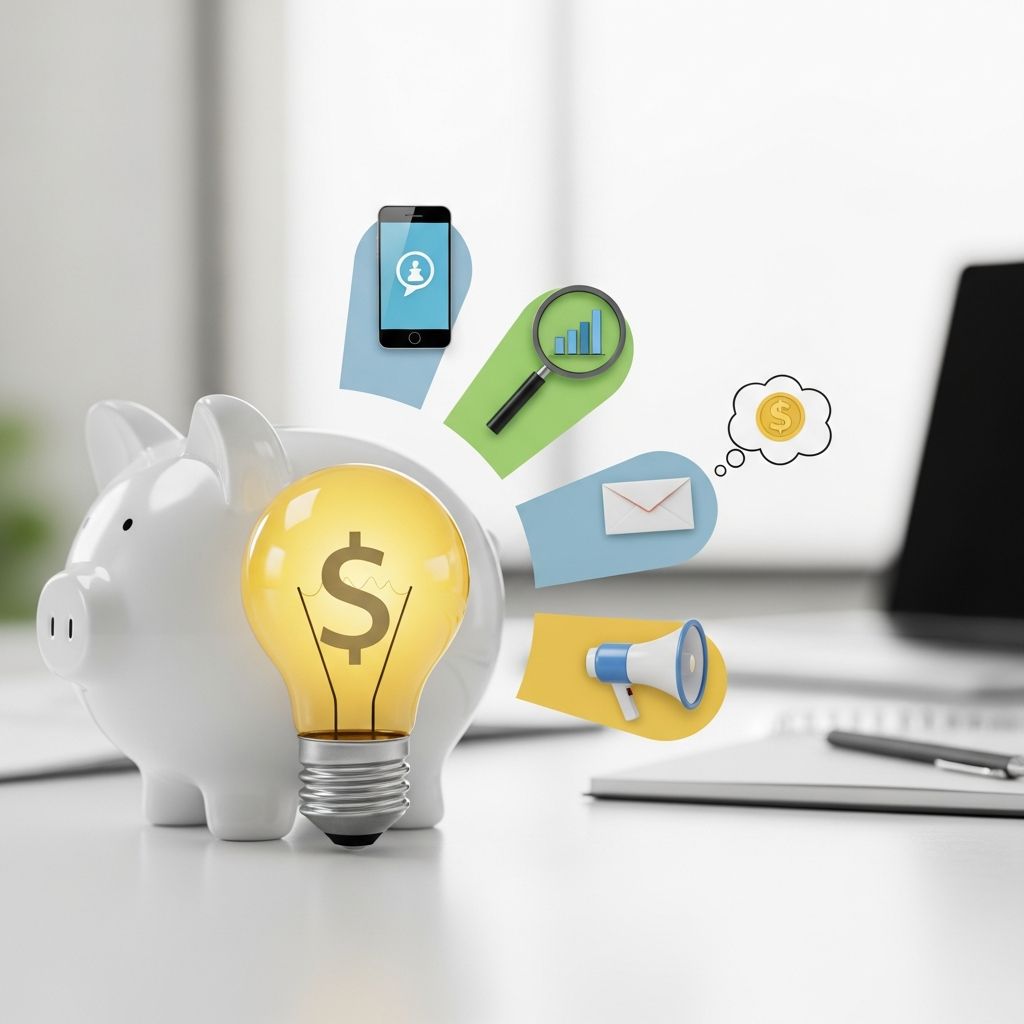
When you’re launching or scaling a business, marketing often feels like a luxury you can’t afford. Yet visibility is essential for survival. The good news is that effective marketing doesn’t require a Fortune 500 budget. In 2026, the most successful emerging businesses combine strategic thinking with resourceful execution, proving that creativity and consistency matter more than spending power.
Understanding the Economics of Smart Marketing
Before diving into specific tactics, it’s important to recognize that affordable marketing is fundamentally about efficiency. Instead of broadcasting your message to everyone, you identify your ideal customers and reach them through channels where they naturally congregate. Precision marketing—targeting narrow audience segments with highly relevant messages—has become the foundation of successful campaigns, even for businesses with limited budgets.
The shift away from broad-based campaigns reflects a larger truth: paid advertising costs continue rising while effectiveness often diminishes. This means startups now compete effectively by being strategic rather than lavish with their resources. Understanding your customer journey, measuring what actually matters, and continuously optimizing based on real data separates successful budget-conscious marketers from those who waste limited resources.
Building Your Foundation Without Paid Advertising
The cheapest and often most effective marketing channels are those that require your time and attention rather than money. Before spending a single dollar on advertising, establish a strong foundation using free or nearly-free channels that build long-term value.
Claiming and Optimizing Your Online Real Estate
Your digital presence begins with tools that cost nothing but demand attention to detail. A Google Business Profile is absolutely essential—it’s free, appears prominently in local searches, and allows you to control how potential customers perceive your business. Beyond Google, claim your business on relevant local directories to ensure consistent information across the web.
Your website serves as the hub connecting all marketing efforts. Rather than investing in flashy design, focus on elements that directly impact conversions. A clear value proposition visible immediately when someone lands on your page answers the critical question: “Why should I choose you?” Include multiple contact options—phone number, email, contact form—and ensure every page loads quickly on mobile devices, since over 60% of searches happen on phones.
Developing Content That Attracts Without Ads
Content marketing represents one of the most underutilized affordable strategies. By creating helpful, relevant content, you attract potential customers through search engines and social media without paying for each click. The approach requires patience—results compound over months—but the investment is time rather than money.
Start by identifying questions your customers ask and topics they search for. Create blog posts, guides, videos, or infographics that answer these questions comprehensively. This approach serves double purposes: it helps potential customers discover you through search engines, and it establishes your expertise and trustworthiness before anyone reaches out.
Leveraging Social Media for Consistent Visibility
Consistent social media presence costs virtually nothing but demands regularity. Rather than attempting to maintain presence across every platform, select one or two where your target audience actively congregates. Post consistently—daily if possible—with content that engages rather than simply promotes. Behind-the-scenes content, customer stories, educational tips, and visual demonstrations of your work all drive engagement without paid promotion.
The compounding nature of social media means a single post that generates genuine engagement can attract inbound interest weeks after publication. Over time, your audience grows, and your reach expands organically.
Email Marketing: Your Most Valuable Asset
An email list represents your most controllable marketing asset. Unlike social media platforms where algorithms determine who sees your content, email reaches people who’ve explicitly chosen to hear from you. Building this list requires offering genuine value—a free resource, discount code, or exclusive information that makes subscribing worthwhile.
Email platform costs are minimal, especially at early stages. Services often charge nothing for modest subscriber counts. Use email strategically: welcome sequences that introduce new subscribers to your business, educational content that reinforces your expertise, and occasional promotional messages for your products or services.
For restaurants and retail businesses, email becomes particularly powerful when paired with loyalty incentives. A birthday discount or anniversary offer encourages repeat purchases. For service businesses, email maintains top-of-mind awareness and reminds past customers of your expertise when they need your services.
Strategic Partnerships and Word-of-Mouth Amplification
Formalizing Referral Programs
Word-of-mouth remains the cheapest customer acquisition channel. However, relying on hope isn’t a strategy. Formalizing a referral program removes friction and motivates customers to recommend you. The incentive needn’t be elaborate—discount codes, account credits, or exclusive access to new offerings all work effectively.
Make sharing easy by providing referral codes customers can easily remember and share. Track results to understand how many customers come through referrals versus other channels.
Collaborative Partnerships With Complementary Businesses
Partnerships with adjacent businesses offer mutual benefit without financial cost. A coffee shop and lunch restaurant naturally complement each other—they serve different dayparts and customer occasions. Cross-promoting to each other’s audiences expands reach at zero marginal cost. Retail clothing stores might partner with tailors or shoe repair shops. Service businesses often benefit from partnerships with complementary service providers.
When approaching potential partners, focus on mutual benefit rather than asking for favors. The best partnerships are those where both parties genuinely value the relationship.
Micro-Influencer Collaborations
You don’t need celebrity endorsements to gain credibility through influencers. Micro-influencers with 5,000 to 20,000 followers often deliver superior results at a fraction of the cost. Their smaller audiences are typically more engaged, and their followers trust their recommendations because they feel more personal and authentic.
Approach micro-influencers with specific offers—free product or service in exchange for authentic content. The key word is “authentic.” Overly scripted content underperforms because followers sense inauthenticity. Allow influencers creative freedom while providing essential information about your business. Track results using unique discount codes or landing pages to measure actual return on investment.
Strategic Paid Advertising When Budget Allows
Starting Small With Google Ads
When you’re ready to invest in paid advertising, Google Ads offers powerful targeting options even on tiny budgets. The key is starting small and testing systematically before scaling investment. Begin with $20 to $50 daily to learn what works before expanding.
Success with Google Ads depends on targeting the right keywords. Rather than bidding on broad terms, focus on high-intent keywords that indicate someone is ready to buy or hire. Someone searching “emergency plumber near me” is far more valuable than someone searching “plumbing tips.” Your ad copy should communicate your specific value proposition rather than generic claims that could describe any business in your category.
Use location targeting to ensure you only pay for clicks from people who can actually use your services. Set up conversion tracking to monitor actual business results—calls, form submissions, or purchases—rather than just click counts. This data guides optimization and prevents wasting budget on clicks that don’t convert.
Social Media Advertising for Visual Businesses
Facebook, Instagram, and TikTok ads work particularly well for visually compelling products and for reaching customers interested in specific interests or demographics. Like Google Ads, success requires precise targeting and continuous testing.
Rather than running a single ad, test 3-4 different creative variations to identify what resonates with your audience. Start with $10 to $20 daily per ad variation. Precise targeting—using demographics, interests, behaviors, and lookalike audiences—ensures your budget reaches people most likely to become customers.
Retargeting represents particularly efficient spending. Most website visitors leave without taking action. Retargeting ads remind them why they were interested and offer incentive to return. Because retargeting reaches people who’ve already shown interest, these campaigns typically deliver the highest return on advertising investment.
Measuring Success and Optimizing Continuously
The most critical aspect of affordable marketing is measuring what actually matters. Vanity metrics—likes, impressions, and views—feel good but don’t pay bills. Focus instead on metrics tied to business results: cost per lead, conversion rates, and customer acquisition cost.
Establish a system for tracking which marketing activities produce customers and which consume budget without results. Monthly reviews of metrics allow rapid adjustment. If an approach isn’t working, pause it and redirect resources elsewhere. If something works, you have data justifying increased investment.
A Realistic Implementation Timeline
Month 1: Building Foundation
- Optimize Google Business Profile with complete information and professional photos
- Ensure website clearly communicates value proposition and includes multiple contact options
- Create 3-5 pieces of helpful content aligned with customer questions
- Establish email collection system on website with compelling lead magnet
- Select one or two social media platforms for consistent posting
- Request reviews from satisfied customers
Month 2 and Beyond: Testing and Growth
- Launch small paid advertising experiment ($500 or less) to test channels and messaging
- Implement formal referral program with clear incentives
- Review performance data monthly and adjust strategy accordingly
- Pursue one local partnership or cross-promotional opportunity
- Expand successful tactics and pause underperforming activities
Sector-Specific Applications
Restaurant and Food Service Businesses
Visual platforms like Instagram and TikTok are essential. Daily posts showcasing dishes, preparation methods, and customer experiences build appetite appeal. Weekly Google Business Profile updates with specials, events, or menu additions keep regulars informed. Email campaigns offering birthday discounts or loyalty rewards drive repeat visits. Local partnerships with nearby businesses create cross-traffic opportunities.
Retail and E-Commerce
If you operate a physical store, local inventory ads on Google show nearby searchers what products you have in stock. Email campaigns announcing early access to sales, new arrivals, and exclusive offers drive urgency. User-generated content and customer testimonials build trust. Community involvement—sponsoring teams, events, or charitable causes—builds brand awareness and positive associations.
Service-Based Businesses
Content marketing establishing expertise is particularly valuable. Detailed guides, case studies, and educational resources demonstrate capability and build confidence in potential customers. Email stays top-of-mind between customer interactions. Referral programs incentivize satisfied customers to recommend you. LinkedIn content with compounding engagement potential suits professional service businesses particularly well.
Frequently Asked Questions
Q: How much should a startup spend on marketing?
A: Begin with free or low-cost channels before investing in paid advertising. Once you achieve consistent results from organic efforts, small paid campaigns ($500-1,000 monthly) test channels and messaging. As revenue grows and you understand which channels work best, increase investment proportionally.
Q: Which social media platform is best for marketing?
A: Rather than trying all platforms, choose one or two where your target customers actually spend time. A B2B service company might focus on LinkedIn while a retail or food business thrives on Instagram and TikTok. Depth on one platform beats scattered presence across many.
Q: How long before marketing efforts show results?
A: Organic channels like content marketing and social media require 3-6 months to generate meaningful traffic. Paid advertising can deliver immediate results but requires testing and optimization. Email marketing shows results quickly once you build a meaningful subscriber list.
Q: Is word-of-mouth marketing still effective?
A: Absolutely. Word-of-mouth remains the cheapest customer acquisition channel. The difference in 2026 is that successful businesses formalize referral programs with clear incentives rather than hoping customers recommend them organically.
Q: Can small budgets compete with large competitors?
A: Yes, through precision marketing. By narrowly targeting specific customer segments with highly relevant messages, small businesses often achieve better results than large competitors using broad approaches. Strategic thinking and consistent execution matter more than budget size.
References
- Small Business Marketing Ideas That Actually Work in 2026 — San Diego County CPA. 2026-01-09. https://www.sdocpa.com/small-business-marketing-ideas/
- B2B Startup Marketing in 2026: 9 Strategies That Actually Work — Agility PR Solutions. 2026. https://www.agilitypr.com/pr-news/marketing-news/b2b-startup-marketing-in-2026-9-strategies-that-actually-work/
- Five Growth Strategies Every Early-Stage Startup Should Explore in 2026 — Arizona State University School of Entrepreneurship. 2026-01-15. https://entrepreneurship.asu.edu/blog/2026/01/15/five-growth-strategies-every-early-stage-startup-should-explore-in-2026/
- 7 Simple Marketing Strategies For 2026 (PROVEN & PROFITABLE) — Copy Posse. 2026. https://copyposse.com/blog/7-simple-marketing-strategies-for-2026-proven-profitable/
- How to Build Your 2026 Marketing Plan — Frank & Maven. 2026. https://frankandmaven.com/how-to-build-your-2026-marketing-plan/

Medha Deb is an editor with a master's degree in Applied Linguistics from the University of Hyderabad. She believes that her qualification has helped her develop a deep understanding of language and its application in various contexts. Medha specializes in the areas of beauty, health, sports, and wellness and is committed to ensuring that the content on the website is…